


Funnel Hirsch
In the realm of industrial filtration and precision laboratory separation, the funnel hirsch represents a specialized geometry designed for the efficient recovery of small quantities of solids. While often categorized alongside the more common Büchner funnel, the Hirsch variant is distinguished by its outward-sloping walls and a significantly smaller perforated plate relative to its top diameter. For engineers and procurement specialists in the pharmaceutical, chemical processing, and fine-particle industries, understanding the technical nuances of the funnel hirsch—particularly when constructed from high-performance materials like stainless steel—is essential for optimizing filtration workflows.
Industrial filtration requires more than just a physical barrier; it demands a synergy between vessel geometry, media permeability, and material integrity. As a manufacturer specializing in custom stainless steel filtration solutions, Kaifil provides the engineering expertise necessary to adapt these traditional laboratory designs into robust, industrial-grade components. By examining the design principles and material considerations of the funnel hirsch, technical professionals can better evaluate its suitability for demanding applications.
Design Principles and Geometry of the Funnel Hirsch
The primary architectural feature of a funnel hirsch is its conical shape. Unlike the cylindrical walls of a Büchner funnel, which are designed for larger cake volumes and uniform pressure distribution across a wide surface area, the Hirsch funnel’s sloped sides direct the filtrate and solid residue toward a centralized, smaller filter disc.
Sloped Walls and Solid Recovery
This conical design is particularly advantageous when working with limited sample sizes or expensive materials. The angle of the walls ensures that solids are concentrated onto a smaller area, making the recovery of the "filter cake" more efficient. In industrial pilot plants or specialized chemical synthesis, this geometry minimizes the loss of product that might otherwise be trapped in the corners of a flat-bottomed cylindrical vessel.
Perforated Plate Integration
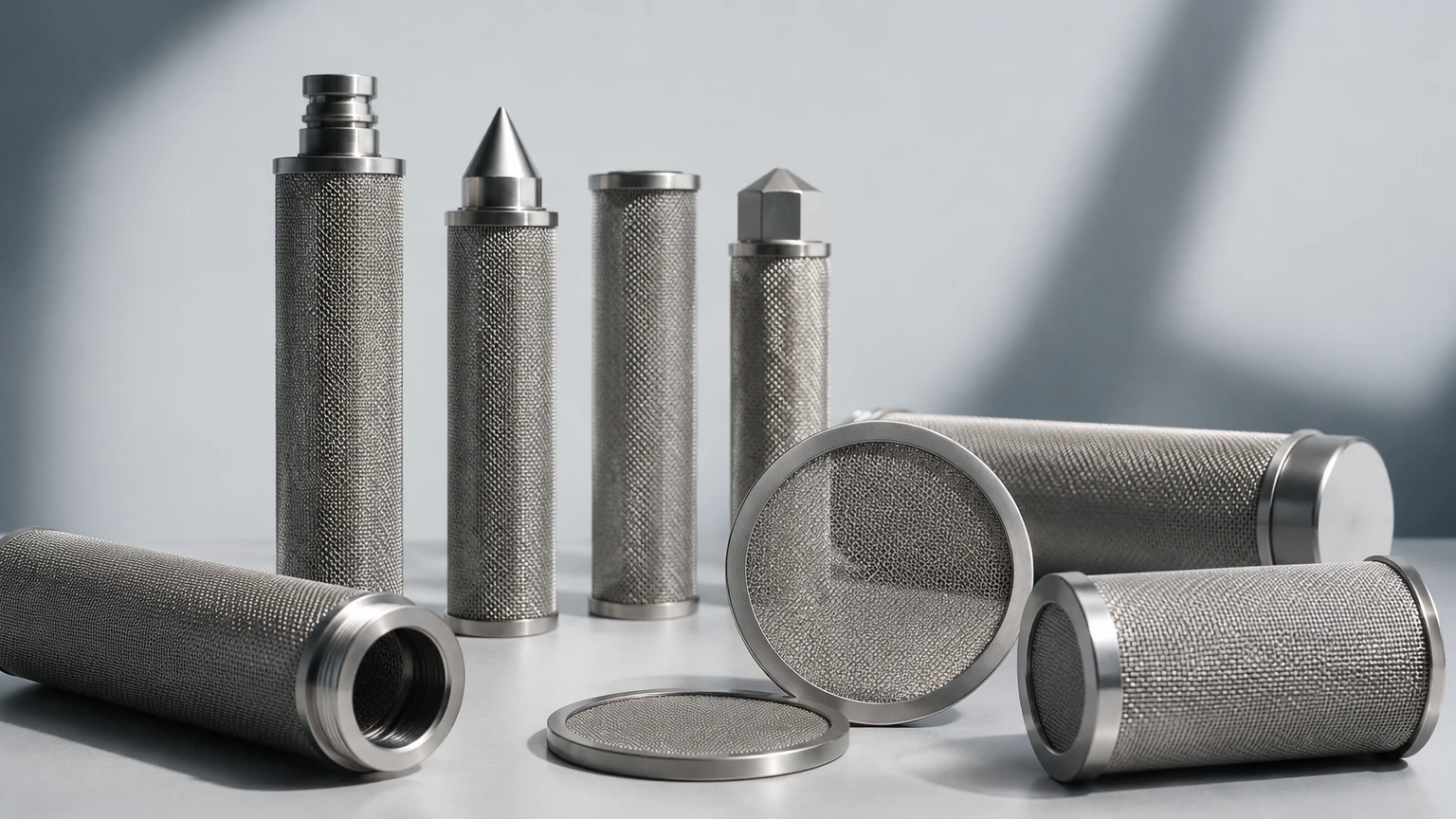
The base of the funnel hirsch contains a perforated plate or a support structure for the filtration media. In precision metal versions, this plate is often integrated with advanced wire mesh or sintered metal layers. The ratio of the top diameter to the plate diameter is a critical engineering specification, as it determines the steepness of the slope and the velocity of the fluid as it approaches the media.
Material Selection: The Shift to Stainless Steel
Traditionally, Hirsch funnels were manufactured from porcelain or glass. However, in modern B2B industrial environments, these materials often fail to meet the rigorous demands of durability, thermal resistance, and chemical inertness. Stainless steel has become the gold standard for industrial-grade filtration components.
Durability and Mechanical Strength
Industrial processes involve pressure differentials, mechanical handling, and sometimes abrasive slurries. Stainless steel (typically Grades 304 or 316L) offers superior impact resistance compared to ceramic or glass. This eliminates the risk of breakage and subsequent batch contamination—a critical factor in pharmaceutical and food-grade production.
Thermal and Chemical Resistance
The funnel hirsch is frequently used in processes involving hot filtrations or aggressive solvents. 316L stainless steel provides excellent resistance to pitting and corrosion, especially in the presence of chlorides or acidic environments. Furthermore, the ability of metal components to withstand rapid temperature changes (thermal shock) without cracking is a significant advantage in high-throughput industrial settings.
Surface Finish and Cleanability
For industries such as food and beverage or pharmaceuticals, the surface finish of the filtration equipment is paramount. Stainless steel funnels can be electropolished to achieve a high degree of smoothness, reducing the likelihood of bacterial growth and facilitating Clean-in-Place (CIP) or Sterilization-in-Place (SIP) protocols. This ensures that the funnel hirsch meets stringent sanitary standards while maintaining long-term performance.
Filtration Media and Performance Calibration
The effectiveness of a funnel hirsch is largely dependent on the filtration media placed upon its perforated base. Kaifil specializes in providing customized media that can be integrated into these funnel structures to achieve specific micron ratings and flow characteristics.
Wire Mesh and Sintered Metal Components
Depending on the application, a funnel hirsch may utilize multi-layer wire mesh or sintered metal plates. Sintered metal media offer high mechanical strength and precise pore size distribution, which is vital for vacuum filtration where the pressure differential can be significant. These components are engineered to prevent media migration, ensuring that no metallic particles contaminate the filtrate.
Micron Ratings and Permeability
Engineers must select a micron rating that balances filtration efficiency with flow rate. A funnel hirsch equipped with a 5-micron sintered disc will behave differently than one with a 50-micron wire mesh. The choice depends on the particle size distribution of the solids being recovered. High permeability is essential to prevent premature blinding of the filter, especially when dealing with gelatinous or highly concentrated slurries.
Flow Dynamics in Vacuum Filtration
Because the funnel hirsch is almost exclusively used with vacuum assistance, the integrity of the seal and the support of the filter media are critical. The vacuum creates a pressure differential that pulls the liquid through the media. If the media is not properly supported by the funnel's internal structure, it may deform, leading to bypass or mechanical failure. Engineering the support plate to withstand these forces is a core part of the manufacturing process.
Industrial Applications of Hirsch-Style Filtration
While the funnel hirsch originated in the laboratory, its principles are applied across various industrial sectors where precision and small-to-medium batch processing are required.
Pharmaceutical and Biotechnology
In the production of Active Pharmaceutical Ingredients (APIs), small batches of high-value crystals or precipitates must be isolated. The funnel hirsch allows for maximum recovery of these solids with minimal waste. The use of 316L stainless steel ensures compliance with FDA and cGMP requirements.
Fine Chemical Synthesis
Chemical processors often use Hirsch-style filtration for catalyst recovery or the removal of impurities from specialized chemical batches. The ability to customize the filter media allows for the handling of diverse chemical compositions and temperatures.
Food and Beverage Research
In the development of new flavorings or additives, researchers use funnel hirsch configurations to separate solids from extracts. The durability of stainless steel components ensures that the equipment can be reused across hundreds of test cycles without degradation.
Selection Criteria for Industrial Engineers
When specifying a funnel hirsch or a similar filtration component for an industrial system, several technical factors must be confirmed to ensure operational success. For those evaluating technical specifications and manufacturing capabilities, visiting the Main Page of a specialized manufacturer can provide deeper insights into the available customization options.
1. Chemical Compatibility
Confirm that the material of the funnel and the internal filter media is compatible with the process fluid. While 316L stainless steel is versatile, certain highly corrosive acids may require specialized alloys like Hastelloy.
2. Batch Volume and Solids Loading
The size of the funnel hirsch must be matched to the expected volume of solids. If the solids loading is too high, the small plate area of the Hirsch design may lead to rapid cake buildup and a significant drop in flow rate. In such cases, a larger Büchner-style geometry might be more appropriate.
3. Vacuum Requirements
Ensure the funnel is rated for the vacuum levels intended for the process. This includes verifying the thickness of the walls and the structural integrity of the perforated support plate.
4. Integration with Existing Systems
In an industrial setting, the funnel hirsch is rarely a standalone piece of glassware. It must often be integrated into a larger vacuum manifold or piping system. Custom flanges, NPT fittings, or tri-clamp connections may be necessary to ensure a leak-proof installation.
Maintenance and Longevity of Metal Filtration Components
One of the primary reasons B2B buyers choose stainless steel Hirsch funnels over disposable or fragile alternatives is the long-term cost of ownership. However, maintaining this longevity requires proper care and maintenance protocols.
Cleaning Procedures
To prevent cross-contamination between batches, the funnel hirsch must be thoroughly cleaned. Ultrasonic cleaning is highly effective for removing trapped particles from deep within the pores of sintered metal media. For chemical residues, appropriate solvents or caustic washes can be used without damaging the stainless steel structure.
Inspection for Media Blinding
Over time, certain applications may cause "blinding," where particles become permanently lodged in the filtration media. Regular inspection of the flow rate and pressure drop can indicate when a filter component needs deep cleaning or replacement. Because Kaifil designs these components for durability, they can often be restored to original performance levels through professional cleaning cycles.
Sterilization
In sterile environments, the funnel hirsch must be capable of withstanding autoclave cycles or chemical sterilization. Stainless steel's inherent resistance to high temperatures and pressures makes it the ideal material for these requirements.
Customization and OEM Solutions
Every industrial process has unique requirements that off-the-shelf laboratory equipment cannot always meet. Customization is where the transition from a standard funnel hirsch to a specialized industrial tool occurs.
Tailored Micron Ratings
Manufacturers can produce Hirsch-style funnels with specific micron ratings tailored to the exact particle size of the client's product. This precision ensures maximum yield and filtrate clarity.
Structural Modifications
From reinforced support grids for high-pressure vacuum applications to specialized outlet geometries for integration into automated production lines, custom engineering allows the funnel hirsch to function as a seamless part of a larger industrial system.
Material Traceability
In regulated industries, providing material test reports (MTRs) and certificates of compliance is essential. Professional manufacturers ensure that every component of the funnel hirsch can be traced back to its original heat lot, providing the documentation necessary for quality assurance and regulatory audits.
Conclusion
The funnel hirsch remains a vital tool for precision filtration, offering unique advantages in solid recovery and small-batch processing. By moving beyond traditional materials and embracing the durability and precision of stainless steel, industrial engineers can significantly improve the efficiency and reliability of their filtration workflows. Whether used in a pharmaceutical lab or a chemical pilot plant, the Hirsch funnel’s specialized geometry, when paired with high-performance metal media, provides a robust solution for demanding separation tasks. Understanding the interplay between design, material, and application-specific requirements is the key to selecting the right filtration component for long-term industrial success.
