


Gas Filter Separator Vertical Configuration
In industrial gas processing, the removal of liquid droplets and solid particulates is critical for protecting downstream equipment such as compressors, turbines, and measuring instruments. A gas filter separator vertical configuration is one of the most common and effective designs used to achieve high-purity gas streams. By utilizing a multi-stage separation process within a vertical vessel, engineers can optimize space while ensuring high efficiency in removing both fine solids and liquid aerosols.
As a specialized manufacturer of stainless steel filtration solutions, Kaifil provides the precision-engineered components—including wire mesh filters and stainless steel filter cartridges—that serve as the heart of these separation systems. Understanding the technical nuances of the vertical configuration is essential for engineers and procurement teams tasked with maintaining system integrity and operational efficiency.
The Fundamentals of Gas Filter Separator Vertical Configuration
A gas filter separator vertical configuration is designed to handle gas streams containing moderate to high concentrations of liquid and solid contaminants. Unlike a standard dry filter or a simple knock-out drum, a filter separator combines mechanical impingement, centrifugal force, and high-efficiency filtration elements in a single unit.
The vertical orientation is particularly advantageous when the installation footprint is limited. In this configuration, the gas typically enters the middle or lower section of the vessel. The separation process occurs in distinct stages:
1. Primary Separation: As the gas enters the vessel, a change in velocity or a baffle plate causes larger liquid droplets and heavy solids to drop out of the gas stream due to gravity.
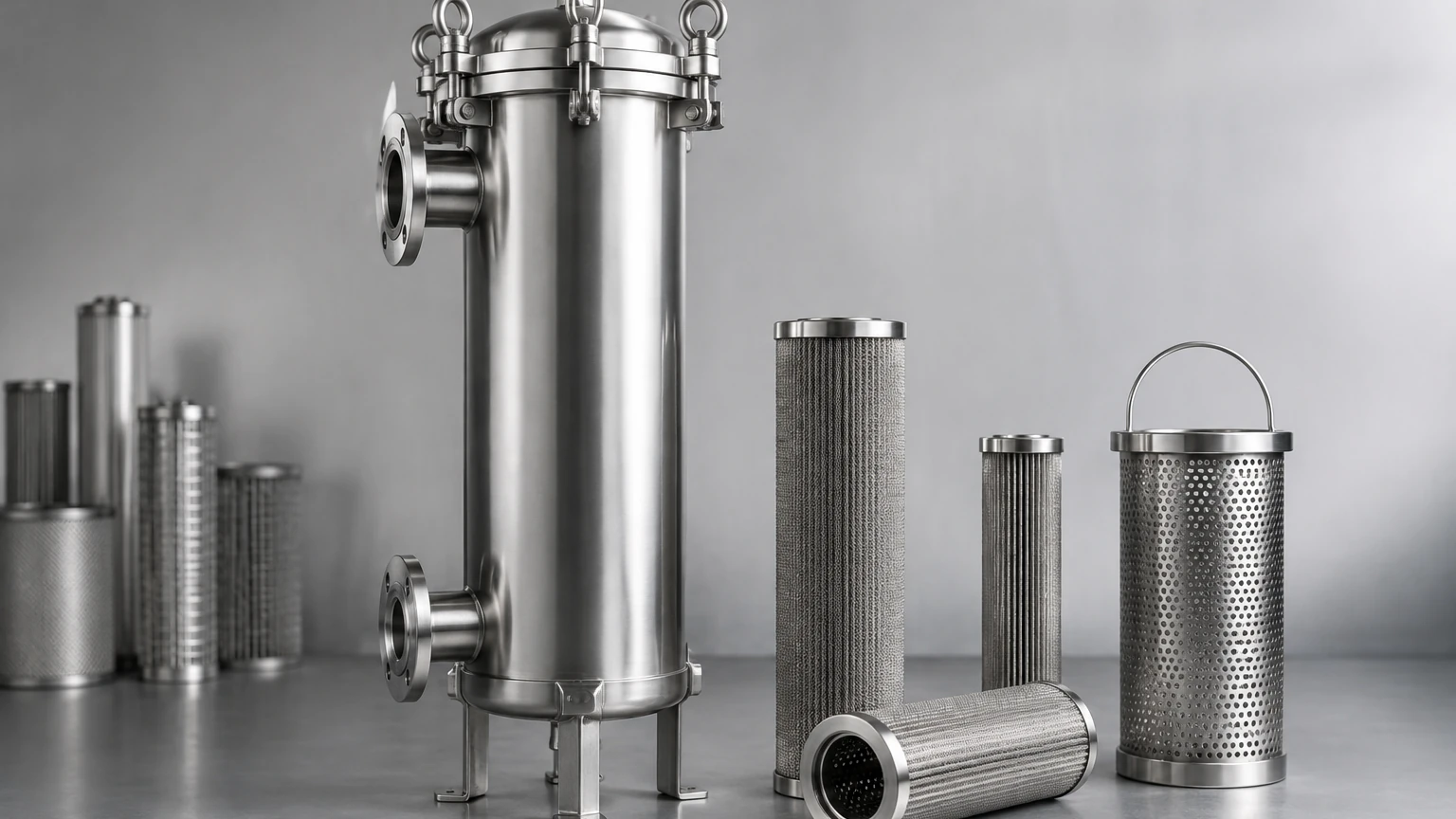
2. Filtration and Coalescence: The gas then flows through a bank of filter cartridges. These elements, often constructed from pleated stainless steel wire mesh or specialized fibers, capture fine solid particles and cause small liquid droplets to coalesce into larger ones.
3. Secondary Separation (Mist Elimination): The coalesced droplets are then carried by the gas stream to a secondary separation stage, such as a wire mesh mist eliminator or a vane pack, where they are captured and drained into a sump.
For those seeking high-performance components for these systems, visiting the Main Page provides access to a wide range of custom stainless steel filtration options designed for demanding industrial environments.
Key Components and Engineering Considerations
The efficiency of a gas filter separator vertical configuration depends heavily on the quality and design of its internal components. Engineers must evaluate several factors when specifying these systems.
Filter Cartridges and Media Selection
The filter cartridges are the most critical element for removing fine contaminants. In a vertical configuration, these elements are usually mounted vertically on a tubesheet. Stainless steel is often the preferred material for these cartridges due to its chemical compatibility, thermal stability, and mechanical strength.
Kaifil specializes in manufacturing custom stainless steel filter cartridges that utilize multi-layer sintered mesh or wedge wire. These materials provide a rigid structure that can withstand high differential pressures without collapsing. When selecting media, engineers must consider the micron rating required to protect downstream assets. Common ratings for gas filter separators range from 0.3 microns for high-efficiency coalescing to 10 microns for general-purpose protection.
Mist Eliminators and Vane Packs
After the gas passes through the coalescing elements, it still contains the enlarged liquid droplets. A secondary mist eliminator is required to prevent these droplets from being re-entrained into the outlet gas. Wire mesh mist eliminators are highly effective in vertical configurations because they offer a high surface area for droplet impingement while maintaining a low pressure drop. The vertical upward flow of the gas allows the captured liquid to drain downward through the mesh against the gas flow, provided the velocity is kept within design limits.
The Sump and Drainage System
In a vertical configuration, the collected liquids accumulate in the bottom of the vessel (the sump). The design must include reliable level controls and drainage valves to ensure that the liquid level does not rise high enough to be re-entrained into the gas stream. The volume of the sump is determined by the expected liquid loading in the inlet gas and the required residence time for liquid degassing.
Advantages of the Vertical Configuration
While horizontal filter separators are also common, the vertical configuration offers specific technical benefits that make it the preferred choice for many industrial applications.
Optimized Footprint
In offshore platforms, chemical plants, and refineries where floor space is at a premium, the vertical design is ideal. It utilizes vertical height rather than horizontal area, allowing for more compact plant layouts. This is a primary driver for selecting a gas filter separator vertical configuration in modular or skid-mounted systems.
Efficient Liquid Handling
Vertical separators are generally better at handling higher liquid-to-gas ratios. Gravity works in favor of the separation process, as the liquid naturally falls to the bottom of the vessel while the clean gas exits from the top. This natural separation reduces the load on the secondary mist elimination stage.
Ease of Maintenance
In many vertical designs, the filter elements are accessible through a top-opening closure. This allows maintenance crews to replace fouled cartridges without needing to dismantle extensive piping. Since stainless steel elements provided by manufacturers like Kaifil are often cleanable and reusable, the vertical configuration facilitates easier removal for ultrasonic cleaning or chemical washing.
Performance Evaluation and Sizing
Correct sizing is paramount to the success of a gas filter separator vertical configuration. If the vessel is undersized, the gas velocity will be too high, leading to "carryover," where contaminants are swept through the filter media and out the discharge. Conversely, an oversized vessel is unnecessarily expensive and may not provide enough centrifugal force for primary separation.
Gas Velocity and Re-entrainment
The critical velocity (often calculated using the Souders-Brown equation) determines the point at which liquid droplets will be re-entrained. Engineers must ensure that the actual gas velocity through the mist eliminator and the filter section remains below this threshold. In a vertical configuration, the upward velocity must be carefully balanced against the terminal settling velocity of the liquid droplets.
Pressure Drop Management
Every filtration stage introduces a pressure drop. A clean gas filter separator vertical configuration typically operates with a pressure drop of 2 to 5 psi. As the filter cartridges capture solid particulates, the differential pressure (DP) increases. It is standard engineering practice to install DP gauges across the filter bank. Elements should generally be cleaned or replaced when the DP reaches 10 to 15 psi to prevent damage to the elements or a significant loss in system efficiency.
Material Selection and Durability
Industrial gas streams often contain corrosive components such as hydrogen sulfide (H2S), carbon dioxide (CO2), and brine. Consequently, the materials used for the internal filtration components must be highly resistant to corrosion and erosion.
Stainless steel grades such as 304 and 316L are the industry standard for most applications. For more aggressive environments, such as those found in sour gas processing or offshore applications, specialized alloys like Duplex stainless steel or Monel may be required. Kaifil’s expertise in custom stainless steel fabrication ensures that the filtration components can meet these stringent material requirements, providing long-term reliability and reducing the total cost of ownership.
Common Risks and Mitigation Strategies
Even a well-designed gas filter separator vertical configuration can face operational challenges if not managed correctly. Common risks include:
* Liquid Surges: A sudden slug of liquid can overwhelm the primary separation stage and flood the filter elements. To mitigate this, engineers often specify a larger primary knock-out section or install a slug catcher upstream of the filter separator.
* Solid Loading: If the gas stream contains a high volume of fine solids, the filter cartridges may foul rapidly. In such cases, using pleated stainless steel mesh elements is beneficial because they provide a larger surface area than cylindrical elements, extending the time between maintenance cycles.
* Bypassing: If the filter cartridges are not seated correctly on the tubesheet, contaminated gas can bypass the filtration stage entirely. High-quality seals and precision-machined filter housings are essential to prevent this issue.
Conclusion: Selecting the Right Solution
Implementing an effective gas filter separator vertical configuration requires a deep understanding of the specific gas composition, flow rates, and contaminant profiles. By focusing on high-quality internal components and adhering to sound engineering principles, operators can ensure the longevity of their downstream equipment and the purity of their gas products.
For engineers and purchasing managers, confirming the compatibility of filter media with the process gas and the required filtration accuracy is the first step toward optimization. Partnering with a manufacturer like Kaifil allows for the development of customized stainless steel filtration components that are tailored to the unique demands of each application. To explore technical specifications and request support for your filtration projects, visit the Main Page to review product options and application support.
Download Gas Filter Separator Vertical Configuration as a PDF
