


Gas Filter Separator
In industrial gas processing and transport, the presence of solid particulates and liquid aerosols can lead to significant operational failures, including equipment erosion, valve fouling, and compromised end-product quality. A gas filter separator is a critical multi-stage pressure vessel designed to remove these contaminants with high efficiency. Unlike a standard dry gas filter, which primarily targets solid debris, a filter separator utilizes a combination of mechanical separation and high-precision filtration media to handle both solid and liquid phase impurities simultaneously.
For engineers and procurement teams, selecting the correct internal components—specifically the stainless steel filter cartridges and wire mesh elements—is essential for ensuring the longevity of downstream equipment like compressors, turbines, and meters. As a specialized manufacturer, Kaifil provides the precision-engineered metal components that form the heart of these separation systems, ensuring performance in demanding chemical, pharmaceutical, and industrial environments.
Principles of Operation in Gas Filter Separators
The effectiveness of a gas filter separator relies on a two-stage or three-stage separation process. Understanding these stages is vital for determining the required filtration accuracy and the structural integrity of the filter elements.
Stage One: Bulk Separation and Impingement
As the contaminated gas enters the vessel, it typically encounters a slug catcher or an impingement baffle. This stage uses gravity and centrifugal force to remove large liquid droplets and heavy solid particles. By forcing the gas to change direction abruptly, the momentum of the heavier contaminants causes them to strike the baffle and fall into a collection sump. This stage protects the secondary filtration elements from being overwhelmed by high liquid loads.
Stage Two: Coalescing and Fine Filtration
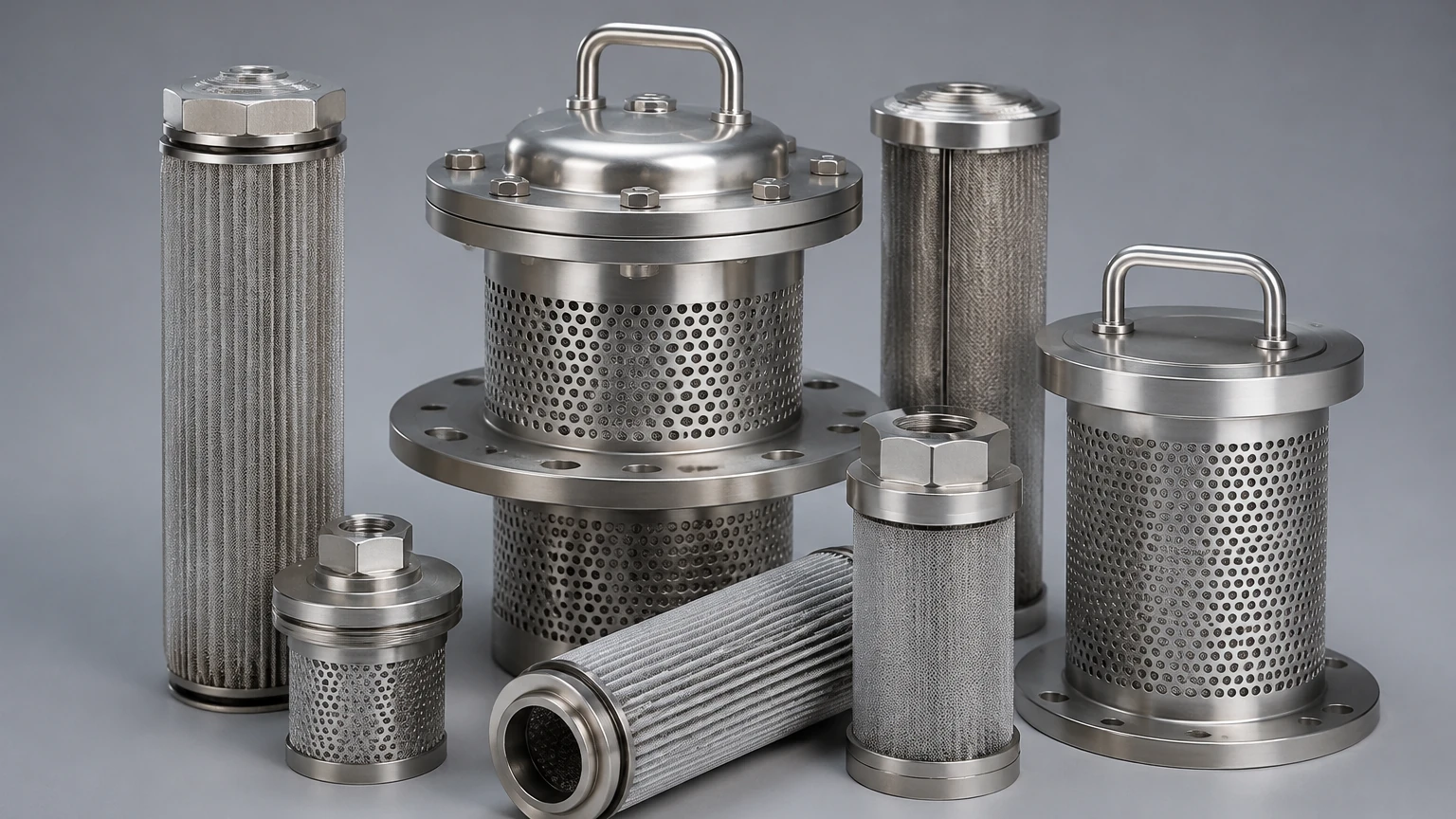
The gas then passes through high-efficiency filter cartridges. In many high-performance systems, these are constructed from pleated stainless steel wire mesh or sintered metal fibers. These elements perform two functions: they trap fine solid particulates through direct interception and facilitate coalescence. During coalescence, small liquid aerosols collide with the fine metal fibers, merging into larger droplets. These droplets then migrate through the media and eventually drop out of the gas stream due to gravity.
Stage Three: Final Mist Elimination
In some configurations, a final mist extractor or vane pack is situated at the outlet. This ensures that any remaining re-entrained droplets are captured before the gas exits the vessel. The synergy between these stages allows the system to achieve high removal efficiencies, often exceeding 99.9% for particles and droplets down to 1-3 microns.
The Role of Stainless Steel Filtration Media
The choice of material for the internal filter elements is perhaps the most significant factor in the total cost of ownership and reliability of a gas filter separator. While synthetic or fiberglass elements are common, stainless steel components offer distinct advantages in industrial B2B applications.
Durability and Pressure Resistance
Industrial gas streams often operate under high pressure and may experience sudden pressure surges. Stainless steel filter cartridges, particularly those manufactured by Kaifil, provide the structural rigidity necessary to withstand high differential pressures without collapsing or bypassing. This is especially critical in hydraulic and high-pressure chemical processing applications.
Chemical Compatibility and Corrosion Resistance
Gas streams frequently contain corrosive elements such as hydrogen sulfide (H2S), carbon dioxide (CO2), or various chemical vapors. Using 304 or 316L stainless steel ensures that the filter media does not degrade over time. This corrosion resistance prevents secondary contamination that can occur when inferior materials break down and release fibers into the downstream flow.
Cleanability and Reusability
Unlike disposable fiberglass elements, stainless steel wire mesh filters can often be cleaned and returned to service. This reduces waste and long-term procurement costs. For technical teams, the ability to perform ultrasonic cleaning or backwashing on metal filter elements provides a sustainable alternative to frequent cartridge replacements.
Critical Engineering Parameters for Filter Selection
When specifying components for a gas filter separator, engineers must look beyond basic dimensions. Several technical parameters dictate whether a filter will perform as expected under actual field conditions.
1. Micron Rating and Efficiency: It is important to distinguish between nominal and absolute micron ratings. For critical protection of gas turbines, an absolute rating is often required to ensure no particles above a specific size pass through.
2. Flux Rate and Velocity: The gas velocity through the filter media must be carefully controlled. If the velocity is too high, it can prevent effective coalescence and lead to "carry-over," where liquids are re-entrained into the gas stream.
3. Clean Differential Pressure (DP): A well-designed filter element should offer low initial resistance to flow. High initial DP reduces the available operating life of the filter and increases energy consumption for the upstream compression system.
4. Temperature Limits: In applications like steam filtration or high-temperature chemical synthesis, the seals and the media must remain stable. Stainless steel elements excel in these environments where polymers would fail.
Customization Options for Demanding Industrial Environments
Standard off-the-shelf filtration products often fail to meet the specific nuances of a unique industrial process. Customization is a core strength of Kaifil’s manufacturing approach. When a standard gas filter separator element does not fit the required flow profile or chemical environment, custom engineering becomes necessary.
Tailored Mesh Weaves
Depending on whether the primary goal is solid removal or liquid coalescing, the weave of the stainless steel wire mesh can be adjusted. Plain weaves, dutch weaves, and twilled weaves each offer different balances of flow rate and filtration fineness.
Structural Reinforcement
For high-vibration environments or systems with frequent flow reversals, filter cartridges can be designed with internal perforated cores and external shrouds. These reinforcements ensure that the pleated media remains intact and the pleats do not bunch, which would otherwise reduce the effective filtration area.
Custom End Caps and Sealing
The interface between the filter element and the vessel housing is a common point of failure. Custom-machined end caps—including threaded, flanged, or bayonet-style fittings—ensure a leak-proof seal. The choice of O-ring material (Viton, EPDM, PTFE) must also be matched to the gas composition.
Maintenance and Total Cost of Ownership (TCO)
From a purchasing perspective, the initial price of a stainless steel filter element is higher than that of a disposable synthetic filter. However, the Total Cost of Ownership (TCO) often favors metal filtration in the long run.
Replacement Cycles
Disposable filters require frequent change-outs, which involve not only the cost of the part but also labor costs and system downtime. Stainless steel elements are designed for longevity. In many gas filter separator applications, a high-quality metal cartridge can last for years with proper maintenance.
Monitoring Performance
Operators should monitor the differential pressure across the filter separator. A sudden drop in DP might indicate a ruptured element or a seal failure (bypass), while a rapid increase suggests heavy contamination or "slugging." Establishing a baseline DP for a clean system allows for predictive maintenance scheduling, preventing emergency shutdowns.
Applications Across Industrial Sectors
Gas filter separators are ubiquitous in any industry where gas purity is a prerequisite for process stability.
* Chemical Processing: Protecting catalysts from oil and water contamination in feed gas streams.
* Food and Beverage: Ensuring that CO2 used in carbonation or nitrogen used for blanketing is free of particulates and moisture.
* Pharmaceuticals: Maintaining sterile gas environments by removing fine contaminants from process air.
* Power Generation: Protecting fuel gas nozzles in turbines from erosion caused by fine solids.
By focusing on high-quality manufacturing and material integrity, Kaifil supports these industries with reliable filtration components that meet rigorous standards. For more information on specific filtration solutions and to Review product options and application support, visiting the Main Page provides a comprehensive overview of available custom capabilities.
Conclusion
The gas filter separator is a sophisticated piece of equipment that requires high-quality internal components to function effectively. By understanding the principles of coalescing, the advantages of stainless steel media, and the importance of custom engineering, technical professionals can optimize their filtration processes. Choosing the right partner for these components ensures that the system provides maximum protection for downstream assets while minimizing operational costs and downtime. Whether you are designing a new system or looking to upgrade existing filter elements, focusing on material durability and precision design is the key to successful industrial gas separation.
