


Skid Water
In modern industrial processing, the transition toward modularity has redefined how water treatment and filtration systems are designed, deployed, and maintained. The term "skid water" refers to water treatment or filtration systems that are pre-assembled on a structural steel frame (the skid). These systems are engineered to be self-contained, integrating pumps, piping, valves, control systems, and, most critically, high-performance filtration components. For engineers and procurement professionals, understanding the technical nuances of these skid-mounted systems is essential for ensuring operational reliability in demanding environments such as chemical processing, pharmaceutical manufacturing, and large-scale food production.
By centralizing the filtration process onto a portable or fixed skid, facilities can achieve higher precision in water quality management while reducing on-site installation time. However, the effectiveness of any skid water system is fundamentally dictated by the quality and specification of its internal filtration media. Stainless steel wire mesh filters and precision metal cartridges are often the preferred choice for these applications due to their durability and ability to withstand the rigorous cleaning cycles required in industrial settings.
Understanding Skid-Mounted Water Treatment Systems
Skid-mounted water systems are designed to address the complexities of industrial fluid management by providing a plug-and-play solution. Unlike traditional field-erected systems, a skid water assembly is fabricated and tested in a controlled factory environment before being shipped to the site. This approach minimizes the risk of installation errors and ensures that the filtration performance meets the specified engineering standards from day one.
The primary advantage of a skid-mounted configuration is its spatial efficiency. In many industrial plants, floor space is a premium. By stacking components and optimizing the piping layout within a rigid frame, engineers can fit a high-capacity filtration system into a significantly smaller footprint. Within these systems, the filtration stage is often the most critical, acting as the primary defense against particulate contamination that could damage downstream equipment or compromise product purity.
The Role of Stainless Steel Filtration in Skid Water Systems
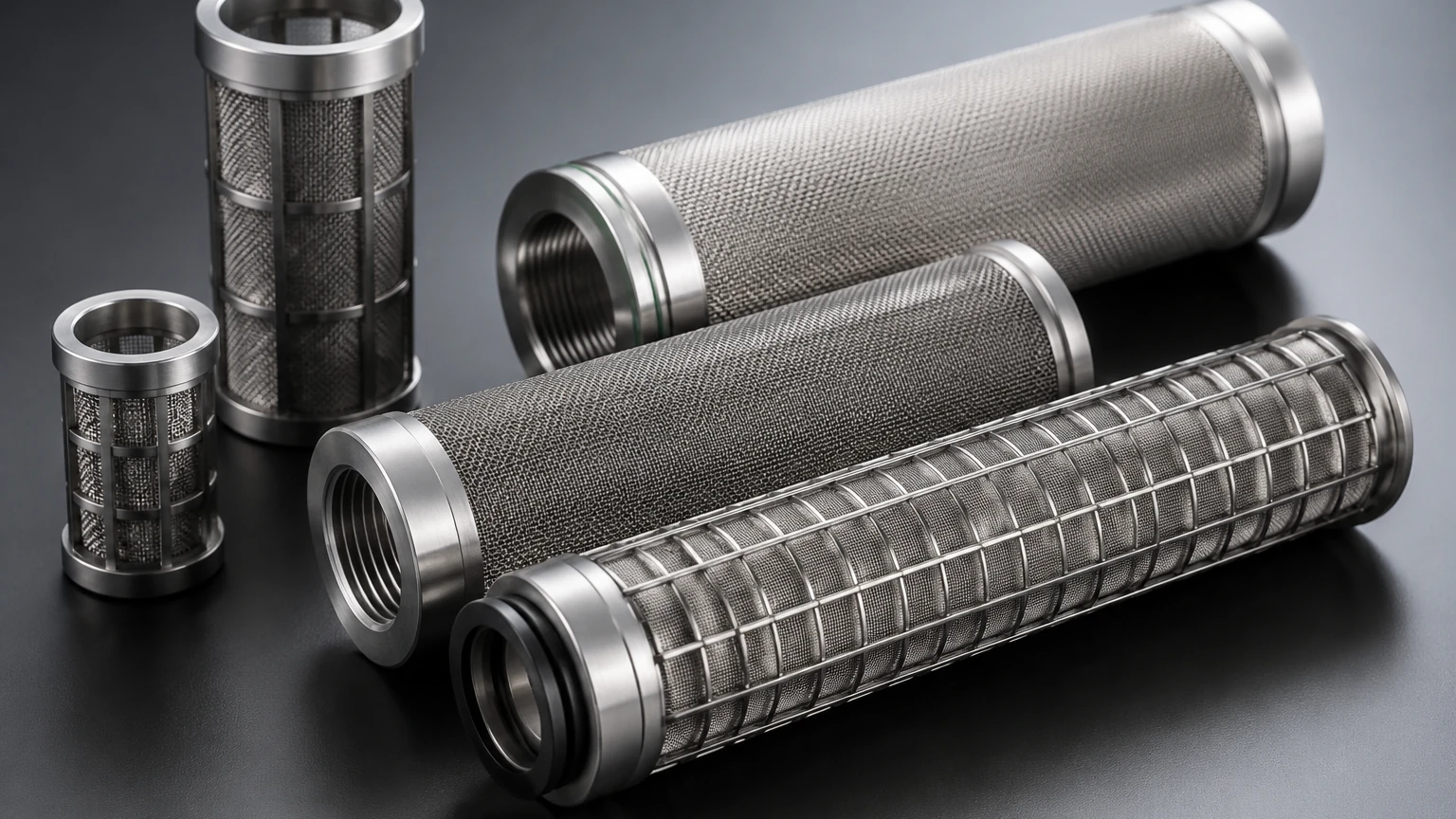
For industrial skid water applications, the choice of filtration material is paramount. While polymer-based filters are common in light-duty applications, industrial skids frequently require the mechanical strength and thermal stability provided by stainless steel. Stainless steel filter cartridges and wire mesh components offer several distinct advantages:
1. Mechanical Integrity: Industrial water systems often operate under high pressure or experience significant pressure surges. Stainless steel components resist deformation and structural failure under these conditions.
2. Thermal Resistance: Many skid-mounted systems process hot process water or undergo Steam-In-Place (SIP) sterilization. Metal filters maintain their pore structure and filtration accuracy at temperatures that would melt or degrade synthetic media.
3. Chemical Compatibility: In chemical processing and pharmaceutical applications, the water may contain solvents, cleaning agents, or pH extremes. 304 or 316L stainless steel provides the necessary corrosion resistance to prevent media migration and contamination.
When evaluating components for a skid water system, engineers should prioritize manufacturers who specialize in custom stainless steel solutions. For more information on tailored filtration components, visit the Main Page.
Critical Selection Parameters for Engineers
Selecting the right filtration component for a skid water system requires a deep dive into technical specifications. It is not enough to simply choose a filter based on a nominal micron rating. Engineers must consider the following factors to ensure long-term performance:
Micron Rating: Absolute vs. Nominal
In industrial filtration, the distinction between absolute and nominal ratings is vital. A nominal rating refers to a filter's ability to retain a percentage of particles of a certain size, whereas an absolute rating indicates the diameter of the largest spherical particle that can pass through the filter. For critical skid water applications, such as protecting high-pressure nozzles or membrane systems, absolute-rated stainless steel mesh is typically required to prevent bypass.
Effective Filtration Area (EFA)
The EFA determines the flow capacity and the dirt-holding capacity of the filter. A larger EFA results in a lower flux (flow per unit area), which generally extends the interval between cleaning or replacement cycles. Pleated stainless steel cartridges are often used in skid water systems to maximize EFA within a compact housing, providing a high surface area without increasing the overall skid dimensions.
Differential Pressure (ΔP)
The clean pressure drop across the filter media must be calculated to ensure the skid's pump system is appropriately sized. As the filter accumulates contaminants, the differential pressure increases. Engineers must define the maximum allowable ΔP before the system triggers a backwash cycle or requires manual cleaning. High-quality wire mesh filters are designed to minimize initial ΔP while maintaining structural rigidity during the high-pressure conditions of a terminal pressure drop.
Industry-Specific Applications and Performance Expectations
Skid water systems serve diverse roles across various industries, each with unique filtration requirements. Understanding these specific needs helps in selecting the correct metal filtration components.
* Chemical Processing: In this sector, skid water systems are used for cooling water filtration, catalyst recovery, and process water purification. The filters must be resistant to aggressive chemicals and capable of handling high solids loading. Sintered wire mesh is often used here for its exceptional strength and precise pore distribution.
* Food and Beverage: Filtration in this industry focuses on removing suspended solids and ensuring biological safety. Stainless steel filters are preferred because they are easy to clean and do not shed fibers or particles into the product stream. They must comply with hygienic design standards to prevent bacterial growth in "dead zones."
* Pharmaceuticals: The requirements here are the most stringent. Skid-mounted systems for Purified Water (PW) or Water for Injection (WFI) require high-grade 316L stainless steel components with specific surface finishes (often electropolished) to ensure sterility and prevent biofilm formation.
* Hydraulic and Cooling Systems: In heavy machinery, skid water systems protect heat exchangers from scaling and particulate buildup. Durable wedge wire or coarse mesh filters are often employed as pre-filters to remove larger debris before finer filtration stages.
Technical Challenges and Risk Mitigation
Operating a skid water system involves managing several technical risks. One of the most common issues is "blinding" or clogging of the filter media. If the filtration accuracy is too fine for the incoming water quality, the system will require frequent maintenance, leading to increased operational costs. Conversely, if the filtration is too coarse, downstream components may be damaged.
To mitigate these risks, engineers should perform a thorough water analysis before finalizing the skid design. This includes measuring Total Suspended Solids (TSS), particle size distribution (PSD), and chemical composition. Based on this data, a multi-stage filtration approach can be implemented on the skid, using a coarse stainless steel pre-filter to protect a finer secondary filter.
Another risk is corrosion, particularly in systems handling brackish water or high-chloride fluids. In these cases, standard 304 stainless steel may be insufficient, and 316L or even high-nickel alloys may be necessary for the filter components to prevent pitting and stress corrosion cracking.
Customization and OEM Integration for Skid Manufacturers
Most skid water systems are not "off-the-shelf" products but are customized to meet the specific needs of a facility. This customization extends down to the filtration components. OEM manufacturers of stainless steel filters work closely with skid builders to provide bespoke solutions, including:
* Custom Dimensions: Tailoring the length and diameter of filter cartridges to fit specific housing constraints within the skid.
* End-Cap Configurations: Designing custom fittings (such as 222, 226, or threaded connections) to ensure a leak-proof seal and ease of installation.
* Reinforced Structures: Adding internal support cores or external cages to filters that will be subjected to extreme backwashing pressures or high-viscosity fluids.
By collaborating with a specialized manufacturer, skid builders can ensure that the filtration stage is perfectly matched to the system's flow dynamics and performance goals.
Maintenance and Total Cost of Ownership (TCO) Considerations
When evaluating the cost of a skid water system, engineers must look beyond the initial purchase price and consider the Total Cost of Ownership (TCO). While stainless steel filters have a higher upfront cost than disposable polymer filters, their long-term value is often superior.
Stainless steel media is cleanable and reusable. Methods such as backpulsing, ultrasonic cleaning, or chemical soaking can restore the filter to near-original performance levels. This eliminates the recurring cost of purchasing, storing, and disposing of single-use cartridges. Furthermore, the durability of metal filters reduces the risk of unscheduled downtime caused by filter failure, which can be far more expensive than the cost of the components themselves.
To optimize the replacement cycle, skid water systems should be equipped with differential pressure sensors and automated monitoring. This allows maintenance teams to clean the filters based on actual loading rather than a fixed time interval, maximizing the lifespan of the media and ensuring consistent water quality.
Conclusion
Skid water systems represent a sophisticated approach to industrial water management, offering modularity, efficiency, and high performance. The heart of these systems—the filtration media—must be selected with technical precision to withstand the demands of industrial environments. Stainless steel wire mesh and metal filter cartridges provide the necessary durability, chemical resistance, and filtration accuracy required for critical applications. By focusing on engineering parameters such as absolute micron ratings, material compatibility, and ease of maintenance, professionals can ensure their skid-mounted systems deliver reliable service and a low total cost of ownership.
