


Gasoline Separator
In industrial fluid management, the gasoline separator serves as a critical component for ensuring fuel purity, environmental compliance, and the protection of downstream equipment. Whether utilized in refinery processes, bulk storage terminals, or complex chemical processing plants, the efficiency of a gasoline separator depends heavily on the internal filtration and separation media. For engineers and procurement specialists, understanding the technical nuances of these systems—ranging from coalescence principles to material compatibility—is essential for optimizing operational uptime and minimizing the total cost of ownership.
Industrial gasoline separators are primarily designed to remove two types of contaminants: solid particulates and water. Water contamination in gasoline is particularly problematic, as it can lead to microbial growth, corrosion of storage tanks, and catastrophic failure of high-pressure injection systems or industrial engines. To address these challenges, high-performance separators utilize specialized stainless steel components and multi-stage filtration architectures.
Core Principles of Gasoline Separation
The separation of gasoline from water and solids typically relies on three physical mechanisms: gravity separation, impingement, and coalescence.
Gravity Separation
Gravity separation is the most basic form of treatment, utilizing the difference in specific gravity between gasoline (typically 0.71–0.77) and water (1.0). In a quiescent state, water droplets will naturally settle at the bottom of a vessel. However, gravity alone is often insufficient for industrial flow rates or when water is emulsified into very fine droplets.
Mechanical Coalescence
This is where advanced filtration media, such as those manufactured by Kaifil, become vital. A gasoline separator equipped with coalescing elements forces the fluid through a dense matrix of fibers or wire mesh. As small water droplets pass through the media, they are intercepted by the fibers and merge into larger droplets. Once these droplets reach a sufficient mass, they overcome the flow velocity and settle out of the gasoline stream.
Particulate Filtration
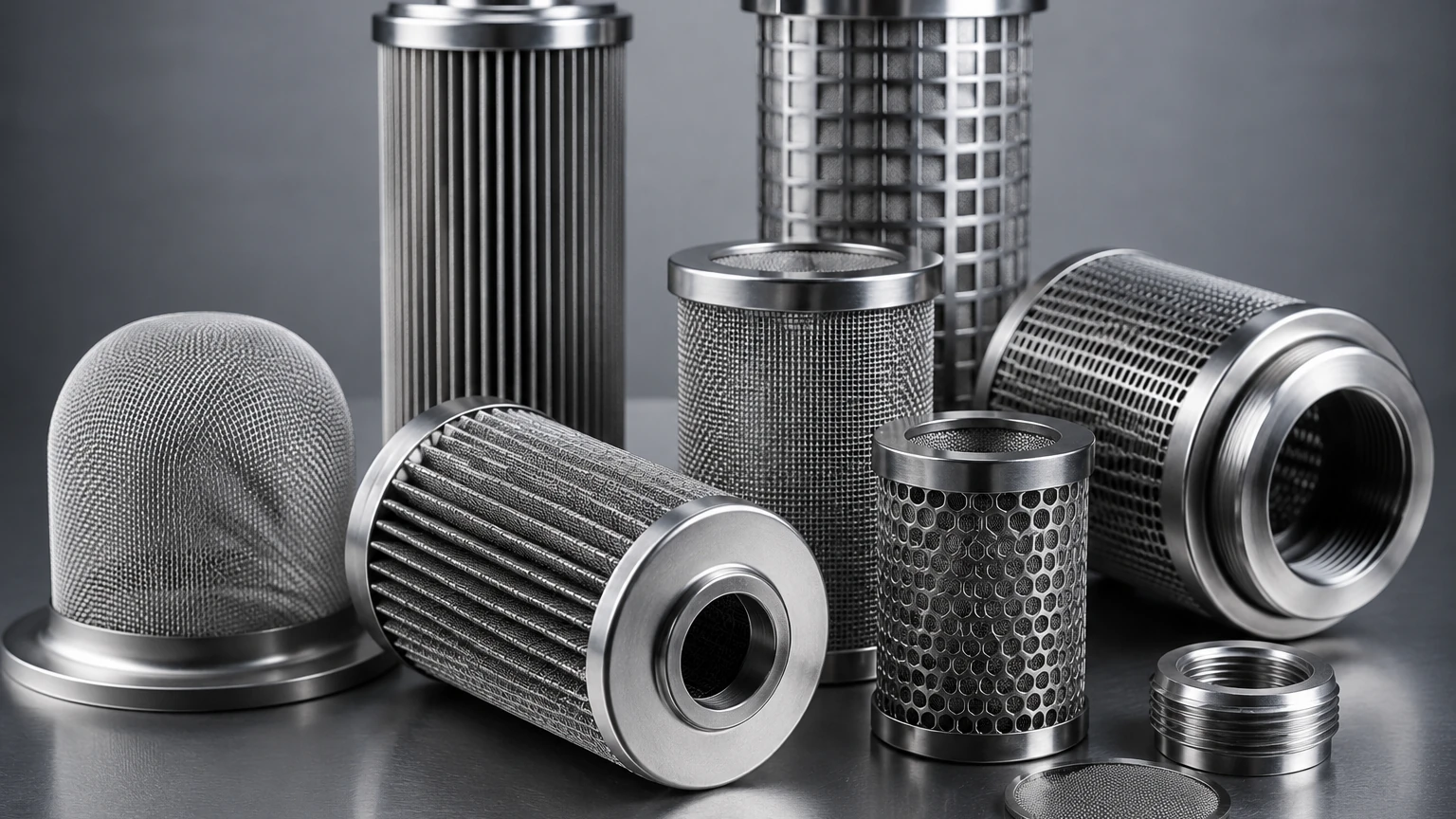
Before the fluid reaches the coalescing stage, it must pass through a particulate filter. Solid contaminants like rust, scale, and sand can clog the fine pores of a coalescer, significantly reducing its lifespan. Therefore, a robust gasoline separator is often a multi-stage system that integrates high-precision stainless steel filter cartridges to ensure only clean fluid reaches the separation stage.
Engineering Considerations for Material Selection
When specifying components for a gasoline separator, material selection is the most critical factor in determining the longevity and reliability of the system. While various materials can be used for filtration, stainless steel remains the industry standard for demanding B2B applications.
Chemical Resistance and Corrosion
Gasoline, particularly when blended with ethanol or other additives, can be chemically aggressive. Furthermore, the presence of water at the separation interface creates a high risk of localized corrosion. Utilizing Grade 304 or Grade 316 stainless steel ensures that the internal mesh and support structures do not degrade over time. Unlike polymer-based filters, stainless steel does not leach chemicals into the fuel and maintains its structural integrity even when exposed to high-sulfur gasoline or acidic contaminants.
Temperature and Pressure Stability
Industrial processes often involve fluctuating temperatures and high differential pressures. Stainless steel wire mesh filters provide the mechanical strength necessary to withstand pressure surges without deforming. This stability ensures that the pore size remains consistent, preventing "media migration"—a common failure in lower-quality filters where fibers break off and contaminate the downstream fluid.
The Role of Stainless Steel Wire Mesh in Separation
The internal architecture of a gasoline separator often relies on precision-engineered wire mesh. The geometry of the mesh—including the weave type and wire diameter—directly impacts the separation efficiency.
1. Plain Weave Mesh: Often used for primary straining and coarse particulate removal, providing high flow rates with minimal pressure drop.
2. Dutch Weave Mesh: This configuration offers a much higher degree of filtration precision. The dense packing of wires creates a tortuous path that is ideal for trapping fine solids and facilitating the initial stages of coalescence.
3. Sintered Mesh: For the most demanding environments, multiple layers of wire mesh are sintered together to create a rigid, porous plate. This is frequently used in high-pressure gasoline separators where the filter must be cleaned and reused multiple times.
By selecting the appropriate mesh configuration, engineers can balance the need for high filtration accuracy with the requirement for manageable maintenance cycles. For a broader look at how these components integrate into various industrial systems, you can review product options and application support on our Main Page.
Performance Evaluation Criteria
To accurately assess the effectiveness of a gasoline separator, technical teams must look beyond simple flow rates. The following metrics are standard in the industrial filtration sector:
Beta Ratio and Micron Rating
The micron rating indicates the size of particles the filter can trap. However, the Beta Ratio (β) provides a more accurate picture of efficiency by comparing the number of particles upstream versus downstream. A high Beta Ratio (e.g., β75 or β1000) is necessary for gasoline separators used in sensitive pharmaceutical or aerospace fuel applications.
Water Removal Efficiency
This is usually expressed as a percentage or in parts per million (ppm). A high-efficiency gasoline separator should be capable of reducing water content from several thousand ppm down to less than 15 ppm, depending on the specific industry requirements and downstream equipment tolerances.
Differential Pressure (ΔP)
The pressure drop across the filter media is a key indicator of energy consumption and filter life. A well-designed gasoline separator will have a low initial ΔP. As the filter accumulates contaminants, the ΔP increases; monitoring this allows operators to schedule maintenance before the system reaches a critical bypass state.
Customization and OEM Integration
No two industrial applications are identical. A gasoline separator used in a marine refueling station faces different challenges than one integrated into a chemical refinery. Customization is often required to meet specific spatial constraints or fluid dynamics.
* Custom Housing Sizes: Adapting the separator vessel to fit existing piping layouts.
* Specialized End Caps: Ensuring the filter cartridges interface perfectly with the internal manifold of the separator.
* Variable Layering: Adjusting the number of mesh layers in a sintered element to target specific contaminant profiles found in unique gasoline blends.
Manufacturers like Kaifil specialize in these customized solutions, providing the engineering support needed to transition from a generic design to a high-performance, application-specific filtration component.
Maintenance and Total Cost of Ownership (TCO)
While the initial purchase price of a gasoline separator is a significant factor, the long-term TCO is driven by maintenance requirements and replacement parts. Stainless steel components offer a distinct advantage in this regard because they are often cleanable and reusable.
Cleaning Protocols
Unlike disposable paper or glass-fiber elements, stainless steel mesh can be cleaned using ultrasonic baths, backwashing, or chemical solvents. This capability significantly extends the service life of the internal components and reduces the volume of hazardous waste generated by the facility.
Replacement Cycles
Predicting replacement cycles requires a thorough understanding of the contaminant loading in the gasoline stream. By installing differential pressure gauges and sampling ports, engineers can move from reactive maintenance to a predictive model. This ensures that the gasoline separator always operates within its peak efficiency range, protecting expensive downstream pumps and turbines from damage.
Technical Challenges in Gasoline Separation
Engineers must also account for the presence of surfactants in gasoline. Surfactants (surface-active agents) can lower the interfacial tension between water and gasoline, making it extremely difficult for traditional coalescers to function. In such cases, the gasoline separator may require specialized coatings or modified mesh surfaces to break the emulsion.
Furthermore, the rise of biofuels and ethanol-blended gasoline has introduced new complexities. Ethanol is hygroscopic, meaning it attracts water. In high-ethanol blends, water can become chemically bound to the fuel, requiring more sophisticated separation technologies than standard gravity or mechanical coalescence can provide.
Conclusion
The gasoline separator is a vital safeguard in industrial fluid processing. By focusing on high-quality stainless steel filtration media, precise engineering specifications, and a clear understanding of the physical principles of separation, organizations can ensure the purity of their fuel and the longevity of their infrastructure. Selecting the right components—whether for a new installation or an OEM upgrade—requires a partner with deep technical expertise in metal filtration solutions. For detailed specifications on the mesh and cartridges that drive these systems, visit the Kaifil Main Page.
