


Gas Purifiers
In modern industrial environments, the requirement for high-purity gases is a fundamental necessity rather than a luxury. Industrial gas purifiers are engineered systems designed to remove contaminants—such as moisture, oxygen, carbon dioxide, hydrocarbons, and particulate matter—from a gas stream to achieve specific purity levels, often reaching 99.9999% (6N) or higher. For engineers and procurement specialists, understanding the technical nuances of these systems is essential for ensuring process stability, protecting sensitive downstream equipment, and maintaining product integrity.
Gas purification is not a one-size-fits-all process. The selection of a purifier depends heavily on the type of gas being processed, the specific impurities present, and the required flow rates. Whether the application involves semiconductor fabrication, pharmaceutical synthesis, or high-pressure hydraulic systems, the efficiency of the gas purifier is often determined by the quality of its internal components, particularly the filtration media and the housing materials.
The Critical Role of Gas Purification in Industrial Processes
Contaminants in process gases can lead to catastrophic failures in industrial applications. In the chemical industry, even trace amounts of moisture or oxygen can poison expensive catalysts, leading to reduced yields or complete batch loss. In the semiconductor sector, sub-micron particles can cause defects in wafer production, significantly impacting profitability.
Gas purifiers serve as the primary line of defense. They utilize various mechanisms to ensure that the gas reaching the point of use meets stringent quality standards. Beyond protecting the final product, these systems also safeguard analytical instruments, such as gas chromatographs and mass spectrometers, which are highly sensitive to baseline noise caused by impurities.
From an engineering perspective, a gas purifier must be viewed as a balanced system where pressure drop, removal efficiency, and service life are optimized. A well-designed purifier minimizes the total cost of ownership by reducing the frequency of media replacement and preventing downtime in the production line.
Core Technologies in Gas Purifier Design
Gas purifiers employ several distinct technologies to target specific contaminants. Most industrial systems utilize a combination of these methods to achieve ultra-high purity levels.
Adsorption and Chemisorption
Adsorption involves the physical or chemical bonding of impurity molecules to the surface of a solid medium, known as an adsorbent. Common materials include molecular sieves, activated alumina, and silica gel. Chemisorption takes this a step further by involving a chemical reaction between the impurity and the purifier medium, often used for the removal of oxygen and reactive gases. These media are typically housed in stainless steel vessels designed to withstand high pressures.
Catalytic Purification
Catalytic purifiers use a catalyst bed to facilitate a chemical reaction that converts impurities into a more easily removable form. For example, trace hydrogen and oxygen can be reacted over a noble metal catalyst to form water, which is then removed by a downstream desiccant dryer. This method is highly effective for bulk gas purification where large volumes of gas must be processed continuously.
Mechanical Filtration
Mechanical filtration is the process of removing solid particulates from the gas stream. This is where precision-engineered components, such as those found on the Main Page of specialized manufacturers, become critical. High-efficiency particulate air (HEPA) or ultra-low penetration air (ULPA) filters are often integrated into gas purifiers to ensure that no media fines or external dust particles exit the system. Stainless steel wire mesh and sintered metal filters are preferred in these applications due to their durability and ability to operate under extreme temperatures and pressures.
Material Engineering for High-Purity Gas Systems
The materials used in the construction of gas purifiers must be carefully selected to prevent secondary contamination. In high-purity applications, the phenomenon of outgassing—where the material itself releases trapped gases—can compromise the purity of the process gas.
Stainless Steel 316L
Stainless steel 316L is the industry standard for gas purifier housings and internal filtration components. Its low carbon content and the addition of molybdenum provide excellent corrosion resistance, particularly against acidic or halogenated gases. Furthermore, 316L can be electropolished to a mirror-like finish, reducing the internal surface area and minimizing the potential for particle entrapment or gas adsorption.
Sintered Metal Media
For the filtration stages within gas purifiers, sintered metal fiber felt and multi-layer wire mesh are frequently utilized. These materials offer a unique combination of high porosity and high mechanical strength. Unlike polymer-based filters, sintered stainless steel components do not shed fibers and can withstand high-pressure differentials without deforming. This makes them ideal for the final filtration stage in a gas purifier, where absolute particle retention is required.
Performance Evaluation: Flow, Pressure, and Efficiency
When evaluating gas purifiers, engineers must analyze several key performance metrics to ensure the system is compatible with their specific application.
1. Filtration Rating (Micron Rating): This defines the size of particles the purifier can effectively remove. In high-purity gas systems, absolute ratings are preferred over nominal ratings to ensure consistent performance. For gas purifiers, ratings often go down to 0.003 microns for specialized semiconductor applications.
2. Differential Pressure (Delta P): Every filter or purifier bed introduces resistance to the gas flow. A high initial pressure drop can limit the maximum flow rate and increase energy costs. It is essential to select a purifier that provides the required purity while maintaining a low pressure drop across its operational life.
3. Flow Capacity: The purifier must be sized to handle the peak flow requirements of the facility. Undersized purifiers will lead to excessive gas velocity, which can reduce the contact time with the purification media and lower the overall efficiency.
4. Inlet and Outlet Concentrations: The purifier’s effectiveness is measured by its ability to reduce impurities from a known inlet concentration to a target outlet level (e.g., from 10 ppm to <1 ppb).
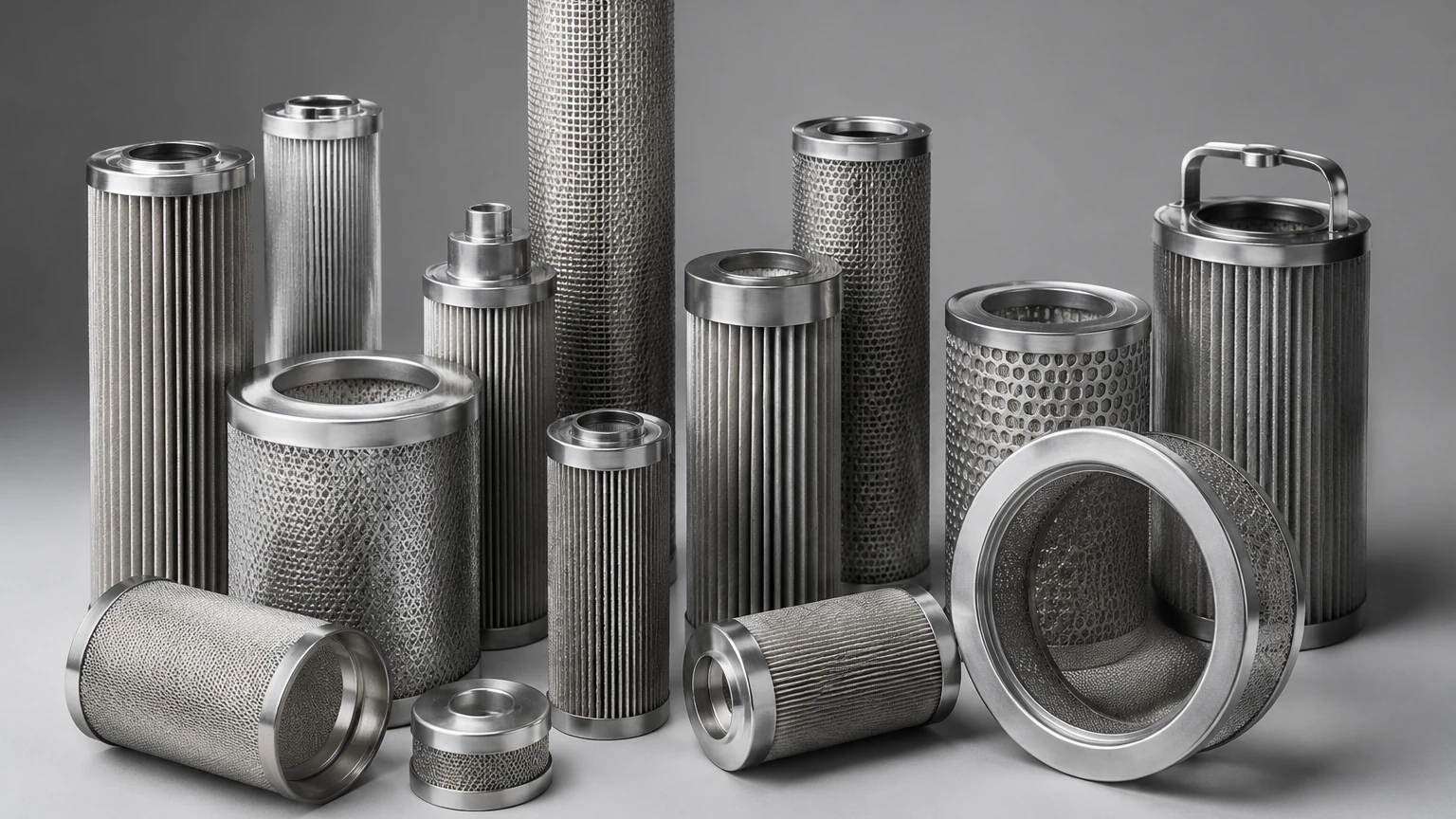
Custom Filtration Components for Gas Purifiers
Many industrial applications require customized gas purifiers tailored to unique environmental conditions or specific gas chemistries. Off-the-shelf solutions may not always provide the necessary chemical compatibility or mechanical footprint required for integrated systems.
Customization options often include:
* Variable End Fittings: Integration of VCR, NPT, or flange connections to match existing piping.
* Specialized Alloys: Use of Hastelloy or Inconel for extremely corrosive gas streams where even 316L stainless steel may fail.
* Bespoke Geometry: Designing filter cartridges and purifier beds to fit within restricted spatial envelopes in OEM equipment.
Manufacturers like Kaifil specialize in developing these custom stainless steel filtration solutions, ensuring that the internal components of a gas purifier are precisely engineered for the intended flow dynamics and contaminant load. By working closely with an OEM partner, engineers can develop filtration components that balance high surface area with compact design, effectively extending the service life of the gas purifier.
Industry Applications and Compliance Standards
Gas purifiers are utilized across a broad spectrum of industries, each with its own set of standards and regulatory requirements.
Semiconductor and Electronics
In the semiconductor industry, gas purity is measured in parts per trillion (ppt). Gas purifiers used here must meet Ultra-High Purity (UHP) standards. The filtration components must be manufactured in cleanroom environments and undergo rigorous helium leak testing to ensure system integrity.
Pharmaceutical and Biotechnology
For life sciences, gas purifiers must often comply with FDA and USP standards. Nitrogen, oxygen, and CO2 used in bioreactors or packaging must be free of microbial contaminants and oil vapors. Stainless steel filters are preferred here because they can be sterilized using steam-in-place (SIP) or autoclaving processes without degrading.
Food and Beverage
In food grade applications, such as nitrogen blanketing or carbonation, gas purifiers ensure that the gases are free of odors, moisture, and particulates. Compliance with food safety regulations (such as EC 1935/2004) is mandatory for all materials that come into contact with the gas stream.
Maintenance Cycles and Operational Efficiency
The longevity of a gas purifier is directly related to the quality of its maintenance and the cleanliness of the incoming gas. Most purifiers feature a finite capacity for removing chemical impurities, after which the media must be regenerated or replaced.
Monitoring Pressure Drop
One of the most effective ways to monitor the health of a gas purifier is by tracking the differential pressure. An unexpected increase in Delta P usually indicates particulate loading in the filter stages, while a sudden drop could indicate a breach in the filter media. Integrated pressure sensors allow for real-time monitoring and predictive maintenance scheduling.
Replacement Cycles
The replacement cycle for gas purifier cartridges depends on the impurity load. In systems where the inlet gas is relatively clean, a purifier may last for several years. However, in heavy industrial applications, pre-filtration is often used to extend the life of the primary gas purifier. Using high-quality stainless steel pre-filters can capture bulk contaminants, allowing the more expensive purification media to focus on trace-level impurities.
Total Cost of Ownership (TCO)
When purchasing gas purifiers, it is important to look beyond the initial capital expenditure. TCO includes the cost of replacement media, the energy cost associated with pressure drop, and the potential cost of production downtime. Investing in high-quality, durable stainless steel components often results in a lower TCO due to reduced maintenance requirements and longer service intervals.
Conclusion
Gas purifiers are essential components in the pursuit of industrial precision and product quality. By understanding the underlying technologies, material requirements, and performance metrics, technical professionals can make informed decisions that optimize their gas delivery systems. The integration of high-performance stainless steel filtration components is a key factor in achieving reliable, long-term gas purity. For those seeking to enhance their filtration systems or develop custom OEM solutions, reviewing professional manufacturing capabilities and technical specifications is the recommended next step in ensuring process excellence.
