


Hastelloy C276 Simplex Basket Strainers
In industrial fluid handling, the selection of filtration hardware is dictated by the chemical aggressiveness and thermal demands of the process media. While standard stainless steels like 304 or 316 are sufficient for many water-based or mildly corrosive applications, they often fail in environments involving hot acids, chlorides, or highly oxidizing salts. For these critical applications, hastelloy c276 simplex basket strainers represent an engineered solution designed to ensure system integrity and protect downstream equipment such as pumps, valves, and heat exchangers.
Hastelloy C276 is a nickel-molybdenum-chromium superalloy with an addition of tungsten, specifically designed to provide excellent corrosion resistance in a wide range of severe environments. When integrated into a simplex basket strainer—a single-chamber vessel used to remove particulate matter from a liquid stream—it offers a level of durability that standard alloys cannot match.
Material Properties and Chemical Compatibility
The primary reason for specifying hastelloy c276 simplex basket strainers is the material's unique chemistry. C276 is widely considered one of the most versatile corrosion-resistant alloys available today. Its high molybdenum content (15-17%) provides exceptional resistance to pitting and crevice corrosion, which are common failure modes for stainless steel in chloride-rich environments.
Engineers must consider the specific chemical interactions within their piping systems. Hastelloy C276 remains stable in the presence of:
* Ferric and cupric chlorides: Highly aggressive oxidizing salts that quickly degrade 316L stainless steel.
* Hot contaminated organic and inorganic media: Including formic and acetic acids, acetic anhydride, and seawater.
* Wet chlorine gas: One of the few materials that can withstand the corrosive effects of wet chlorine, hypochlorite, and chlorine dioxide.
* Reducing and oxidizing atmospheres: The balanced chromium and molybdenum levels allow the alloy to perform well in both environments, making it ideal for multi-purpose chemical processing lines.
From an engineering perspective, using C276 for the strainer body and the internal basket ensures that the entire filtration unit maintains its structural integrity even when exposed to fluctuating pH levels and high temperatures.
Engineering Design of Simplex Basket Strainers
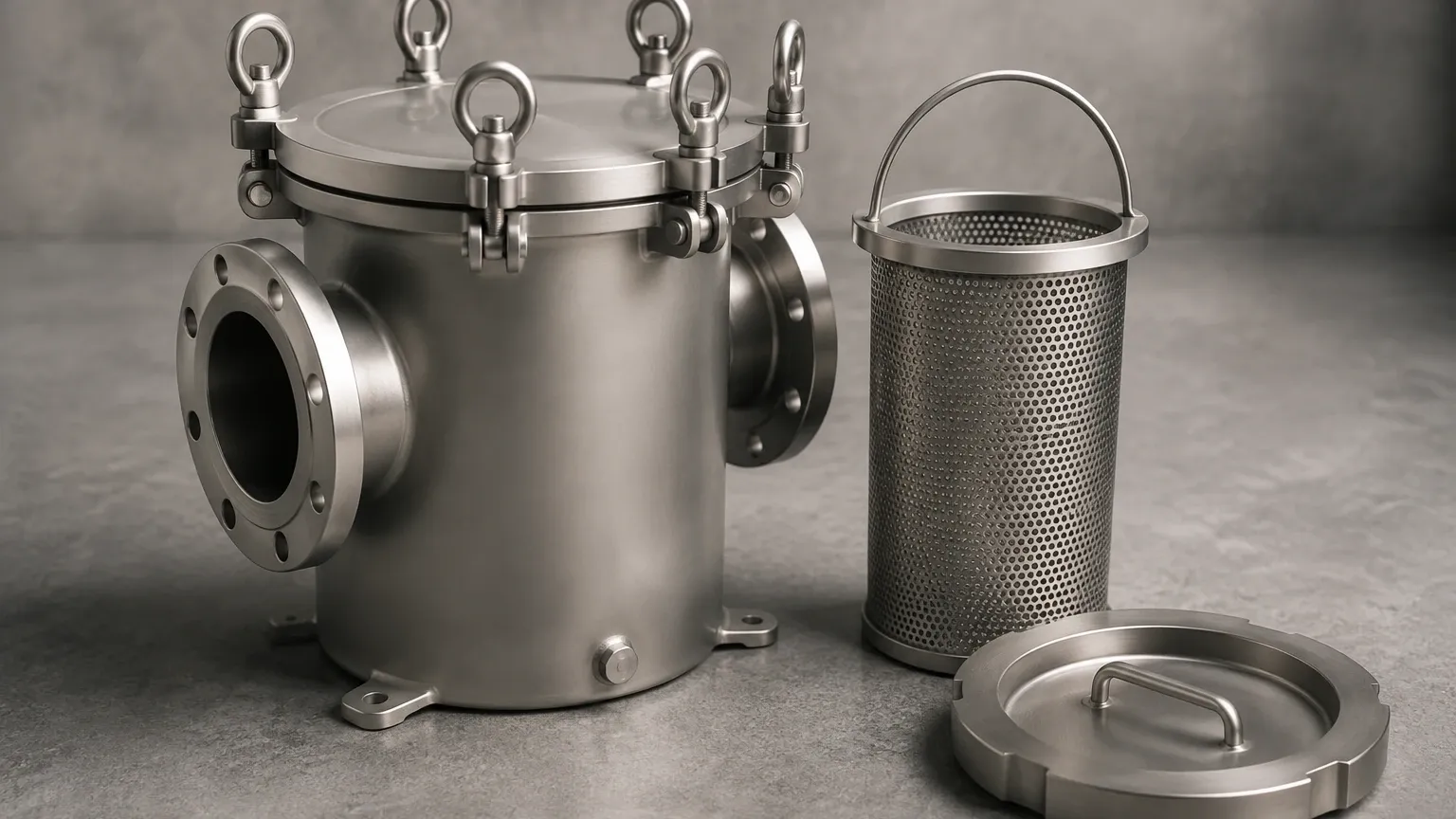
A simplex basket strainer is characterized by its single-chamber design. Unlike duplex strainers, which allow for continuous flow during cleaning, a simplex unit requires the process flow to be shut down or diverted via a bypass line to remove and clean the basket. This makes them suitable for batch processes or systems where flow can be periodically interrupted.
Flow Dynamics and Pressure Drop
When designing a system around hastelloy c276 simplex basket strainers, the clean pressure drop ($ΔP$) is a critical calculation. The pressure drop is influenced by the fluid viscosity, specific gravity, flow rate, and the open area ratio of the basket.
Engineers typically look for a "high-capacity" basket design. The ratio of the open area of the basket to the cross-sectional area of the inlet pipe should ideally be at least 6:1. A higher ratio results in a lower velocity through the mesh or perforation, which reduces the rate of pressure increase as debris accumulates. This extends the service interval between cleanings and reduces the mechanical stress on the basket material.
Connection Types and Pressure Ratings
Depending on the system requirements, these strainers are available with various connection types, including:
* Flanged Ends (ANSI/ASME B16.5): Preferred for high-pressure and high-temperature industrial applications to ensure a leak-proof seal and ease of maintenance.
* Threaded Ends (NPT): Common in smaller piping systems (typically under 2 inches) where pressure requirements are lower.
* Socket Weld: Used in applications where zero leakage is mandatory and the strainer is intended to be a permanent fixture in the line.
Filtration Accuracy and Basket Selection
The internal basket is the most critical component of the strainer. In hastelloy c276 simplex basket strainers, the basket must be constructed from the same high-grade alloy to prevent galvanic corrosion between the housing and the filter element.
Perforation vs. Mesh
Selection between a perforated plate basket and a wire mesh-lined basket depends on the required filtration fineness:
1. Perforated Plates: Typically used for coarse filtration (straining). Common hole sizes range from 1/32" to 1/4". These are robust and easy to clean mechanically.
2. Wire Mesh: For finer filtration requirements, a C276 wire mesh is sintered or welded to a perforated support basket. This allows for filtration down to 20 microns or finer.
When specifying the basket, engineers must determine the "allowable solids loading." If the process fluid contains a high concentration of fine particulates, a pleated basket design may be required to increase the effective surface area without increasing the overall footprint of the strainer housing. For comprehensive technical data on material selection and filtration performance, engineers can consult the Main Page of the manufacturer’s technical documentation.
Industrial Applications for C276 Strainers
The deployment of hastelloy c276 simplex basket strainers is prevalent in industries where the cost of equipment failure and downtime far outweighs the initial investment in premium alloys.
Chemical and Petrochemical Processing
In chemical synthesis, reactors often produce intermediate fluids that are highly acidic or contain catalytic residues. C276 strainers are used to protect downstream high-pressure pumps from these particulates. Because C276 resists the formation of grain-boundary precipitates in the weld heat-affected zone, it is particularly reliable for welded strainer housings used in chemical service.
Pharmaceutical and Food Production
While 316L is the standard for most sanitary applications, certain pharmaceutical processes involving aggressive cleaning agents or specialized chemical reactions require the enhanced resistance of Hastelloy. The alloy’s ability to withstand localized corrosion ensures that no metallic contaminants are leached into the product stream, maintaining high purity standards.
Marine and Offshore Engineering
Seawater is notoriously corrosive due to its high chloride content. Simplex strainers used in offshore platforms for cooling water systems or fire protection lines often utilize C276 to prevent the rapid pitting that occurs in standard stainless steels, especially in stagnant or low-velocity conditions during system standby.
Selection Criteria for Procurement and Engineering
Before purchasing or specifying hastelloy c276 simplex basket strainers, technical teams should confirm several parameters to ensure the hardware is fit for purpose:
1. Design Pressure and Temperature: Ensure the strainer housing is rated for the maximum surge pressure and the highest operating temperature of the process. ASME Section VIII Division 1 is a common design standard for these vessels.
2. Seal Compatibility: While the housing is C276, the O-rings or gaskets must also be compatible with the fluid. Common choices include PTFE (Teflon), Viton, or Kalrez for extreme chemical resistance.
3. Cover Type: For frequent cleaning, a "quick-opening" cover (such as a swing-bolt or clamp style) is preferred over a bolted cover to minimize downtime.
4. Vent and Drain Ports: Ensure the design includes a vent port to release pressure before opening and a drain port to empty the chamber for easier basket removal.
5. Differential Pressure Gauge Taps: Specifying NPT taps on the inlet and outlet allows for the installation of a differential pressure gauge. This provides real-time data on basket loading, allowing maintenance teams to clean the unit based on actual performance rather than an arbitrary schedule.
Total Cost of Ownership and Maintenance
The initial capital expenditure for a C276 strainer is significantly higher than that of a stainless steel unit. However, the total cost of ownership (TCO) is often lower in aggressive environments. Standard alloys may require replacement every 12 to 24 months due to corrosion-induced thinning or basket failure. In contrast, a properly specified Hastelloy C276 unit can provide a service life exceeding a decade.
Maintenance of hastelloy c276 simplex basket strainers involves regular inspection of the basket for mechanical wear and checking the integrity of the seals. Because C276 is a hard, work-hardening alloy, baskets are resistant to erosion from high-velocity particles, but they should still be inspected for any signs of "blinded" mesh (permanent clogging) that could lead to basket collapse under high differential pressure.
Customization and OEM Solutions
In many industrial settings, standard off-the-shelf strainers do not meet specific spatial or performance constraints. Custom manufacturing allows for the adjustment of nozzle orientations, the addition of heating jackets for viscous fluids (like resins or polymers), and the integration of specialized internal coatings if required.
Working with a manufacturer that understands the nuances of nickel-alloy fabrication is essential. Welding C276 requires precise gas shielding and heat input control to maintain the alloy's corrosion-resistant properties. Engineering teams should seek partners who provide full material traceability (MTRs) and adhere to international quality standards for filtration components.
By selecting hastelloy c276 simplex basket strainers, facilities can ensure the protection of their most expensive process equipment while minimizing the risks of environmental leaks and unplanned shutdowns. For detailed specifications on custom metal filtration components and industrial strainers, visit the Main Page to review available engineering resources and product capabilities.
