


How Do You Filter Sea Water
Seawater filtration is a critical process for a wide range of industrial applications, including desalination plants, offshore oil and gas platforms, marine cooling systems, and coastal power generation. The complexity of seawater—characterized by high salinity, suspended solids, organic matter, and biological organisms—requires a sophisticated, multi-stage approach to ensure the protection of downstream equipment and the efficiency of the overall system. For engineers and procurement teams, understanding how do you filter sea water involves evaluating mechanical, chemical, and material engineering factors to achieve a balance between filtration precision and operational longevity.
In industrial contexts, the primary objective of seawater filtration is often the removal of macro-impurities and fine particulates that can cause scaling, clogging, or corrosion in sensitive components like reverse osmosis (RO) membranes, heat exchangers, and high-pressure pumps. This guide explores the technical methodologies, material considerations, and engineering best practices for effective seawater filtration.
The Multi-Stage Filtration Architecture
Filtering seawater is rarely a single-step process. Due to the high variability of seawater quality—which changes based on depth, distance from the shore, and seasonal biological blooms—a robust system typically employs a series of filtration barriers. Each stage is designed to target specific particle sizes and protect the subsequent, more refined stage.
1. Intake and Coarse Pre-filtration
The first step in answering how do you filter sea water begins at the intake point. Coarse filtration, often utilizing heavy-duty screens or wedge wire strainers, is designed to remove large debris such as seaweed, shells, fish, and plastic waste. These initial filters typically operate in the range of 1mm to 10mm. The goal here is purely mechanical protection of the intake pumps and the prevention of major blockages in the piping system.
2. Intermediate Micro-filtration
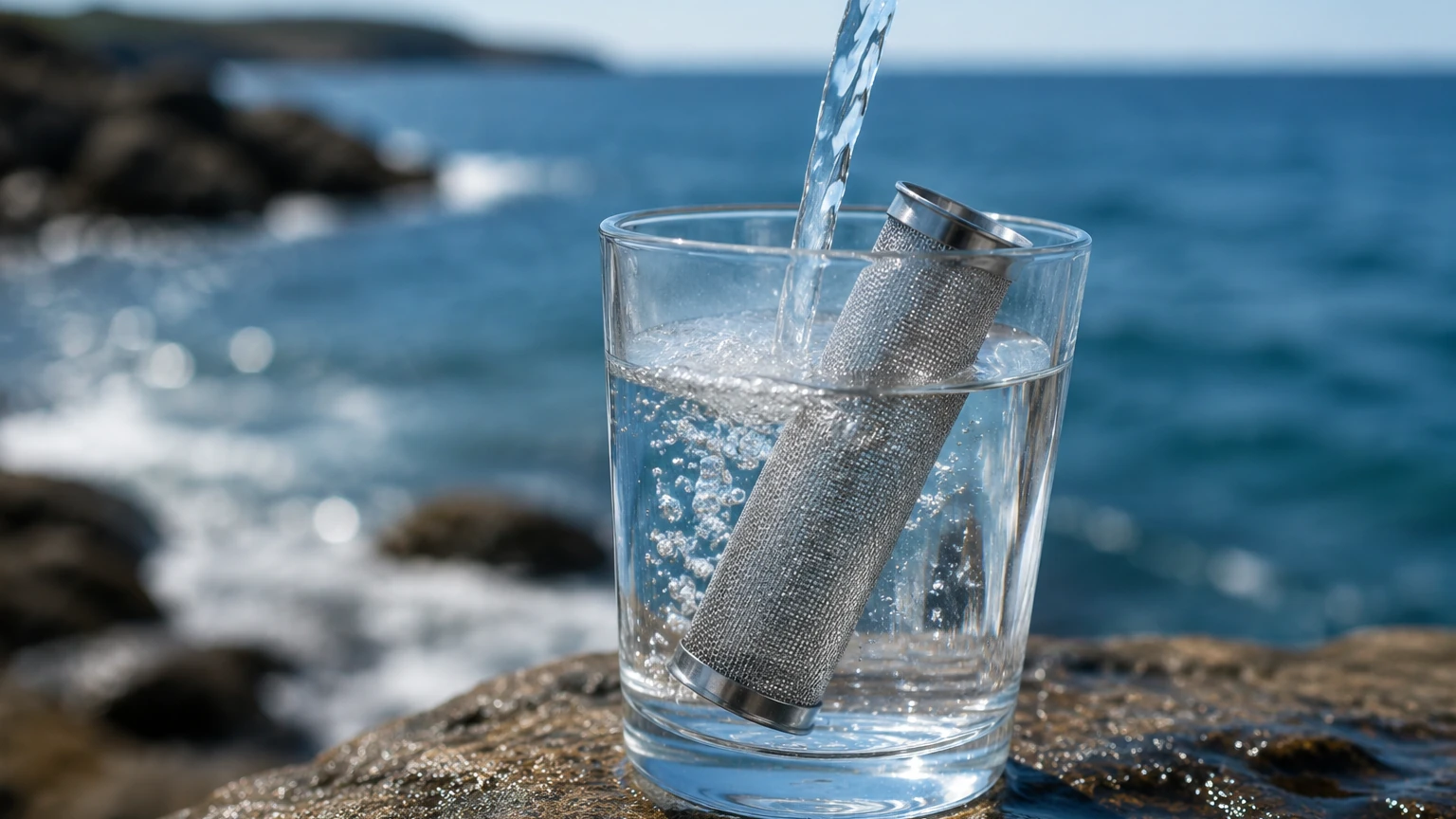
Once large debris is removed, the water enters the intermediate stage. This is where stainless steel wire mesh filters and automatic backwashing strainers become essential. These components typically filter down to 50–500 microns. At this stage, the focus shifts to removing suspended solids (TSS) and smaller organic fragments. High-quality wire mesh is preferred here because of its ability to withstand high flow rates and its compatibility with automated cleaning cycles, which are necessary to manage the continuous influx of particulates.
3. Fine Filtration and Membrane Protection
For applications like desalination, the water must undergo fine filtration (1–20 microns) before reaching the RO membranes. This stage often utilizes pleated stainless steel filter cartridges or multi-media filters. Pleated cartridges provide a high surface area, which is critical for maintaining low pressure drops while capturing fine silts and microorganisms. This stage is vital because even microscopic particles can lead to "fouling," a condition where the RO membranes become coated in a layer of debris, significantly reducing their efficiency and lifespan.
Material Engineering: Combating Chloride Corrosion
One of the most significant challenges in seawater filtration is the highly corrosive nature of the medium. The high chloride content in seawater is notoriously aggressive toward standard metals, leading to pitting and crevice corrosion. When considering how do you filter sea water, material selection is perhaps the most critical engineering decision.
Stainless Steel Grades
While standard 304 stainless steel is unsuitable for seawater due to its vulnerability to chloride-induced stress corrosion cracking, higher-grade alloys provide the necessary durability.
* 316L Stainless Steel: Often the baseline for marine environments, 316L contains molybdenum, which enhances its resistance to pitting. It is commonly used for components that are periodically cleaned or in less aggressive brackish water environments.
* Duplex and Super Duplex Stainless Steel: For continuous immersion in high-salinity seawater, Duplex (e.g., 2205) and Super Duplex (e.g., 2507) alloys are the industry standard. These materials offer superior mechanical strength and significantly higher resistance to localized corrosion compared to the 300-series stainless steels.
* 904L and Specialty Alloys: In high-temperature seawater applications, such as cooling systems for heavy industry, specialty alloys like 904L may be required to prevent rapid degradation of the filter media.
Selecting the correct material ensures that the filter elements do not become a source of contamination themselves through corrosion products, and it extends the replacement cycle, lowering the total cost of ownership. For more information on material specifications and custom engineering, you can Review product options and application support on our Main Page.
Technical Mechanisms of Filtration
To understand how do you filter sea water effectively, one must look at the specific mechanisms used to capture contaminants. In industrial filtration, three primary mechanisms are employed:
1. Surface Filtration: This occurs when particles are larger than the openings in the filter media (such as a wire mesh). The particles are trapped on the surface of the filter. This is the most common method for pre-filtration and is easily cleaned via backwashing.
2. Depth Filtration: This involves a thicker media where particles are trapped throughout the tortuous path of the material. Sintered metal felt or multi-layer mesh structures are used for depth filtration to capture a higher volume of contaminants before requiring cleaning.
3. Cake Filtration: As a layer of debris builds up on the filter surface, this "cake" itself begins to act as a filter medium, often capturing particles smaller than the original mesh openings. However, this must be carefully managed to prevent excessive pressure drop (ΔP).
Engineering Considerations for System Design
When designing or purchasing a seawater filtration system, engineers must account for several operational variables to ensure the system remains functional under varying conditions.
Flow Velocity and Pressure Drop
Seawater systems often handle massive volumes of water. The filter must be sized to accommodate the maximum flow velocity without creating a pressure drop that exceeds the pump's capacity. A high initial pressure drop across a clean filter indicates that the filter is undersized or the mesh is too fine for the specific application. Engineers typically aim for a clean pressure drop of less than 0.2 to 0.5 bar.
Biological Fouling (Biofouling)
Seawater is a living medium. Algae, bacteria, and larvae can attach to the filter media and grow, creating a biological film that is much harder to remove than inorganic silt. To combat this, filtration systems often incorporate chemical dosing (such as chlorination) or use specialized coatings. From a mechanical perspective, the use of smooth, high-precision stainless steel surfaces can reduce the ability of organisms to adhere to the filter mesh.
Backwashing and Maintenance Cycles
In many B2B industrial settings, downtime is not an option. Therefore, seawater filters are often designed to be self-cleaning. Automatic backwashing filters use a portion of the filtered water (or an external clean water source) to flush the accumulated debris off the mesh. The frequency of these cycles depends on the turbidity of the seawater. High-quality stainless steel mesh is vital here, as it must withstand the mechanical stress of repeated backwashing without deforming or losing its filtration accuracy.
Customization and OEM Solutions
Every seawater intake site is unique. Factors such as local tide patterns, seasonal temperature shifts, and proximity to industrial runoff influence the specific requirements of the filtration system. This is why many engineers opt for customized filtration components rather than off-the-shelf solutions.
Customization options include:
* Variable Mesh Weaves: Choosing between plain weave, twill weave, or Dutch weave to balance flow rate and filtration fineness.
* Reinforced Structures: Adding support cores or external cages to filter cartridges to handle high-pressure differentials.
* Specific Geometry: Designing filter elements to fit existing housing units in older desalination or power plants.
By working with a manufacturer that understands the nuances of metal filtration, purchasing teams can ensure that the components they receive are optimized for the specific chemical and physical profile of the water they are treating.
Conclusion: Selecting the Right Filtration Partner
Answering the question of how do you filter sea water requires a deep dive into material science, fluid dynamics, and mechanical engineering. It is not merely about choosing a mesh size; it is about selecting a solution that can survive the harshest environments while protecting multi-million dollar downstream assets.
For industrial professionals, the focus should remain on durability, precision, and ease of maintenance. High-grade stainless steel filtration components provide the necessary resistance to corrosion and biofouling that plastic or lower-grade metal alternatives cannot match. By implementing a strategically designed multi-stage filtration system, industries can ensure a steady supply of clean process water, minimize maintenance costs, and extend the operational life of their equipment.
Whether you are designing a new seawater intake system or upgrading an existing desalination facility, choosing the right filtration components is the first step toward operational excellence. For technical guidance and a comprehensive range of stainless steel filtration products, visit our Main Page to explore how our engineering expertise can support your specific application needs.
