


How to Set Up Vacuum Filtration
Vacuum filtration, also known as suction filtration, is a critical technique used in industrial laboratories and manufacturing processes to separate solids from liquids. Unlike gravity filtration, which relies solely on the weight of the liquid to pass through a medium, vacuum filtration utilizes a pressure gradient to accelerate the process. This method is particularly valued in high-volume industrial applications where efficiency, speed, and the recovery of dry solids are paramount.
For engineers and procurement teams, understanding how to set up vacuum filtration correctly is essential for maintaining process integrity and ensuring the longevity of filtration components. This guide provides a technical overview of the assembly process, material selection, and engineering considerations necessary for a professional-grade setup.
The Fundamentals of Vacuum Filtration in Industrial Environments
In an industrial context, vacuum filtration is employed when the desired product is either the solid precipitate or the clarified filtrate. The process involves creating a vacuum (reduced pressure) in a receiving vessel, which draws the liquid through a filter medium. The solids are trapped on the surface of the medium, forming a "filter cake," while the liquid (filtrate) collects below.
Industrial vacuum filtration offers several advantages over traditional methods:
1. Increased Throughput: The pressure differential significantly reduces the time required to process large batches of slurry.
2. Drier Filter Cakes: The suction force helps pull residual liquid from the solid particles, resulting in a drier end product, which reduces subsequent drying costs.
3. Handling High-Viscosity Liquids: Vacuum systems can process thicker fluids that would otherwise clog or pass too slowly through a gravity-fed system.
When considering a system for chemical processing, pharmaceuticals, or food and beverage production, the choice of components—specifically the filter media—is the most critical factor in determining the system's efficiency and total cost of ownership.
Essential Components for a Robust Vacuum Filtration Setup
A professional vacuum filtration system consists of several specialized components. Each must be compatible with the chemical properties of the slurry and the mechanical stresses of the vacuum.
1. The Vacuum Source
Industrial setups typically use either a diaphragm vacuum pump or a rotary vane pump. Diaphragm pumps are often preferred for chemical applications because they are oil-free and offer high resistance to corrosive vapors. The pump must be rated for the specific vacuum level required by the process.
2. The Filter Holder or Funnel
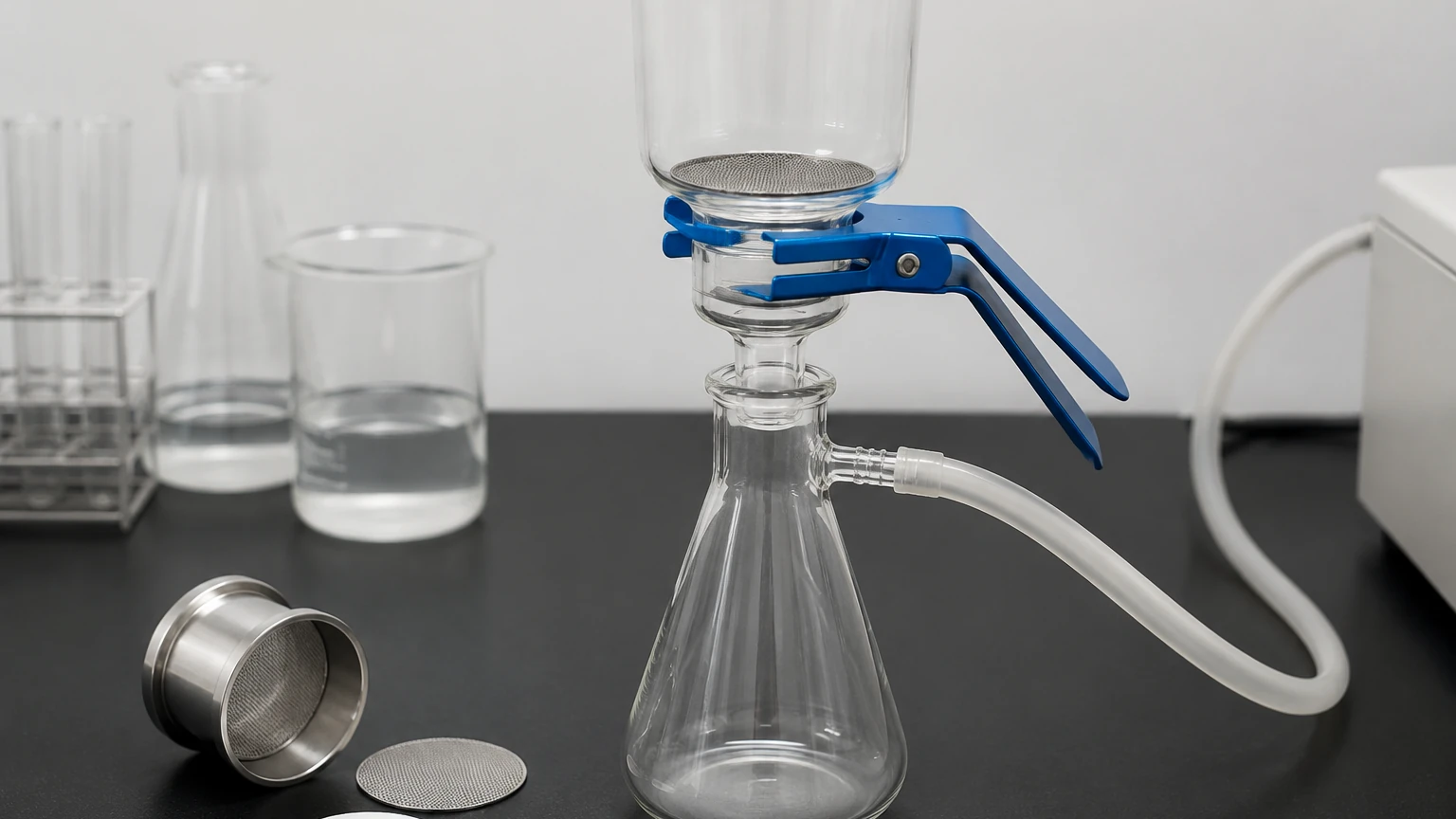
In laboratory settings, a Buchner funnel is common. In industrial OEM applications, this is replaced by a stainless steel filter housing or a custom-designed manifold. These components must be constructed from materials like 304 or 316L stainless steel to withstand high pressures and prevent contamination.
3. The Filter Medium
This is the heart of the system. While disposable paper or polymer membranes are used for simple tasks, industrial processes demand durable solutions. Stainless steel wire mesh filters and sintered metal cartridges are the standards for demanding environments. These provide precise micron ratings, high mechanical strength, and the ability to be cleaned and reused.
4. The Receiving Vessel (Filtrate Flask)
This vessel must be vacuum-rated (thick-walled) to prevent implosion. In large-scale operations, these are typically heavy-duty stainless steel tanks equipped with sight glasses and drainage valves.
5. The Vacuum Trap
Positioned between the receiving vessel and the vacuum pump, the trap prevents liquid or corrosive vapors from entering and damaging the pump. This is a critical safety and maintenance component.
Step-by-Step Instructions: How to Set Up Vacuum Filtration
Proper assembly is vital to prevent leaks and ensure consistent performance. Follow these steps to learn how to set up vacuum filtration for industrial or pilot-scale applications.
Step 1: Preparation and Cleaning
Before assembly, ensure all components are clean and free of residues from previous batches. For pharmaceutical or food-grade applications, this may involve sterilization or CIP (Clean-In-Place) protocols. Inspect gaskets and O-rings for cracks or wear, as even a minor air leak will significantly reduce filtration efficiency.
Step 2: Securing the Receiving Vessel
Place the vacuum-rated flask or tank on a stable, level surface. In industrial settings, these vessels are often bolted to a skid or frame. Ensure the vessel is properly grounded if you are working with flammable solvents to prevent static discharge.
Step 3: Installing the Filter Media
If using a stainless steel wire mesh filter or a sintered metal disc, place it into the filter holder. Ensure the media is seated perfectly flat against the support plate. For custom Main Page solutions, such as pleated cartridges, ensure the cartridge is locked into the housing according to the manufacturer’s specifications. A secure fit is necessary to prevent "bypass," where the slurry leaks around the edges of the filter rather than passing through it.
Step 4: Establishing the Seal
Connect the filter holder to the receiving vessel using a high-quality rubber stopper or a specialized flange gasket. In high-pressure industrial systems, tri-clamp fittings or bolted flanges are used to create a hermetic seal. Apply a small amount of compatible lubricant to the gaskets if necessary to ensure an airtight fit.
Step 5: Connecting the Vacuum Line and Trap
Connect the vacuum hose from the receiving vessel to the vacuum trap, and then from the trap to the vacuum pump. Use reinforced vacuum tubing that will not collapse under negative pressure. Ensure all connections are tight and secured with hose clamps if necessary.
Step 6: System Testing
Before introducing the slurry, perform a dry run. Turn on the vacuum pump and check the pressure gauge. The system should reach the target vacuum level quickly and hold it. If the pressure does not drop as expected, check for leaks at the seals and connections.
Step 7: Commencing Filtration
Once the vacuum is established, slowly pour the slurry into the filter holder. It is often beneficial to "pre-wet" the filter media with a small amount of clean solvent to help seat the media and establish the initial flow. Maintain a consistent level of liquid in the funnel to prevent air from being drawn through the filter cake prematurely, which can cause cracking and uneven drying.
Engineering Considerations: Pressure, Flow, and Material Compatibility
When learning how to set up vacuum filtration, engineers must look beyond the physical assembly and consider the fluid dynamics and material science involved.
Differential Pressure ($ΔP$)
The efficiency of vacuum filtration is governed by the pressure difference across the filter medium. However, increasing the vacuum does not always increase the flow rate. For compressible solids, excessive vacuum can compress the filter cake, reducing its permeability and slowing the process. Finding the "sweet spot" for $ΔP$ is essential for optimizing throughput.
Micron Rating and Permeability
The choice of micron rating depends on the particle size distribution of the solids. A filter that is too fine will clog (blind) rapidly, while one that is too coarse will allow solids to pass into the filtrate. Stainless steel wire mesh is advantageous here because it offers precise pore sizes and a high open-area ratio, which maximizes flow while maintaining strict particle retention.
Chemical and Thermal Resistance
Industrial slurries often contain aggressive solvents or are processed at elevated temperatures. Components made from 316L stainless steel are highly resistant to corrosion and can operate in temperatures exceeding 400°C, far surpassing the capabilities of plastic or paper alternatives. This durability is a key factor in reducing the total cost of ownership for filtration systems.
Troubleshooting Common Issues in Vacuum Filtration Systems
Even a well-designed setup can encounter performance issues. Understanding how to diagnose these problems is part of mastering how to set up vacuum filtration.
* Slow Filtration Rates: This is usually caused by filter blinding or an overly compressed filter cake. If the solids are very fine, consider using a coarser primary filter followed by a polishing stage, or reduce the vacuum pressure to prevent cake compaction.
* Leaking or Loss of Vacuum: Check all seals and gaskets. In many cases, a leak occurs because the filter media was not seated correctly or a flange was not tightened evenly.
* Filtrate Turbidity: If the filtrate appears cloudy, the filter media may have a larger micron rating than the particles, or there may be a mechanical failure (a tear or bypass) in the filter element. Inspect the stainless steel mesh for damage.
* Pump Overheating: This often occurs if the pump is running for extended periods against a completely blocked filter. Ensure the system has a vacuum relief valve or a pressure switch to protect the hardware.
Maximizing ROI with Durable Stainless Steel Filtration Solutions
For B2B buyers and engineers, the goal of setting up a vacuum filtration system is to achieve reliable, repeatable results with minimal downtime. While the initial setup focuses on assembly, the long-term success of the operation depends on the quality of the filtration components.
Custom stainless steel filtration solutions, such as those provided by Kaifil, offer significant advantages over standard off-the-shelf parts. By opting for OEM-specified wire mesh filters and precision-engineered cartridges, facilities can ensure that their vacuum filtration setup is perfectly tailored to their specific flow rates, chemical environments, and particle retention needs.
Investing in high-quality metal filters allows for:
* Extended Service Life: Metal filters can withstand thousands of filtration cycles.
* Ease of Maintenance: Unlike disposables, stainless steel filters can be cleaned via backwashing or ultrasonic baths.
* Sustainability: Reducing the waste stream associated with disposable filter elements aligns with modern green manufacturing initiatives.
When you understand how to set up vacuum filtration and pair that knowledge with the right engineering partners, you create a process that is both efficient and cost-effective. For those looking to upgrade their current systems or develop new filtration equipment, reviewing technical specifications and customization options is the next logical step.
To explore high-performance filtration components and custom OEM solutions for your industrial applications, visit our Main Page for detailed product catalogs and engineering support.
