


Hplc Frits
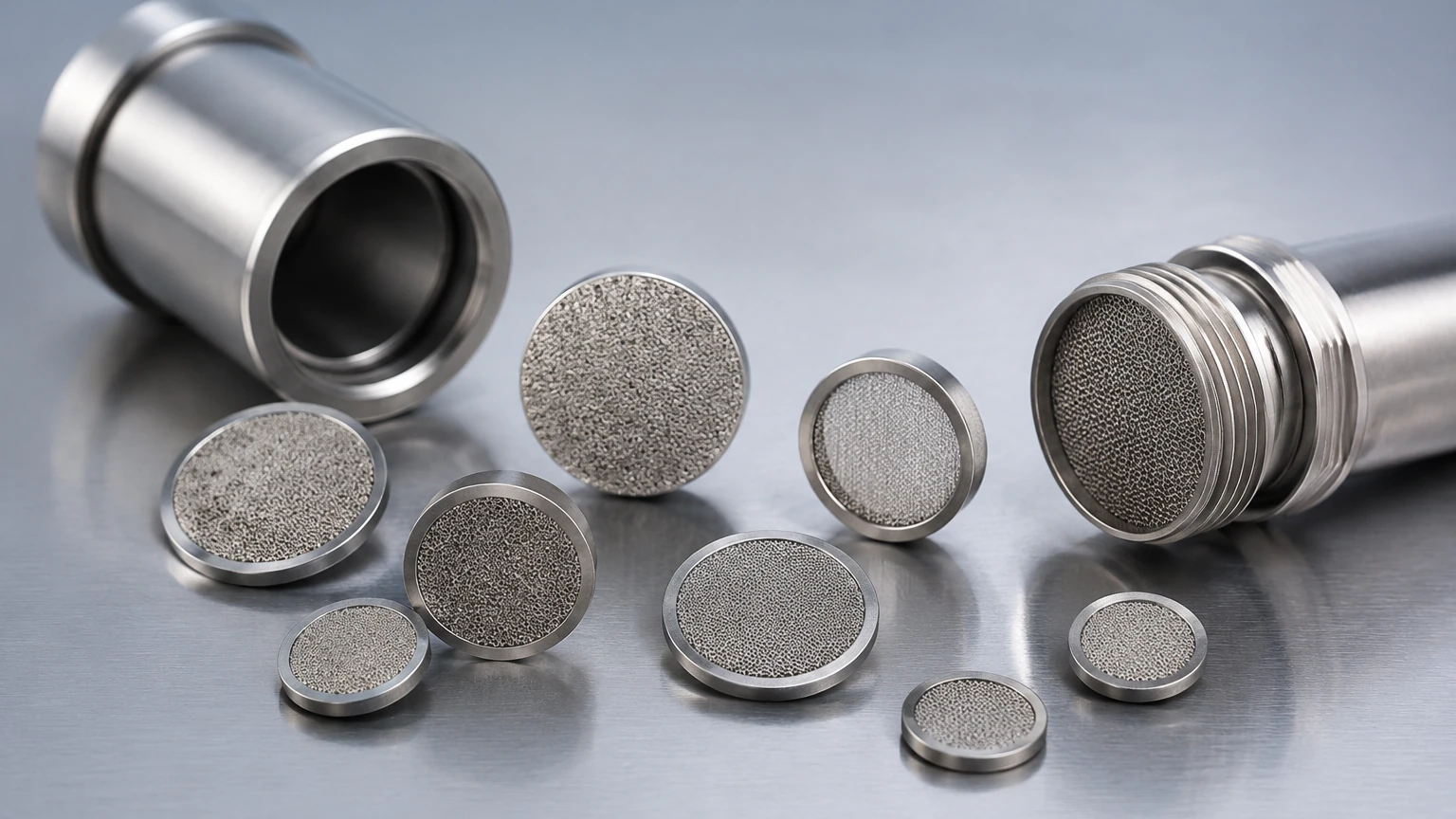
In the field of High-Performance Liquid Chromatography (HPLC), the integrity of the analytical results depends heavily on the precision of the hardware components within the fluidic path. Among these, hplc frits serve as critical filtration and containment elements. These porous components are responsible for holding the stationary phase (packing material) within the column while allowing the mobile phase to pass through with minimal resistance. Beyond simple containment, they protect sensitive downstream detectors and upstream pump components from particulate contamination.
For engineers and laboratory managers, selecting the correct frit involves balancing filtration efficiency, chemical compatibility, and mechanical strength. As a specialized manufacturer of stainless steel filtration solutions, Kaifil provides high-precision sintered metal components designed to meet the rigorous demands of industrial and analytical chromatography. To explore the full scope of available filtration technologies, technical professionals can refer to the Kaifil Main Page for detailed product specifications and application support.
The Engineering of Sintered Metal HPLC Frits
The majority of hplc frits used in industrial and laboratory settings are manufactured through a process called sintering. This involves taking spherical or irregular metal powders—typically 316L stainless steel—and heating them in a controlled atmosphere furnace to a temperature just below their melting point. This process causes the particles to bond at their contact points, creating a rigid, porous structure.
Structural Integrity and Uniformity
The primary advantage of sintered metal frits is their mechanical robustness. Unlike polymer-based filters, sintered stainless steel can withstand the extreme pressures common in modern UHPLC (Ultra-High Performance Liquid Chromatography) systems, which can exceed 10,000 psi. The engineering focus during manufacturing is on achieving a uniform pore size distribution. Non-uniformity in the pore structure can lead to "channeling," where the mobile phase takes the path of least resistance, resulting in uneven flow across the column head and a subsequent loss in chromatographic resolution.
Edge Sealing and Fit
A frit must fit perfectly within the column end-fitting or the frit housing. Any gap between the frit and the wall of the housing allows for "bypass," where the mobile phase or packing material escapes the intended path. Precision machining of the frit diameter and thickness is essential. In many applications, frits are encapsulated in a PEEK (Polyetheretherketone) or PCTFE ring. This polymer ring acts as a gasket, ensuring a leak-proof seal when the column end-fitting is tightened.
Key Performance Parameters: Porosity and Permeability
When specifying hplc frits, the two most critical technical metrics are the micron rating (pore size) and the permeability (flow resistance).
Determining the Correct Micron Rating
The general rule of thumb in chromatography is that the frit's pore size should be significantly smaller than the average particle size of the column packing material. Typically, a frit with a 0.5 µm or 2 µm rating is used.
* 0.5 µm Frits: Generally used for columns packed with particles smaller than 3 µm. They provide excellent retention but are more susceptible to clogging if the mobile phase or sample is not pre-filtered.
* 2 µm Frits: The industry standard for columns with 5 µm or larger packing particles. These offer lower backpressure and a longer service life in less demanding environments.
Understanding Backpressure
Every frit introduces a degree of flow resistance. This resistance is a function of the frit's thickness, diameter, and porosity. In an ideal system, the pressure drop across the frit should be a negligible fraction of the total system pressure. If the frit is too dense or too thick, it can cause an unnecessary increase in backpressure, which may lead to pump strain or solvent leaks. Engineers must calculate the expected pressure drop using Darcy’s Law for porous media to ensure the frit does not become a bottleneck in the system.
Material Selection for High-Pressure Environments
While 316L stainless steel is the most common material for hplc frits due to its cost-effectiveness and broad chemical resistance, specific applications require alternative materials to ensure analytical accuracy.
316L Stainless Steel
316L is preferred for its excellent resistance to most organic solvents and aqueous buffers. However, it is important to note that stainless steel can be susceptible to corrosion when exposed to high concentrations of halides (like chlorides) or extreme pH levels. For these applications, passivation—a chemical treatment that enhances the protective oxide layer on the steel—is a standard requirement to prevent metal ions from leaching into the mobile phase.
Titanium and Bio-inert Options
In bio-chromatography or applications involving highly sensitive proteins and oligonucleotides, stainless steel may not be suitable because metal ions can interact with the analytes. In these cases, titanium frits are used. Titanium is highly biocompatible and offers superior resistance to corrosion in acidic or high-salt environments. For completely metal-free paths, PEEK frits are utilized, though they lack the high-pressure capabilities of their metal counterparts.
Customization and OEM Manufacturing Requirements
Industrial filtration requirements often deviate from standard laboratory column sizes. OEM manufacturers and system integrators frequently require custom hplc frits tailored to specific instrument designs, such as pump inlet filters, inline filters, or specialized detector shielding.
Dimensional Tolerances
In high-precision chromatography, a variance of even 0.05mm in frit thickness can alter the dead volume of a system. Dead volume (or extra-column volume) is the space where the sample can spread out without interacting with the stationary phase, leading to peak broadening. Custom manufacturing allows for tight tolerances that minimize this volume, ensuring that the frit contributes to, rather than detracts from, the system's efficiency.
Tailored Porosity
Beyond the standard 0.5 µm and 2 µm ratings, custom sintering allows for the creation of "graded density" frits or specific void volumes. This is particularly useful in preparative chromatography, where flow rates are much higher, and the balance between filtration and pressure drop is even more critical.
Common Risks and Failure Modes
Understanding the failure modes of hplc frits is essential for maintaining system uptime and data reproducibility.
1. Particulate Clogging: This is the most frequent cause of frit failure. Particulates can originate from the sample, the mobile phase, or wear and tear on pump seals. As the frit surface clogs, backpressure rises. If the pressure exceeds the system's safety limits, the pump will shut down.
2. Chemical Incompatibility: Using a stainless steel frit with highly acidic mobile phases without proper passivation can lead to the leaching of iron, nickel, or chromium ions. This can interfere with UV detection or cause sample degradation.
3. Mechanical Deformation: Under extreme pressure or during improper installation, a frit can warp or compress. This changes the porosity and can lead to leaks or inconsistent flow profiles.
4. Dead Volume Accumulation: If a frit is not seated correctly in its housing, it can create small pockets where the sample can linger. This results in "tailing" peaks in the chromatogram, making it difficult to quantify the results accurately.
Selection Guide for Procurement and Engineering Teams
When sourcing hplc frits for a project or replacement cycle, engineers should confirm the following technical details with their supplier:
* Micron Rating vs. Particle Size: Ensure the frit pore size is at least 50% smaller than the smallest particle in the packing material.
* Material Compatibility: Verify that the metal or polymer is compatible with the full range of pH and solvents intended for use.
* Pressure Rating: Confirm that the frit and its housing (if applicable) are rated for the maximum operating pressure of the HPLC or UHPLC system.
* Dimensional Accuracy: Request the specific tolerances for diameter and thickness to ensure a proper fit in the column end-fittings.
* Cleaning and Passivation: For stainless steel components, confirm whether the frits have been ultrasonically cleaned and passivated to remove manufacturing oils and enhance corrosion resistance.
Conclusion
HPLC frits are more than simple barriers; they are engineered components that play a vital role in the fluidic dynamics of a chromatographic system. By selecting the appropriate material, micron rating, and mechanical design, engineers can significantly improve the lifespan of their columns and the accuracy of their analytical data.
As a dedicated manufacturer of stainless steel and precision metal filtration components, Kaifil supports global industries with customized solutions that meet the exact specifications of demanding applications. For more information on custom designs and technical support, visit the Kaifil Main Page to connect with our engineering team.
