


Manufacturer of Tubesheets and Plate
In the landscape of industrial filtration and pressure vessel fabrication, the integrity of structural components is as vital as the filtration media itself. As a specialized manufacturer of tubesheets and plate, the engineering focus remains on precision, material compatibility, and the ability to withstand the rigorous mechanical stresses of industrial environments. These components serve as the foundation for complex filtration systems, ensuring that filter cartridges, wire mesh elements, and heat exchange tubes are securely seated and effectively sealed against high-pressure differentials.
Selecting a reliable manufacturer of tubesheets and plate requires a deep understanding of machining tolerances, metallurgical properties, and the specific demands of the application, whether it be in chemical processing, pharmaceutical manufacturing, or high-pressure hydraulic systems. This article explores the technical considerations essential for engineers and purchasing teams when sourcing these critical metal components.
Engineering Fundamentals of Tubesheet Design
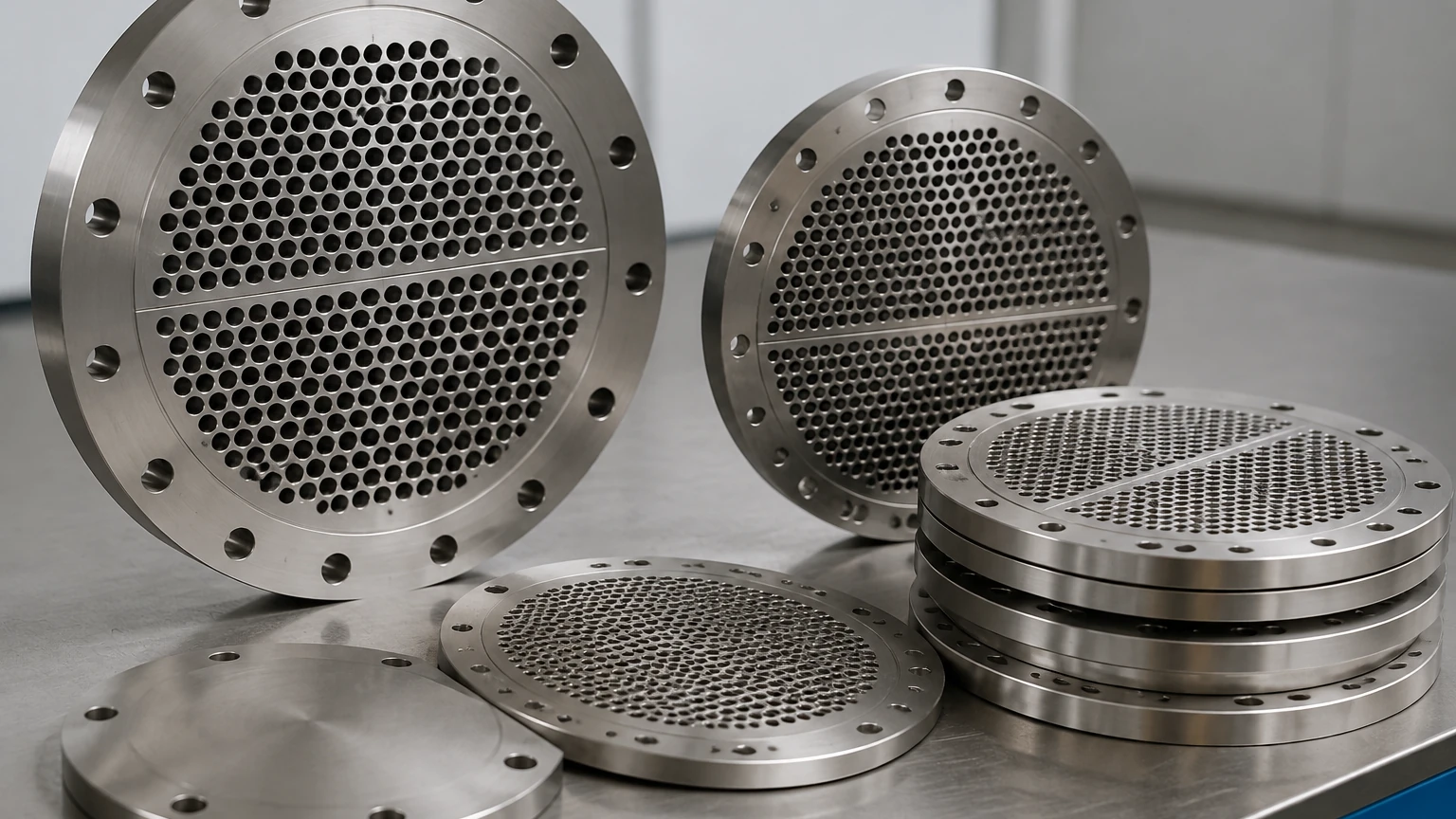
A tubesheet is essentially a thick plate, usually circular, with a pattern of holes drilled through it to accommodate tubes or filter elements. In filtration housings, the tubesheet acts as the primary barrier between the upstream (dirty) and downstream (clean) sides of the system. Therefore, its design must account for several mechanical and hydraulic factors.
Hole Patterns and Pitch
The arrangement of holes—referred to as the pitch—is a critical design variable. The two most common configurations are the triangular pitch and the square pitch.
* Triangular Pitch: This layout allows for a higher density of filter elements or tubes within a given diameter. It is often preferred in compact filtration units where maximum surface area is required within a limited footprint. However, it can make cleaning the shell side more difficult.
* Square Pitch: While offering lower density, the square pitch provides better access for mechanical cleaning and is often used in applications where fouling is a significant concern.
Ligament Thickness
The "ligament" is the material remaining between two adjacent holes. A manufacturer of tubesheets and plate must ensure that the ligament is thick enough to maintain structural integrity under pressure. If the ligament is too thin, the tubesheet may warp or crack, leading to bypass and system failure. Engineering calculations must account for the maximum operating pressure (MAWP) and the yield strength of the selected material at operating temperatures.
Manufacturing Processes for Precision Components
The production of high-quality tubesheets and plates involves several advanced manufacturing stages. Precision is paramount, as even a minor misalignment in hole drilling can prevent the proper installation of filter cartridges or lead to sealing failures.
CNC Drilling and Reaming
Modern manufacturing relies heavily on multi-spindle CNC drilling machines. These machines ensure that hole positions are accurate to within microns. Following the initial drilling, holes are often reamed to achieve a specific surface finish and diameter tolerance. For filtration applications, the internal surface of the hole must be smooth (often specified by an Ra value) to ensure that O-rings or gaskets on the filter elements create a gastight or liquid-tight seal.
Plate Fabrication and Leveling
Before drilling begins, the raw plate must be prepared. This involves cutting the plate to the required outer diameter using waterjet, plasma, or laser cutting technologies. Following the cut, the plate often undergoes a leveling process to ensure it is perfectly flat. Any curvature in the plate can lead to uneven stress distribution once the unit is bolted into a filter housing or heat exchanger.
Material Selection for Corrosive Environments
Material science is at the heart of what a manufacturer of tubesheets and plate provides. Because these components are often exposed to aggressive chemicals or high-temperature steam, the choice of alloy is critical for long-term durability.
Stainless Steel Grades
Stainless steel is the industry standard for most filtration applications due to its corrosion resistance and mechanical strength.
* Grade 304/304L: Suitable for general-purpose applications, including water treatment and some food and beverage processes. It offers good corrosion resistance at a lower cost point.
* Grade 316/316L: The preferred choice for chemical processing and pharmaceutical applications. The addition of molybdenum enhances resistance to pitting and crevice corrosion, particularly in chloride-rich environments.
* Duplex and Super Duplex: In highly aggressive environments, such as seawater filtration or acidic chemical streams, Duplex stainless steels provide superior strength and exceptional resistance to stress corrosion cracking.
Surface Treatments and Coatings
In addition to the base material, certain applications require specialized surface treatments. Electropolishing is common in the pharmaceutical and biotech industries to remove surface impurities and create a mirror-like finish that prevents bacterial growth and facilitates CIP (Clean-in-Place) procedures.
Integration with Custom Filtration Solutions
Tubesheets do not operate in isolation; they are integral parts of a larger filtration assembly. As a manufacturer specialized in stainless steel filtration, Kaifil understands how these plates must interface with various filter media. For more information on integrated solutions, you can visit the Main Page.
Supporting Wire Mesh and Sintered Filters
In many high-precision applications, the tubesheet supports sintered metal fiber or multi-layer wire mesh cartridges. The connection point between the filter element and the tubesheet is a common failure point. Manufacturers must decide between a welded connection—which offers the highest security but makes replacement difficult—and a mechanical seal using threaded fittings or O-ring grooves.
Custom Plate Configurations
Beyond standard circular tubesheets, many industrial systems require custom-shaped plates. These might include rectangular divider plates for multi-stage filtration units or reinforced support plates for large-scale water intake screens. A versatile manufacturer of tubesheets and plate should be able to produce these custom geometries based on specific CAD designs provided by the client's engineering team.
Quality Control and Industry Standards
To ensure safety and performance, tubesheets and plates must be manufactured in accordance with international standards. For B2B buyers, verifying a manufacturer’s adherence to these standards is a critical step in the procurement process.
ASME and PED Compliance
Pressure vessels and their components are often governed by the ASME (American Society of Mechanical Engineers) Boiler and Pressure Vessel Code or the European PED (Pressure Equipment Directive). These codes dictate the allowable stresses, material certifications, and testing protocols required for tubesheets. A reputable manufacturer will provide Material Test Reports (MTRs) for every plate produced, ensuring traceability back to the original steel mill.
Non-Destructive Testing (NDT)
To verify the internal integrity of the metal, various NDT methods may be employed:
* Ultrasonic Testing (UT): Used to detect internal flaws or laminations within the thick metal plate before machining.
* Dye Penetrant Inspection (DPI): Applied after drilling and machining to identify any surface cracks, especially in the ligament areas.
* Coordinate Measuring Machine (CMM) Inspection: Used to verify that the hole pattern and diameters meet the exacting tolerances specified in the engineering drawings.
Maintenance and Replacement Considerations
While tubesheets are designed for longevity, they are not immune to wear. Over time, erosion from high-velocity fluids or corrosion from chemical attack can degrade the hole surfaces or thin the plate.
Evaluating Wear
During routine maintenance shutdowns, engineers should inspect the tubesheet for signs of "wire-drawing" (erosion paths) or pitting. If the sealing surfaces are compromised, the entire filtration system's efficiency drops as bypass occurs. In some cases, holes can be oversized and fitted with sleeves, but often, the most cost-effective long-term solution is the replacement of the tubesheet.
Total Cost of Ownership
When sourcing from a manufacturer of tubesheets and plate, the initial purchase price is only one factor. Engineers must consider the total cost of ownership, which includes the component's expected lifespan, the ease of maintenance, and the reliability of the seal. High-quality machining and superior material selection reduce the frequency of unplanned downtime, providing significant savings over the life of the equipment.
Conclusion: Selecting the Right Manufacturing Partner
The role of a manufacturer of tubesheets and plate is to provide the structural backbone for high-performance industrial systems. By focusing on precision machining, rigorous material selection, and adherence to international safety standards, manufacturers like Kaifil ensure that filtration systems operate at peak efficiency.
For engineers and procurement professionals, the key to success lies in clear communication of technical requirements—including pressure ratings, chemical exposure, and tolerance needs. Working with a partner who understands the nuances of both plate fabrication and filtration technology allows for the development of customized solutions that meet the most demanding industrial challenges. Whether you are designing a new system or looking for replacement components, prioritizing technical expertise and quality assurance will lead to more reliable and durable filtration performance.
