


Hvac Bag Filter
In the landscape of industrial air management, the HVAC bag filter—often referred to as a pocket filter—serves as a critical component for maintaining air quality and protecting sensitive downstream equipment. These filters are designed to handle high air volumes while providing a large surface area for particle collection. For engineers and facility managers in sectors such as chemical processing, pharmaceuticals, and food production, selecting the right filtration media and configuration is not merely a matter of maintenance but a strategic decision affecting energy efficiency, system longevity, and regulatory compliance.
While standard commercial buildings may rely on disposable synthetic bag filters, industrial environments often demand higher performance standards. In these settings, the choice between traditional fiber-based media and advanced alternatives, such as stainless steel mesh components, depends on the specific stressors of the application, including temperature, chemical exposure, and the nature of the particulate matter. This guide examines the technical specifications, engineering considerations, and selection criteria essential for optimizing HVAC bag filter performance.
Understanding HVAC Bag Filter Design and Functionality
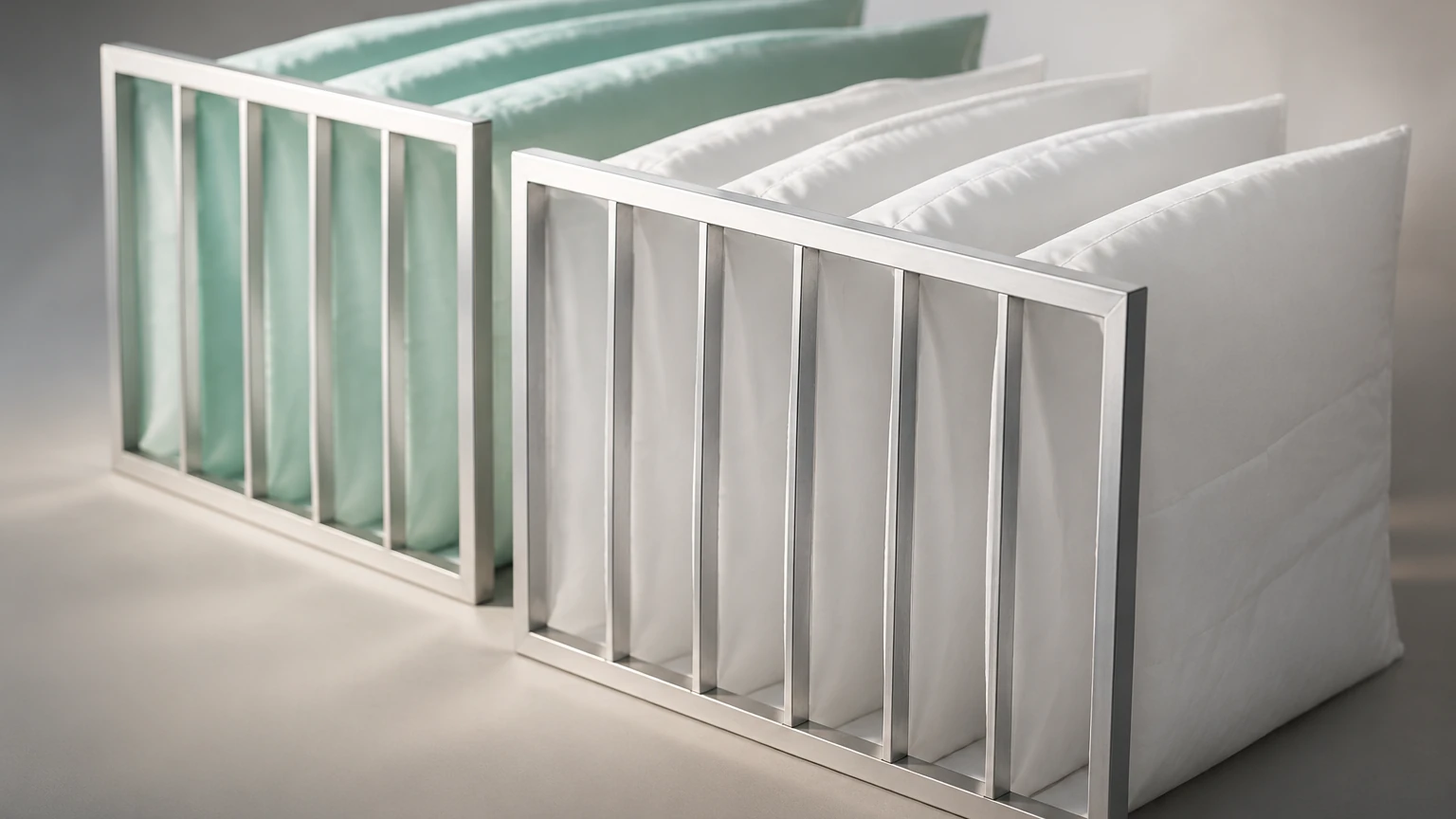
The primary advantage of an HVAC bag filter lies in its geometry. By utilizing a series of deep pockets or "bags," the filter maximizes the effective filtration area within a fixed frame size. This design allows for a lower face velocity across the media, which in turn reduces the initial pressure drop and increases the dust-holding capacity (DHC).
Pocket Configuration and Airflow
In a typical industrial air handling unit (AHU), bag filters are installed in banks. The number of pockets—ranging from three to twelve or more—and their depth (usually between 12 and 36 inches) determine the filter’s performance profile. A higher number of pockets increases the surface area but can also lead to "pocket crowding" if not engineered correctly. Crowding occurs when the pockets touch each other during operation, restricting airflow and causing a premature rise in differential pressure. Professional-grade filters utilize aerodynamic spacers or specialized stitching to ensure the pockets remain fully inflated and separated, even under fluctuating air loads.
Frame Integrity
The frame is the structural backbone of the filter. In industrial applications, frames are typically constructed from galvanized steel or high-strength plastic. However, for environments where corrosion resistance is paramount, such as in chemical scrubbers or offshore installations, stainless steel frames are preferred. A rigid frame prevents air bypass—a common failure point where unfiltered air leaks around the edges of the filter—ensuring that the system meets its rated efficiency.
Technical Specifications and Efficiency Standards
When evaluating an HVAC bag filter, engineers must look beyond the physical dimensions and focus on standardized performance metrics. The industry primarily relies on two standards: ASHRAE 52.2 (MERV ratings) and the global ISO 16890 standard.
MERV Ratings (ASHRAE 52.2)
The Minimum Efficiency Reporting Value (MERV) scales from 1 to 16. For industrial HVAC applications, bag filters typically fall within the MERV 11 to MERV 15 range.
- MERV 11-12: Effective at capturing particles between 1.0 and 3.0 microns. These are often used as secondary filters in general manufacturing.
- MERV 13-15: Capable of capturing sub-micron particles (0.3 to 1.0 microns). These are essential for cleanroom pre-filtration and pharmaceutical processing where microbial control is necessary.
ISO 16890: A Modern Approach
ISO 16890 classifies filters based on their ability to capture specific particulate matter sizes: ePM1, ePM2.5, and ePM10. This standard provides a more accurate representation of how a filter will perform against actual atmospheric dust. For instance, an ePM1 85% filter is highly effective against the smallest, most hazardous particles, making it a critical specification for facilities concerned with fine chemical dust or combustion byproducts.
Engineering Considerations: Pressure Drop and Energy Costs
The most significant operational cost associated with an HVAC bag filter is not the purchase price, but the energy required to push air through it. This is measured as pressure drop (or differential pressure).
Initial vs. Final Resistance
Every filter has an initial resistance (when clean) and a recommended final resistance (when dirty). As the filter loads with dust, the resistance increases, requiring the AHU’s fan to work harder. Engineers must balance the filtration efficiency with the system’s fan curve. Selecting a filter with a low initial pressure drop—often achieved through superior media pleating or increased pocket counts—can result in thousands of dollars in energy savings over the filter's lifespan.
The Impact of Face Velocity
Airflow velocity, typically measured in feet per minute (fpm), directly impacts filtration efficiency. Most HVAC bag filters are rated at 500 fpm. Operating significantly above this velocity can cause "bleed-through," where particles are forced through the media, or structural failure of the pockets. Conversely, operating at lower velocities generally improves efficiency and extends the service life of the filter.
Material Science: Synthetic vs. Metal Filtration Solutions
In standard HVAC applications, the filter media is usually comprised of synthetic fibers or glass microfibers. However, industrial engineering often requires a shift toward more robust materials when environmental conditions exceed the limits of polymers.
Synthetic and Glass Fiber Media
Synthetic media is favored for its moisture resistance and durability during handling. Glass fiber media, while more fragile, often provides higher efficiency at a lower pressure drop. Both, however, are typically disposable and have limited resistance to extreme temperatures or aggressive solvents.
The Role of Stainless Steel in High-Performance Filtration
In specialized industrial sectors, such as high-temperature exhaust or corrosive chemical venting, traditional HVAC bag filters may fail. This is where stainless steel filtration solutions, like those manufactured by Main Page, become indispensable.
Stainless steel wire mesh and sintered metal components offer several advantages over synthetic bags in harsh environments:
1. Temperature Resistance: While synthetic bags may melt or degrade above 90°C, stainless steel filters can operate at temperatures exceeding 400°C.
2. Chemical Compatibility: Stainless steel (304, 316L) is resistant to a wide array of acids, bases, and organic solvents that would dissolve synthetic fibers.
3. Cleanability and Reusability: Unlike disposable bag filters, metal filters can be cleaned via ultrasonic baths, back-pulsing, or chemical cleaning, reducing the total waste stream and long-term procurement costs.
4. Structural Integrity: In high-pressure or high-pulsation environments, the rigid structure of a metal filter prevents the "flexing" that can lead to media fatigue in cloth or synthetic bags.
Selection Criteria for Industrial Air Filtration Systems
Choosing the correct HVAC bag filter or its industrial equivalent requires a comprehensive analysis of the operating environment. Engineers should confirm the following data points before finalizing a specification:
1. Particle Characteristics
Is the particulate dry, oily, or abrasive? Dry dust is easily handled by standard bag filters, but oily mist can quickly blind synthetic media. For abrasive dust, a pre-filter or a reinforced metal mesh may be required to protect the primary bag filter from physical damage.
2. Environmental Conditions
Humidity levels and temperature fluctuations are critical. High humidity can cause some fiber-based media to sag or develop mold. In such cases, antimicrobial-treated synthetic media or hydrophobic metal filters are preferred.
3. Space Constraints
The physical footprint of the filter bank often dictates the pocket depth. If space is limited, a high-efficiency mini-pleat filter might be used, though it will typically have a higher pressure drop than a deep-pocket bag filter with the same MERV rating.
4. Regulatory and Safety Compliance
In the food and beverage industry, filters must often comply with FDA or EC 1935/2004 standards for food contact. In explosive environments (ATEX zones), filters must be grounded or made of conductive materials to prevent static discharge. Stainless steel filtration components are naturally conductive and often the safest choice for hazardous dust collection.
Maintenance, Replacement Cycles, and Total Cost of Ownership (TCO)
A common mistake in industrial procurement is selecting an HVAC bag filter based solely on the lowest unit price. A TCO approach considers the purchase price, energy consumption, labor for replacement, and disposal costs.
Monitoring Differential Pressure
To optimize replacement cycles, systems should be equipped with differential pressure gauges (e.g., Magnehelic gauges) or digital sensors. Filters should be replaced when they reach the manufacturer’s recommended final resistance, or when the energy cost of the pressure drop exceeds the cost of a new filter and the labor to install it.
Preventive Maintenance
Regular inspections should check for:
- Pocket Integrity: Look for tears or failed seams.
- Gasket Sealing: Ensure the gasket between the filter and the holding frame is compressed and airtight.
- Dust Bypass: Check the downstream side of the filter for dust streaks, which indicate a leak.
For facilities utilizing permanent stainless steel filtration components, maintenance involves scheduled cleaning cycles. These cycles must be validated to ensure the cleaning process restores the filter to its near-original pressure drop without damaging the precision mesh.
Conclusion
The HVAC bag filter is a workhorse of industrial air management, providing a balance of high-volume airflow and efficient particulate capture. However, as industrial processes become more demanding, the limitations of standard disposable filters become apparent. For engineers managing complex chemical, pharmaceutical, or high-temperature processes, integrating robust filtration solutions is essential for operational stability.
By understanding the nuances of MERV ratings, pressure drop engineering, and material compatibility, technical professionals can make informed decisions that enhance system performance. Whether the application calls for high-capacity synthetic pockets or the precision and durability of custom stainless steel filtration components found on the Main Page, the goal remains the same: clean air, protected equipment, and optimized energy usage. For those looking to upgrade their industrial filtration systems, consulting with a manufacturer that specializes in custom metal solutions can provide the technical edge needed to solve the most challenging air quality issues.
