


Hydraulic Coreless Filters
In modern industrial hydraulic systems, the demand for high-efficiency filtration is balanced against the increasing need for environmental sustainability and operational cost reduction. Hydraulic coreless filters have emerged as a sophisticated solution to these dual requirements. Unlike traditional filter elements that incorporate a permanent inner support core made of metal or heavy plastic, coreless designs relocate the structural support to the filter housing itself. This engineering shift results in a disposable element that is lighter, easier to manage, and significantly more environmentally friendly.
For engineers and procurement professionals, understanding the technical nuances of hydraulic coreless filters is essential for optimizing system uptime and maintaining fluid cleanliness. This article explores the design principles, performance metrics, and selection criteria for coreless filtration technology within the context of industrial hydraulic applications.
The Engineering Principles of Coreless Filtration
The fundamental difference between a standard hydraulic filter and a coreless filter lies in the architecture of the element. In a conventional setup, the filter media is wrapped around a perforated metal center tube (the core). This core provides the necessary structural integrity to prevent the media from collapsing under the pressure of the fluid flow. However, when the filter reaches its dirt-holding capacity, the entire unit—including the metal core—is discarded.
Hydraulic coreless filters utilize a reusable support core that remains a permanent fixture within the filter housing. The filter element itself consists only of the filtration media, protective layers, and end caps. When the element is replaced, only the media and end caps are disposed of. This design requires precision engineering to ensure that the interface between the disposable element and the permanent core is leak-proof and capable of withstanding high differential pressures.
From a manufacturing perspective, such as the precision capabilities found at Kaifil, the production of these elements involves advanced pleating techniques and thermal bonding of end caps to ensure that the media remains stable without the internal support during the installation phase. Once seated over the housing's permanent core, the element gains the structural rigidity required for high-pressure hydraulic service.
Performance Advantages for Industrial Hydraulic Systems
The transition to coreless technology offers several distinct advantages that directly impact the efficiency of hydraulic machinery and the bottom line of industrial operations.
1. Environmental Impact and Waste Reduction
By removing the metal core from the disposable portion of the filter, the volume of waste generated during a maintenance interval is reduced by up to 50% or more by weight. Because the remaining components—typically glass fiber or specialized polymer media and plastic end caps—contain no metal, they are often incinerable. This allows facilities to convert waste into energy rather than sending bulky metal-laden filters to landfills.
2. Reduced Shipping and Storage Costs
Coreless elements are significantly lighter than their traditional counterparts. For large-scale industrial operations that manage hundreds of hydraulic systems, the reduction in shipping weight leads to lower logistics costs. Additionally, the compact nature of coreless elements allows for more efficient use of warehouse space.
3. Ease of Maintenance
The lightweight design of hydraulic coreless filters makes them easier for technicians to handle, especially in large-scale systems where filter elements can be several feet long. The replacement process is generally cleaner, as the permanent core remains in the housing, reducing the risk of dripping oil during the change-out.
Critical Technical Specifications for Filter Selection
When selecting hydraulic coreless filters, engineers must look beyond simple dimensions and focus on performance data validated by international standards. The following metrics are critical for ensuring the longevity of hydraulic pumps, valves, and actuators.
Filtration Efficiency (Beta Ratio)
The Beta ratio ($\beta$) is the primary indicator of a filter’s ability to capture particles of a specific size. For industrial hydraulics, a high Beta ratio (e.g., $\beta_x(c) \geq 1000$, representing 99.9% efficiency) is often required for critical components. It is vital to confirm that the coreless element maintains its rated efficiency even under fluctuating flow conditions, a characteristic tested under ISO 16889.
Collapse Pressure Rating
Because the structural support is external to the disposable element, the collapse pressure rating is a function of the fit between the element and the permanent core. Engineers must ensure the element is rated to withstand the maximum potential differential pressure of the system, particularly during cold starts when fluid viscosity is high. Standard ratings often range from 10 bar (150 psi) for return line filters to over 210 bar (3000 psi) for high-pressure line filters.
Dirt Holding Capacity (DHC)
The DHC determines the service life of the filter. A well-designed coreless filter should offer a DHC comparable to or better than traditional filters. This is achieved through optimized pleat geometry, which maximizes the available surface area of the media within the given housing volume.
Material Compatibility and Customization Options
Industrial hydraulic systems utilize a variety of fluids, from standard mineral-based oils to fire-resistant phosphate esters (like Skydrol) and water glycols. The materials used in hydraulic coreless filters must be chemically compatible with these fluids to prevent degradation of the media or seals.
Media Selection
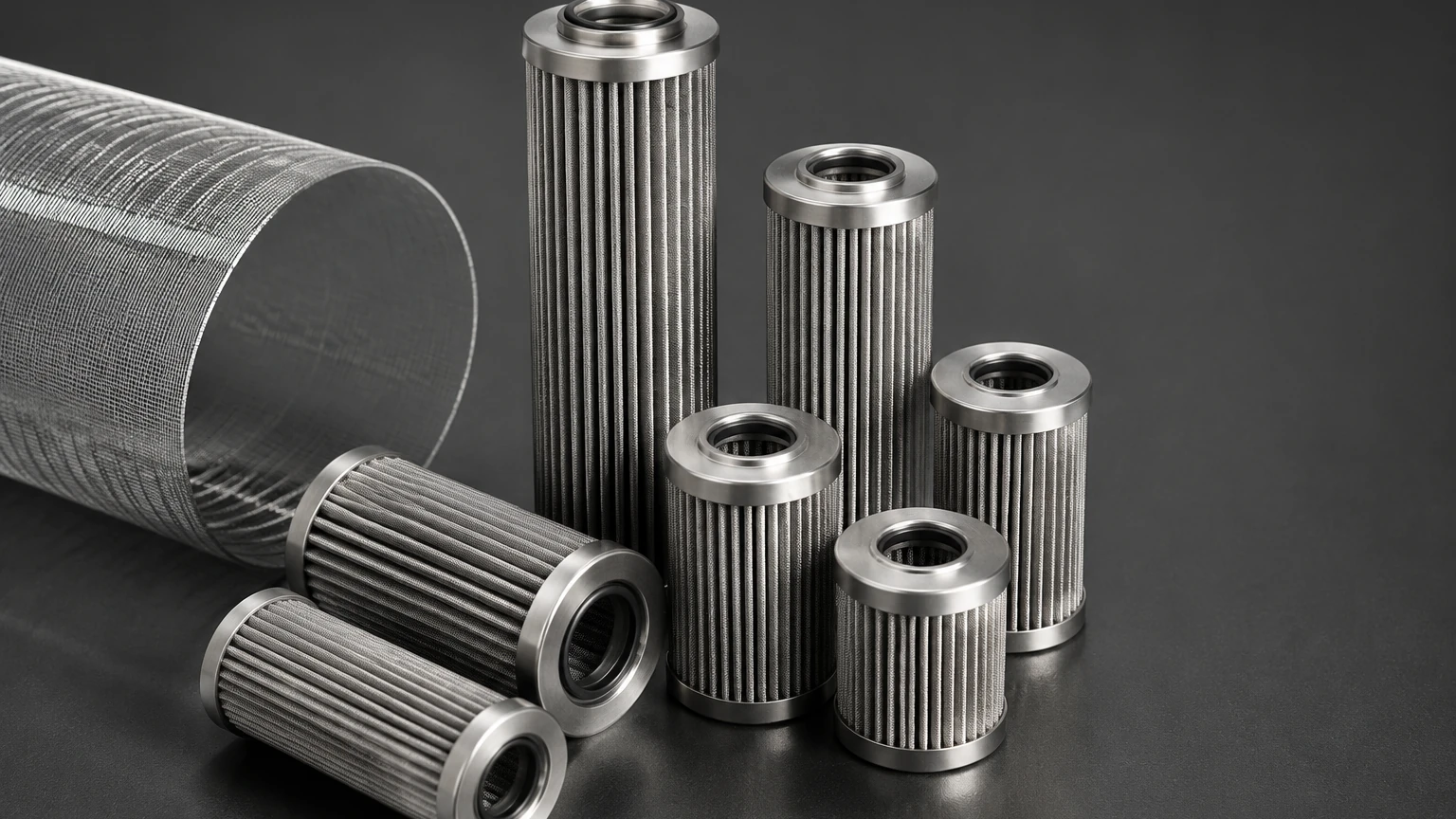
While many coreless filters use micro-glass fibers for high-efficiency silt control, certain applications require the durability of metal. Kaifil specializes in custom stainless steel filtration solutions, including wire mesh components that can be adapted for coreless configurations. Stainless steel wire mesh is particularly valuable in high-temperature environments or where the filter must be cleaned and reused rather than disposed of. For more information on specialized industrial filtration components, visit the Main Page.
Seal Materials
Nitrile (Buna-N) is standard for most mineral oil applications, but Viton (FKM) or EPDM may be required for synthetic fluids or high-temperature operations. In coreless designs, the integrity of the O-ring seal between the element and the permanent core is the most common point of failure if not properly specified.
Maintenance, Disposal, and Total Cost of Ownership
Evaluating the cost of hydraulic coreless filters requires a Total Cost of Ownership (TCO) approach rather than looking at the purchase price alone. While the initial investment in a coreless-capable housing may be higher, the long-term savings are substantial.
Disposal Costs
In many jurisdictions, used oil filters are classified as hazardous waste. The cost of disposing of a metal-core filter is often calculated by weight. By switching to coreless elements, companies can significantly reduce their hazardous waste weight, leading to direct savings in disposal fees.
Replacement Cycles
To maximize the value of coreless filtration, maintenance teams should utilize differential pressure indicators (clogging indicators) to change elements only when necessary. Changing filters based on a fixed schedule often results in discarding elements that still have significant remaining life. Conversely, waiting too long can trigger the bypass valve, allowing unfiltered oil to circulate through the system.
Compatibility with Existing Housings
One common question engineers ask is whether they can convert existing standard housings to coreless. In most cases, this requires an adapter kit or a complete housing replacement. It is essential to work with a manufacturer that understands the tolerances required for these conversions to prevent internal leakage (bypass) which can occur if the element does not seat perfectly against the permanent core.
Selecting a Manufacturing Partner for Custom Solutions
For OEM applications or specialized industrial processes, off-the-shelf coreless filters may not meet specific performance or spatial requirements. Partnering with a manufacturer like Kaifil allows for the development of customized filtration solutions. Key considerations when choosing a partner include:
* Material Expertise: The ability to work with various grades of stainless steel and specialized synthetic media.
* Manufacturing Precision: Ensuring that the dimensions of the coreless element perfectly match the permanent housing core to prevent fluid bypass.
* Testing Capabilities: Verification of micron ratings, Beta ratios, and structural integrity under simulated operating conditions.
* Customization: The flexibility to design filters for non-standard flow rates, pressures, or fluid types.
In demanding sectors such as chemical processing or pharmaceutical manufacturing, the reliability of the filtration component is non-negotiable. Custom-engineered hydraulic coreless filters ensure that the system remains protected while adhering to the facility's sustainability goals.
Conclusion
Hydraulic coreless filters represent a significant advancement in industrial fluid power technology. By separating the structural support from the consumable media, these filters offer a compelling blend of high-performance contamination control, environmental responsibility, and reduced operational costs. For engineers tasked with maintaining complex hydraulic systems, the transition to coreless technology is a strategic move toward more efficient and sustainable maintenance practices.
When evaluating these solutions, it is critical to focus on validated performance data, material compatibility, and the precision of the manufacturing process. Whether implementing standard coreless elements or seeking custom stainless steel filtration components, selecting high-quality parts is the most effective way to ensure the long-term health of hydraulic infrastructure. To explore a wide range of professional filtration options and technical support for your specific application, visit the Main Page.
