


Wide Bore Tips
In the landscape of industrial fluid handling and precision liquid dispensing, the geometry of the delivery orifice is a primary determinant of system efficiency and product integrity. Wide bore tips, characterized by their enlarged internal diameters at the distal end, serve as a critical solution for applications where standard narrow-aperture tips fail due to fluid viscosity, particulate content, or the presence of shear-sensitive biological materials. For engineers and technical procurement teams, understanding the mechanical and fluid-dynamic advantages of wide bore configurations is essential for optimizing processes in pharmaceutical manufacturing, chemical processing, and food production.
From an engineering perspective, the transition to wide bore tips is rarely a matter of simple convenience; it is a calculated response to the physical properties of the medium being transported. Whether integrated into automated liquid handling systems or manual dispensing setups, these components must be selected based on rigorous criteria including material compatibility, flow rate requirements, and the specific filtration needs of the upstream process.
The Fluid Mechanics of Wide Bore Geometry
The fundamental advantage of wide bore tips lies in the reduction of fluid resistance and shear stress. According to the Hagen-Poiseuille equation, the pressure drop (ΔP) in a cylindrical pipe is inversely proportional to the fourth power of the radius ($r^4$). This means that even a marginal increase in the bore diameter significantly reduces the pressure required to move a fluid through the tip.
For high-viscosity fluids, such as concentrated polymer solutions or industrial oils, standard tips often create excessive backpressure. This can lead to inaccuracies in volume delivery, increased wear on pump components, and potential system failure. Wide bore tips mitigate these risks by providing a larger cross-sectional area, allowing for laminar flow at higher velocities than would be possible in a constricted orifice.
Furthermore, shear stress—the force applied parallel to the cross-section of the fluid—is a critical concern when handling non-Newtonian fluids or delicate biological suspensions. In a narrow tip, the velocity gradient near the walls is steep, creating high shear forces that can denature proteins, rupture cell membranes, or alter the molecular structure of sensitive chemical compounds. Wide bore tips distribute the flow over a larger area, reducing the velocity gradient and ensuring that the structural integrity of the fluid remains intact during dispensing.
Material Selection and Industrial Durability
While polymer-based wide bore tips are common in laboratory environments for genomic DNA handling, industrial B2B applications often demand the durability and chemical resistance of metallic components. Precision-engineered stainless steel tips, particularly those manufactured from 304 or 316L grades, offer several advantages over their plastic counterparts:
1. Chemical Compatibility: Stainless steel resists degradation from aggressive solvents, acids, and bases used in chemical processing.
2. Thermal Stability: Industrial processes often operate at elevated temperatures. Stainless steel wide bore tips maintain their dimensional stability and structural integrity under thermal stress, where polymers might soften or deform.
3. Sterilization and Reuse: In pharmaceutical and food applications, components must undergo rigorous sterilization cycles, including autoclaving or Clean-in-Place (CIP) procedures. Stainless steel is ideally suited for these environments, offering a long service life and a lower total cost of ownership compared to single-use disposables.
4. Surface Finish: The internal surface roughness (Ra) of a wide bore tip significantly affects fluid retention and carryover. High-precision manufacturing allows for electropolished internal bores, which minimize friction and prevent the accumulation of residues that could lead to cross-contamination.
Applications in High-Viscosity and Particulate Handling
Wide bore tips are indispensable in sectors where the medium is not a clear, low-viscosity liquid.
Pharmaceutical and Biotech Manufacturing
In the production of biologics, maintaining the viability of cells is paramount. Standard tips can act as a physical bottleneck, subjecting cells to mechanical trauma. Wide bore tips allow for the gentle transfer of cell suspensions and high-molecular-weight genomic material without the risk of fragmentation. They are also used in the dispensing of viscous ointments and creams where precision is required despite the heavy consistency of the product.
Chemical and Petrochemical Processing
Industrial chemicals often contain suspended solids or catalysts that can easily clog a standard narrow-bore nozzle. Wide bore tips accommodate these particulates, reducing the frequency of maintenance-related downtime. In petrochemical applications, the handling of heavy resins and lubricants requires the low-resistance flow path that only a wide bore configuration can provide.
Food and Beverage Production
In the food industry, wide bore tips are utilized for dispensing products with high pulp content, seeds, or crystalline structures. Standard nozzles would frequently bridge with these solids, leading to inconsistent fill volumes. The larger aperture ensures a consistent flow, maintaining the speed of the production line while ensuring dosage accuracy.
Integrating Filtration with Wide Bore Systems
A common misconception is that the use of wide bore tips eliminates the need for precision filtration. In reality, the two are complementary. While a wide bore tip can handle larger particulates, the upstream system—pumps, valves, and sensors—often remains sensitive to contamination.
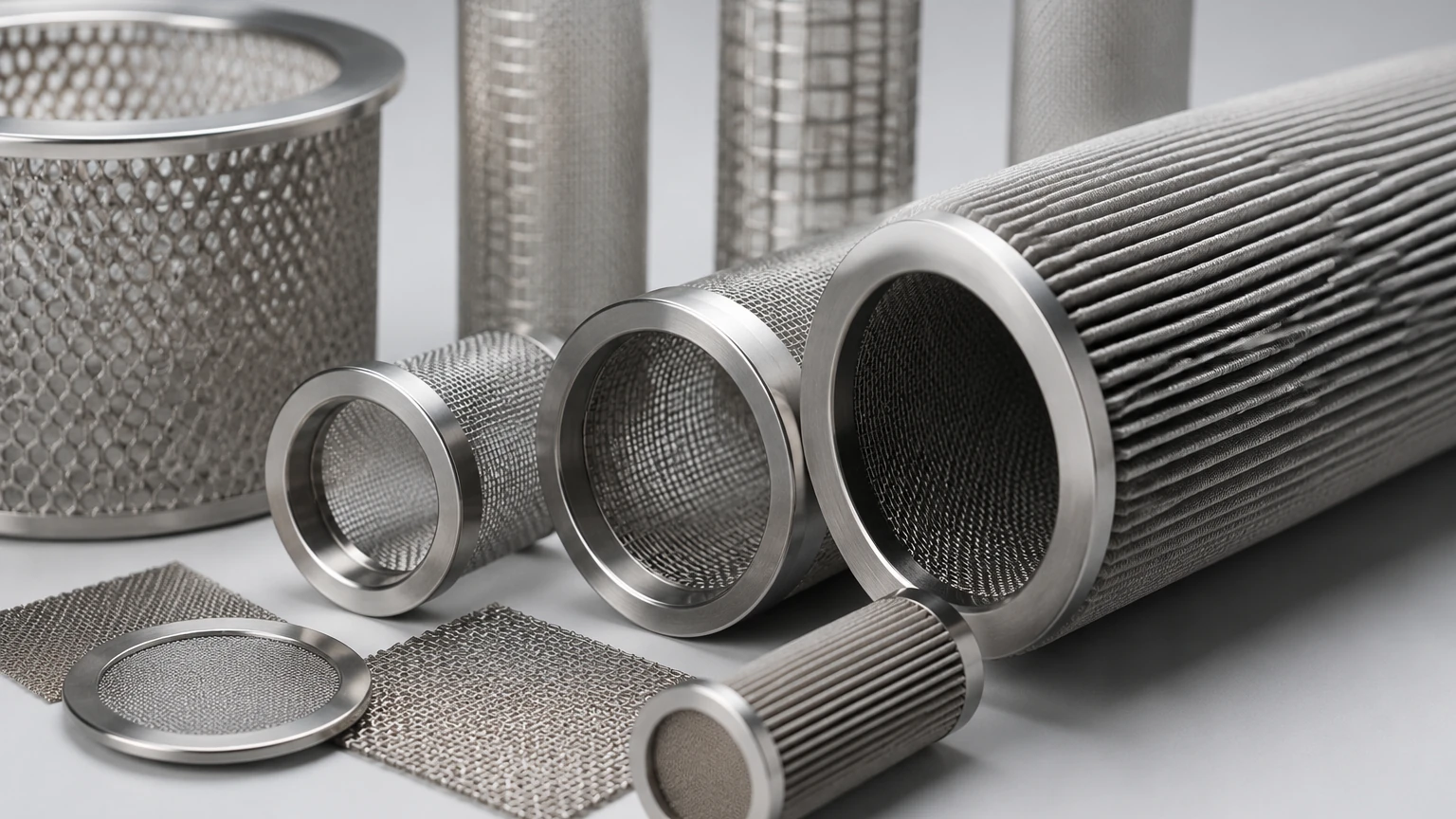
Integrating stainless steel wire mesh filters or sintered metal cartridges into the fluid path is essential for protecting the integrity of the wide bore dispensing system. These filters serve as a safeguard, ensuring that only particulates within the allowable size range for the tip reach the orifice. For instance, if a system utilizes a 1.5mm wide bore tip, an upstream filter might be calibrated to 500 microns to prevent any large debris from causing a blockage, while still allowing the intended solids in the fluid to pass through.
At Kaifil, we specialize in the synergy between filtration and dispensing. Our custom stainless steel filtration solutions are designed to integrate seamlessly into industrial fluid lines, ensuring that wide bore tips operate at peak efficiency without the risk of upstream component failure. For more information on our full range of industrial filtration components, visit our Main Page.
Engineering Considerations for Selection
When specifying wide bore tips for an industrial application, several technical parameters must be confirmed to ensure performance:
* Internal Diameter (ID): The ID should be selected based on the largest expected particulate size and the desired flow rate. A general rule of thumb is that the bore diameter should be at least three to five times the diameter of the largest particle to prevent bridging.
* Tip Geometry: The taper of the tip affects the transition from the fluid line to the orifice. A gradual taper reduces turbulence and minimizes the risk of air entrapment, which is critical for volumetric accuracy.
* Connection Type: Whether the tip uses a Luer lock, threaded NPT connection, or a custom flange, the interface must be leak-proof and capable of withstanding the system's operating pressure.
* Regulatory Compliance: In the food and pharmaceutical sectors, materials must meet FDA or USP Class VI standards. Ensuring that the stainless steel grade and any coatings used are compliant is a non-negotiable step in the procurement process.
Mitigating Common Risks
Despite their advantages, wide bore tips introduce specific challenges that must be managed. One primary risk is "dripping" or post-dispense leakage. Because the larger orifice has less capillary action to hold the fluid in place, low-viscosity fluids may leak from the tip after the pump has stopped. This is often mitigated through the use of vacuum-back or "snuff-back" valves in the dispensing system.
Another consideration is the potential for increased carryover. A larger internal surface area provides more space for fluid to adhere. This makes the selection of high-quality surface finishes and the implementation of robust cleaning protocols essential, particularly in multi-product facilities where cross-contamination is a high-risk factor.
Customization and OEM Solutions
Standard off-the-shelf components often fall short of the specific requirements of complex industrial systems. Customization allows for the optimization of tip length, bore diameter, and material properties to suit a unique application.
As a professional manufacturer, Kaifil provides OEM and customized filtration and fluid handling components. We work closely with engineering teams to develop wide bore solutions that meet the demanding needs of chemical processing, water treatment, and pharmaceutical applications. Our expertise in material selection and precision manufacturing ensures that every component—from the wire mesh filter protecting the line to the custom-designed tip—delivers reliable, long-term performance.
Conclusion: Optimizing Process Reliability
The selection of wide bore tips is a strategic decision that impacts the reliability, accuracy, and safety of industrial fluid handling. By reducing shear stress, accommodating particulates, and lowering system pressure requirements, these components enable the efficient processing of complex fluids that would otherwise be unmanageable.
When combined with high-performance stainless steel filtration, wide bore systems provide a robust solution for the most demanding industrial environments. Engineers must weigh the benefits of reduced resistance against the challenges of fluid retention and surface finish to select the optimal configuration for their specific needs. For technical support and to review our comprehensive range of filtration and precision metal components, please explore the resources available on our Main Page.
