


Stripping Column
In industrial chemical processing and environmental engineering, the stripping column stands as a fundamental unit operation designed for the separation of volatile components from a liquid stream. By facilitating the mass transfer of solutes from a liquid phase into a gas phase, these towers are essential for purification, solvent recovery, and wastewater treatment. For engineers and procurement specialists, understanding the technical nuances of stripping column design—specifically the role of internal components and filtration systems—is critical to ensuring operational efficiency and long-term durability.
As a specialized manufacturer of stainless steel filtration solutions, Kaifil provides the precision-engineered components necessary to optimize these processes. From mist eliminators to pre-filtration cartridges, the performance of a stripping column is often dictated by the quality of its internal metal structures. This guide explores the engineering principles, material considerations, and maintenance strategies required to manage industrial stripping operations effectively.
Fundamental Principles of Stripping Column Operation
A stripping column operates on the principle of mass transfer, where a liquid containing dissolved gases or volatile organic compounds (VOCs) is brought into intimate contact with a stripping agent, typically steam, air, or an inert gas like nitrogen. The process is essentially the reverse of absorption. While absorption moves solutes from a gas to a liquid, stripping utilizes the concentration gradient to drive solutes out of the liquid.
Mass Transfer and Henry’s Law
The efficiency of a stripping column is governed by Henry's Law, which states that the amount of dissolved gas in a liquid is proportional to its partial pressure above the liquid. To maximize the removal of contaminants, the stripping gas must have a lower partial pressure of the target solute than the equilibrium pressure exerted by the liquid phase. Engineers must calculate the "stripping factor," a dimensionless ratio that determines the feasibility of the separation. A higher stripping factor generally leads to a more efficient process but requires a greater volume of stripping gas, which can increase operational costs.
Gas-Liquid Contacting Methods
To achieve high efficiency, the stripping column must provide maximum surface area for contact between the two phases. This is achieved through two primary internal configurations:
1. Packed Columns: These use random or structured packing to create a thin film of liquid over a large surface area. Structured packing, often fabricated from stainless steel wire mesh, offers lower pressure drops and higher efficiency compared to random packing.
2. Tray Columns: These utilize a series of perforated trays or bubble caps. The gas bubbles through the liquid held on each tray, creating a discrete stage of mass transfer. Tray columns are often preferred for larger-scale operations or when the liquid contains solids that might clog packing.
Key Components and Engineering Considerations
The physical design of a stripping column involves more than just the outer shell. The internals dictate the fluid dynamics and, consequently, the separation performance. For engineers, selecting the right internals is a balance between throughput, pressure drop, and the required purity of the effluent.
Liquid Distributors and Re-distributors
Uniform liquid distribution is paramount. If the liquid is not evenly spread across the top of the packing, "channeling" occurs, where the liquid flows down the walls or through specific paths, bypassing the stripping gas. Precision-engineered distributors ensure that the entire cross-sectional area of the column is utilized. In taller columns, re-distributors are installed at intervals to correct any maldistribution that develops as the liquid descends.
Mist Eliminators and Demister Pads
As the stripping gas exits the top of the column, it often carries entrained liquid droplets. If left unmanaged, this carryover can contaminate downstream equipment or lead to product loss. Mist eliminators, typically constructed from knitted stainless steel wire mesh, are installed at the gas outlet. These components work by impingement; the gas flows through the mesh while the heavier liquid droplets collide with the wires, coalesce, and fall back into the column. Kaifil specializes in custom-designed wire mesh demisters that provide high removal efficiency with minimal pressure resistance.
Support Grids and Hold-down Plates
Internal supports must be robust enough to handle the weight of the packing and the liquid holdup while remaining open enough to allow gas to pass upward without significant resistance. Engineering these supports requires careful calculation of the open area to prevent "flooding," a condition where the upward gas velocity is so high that it prevents the liquid from flowing downward, causing the column to fill with liquid and cease functioning.
Material Selection for Corrosive and High-Temperature Stripping
Stripping columns are frequently deployed in harsh environments involving high temperatures, vacuum conditions, or corrosive chemicals such as hydrogen sulfide (H2S), ammonia, or chlorinated hydrocarbons. Choosing the correct material for internals and filtration components is the most significant factor in determining the total cost of ownership.
The Advantages of Stainless Steel
While plastic internals (like PP or PVDF) are common in low-temperature applications, stainless steel is the industry standard for demanding industrial stripping.
- Type 304 Stainless Steel: Suitable for general-purpose applications with mild corrosive potential.
- Type 316L Stainless Steel: The preferred choice for most chemical processing due to its molybdenum content, which provides superior resistance to chlorides and organic acids.
- High-Nickel Alloys: For extreme environments involving concentrated acids or high-temperature steam stripping, alloys such as 904L or Duplex steels may be required to prevent pitting and stress corrosion cracking.
Using high-quality metal internals ensures that the stripping column maintains its structural integrity over decades of service. Unlike plastics, stainless steel components do not become brittle over time and can withstand the mechanical stresses of high-pressure steam cleaning.
The Role of Filtration in Stripping Processes
Filtration is often an overlooked aspect of stripping column design, yet it is essential for preventing fouling and maintaining gas purity. Particulate matter in the feed stream can quickly degrade the performance of a column by clogging the packing or the distribution orifices.
Pre-filtration of Feed Liquids
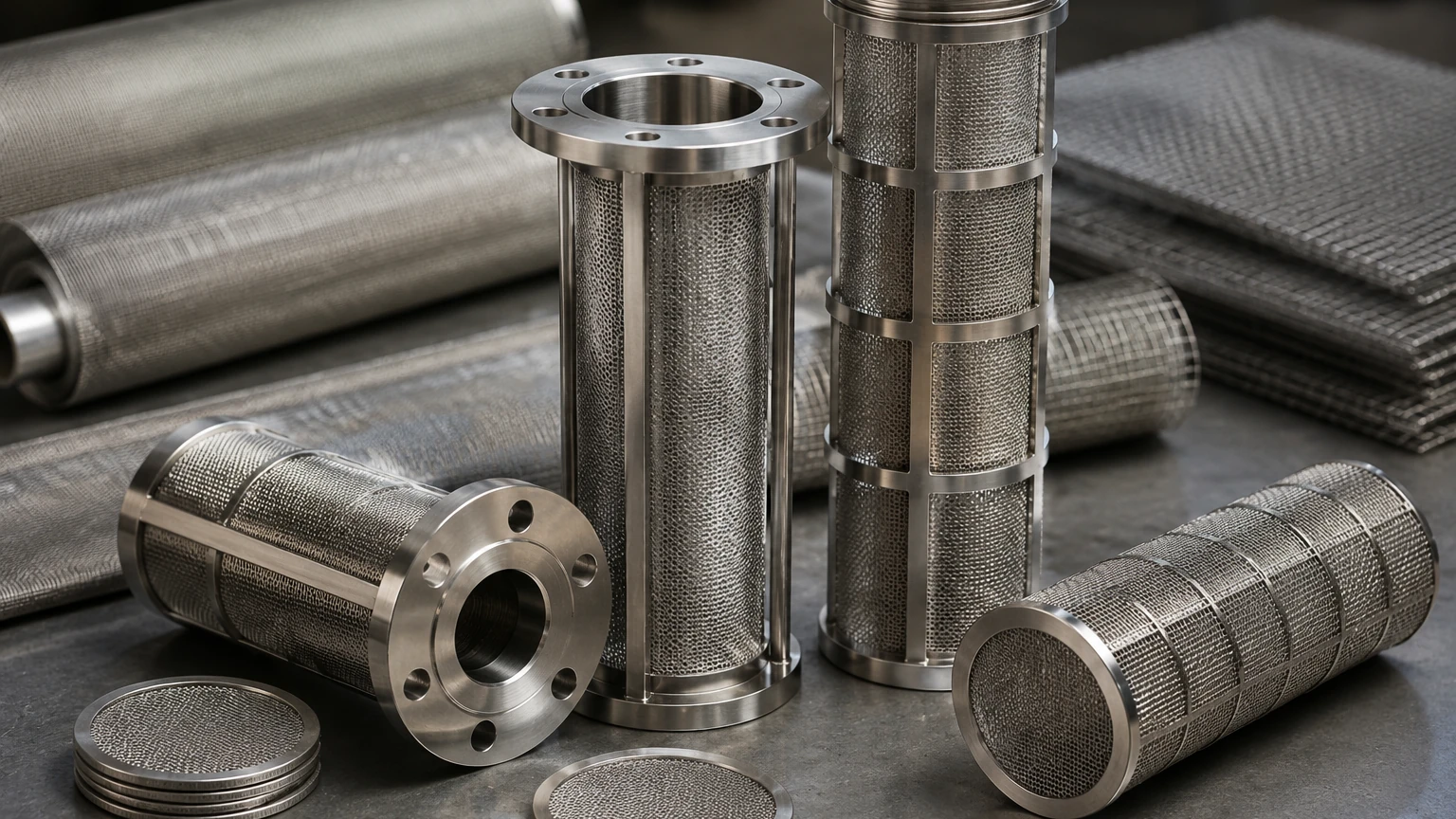
Before the liquid enters the stripping column, it should pass through a high-precision filter. Stainless steel filter cartridges are ideal for this application because they can handle high flow rates and can be backwashed or chemically cleaned. Removing suspended solids prevents the formation of a "filter cake" on the surface of the packing, which would otherwise reduce the available surface area for mass transfer and increase the pressure drop across the bed.
Protecting Downstream Equipment
In many processes, the stripped gas is sent to a condenser or a secondary reactor. If the stripping column does not effectively separate entrained liquids, the downstream equipment may suffer from corrosion or catalyst poisoning. Utilizing precision wire mesh filters at the gas discharge point ensures that the vapor phase is free of liquid contaminants, protecting the integrity of the entire process loop.
Performance Evaluation and Maintenance
Engineers must monitor several key performance indicators (KPIs) to ensure the stripping column is operating within its design parameters. Routine maintenance and a clear understanding of replacement cycles are necessary to avoid unscheduled downtime.
Monitoring Pressure Drop
The pressure difference between the bottom and the top of the column is the most reliable indicator of internal health. A sudden increase in pressure drop usually suggests fouling, scaling, or flooding. Conversely, a decrease in pressure drop might indicate that the packing has shifted or that channeling is occurring. Regular monitoring allows operators to schedule cleaning before the column’s efficiency drops below acceptable levels.
Cleaning and Replacement Cycles
Stainless steel internals offer the advantage of being cleanable. Depending on the nature of the contaminants, columns can be cleaned using acid washes, steam surging, or mechanical cleaning of the demister pads.
- Filter Cartridges: Should be replaced or cleaned based on the differential pressure across the filter housing.
- Wire Mesh Demisters: While durable, these should be inspected annually for signs of erosion or clogging. If the wire diameter has significantly thinned due to corrosion, the demister should be replaced to prevent wire fragments from entering the gas stream.
Customization for Specific Applications
Standard off-the-shelf components rarely provide the optimal balance of efficiency and durability for specialized industrial needs. Customization allows engineers to specify the exact wire diameter, mesh density, and alloy grade for their specific stripping column. For those seeking detailed technical specifications and support for custom filtration components, visiting the Main Page of a professional manufacturer like Kaifil provides access to engineering resources and product data sheets.
Optimizing Total Cost of Ownership (TCO)
When procuring components for a stripping column, the initial purchase price is only one part of the economic equation. A true B2B purchasing decision must account for the total cost of ownership, which includes installation, energy consumption (due to pressure drop), maintenance labor, and the cost of lost production during downtime.
1. Energy Efficiency: Selecting high-performance packing and mist eliminators with low pressure drop characteristics directly reduces the energy required for the blowers or compressors driving the stripping gas.
2. Durability: Investing in high-grade stainless steel internals from the outset prevents the need for frequent replacements. In many chemical plants, the labor cost of opening a column and replacing internals far exceeds the cost of the parts themselves.
3. Reliability: Precision-manufactured filters prevent the fouling of expensive packing materials, extending the time between major turnarounds.
Conclusion
The stripping column remains a cornerstone of industrial separation technology. Whether removing ammonia from wastewater or volatile solvents from process oils, the success of the operation depends on the precise interaction of gas and liquid phases. By focusing on high-quality stainless steel internals, effective mist elimination, and rigorous pre-filtration, engineers can ensure their systems operate at peak efficiency with minimal maintenance requirements.
For technical professionals looking to optimize their filtration and separation stages within a stripping column, collaborating with a manufacturer that understands the rigors of industrial environments is essential. To review product options and application support for custom stainless steel filtration solutions, visit https://www.kaifil.com/ to explore how precision engineering can enhance your processing capabilities.
