


Hydraulic Filter Elements
In industrial hydraulic systems, the fluid serves multiple critical roles: it transmits power, lubricates moving parts, transfers heat, and seals tolerances between components. However, the presence of contaminants—ranging from microscopic metal shavings to environmental dust—can compromise these functions, leading to component wear, system inefficiency, and catastrophic failure. Hydraulic filter elements are the primary line of defense in maintaining fluid cleanliness and ensuring the longevity of pumps, valves, and actuators.
For engineers and procurement professionals, selecting the correct hydraulic filter elements involves more than matching dimensions. It requires a deep understanding of fluid dynamics, material compatibility, and the specific rigors of the operating environment. As a professional manufacturer, Kaifil specializes in providing high-performance stainless steel filtration solutions designed to meet the exacting standards of modern industrial hydraulics.
The Role of Hydraulic Filter Elements in System Reliability
Contamination is widely recognized as the leading cause of failure in hydraulic systems, accounting for an estimated 70% to 80% of all issues. Contaminants enter the system through various means, including built-in debris from manufacturing, ingression through seals and breathers, and internally generated wear particles.
Hydraulic filter elements are engineered to intercept these particles before they can reach sensitive components. By maintaining the fluid's ISO cleanliness code within the manufacturer’s specified limits, these elements prevent abrasive wear, silt-induced stiction in valves, and the acceleration of fluid oxidation. Effective filtration directly correlates to reduced downtime and lower total cost of ownership for industrial machinery.
Engineering Considerations: Materials and Construction
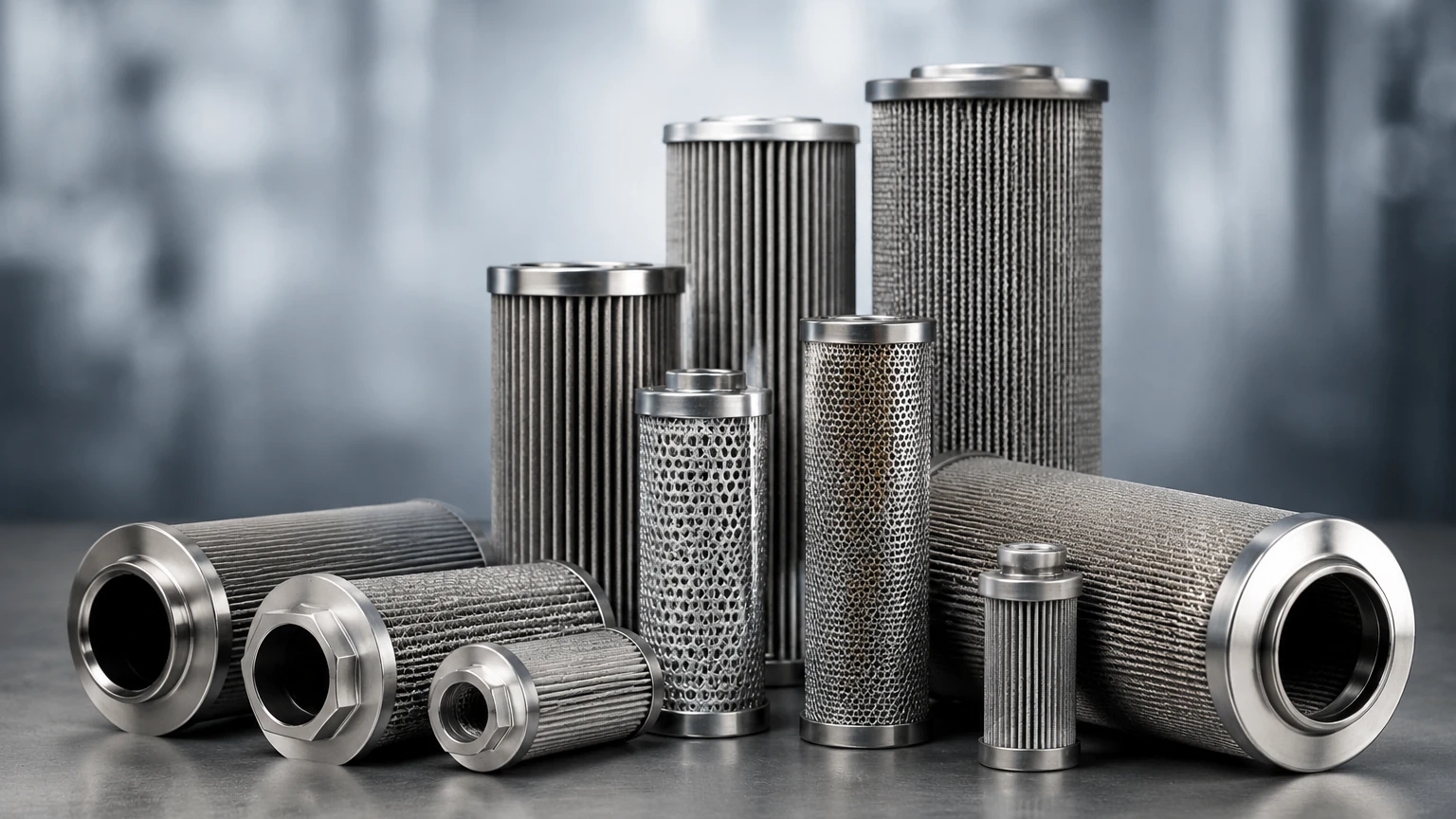
The construction of a hydraulic filter element must withstand high differential pressures, fluctuating flow rates, and potentially corrosive fluids. While disposable elements often use cellulose or glass fiber, industrial applications demanding higher durability frequently turn to stainless steel wire mesh and sintered metal media.
Stainless Steel Wire Mesh
Stainless steel (typically Grade 304 or 316L) is favored for its exceptional mechanical strength and thermal stability. Unlike synthetic media, stainless steel wire mesh maintains its pore structure under high pressure, ensuring consistent filtration performance. Furthermore, these elements are often cleanable and reusable, providing a sustainable alternative to disposable cartridges in specific applications.
Support Structures
The internal core and outer support of the filter element are critical for structural integrity. In high-pressure hydraulic circuits, the element must resist collapse if the pressure drop across the media increases due to contaminant loading. Precision-welded stainless steel cores provide the necessary rigidity to handle these stresses without deforming.
Seals and End Caps
Compatibility with hydraulic fluids is essential. Standard mineral oils may work with Nitrile (NBR) seals, but synthetic fluids or high-temperature environments may require Fluorocarbon (Viton) or EPDM. The end caps, often made of stainless steel or aluminum, must be securely bonded or welded to the media to prevent bypass—a condition where unfiltered fluid leaks around the filter.
Critical Performance Metrics: Beta Ratio and Micron Rating
When evaluating hydraulic filter elements, engineers rely on standardized metrics to predict performance. Understanding the distinction between nominal and absolute ratings is fundamental to proper selection.
Micron Rating
The micron rating indicates the size of particles the filter is designed to capture. A "nominal" rating refers to the filter's ability to retain a majority of particles of a certain size, but it does not guarantee 100% efficiency. An "absolute" rating, typically determined through the Multi-Pass Test (ISO 16889), indicates the particle size at which the filter reaches a specific efficiency level, often 99% or higher.
The Beta Ratio (β)
The Beta Ratio is a more precise measure of filtration efficiency. It is the ratio of the number of particles of a minimum size ($x$) in the upstream fluid to the number of particles of the same size in the downstream fluid. For example, a $\beta_{10} = 200$ means that for every 200 particles of 10 microns entering the filter, only one passes through. This represents an efficiency of 99.5%. High-performance hydraulic systems often require elements with high Beta ratios to protect tight-tolerance components like servo valves.
Placement Within the Hydraulic Circuit
The location of hydraulic filter elements determines the type of protection they provide. A comprehensive filtration strategy often involves multiple elements placed at strategic points:
1. Suction Line Filters: Located before the pump, these protect the pump from large debris. They must have low pressure drop characteristics to prevent pump cavitation.
2. Pressure Line Filters: Positioned downstream of the pump, these elements are built to withstand full system pressure. They protect sensitive components like valves and actuators from pump-generated wear debris.
3. Return Line Filters: These capture contaminants from the system before the fluid returns to the reservoir. They are essential for maintaining the overall cleanliness of the fluid in the tank.
4. Off-line (Kidney Loop) Filtration: A dedicated motor and pump circulate fluid through a high-efficiency filter independently of the main system, allowing for continuous cleaning even when the primary machine is idle.
Common Risks and Failure Modes
Failure to correctly specify or maintain hydraulic filter elements can lead to several risks:
* Element Collapse: If the differential pressure exceeds the element's collapse rating (due to cold starts or excessive clogging), the media may rupture, releasing a concentrated "slug" of contaminants into the system.
* Bypass Leakage: If the filter housing's bypass valve opens too early or if the element is improperly seated, unfiltered fluid will circulate, leading to accelerated component wear.
* Media Migration: In low-quality filters, the filter material itself may break down and enter the fluid stream, becoming a source of contamination.
* Chemical Incompatibility: Using a filter with seals or adhesives that are not compatible with the hydraulic fluid can cause the element to disintegrate, leading to system-wide contamination.
To mitigate these risks, it is essential to source components from manufacturers who adhere to rigorous quality control and material standards. You can Review product options and application support to ensure your filtration components meet the specific demands of your industrial machinery.
Customization and OEM Solutions
Many industrial applications require specialized hydraulic filter elements that do not fit standard off-the-shelf specifications. Customization may be necessary due to unique space constraints, extreme temperature requirements, or the use of non-standard hydraulic fluids.
Kaifil provides extensive OEM and customized filtration solutions, working closely with engineers to develop elements that match precise performance profiles. Customization options include:
* Tailored Dimensions: Adjusting length, diameter, and fitting types to integrate seamlessly into existing housings.
* Specialized Media Layers: Combining different layers of wire mesh or sintered metal to achieve specific flow rates and filtration fineness.
* Advanced Materials: Utilizing high-grade alloys for environments involving aggressive chemicals or extreme thermal cycling.
By focusing on the specific engineering challenges of the application, customized filter elements ensure that the hydraulic system operates at peak efficiency without the compromises often associated with generic replacements.
Maintenance and Replacement Cycles
The effective lifespan of hydraulic filter elements is not fixed; it depends on the contamination ingression rate and the fluid's operating conditions. Relying solely on a calendar-based replacement schedule can be inefficient, leading to either premature disposal of functional elements or, more dangerously, running a clogged filter in bypass mode.
Differential Pressure Monitoring
The most reliable method for determining when to change a filter element is monitoring the differential pressure ($ΔP$). Most industrial filter housings are equipped with visual or electrical indicators that signal when the pressure drop across the element reaches a critical threshold. This indicates that the element's dirt-holding capacity is nearly exhausted.
Fluid Analysis
Regular oil analysis provides a broader view of system health. By monitoring the ISO cleanliness code and the presence of specific wear metals, maintenance teams can evaluate whether the current hydraulic filter elements are performing as expected or if a change in micron rating or media type is required.
Conclusion: Optimizing Hydraulic Performance
Hydraulic filter elements are small components that carry a significant responsibility. Their performance directly impacts the reliability, efficiency, and service life of expensive industrial equipment. By prioritizing high-quality materials like stainless steel, understanding key performance metrics like the Beta ratio, and implementing a strategic maintenance program, engineers can significantly reduce the risks associated with fluid contamination.
Selecting the right partner for filtration solutions is essential. With expertise in precision manufacturing and a focus on durable, high-performance metal filtration, Kaifil supports global industries in achieving optimized hydraulic system performance. Whether you require standard replacements or a fully customized OEM design, focusing on technical excellence in filtration is a prerequisite for industrial success. For more information on our complete range of stainless steel filtration products, visit our Main Page.
