


Hydraulic Filter Press
In industrial liquid-solid separation, the hydraulic filter press stands as a cornerstone technology for dewatering slurry and recovering solids. For engineers and procurement professionals in the chemical, pharmaceutical, and food processing sectors, understanding the mechanical nuances of these systems is essential for optimizing plant efficiency. A hydraulic filter press utilizes a hydraulic system to provide the necessary clamping force to seal a series of filter plates, allowing high-pressure filtration to occur without leakage.
As a manufacturer specialized in precision filtration components, Kaifil recognizes that the efficiency of a hydraulic filter press is not solely dependent on the hydraulic pump's power, but also on the integrity of the filter media and the engineering of the plate pack. This article provides a technical overview of hydraulic filter press operations, component selection, and the critical role of stainless steel filtration solutions in demanding industrial environments.
The Role of the Hydraulic System in Filter Press Operation
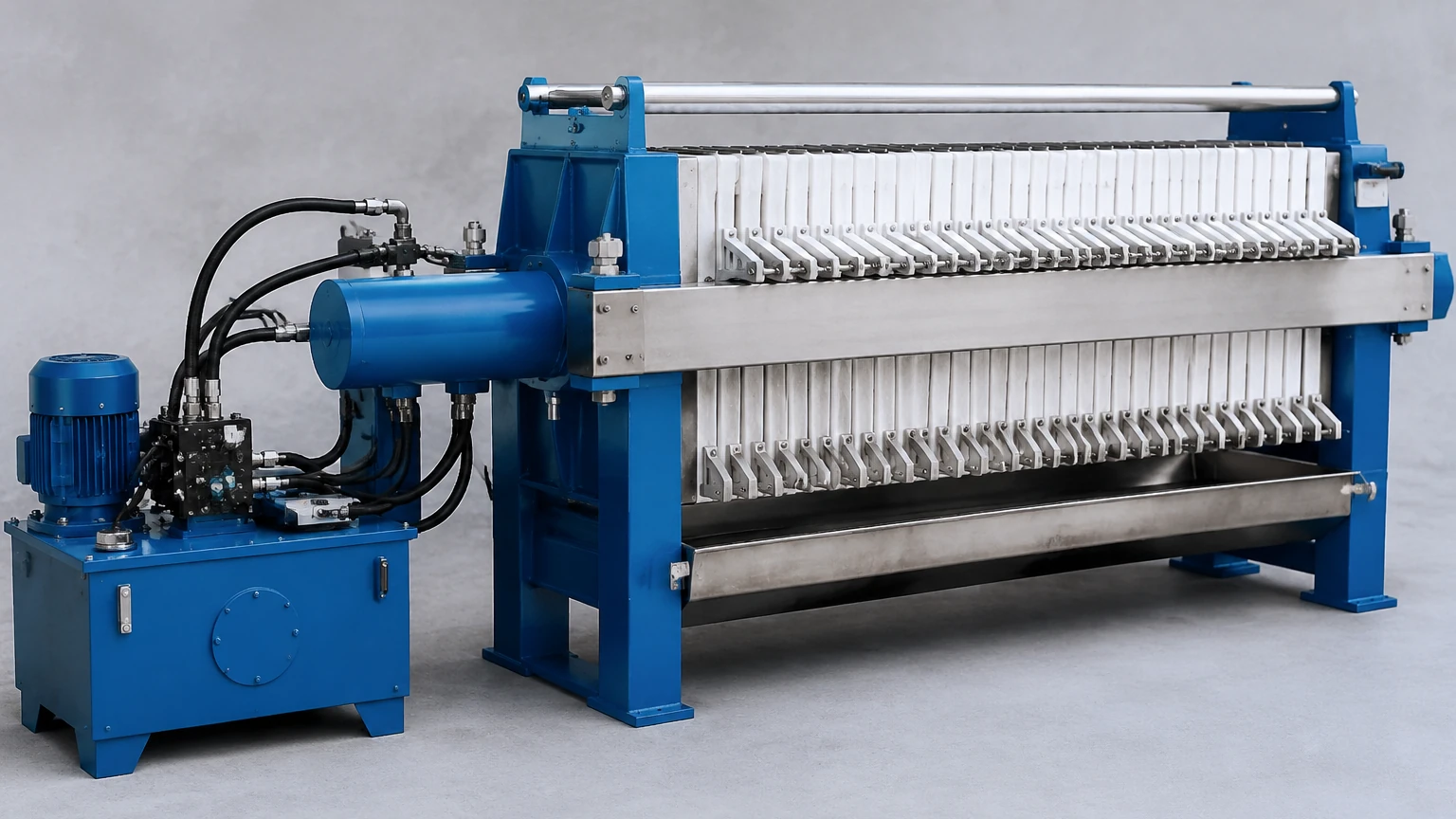
The defining characteristic of a hydraulic filter press is its closing mechanism. Unlike manual or mechanical screw-driven presses, the hydraulic version uses a high-pressure cylinder to move the follower plate and compress the filter plate pack against the fixed head.
Clamping Force and Sealing
To achieve effective filtration, the internal pressure of the slurry being pumped into the press must be lower than the external clamping force applied by the hydraulic cylinder. If the hydraulic pressure is insufficient, the plates may "weep" or spray, leading to product loss and safety hazards. Most industrial hydraulic filter presses operate with a closing pressure that ensures the gaskets or machined surfaces of the plates form a liquid-tight seal.
Automatic vs. Manual Hydraulic Systems
Industrial systems generally fall into two categories: manual hydraulic and automatic hydraulic. Manual systems use a hand-operated pump to actuate the cylinder, suitable for smaller batches or less frequent cycles. In contrast, automatic hydraulic systems utilize an electric motor, hydraulic reservoir, and solenoid valves. These systems often include a pressure-maintenance feature where the pump automatically restarts if the pressure drops below a specific threshold due to thermal expansion or minor seal bypass, ensuring the integrity of the filtration cycle remains uncompromised.
Key Components of a Hydraulic Filter Press
A hydraulic filter press is an assembly of several critical sub-systems. For the technical buyer, evaluating the quality of these components is the first step in ensuring a long service life.
1. The Frame (Skeleton): This includes the fixed head, the moving follower (tail) head, and the side rails (overhead or side-beam). The frame must withstand the massive compressive forces generated by the hydraulic cylinder without deflection.
2. The Hydraulic Power Unit (HPU): This consists of the oil tank, pump, motor, and control valves. The HPU's reliability determines the cycle time and the safety of the operation.
3. The Filter Plate Pack: Plates are typically made from polypropylene, stainless steel, or cast iron. In high-temperature or highly corrosive chemical applications, stainless steel plates are preferred for their structural rigidity and resistance to chemical attack.
4. Filter Media: This is where the actual separation occurs. While many presses use filter cloths, advanced applications requiring precision and durability often utilize stainless steel wire mesh filters or sintered metal laminates. These components, such as those produced by Kaifil, offer superior backwashing capabilities and mechanical strength compared to synthetic fabrics.
The Filtration Cycle: A Step-by-Step Technical Breakdown
Understanding the phases of the hydraulic filter press cycle helps engineers identify potential bottlenecks in their production lines.
1. Closing Phase
The hydraulic cylinder extends, pushing the plate pack together. Once the set pressure is reached (often monitored by a pressure transducer), the system signals that the feeding phase can begin.
2. Feeding and Filtration
Slurry is pumped into the internal chambers formed by the compressed plates. The liquid (filtrate) passes through the filter media and exits through discharge ports, while solids begin to accumulate on the surface of the media, forming a "cake." As the cake thickens, the internal pressure rises.
3. Cake Consolidation (Optional Squeezing)
In membrane hydraulic filter presses, a secondary hydraulic or pneumatic step involves inflating a flexible membrane on the plate surface to physically squeeze the cake. This significantly reduces moisture content and shortens cycle times.
4. Cake Washing
If the objective is to recover a purified solid or remove a specific solvent, wash liquid is pumped through the cake. The design of the filter plate channels determines the efficiency of this displacement washing.
5. Discharge
The hydraulic cylinder retracts, and the plates are separated either manually or via an automatic plate shifter. The solid cakes fall into a hopper or onto a conveyor for further processing.
Selecting Filter Media for Hydraulic Presses
One of the most frequent questions engineers face is the choice between disposable filter cloths and permanent metal filter media. In the context of a hydraulic filter press, the choice of media impacts the total cost of ownership and filtration accuracy.
Stainless Steel Wire Mesh vs. Synthetic Cloth
While synthetic cloths are inexpensive, they are prone to blinding, tearing, and chemical degradation. In contrast, stainless steel wire mesh filters provide:
* High Temperature Resistance: Essential for processes involving hot oils or steam cleaning.
* Mechanical Stability: Metal mesh does not stretch or sag under the high pressures typical of hydraulic pressing.
* Precise Micron Ratings: Sintered mesh or multi-layer wire mesh allows for absolute filtration ratings, which is critical in pharmaceutical and fine chemical sectors.
When selecting media, it is vital to confirm the chemical compatibility of the alloy (typically 304 or 316L) with the process fluid. For highly acidic or saline environments, specialized alloys may be required to prevent pitting and stress corrosion cracking.
Engineering Considerations for System Optimization
When integrating a hydraulic filter press into a facility, several engineering factors must be calculated to ensure the system meets performance expectations.
Filtration Area and Chamber Volume
The required filtration area is determined by the flow rate and the filtration characteristics of the slurry. The chamber volume must be sufficient to hold the total volume of solids produced in a single cycle. Overloading a press can lead to incomplete cake formation and difficult discharge, while underloading can result in uneven cake distribution and potential plate damage.
Pressure Ratings
Most standard hydraulic filter presses are designed for feed pressures of 100 to 225 PSI (7 to 15 bar). However, high-pressure applications may require reinforced frames and specialized hydraulic cylinders capable of maintaining seals at much higher feed pressures. Engineers should specify the maximum operating pressure during the design phase to ensure the safety factor of the hydraulic system is adequate.
Automation and Control Integration
Modern B2B industrial environments require equipment that can integrate with existing PLC (Programmable Logic Controller) systems. Automatic hydraulic presses can be equipped with sensors to monitor hydraulic oil temperature, oil level, and cycle counts, providing data for predictive maintenance and process optimization.
Maintenance and Common Risks
To maintain the performance of a hydraulic filter press, a proactive maintenance schedule is required. The hydraulic system itself is susceptible to oil contamination; even microscopic particles can cause wear in the pump or valves, leading to pressure loss. Regular oil analysis and filter changes within the HPU are mandatory.
Another common risk is "plate misalignment." If the plates are not perfectly aligned during the closing phase, the hydraulic force can be distributed unevenly, leading to cracked plates or damaged side rails. Automated plate shifters should be inspected regularly to ensure they are positioning the plates correctly within the guides.
Finally, the filter media must be kept clean. In systems using stainless steel mesh, ultrasonic cleaning or specialized chemical CIP (Clean-In-Place) cycles can restore the flow rate and extend the life of the components significantly compared to disposable alternatives.
Conclusion: Making Informed Purchasing Decisions
Investing in a hydraulic filter press is a significant capital expenditure that requires a deep understanding of both mechanical and chemical requirements. By focusing on the quality of the hydraulic closing mechanism, the structural integrity of the frame, and the precision of the filtration media, companies can achieve reliable, long-term separation performance.
For those seeking to optimize their filtration processes with high-performance metal components, selecting a partner with manufacturing expertise is essential. Whether you are replacing existing components or designing a new system, you can Review product options and application support on our Main Page to find the right stainless steel filtration solutions for your specific industrial needs.
Before taking the next step in your procurement process, ensure you have confirmed your slurry’s chemical properties, the required solids dryness, and the desired level of automation. These factors will ultimately dictate the configuration of your hydraulic filter press and the success of your filtration operation.
