


Hydraulic Filter Suction
In industrial hydraulic systems, the pump is often considered the heart of the operation. To ensure its longevity and maintain system efficiency, the fluid entering the pump must be free of large contaminants that could cause catastrophic mechanical failure. This is the primary role of hydraulic filter suction components, also known as suction strainers or inlet filters. Positioned directly in the suction line or submerged within the reservoir, these filters serve as the first line of defense for the hydraulic pump.
Selecting the correct hydraulic filter suction solution requires a deep understanding of fluid dynamics, material science, and the specific mechanical requirements of the pump. Unlike pressure or return line filters, suction filters operate under vacuum conditions, making them sensitive to pressure drops that can lead to pump cavitation. For engineers and procurement teams, balancing filtration efficiency with flow unrestrictedness is the central challenge in suction-side design.
Understanding the Function of Suction Filtration in Hydraulic Systems
The primary objective of a suction filter is to protect the hydraulic pump from "ingested" debris. This debris typically includes large particles such as metal chips from manufacturing, scale from pipes, or accidental contaminants introduced during maintenance. While finer filtration usually occurs later in the circuit (in the pressure or return lines), the suction filter prevents large solids from entering the pump’s internal clearances, where they could cause immediate scoring, seizing, or internal leakage.
In most configurations, the hydraulic filter suction unit is mounted either on the pump inlet pipe inside the tank or as an external canister filter between the tank and the pump. Because the pump must "pull" fluid through the filter, any resistance created by the filter media manifests as a vacuum. If this vacuum exceeds the pump's inlet capability, the system becomes vulnerable to performance degradation.
Technical Engineering Challenges: Balancing Filtration and Cavitation
The most critical risk associated with hydraulic filter suction is cavitation. Cavitation occurs when the pressure at the pump inlet falls below the vapor pressure of the hydraulic fluid. This causes vapor bubbles to form within the fluid; when these bubbles reach the high-pressure side of the pump, they collapse violently. The resulting micro-jets of fluid can pit metal surfaces, destroy seals, and eventually lead to total pump failure.
To prevent cavitation, engineers must strictly monitor the pressure drop (ΔP) across the suction filter. Several factors influence this pressure drop:
* Micron Rating: Suction filters generally utilize a coarser mesh than other filters in the system. While pressure filters might target 3–10 microns, suction filters typically range from 74 to 150 microns (100 to 200 mesh). This provides a safeguard against large particles while maintaining a low resistance to flow.
* Fluid Viscosity: Hydraulic oil thickens at lower temperatures. During a cold start, the increased viscosity significantly raises the pressure drop across the filter. This is why many suction systems are oversized or equipped with bypass valves.
* Flow Velocity: Higher flow rates through a fixed filter area increase the velocity and, consequently, the pressure drop. Ensuring a large effective filtration area is essential for high-flow industrial applications.
Material Considerations for Industrial Suction Filters
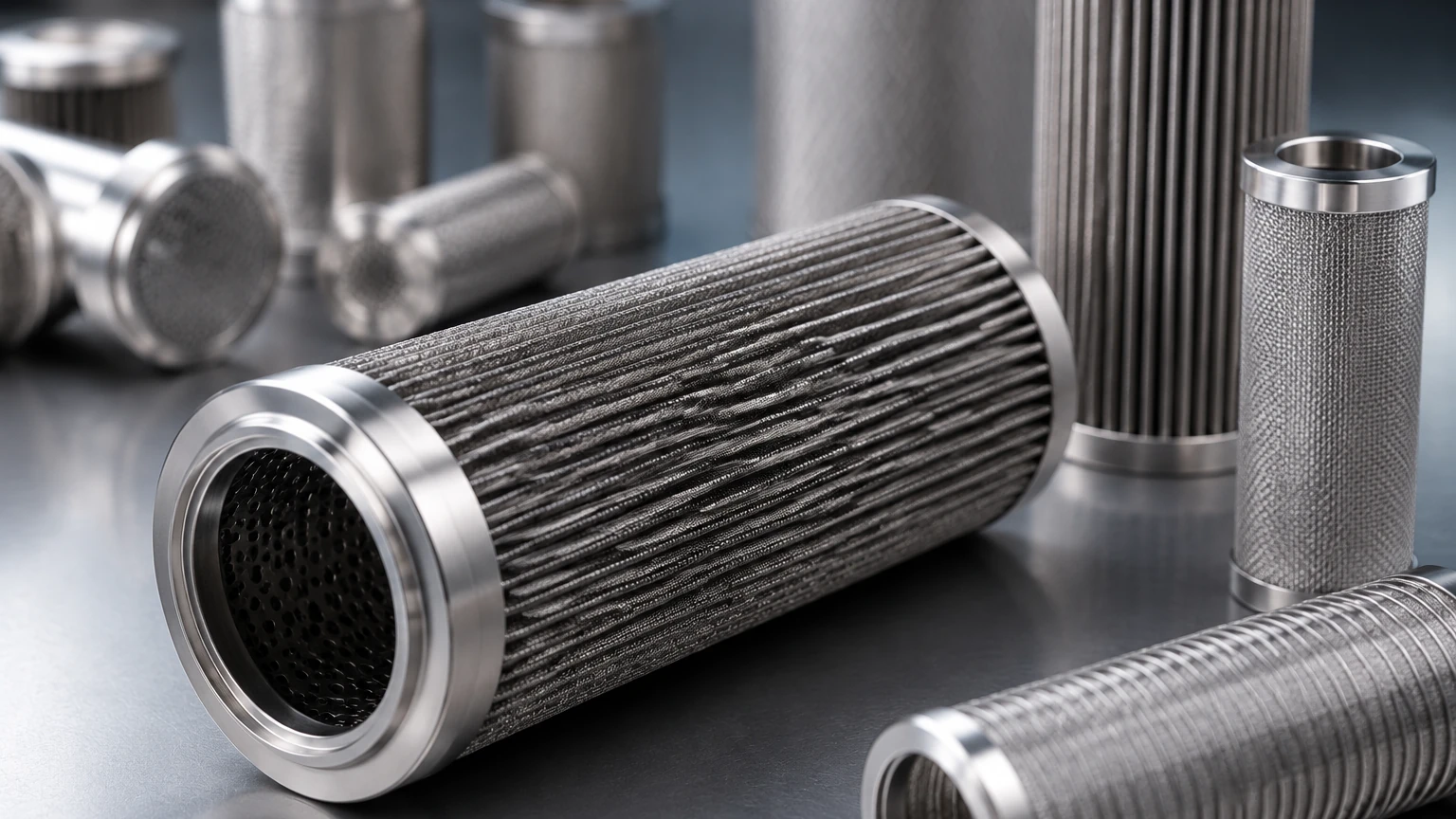
For demanding industrial environments, the material of the filter element is as important as its micron rating. Stainless steel is the industry standard for high-quality suction filtration due to its structural integrity and chemical compatibility. As a specialist in custom filtration, Kaifil emphasizes the use of stainless steel wire mesh for suction applications.
Stainless Steel Wire Mesh
Stainless steel (typically Grade 304 or 316) offers several advantages over synthetic or paper media in the suction line:
1. Durability: It can withstand the mechanical stresses of high-flow suction without collapsing.
2. Cleanability: Unlike disposable cellulose filters, stainless steel mesh can often be cleaned and reused, reducing the total cost of ownership.
3. Chemical Resistance: Stainless steel is compatible with a wide range of hydraulic fluids, including fire-resistant fluids and high-water-base fluids that might degrade other materials.
Structural Reinforcement
In larger suction filters, the wire mesh is often supported by a perforated metal inner core. This core provides the necessary stiffness to prevent the mesh from deforming under the vacuum pressure exerted by the pump, ensuring the filtration geometry remains consistent throughout the service life of the component.
Key Design Features and Customization Options
When specifying a hydraulic filter suction component, engineers must look beyond the basic dimensions. Modern industrial filters incorporate several features designed to enhance reliability and ease of maintenance.
Internal Bypass Valves
A bypass valve is a critical safety feature for suction filters. If the filter becomes clogged with debris or if the fluid is too viscous during a cold start, the bypass valve opens at a pre-set pressure (usually very low, such as 3 to 5 psi). This allows unfiltered fluid to reach the pump, which is a calculated risk—it is generally better for a pump to receive slightly contaminated fluid for a short period than to run dry and cavitate.
Magnetic Inserts
Many suction strainers can be equipped with magnetic columns. These magnets attract and hold fine ferrous particles that might be small enough to pass through the wire mesh. By capturing these particles before they reach the pump, the magnetic insert provides an extra layer of protection against abrasive wear.
Custom End Caps and Connections
Industrial systems often require specific mounting configurations. Whether the application calls for NPT, BSPP, SAE O-ring ports, or specialized flange mounts, customization ensures a leak-free and secure connection. The use of high-quality adhesives or specialized welding techniques (such as argon arc welding) to join the mesh to the end caps is vital for ensuring no bypass occurs at the joints.
Evaluating Performance: Pressure Drop and Flow Rates
To select the appropriate hydraulic filter suction unit, engineers must calculate the "Clean Pressure Drop." This is the resistance the filter offers when it is new and the fluid is at operating temperature. A common rule of thumb is that the total vacuum at the pump inlet should not exceed 2 to 3 inHg (inches of mercury) under normal operating conditions.
When reviewing technical specifications on the Main Page, it is important to consider the "effective filtration area." By increasing the surface area of the pleats or the diameter of the strainer, the velocity of the fluid through the mesh decreases. Lower velocity directly correlates to a lower pressure drop, providing a larger safety margin against cavitation as the filter begins to collect debris over time.
Maintenance Protocols and Replacement Cycles
Because suction filters are often located inside the reservoir, they can be "out of sight, out of mind." However, neglecting the suction side of the hydraulic circuit is a leading cause of pump failure. Effective maintenance involves both scheduled inspections and active monitoring.
Visual and Electrical Indicators
For externally mounted suction filters, vacuum gauges or electrical vacuum switches are essential. These devices alert maintenance teams when the pressure drop reaches a critical threshold, indicating that the filter element requires cleaning or replacement. In submerged applications, regular reservoir inspections are necessary to ensure the strainer is not covered in sludge or blocked by tank-entry contaminants.
Cleaning vs. Replacement
While stainless steel mesh filters are cleanable, the cleaning process must be performed carefully to avoid damaging the delicate wire weave. Ultrasonic cleaning is often the preferred method for removing deeply embedded particles. If the mesh shows signs of fraying, corrosion, or permanent deformation, the element must be replaced immediately to prevent metal fragments from the filter itself from entering the pump.
Choosing the Right Hydraulic Suction Filter for Your Application
Selecting a hydraulic filter suction solution is an exercise in risk management. Engineers must weigh the cost of the filter against the cost of a pump replacement and system downtime. When sourcing these components, it is beneficial to work with a manufacturer that understands the nuances of industrial filtration.
Key questions to confirm before finalizing a specification include:
* Maximum Flow Rate: Does the filter's rated flow account for cold-start viscosity?
* Fluid Compatibility: Are the seals and adhesives used in the filter compatible with the specific hydraulic oil in use?
* Environmental Conditions: Will the filter be exposed to corrosive atmospheres or extreme temperatures?
* Space Constraints: Does the reservoir design allow for a filter with sufficient surface area?
By focusing on high-quality materials and precise engineering, facilities can significantly extend the mean time between failures (MTBF) for their hydraulic pumps. Custom stainless steel solutions provide the durability required for heavy-duty chemical processing, pharmaceutical, and industrial hydraulic applications where reliability is non-negotiable.
The Kaifil Advantage in Suction Filtration
As a professional manufacturer, Kaifil specializes in translating complex filtration requirements into high-performance hardware. Our expertise in stainless steel wire mesh and precision metal components allows us to provide OEM and customized solutions that meet the exact needs of global industrial customers. Whether you are designing a new hydraulic power unit or optimizing an existing system, our focus on quality and durability ensures that your suction-side filtration performs reliably in the most demanding environments.
By integrating advanced manufacturing capabilities with a deep understanding of filtration principles, we help engineering teams achieve the perfect balance between fluid cleanliness and pump protection. For detailed technical specifications on our range of stainless steel filter cartridges and custom suction elements, please visit our Main Page to review product options and application support.
