


Seal Gas Filter
In the context of high-speed rotating equipment, specifically centrifugal compressors, the integrity of dry gas seals (DGS) is paramount to operational safety and efficiency. A seal gas filter serves as the primary defense mechanism, ensuring that the gas entering the seal cavity is free from solid particulates and liquid aerosols. Contamination is the leading cause of dry gas seal failure; even microscopic particles can disrupt the thin gas film—often only 3 to 5 microns thick—that separates the seal faces. This article examines the technical requirements, engineering considerations, and selection criteria for high-performance seal gas filtration systems.
The Critical Function of Seal Gas Filters in Turbo-Machinery
Dry gas seals utilize a non-contacting design where a groove pattern on a rotating ring generates a hydrodynamic lifting force. This force creates a minute gap between the stationary and rotating faces, through which a small amount of "seal gas" flows. For this mechanism to function without mechanical wear, the seal gas must be exceptionally clean.
Industrial compressors often process "sour" or "wet" gases containing pipe scale, rust, catalyst fines, or condensed hydrocarbons. If these contaminants reach the seal faces, they can cause abrasive wear, clogging of the seal grooves, or "hang-up" of the dynamic O-rings. A seal gas filter is engineered to remove these impurities to a specific degree of efficiency, typically defined by API 692 standards. These standards generally dictate that the filtration system must provide at least 99.9% efficiency for particles 1 micron and larger (absolute rating).
Beyond particulate removal, seal gas systems must often handle the presence of liquids. In many applications, the seal gas is taken from the compressor discharge. As this gas cools or undergoes a pressure drop across a control valve (the Joule-Thomson effect), liquids can drop out. Consequently, a dual-stage filtration approach—combining particulate filtration with coalescing stages—is frequently required to protect the sealing environment.
Engineering Specifications and Material Standards
When specifying a seal gas filter, engineers must evaluate the mechanical integrity of the filter element and the housing. Because seal gas systems operate at high pressures—often exceeding 100 bar (1,500 psi)—the filter elements must be designed to withstand high differential pressures without collapsing or shedding media.
Material Selection
Stainless steel is the industry standard for seal gas filter elements due to its corrosion resistance and structural rigidity. Specifically, 316L stainless steel is preferred for its low carbon content, which minimizes carbide precipitation during welding, ensuring the integrity of the end caps and support cores. In environments involving high concentrations of Hydrogen Sulfide (H2S), materials must comply with NACE MR0175/ISO 15156 standards to prevent sulfide stress cracking.
Pressure and Temperature Ratings
The filter element must be rated for the maximum operating temperature of the compressor discharge, which can reach 150°C (302°F) or higher. Furthermore, the "burst pressure" or collapse pressure of the element should significantly exceed the maximum expected differential pressure (dP). In many heavy-duty industrial designs, elements are engineered to withstand a dP of 5 to 10 bar, even though they are typically replaced at a dP of 1 to 1.5 bar.
Comparing Filter Media: Sintered Metal vs. Pleated Mesh
The choice of filter media directly impacts the filtration efficiency, flow capacity, and service life of the seal gas filter. Two primary types of stainless steel media are utilized in professional filtration solutions.
Sintered Metal Fiber (Felt)
Sintered metal fiber media consists of thin stainless steel filaments that are randomly laid and then sintered together at high temperatures. This creates a high-porosity, three-dimensional structure. The primary advantage of sintered fiber is its high dirt-holding capacity and its ability to achieve very fine absolute filtration ratings (down to 1 micron) with relatively low initial pressure drop. It is highly effective for gas applications because the depth of the media allows for the capture of irregular particles.
Pleated Wire Mesh
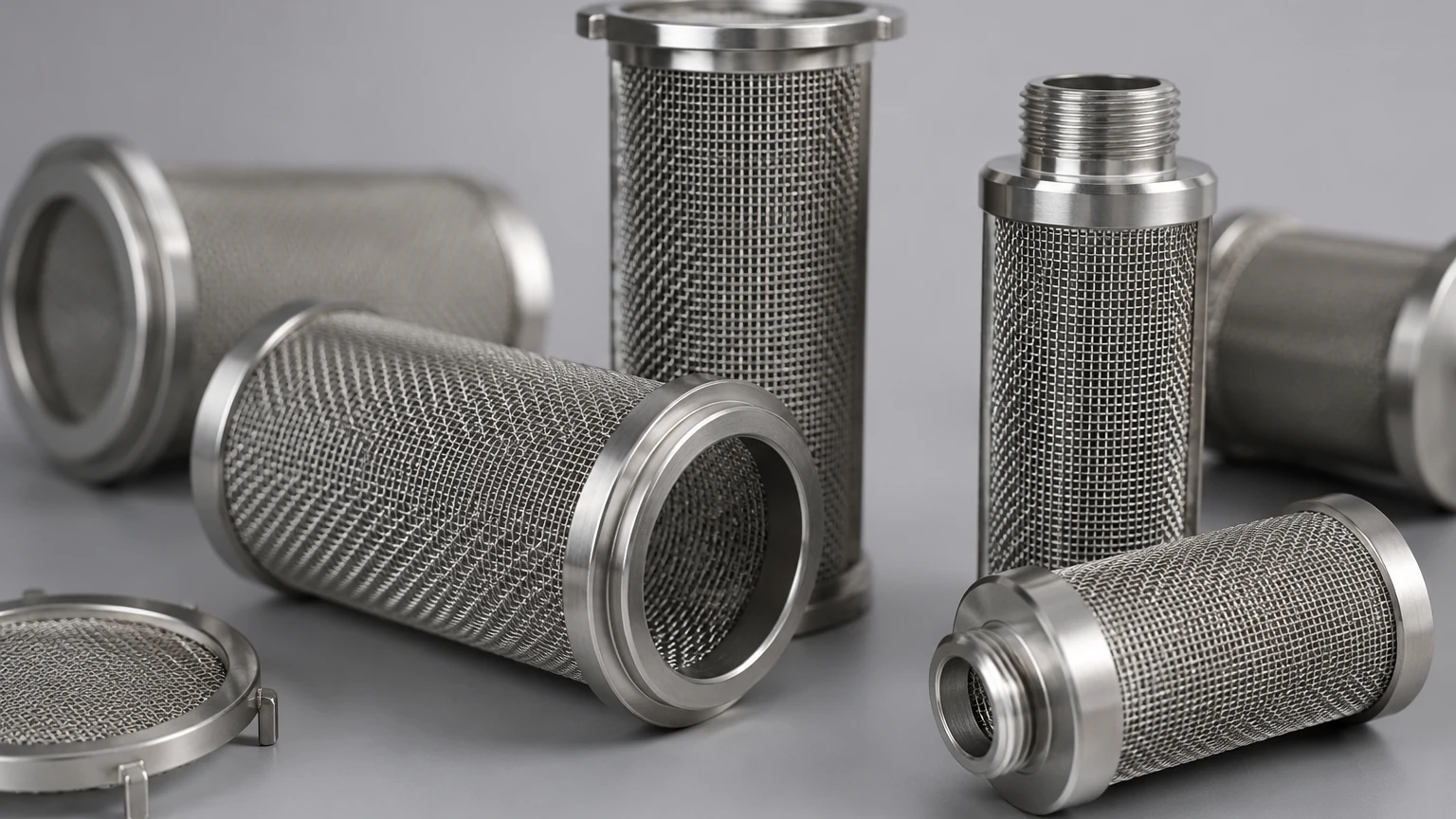
Pleated wire mesh elements utilize a woven stainless steel cloth. To increase the effective filtration area, the mesh is pleated around a central support core. This design is excellent for surface filtration and is often used in secondary stages or as a pre-filter. While wire mesh is highly durable and easy to clean, achieving sub-micron absolute ratings with woven mesh alone can result in a higher pressure drop compared to sintered fiber. However, for specific particulate sizes, pleated mesh provides a robust and reusable solution.
Coalescing vs. Particulate Filtration in Seal Gas Systems
A comprehensive seal gas filter strategy often differentiates between dry particulate removal and liquid coalescing.
1. Particulate Filters: These are designed to capture solid debris. The flow direction is typically from the outside of the element to the inside. The solids are trapped on the surface or within the depth of the media, and the clean gas exits through the center.
2. Coalescing Filters: These are designed to remove liquid aerosols and mists. The flow direction is usually from the inside to the outside. As the gas passes through the media, tiny liquid droplets collide and merge (coalesce) into larger droplets. These droplets then migrate to the outer surface of the element and drain into a sump at the bottom of the filter housing.
In many dry gas seal systems, a "Duplex" filter arrangement is used. This consists of two identical filter housings connected by a transfer valve. This allows the operator to switch flow to the clean filter while the other is serviced, ensuring continuous protection of the compressor seals during maintenance cycles.
Selection Criteria for Industrial Seal Gas Elements
Selecting the correct seal gas filter requires a detailed analysis of the process conditions. Engineers should confirm the following data points before finalizing a specification:
* Gas Composition: Is the gas corrosive, sour, or containing heavy hydrocarbons? This dictates the alloy selection and seal materials (e.g., Viton, Kalrez, or EPDM).
* Flow Rate (Nm³/h or SCFM): The filter must be sized to ensure the gas velocity does not exceed the manufacturer's recommendations, which could lead to "re-entrainment" of liquids in coalescing applications.
* Operating Pressure and Temperature: Both the housing and the element must be rated for the full range of start-up, steady-state, and upset conditions.
* Allowable Pressure Drop: The system must account for the pressure drop across the filter to ensure that the seal gas pressure remains sufficiently higher than the process gas pressure (the "buffer gas" margin).
* Filtration Rating: Specify the absolute micron rating and the Beta ratio (e.g., β1[c] ≥ 1000) to ensure predictable performance.
Maintenance, Cleaning, and Operational Longevity
Monitoring the differential pressure (dP) across the seal gas filter is the most effective way to determine the health of the element. A sudden rise in dP usually indicates a slug of liquid or a high concentration of solids in the process stream. Conversely, a sudden drop in dP could indicate media rupture or a seal failure within the filter housing.
One of the primary advantages of stainless steel filter elements is their cleanability. Unlike disposable glass fiber elements, stainless steel elements can often be cleaned using ultrasonic baths or chemical cleaning, provided the contaminants are not permanently fused to the media. However, in critical seal gas applications, many operators prefer to replace elements with new, certified units to ensure the highest level of seal protection. If cleaning is performed, it must be followed by a bubble-point test to verify that the pore structure has not been compromised.
Total Cost of Ownership (TCO) should be calculated based on the frequency of replacement, the cost of the elements, and the potential cost of a dry gas seal failure. Given that a single DGS failure can cost tens of thousands of dollars in parts and hundreds of thousands in lost production, investing in high-quality, precision-engineered filters is a standard risk-mitigation strategy.
Custom Engineering for OEM Seal Gas Applications
Standard off-the-shelf filters often fail to meet the specific spatial or performance requirements of specialized compressor skids. Customization is frequently necessary to adapt to existing housing dimensions or to optimize flow patterns for specific gas densities. Customization options typically include:
* Bespoke End Cap Designs: Engineering specific threading, O-ring grooves, or bolt-on configurations to match legacy housings.
* Reinforced Support Cores: For applications where high-pressure surges are expected, internal support cores can be thickened to prevent deformation.
* Variable Media Layers: Combining different grades of mesh or fiber to create a multi-stage filtration effect within a single element.
Kaifil specializes in the manufacturing of these precision stainless steel components, providing OEM-quality replacements and custom-designed solutions for demanding industrial environments. By focusing on material integrity and precise filtration accuracy, these components help maintain the delicate balance required for dry gas seal longevity.
For technical professionals seeking to optimize their filtration systems or source reliable replacement elements, reviewing specific product options and application support is a critical next step. Detailed engineering data and customization capabilities can be found on the Kaifil Main Page, which serves as a resource for selecting the appropriate filtration technology for complex industrial gas streams.
In summary, the seal gas filter is a small but vital component in the reliability of rotating equipment. By understanding the nuances of media selection, material standards, and the physical requirements of the sealing environment, engineers can significantly reduce the risk of compressor downtime and extend the service life of their dry gas seals.
