


Pleated Paper Filter
In industrial filtration, the pleated paper filter remains one of the most widely utilized components for fluid and air purification. Its primary advantage lies in the geometric configuration of the media, which allows for a significantly higher surface area within a compact housing footprint compared to flat-sheet or depth-style filters. For engineers and procurement specialists, understanding the technical nuances of pleated media—ranging from material composition to structural integrity under pressure—is essential for optimizing system performance and managing operational costs.
While pleated paper filters are often viewed as consumable commodities, their engineering involves complex trade-offs between filtration efficiency, pressure drop, and dirt-holding capacity. This guide examines the technical specifications of pleated paper filters, their performance metrics, and how they compare to permanent solutions like stainless steel wire mesh.
Understanding Pleated Paper Filter Construction and Engineering
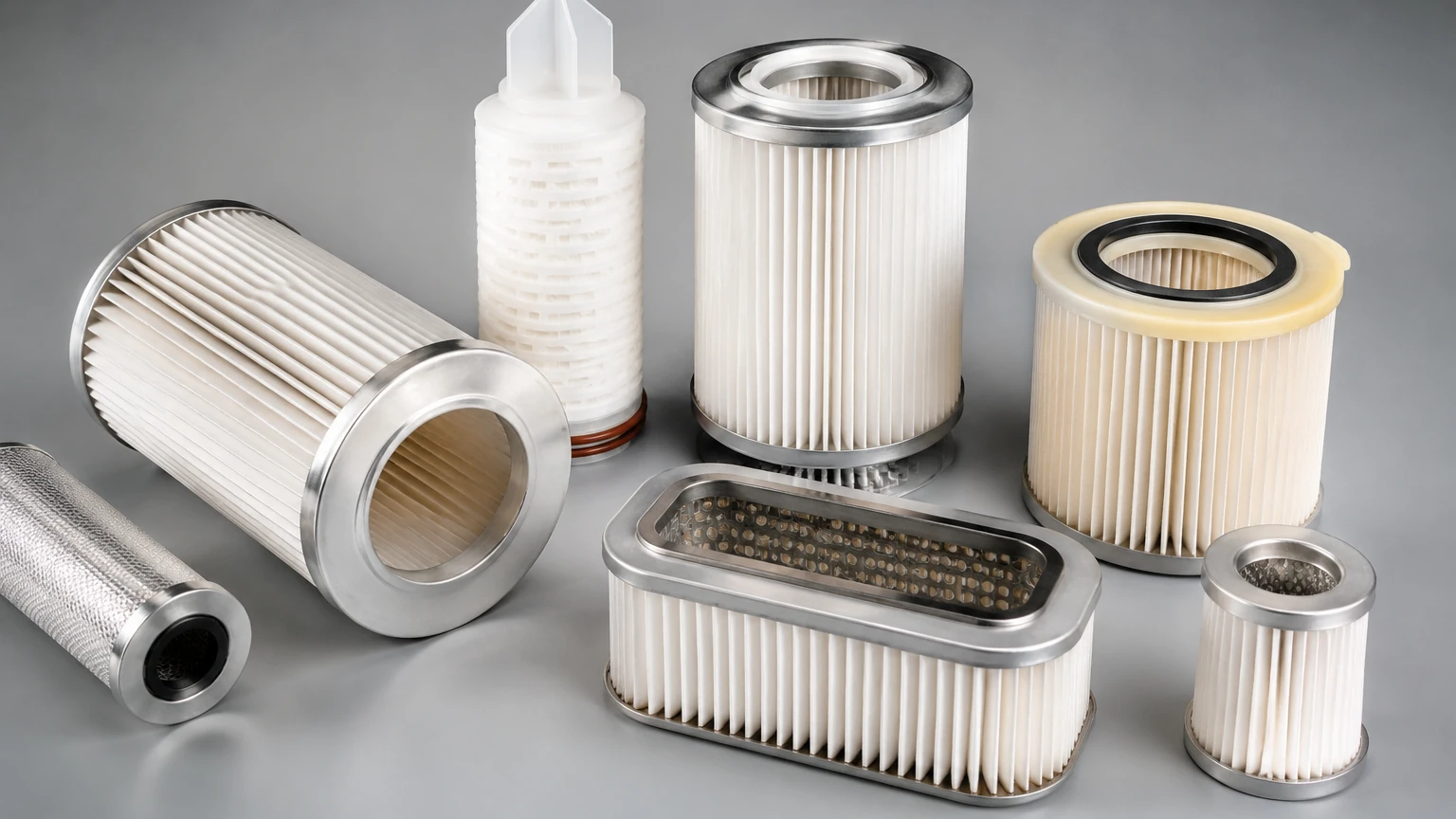
The core principle of a pleated paper filter is the expansion of effective filtration area (EFA). By folding the media into a series of pleats, manufacturers can increase the surface area by a factor of five to fifteen times the cylinder's outer dimensions. This increased area directly impacts the velocity of the fluid passing through the media, known as the face velocity.
Pleat Geometry and Density
Lower face velocity results in a lower initial pressure drop and allows for more efficient capture of contaminants. However, there is a physical limit to pleat density. If pleats are packed too tightly, a phenomenon known as "pleat bunching" occurs. This restricts fluid flow to the tips of the pleats, effectively reducing the usable surface area and causing a rapid increase in differential pressure. Engineers must specify pleat heights and counts that balance maximum surface area with adequate flow channels between the folds.
Structural Support
Because paper (cellulose) media lacks inherent structural rigidity, industrial pleated paper filters typically incorporate support layers. These may include internal metal cores (often perforated steel or tin-plated steel) to prevent collapse under vacuum or high-pressure differentials, and external shrouds or wraps to maintain pleat spacing. In high-vibration environments, such as hydraulic systems or heavy machinery, the pleat tips may be glued or thermally bonded to the support structure to prevent fatigue and media migration.
Material Selection and Chemical Compatibility
The term "paper" in industrial filtration is a broad category encompassing several distinct types of media, each with specific chemical and thermal boundaries.
1. Cellulose Media: The most common form of pleated paper filter, made from wood fibers. It is cost-effective and provides excellent depth filtration characteristics. However, cellulose is sensitive to moisture (which can cause fiber swelling) and is generally limited to temperatures below 250°F (121°C). It is frequently used for engine oil and basic hydraulic applications.
2. Glass Fiber (Microglass): Often categorized with pleated paper due to its similar appearance, microglass uses inorganic borosilicate fibers. It offers much higher dirt-holding capacity and more precise micron ratings than standard cellulose. It is also more resistant to chemical degradation and moisture.
3. Polyester and Synthetic Blends: These are used when the application requires resistance to specific chemicals or higher mechanical strength than pure cellulose can provide. They are common in water treatment and chemical processing pre-filtration.
When selecting a pleated paper filter, engineers must verify compatibility with the process fluid. For instance, certain resins used to bind the fibers in the paper may leach or degrade when exposed to aggressive solvents or high-pH fluids. For more demanding environments where chemical compatibility is a primary concern, reviewing advanced material options on the Main Page can provide insights into more durable alternatives.
Key Performance Indicators: Micron Ratings and Pressure Drop
Evaluating a pleated paper filter requires looking beyond the nominal micron rating. In B2B procurement, technical data sheets should be scrutinized for the following metrics:
Beta Ratio and Efficiency
A "10-micron" filter can mean many things. A nominal rating suggests the filter will stop a majority of 10-micron particles, but an absolute rating (typically defined as Beta ≥ 75 or 99.9% efficiency) provides a guaranteed performance level. For critical systems like high-pressure hydraulics or pharmaceutical pre-filtration, absolute-rated pleated filters are necessary to prevent component wear or downstream contamination.
Dirt-Holding Capacity (DHC)
DHC measures the total mass of a standard contaminant a filter can trap before reaching a terminal pressure drop. A pleated paper filter with high DHC will have a longer service life, reducing the frequency of maintenance intervals. This is particularly important in remote industrial sites where the labor cost of replacement exceeds the cost of the filter element itself.
Clean Pressure Drop (ΔP)
The initial pressure drop across a new filter is a function of the media's permeability and the EFA. A high initial ΔP reduces the available "working room" before the filter reaches its bypass or change-out pressure, effectively shortening the service life. Engineers should aim for a design where the initial pressure drop does not exceed 10-15% of the total allowable differential pressure.
Pleated Paper vs. Stainless Steel Wire Mesh Filters
A critical decision for plant engineers is whether to utilize disposable pleated paper filters or invest in cleanable stainless steel filtration components. Both have distinct roles in industrial processes.
* Disposable Pleated Paper: These are ideal for applications with low contaminant loads or where the nature of the contaminant makes cleaning impossible (e.g., sticky resins or hazardous biological waste). They offer a lower initial purchase price but incur ongoing costs for replacement, inventory management, and disposal.
* Stainless Steel Wire Mesh: Manufactured by specialists like Kaifil, these filters are designed for longevity. Unlike paper, stainless steel mesh can withstand extreme temperatures (up to 1000°F+), high pressures, and aggressive chemical cleaning cycles. While the initial investment is higher, the total cost of ownership is often lower in high-volume or high-temperature processes because the elements can be cleaned and reused thousands of times.
In many systems, a pleated paper filter is used as a secondary or "polishing" stage, while a stainless steel wire mesh filter acts as a primary strainer to remove the bulk of the particulate matter, thereby extending the life of the more expensive or sensitive paper media.
Common Failure Modes and Mitigation Strategies
Failure of a pleated paper filter can lead to catastrophic downstream damage. Understanding why these filters fail helps in designing better systems.
* Media Migration: In low-quality paper filters, individual fibers may break loose and enter the downstream flow. This is a major risk in pharmaceutical and food processing. Specifying "fixed-pore" media or utilizing a stainless steel backup mesh can mitigate this risk.
* Channeling: If the filter media is subjected to a pressure spike, the pores may enlarge, or the media may tear, allowing unfiltered fluid to pass through. This is often invisible from the outside but results in a sudden drop in filtration efficiency.
* Pleat Collapse: If the internal support core is insufficient for the flow rate, the differential pressure can crush the pleats against the core, stopping flow entirely. This is common in cold-start conditions where fluid viscosity is high.
To avoid these issues, it is vital to confirm the maximum allowable differential pressure (MADP) of the element and ensure the system is equipped with bypass valves or pressure sensors that trigger an alarm before the MADP is reached.
Evaluating Total Cost of Ownership (TCO)
For procurement teams, the unit price of a pleated paper filter is only one part of the equation. A comprehensive TCO analysis should include:
1. Replacement Frequency: How many filters are consumed per year?
2. Labor Costs: The time required for technicians to shut down the system, bleed pressure, change the filter, and restart.
3. Disposal Costs: Many industrial filters are classified as hazardous waste once they have been used to filter oils or chemicals, leading to high disposal fees.
4. Production Downtime: The cost of lost production during filter changes.
In many high-demand industrial environments, switching from a standard pleated paper filter to a custom-engineered solution or a more robust metal-based system can result in significant annual savings. Technical teams often consult the Main Page to compare the long-term benefits of customized stainless steel filtration against standard disposable options.
Selection Criteria for Engineers and Procurement Teams
Before finalizing a purchase order for pleated paper filters, technical professionals should confirm the following data points with their supplier:
* Fluid Compatibility: Ensure the media, adhesives, and gaskets are compatible with the process fluid and any cleaning agents used in the system.
* Flow Rate vs. Pressure Drop Curves: Request specific charts showing how the filter performs at various flow rates and viscosities.
* Validation and Testing: For regulated industries (FDA, ISO), ensure the filters are manufactured in a facility that provides lot traceability and performance validation.
* Customization Requirements: If standard sizes do not fit your existing housing, inquire about custom pleat heights or end-cap configurations to optimize the EFA for your specific application.
Conclusion
The pleated paper filter remains a cornerstone of industrial filtration due to its versatility and high surface area. However, its effectiveness depends entirely on correct application and engineering. By understanding the limitations of cellulose media, the importance of pleat geometry, and the trade-offs between disposable and permanent filtration, engineers can ensure their systems operate at peak efficiency. For those managing demanding industrial environments, comparing these disposable options with the durability of stainless steel components is a necessary step in optimizing filtration performance and reducing long-term operational costs.
