


Pulse Filtration System
In high-demand industrial environments, the ability to maintain continuous process flow while managing high solids loading is a critical engineering challenge. Manual filter replacement or cleaning often results in costly downtime and potential exposure to hazardous materials. To address these issues, the pulse filtration system has become a standard solution for liquid-solid and gas-solid separation. By utilizing a rapid, high-pressure reverse flow to dislodge accumulated filter cake, these systems allow for automated, in-situ cleaning that extends the service life of the filter media and ensures consistent operational efficiency.
For engineers and procurement teams, selecting the right components for a pulse filtration system requires a deep understanding of fluid dynamics, material fatigue, and the specific requirements of the application. This guide examines the technical foundations of pulse filtration, focusing on the role of stainless steel filter media and the engineering considerations necessary for optimizing system performance.
The Mechanics of Automated Cleaning in Industrial Filtration
The core function of a pulse filtration system is its ability to regenerate the filter media without interrupting the primary process flow or requiring the disassembly of the filter housing. This is achieved through a controlled "pulse"—a momentary reversal of flow direction using either a compressed gas (backpulsing) or a clean process fluid (backwashing).
In a standard filtration cycle, the process fluid flows from the upstream side to the downstream side of the filter element. As particles are captured on the surface or within the depth of the media, a filter cake begins to form. This cake initially improves filtration efficiency but eventually leads to an increase in differential pressure (ΔP). Once a pre-set pressure threshold is reached, the pulse mechanism is triggered.
From an engineering perspective, the pulse must be powerful enough to overcome the adhesion forces between the filter cake and the media, yet controlled enough to avoid damaging the structural integrity of the filter cartridge. The sudden reversal of pressure creates a shockwave or a high-velocity flow that lifts the cake, allowing it to settle into a collection hopper. This process is highly dependent on the rigidity of the filter element; if the media deforms during the pulse, the cleaning efficiency drops significantly, and the risk of mechanical failure increases.
Material Considerations for High-Pressure Pulse Cycles
Because pulse filtration involves repeated cycles of pressure reversal, the choice of material is paramount. While polymer-based or disposable media may be suitable for static filtration, they often lack the mechanical strength required for a pulse filtration system. Stainless steel, particularly grades 304 and 316L, is the preferred material for these applications due to its unique combination of properties.
Fatigue Resistance
Every pulse cycle subjects the filter media to mechanical stress. Over thousands of cycles, this can lead to metal fatigue. High-quality stainless steel alloys are engineered to withstand these cyclical loads without cracking or losing their pore structure. In more aggressive chemical environments, specialty alloys like Hastelloy or Monel may be utilized to prevent corrosion-induced weakening of the media.
Thermal Stability
Many industrial pulse systems operate at elevated temperatures, such as in catalyst recovery or hot gas filtration. Stainless steel maintains its structural integrity at temperatures where synthetic fibers would melt or degrade. This thermal stability ensures that the filtration rating remains consistent throughout the operating cycle.
Chemical Compatibility
In chemical processing and pharmaceutical applications, the filter media must be inert to the process fluid. Stainless steel provides excellent resistance to a wide range of solvents, acids, and bases. For a comprehensive look at available material options and their specific application benefits, engineers can visit the Kaifil Main Page to review technical specifications.
Structural Design: Sintered Wire Mesh vs. Metal Fiber Felt
The physical structure of the filter media determines how effectively it can be cleaned by a pulse. There are two primary types of metal media used in pulse filtration systems: sintered wire mesh and sintered metal fiber felt.
Sintered Wire Mesh
Sintered wire mesh consists of multiple layers of woven wire cloth that are bonded together through a high-temperature sintering process. This creates a rigid, stable, and precise filtration surface. In a pulse filtration system, sintered mesh is highly effective because it provides a "surface-loading" characteristic. Since the particles are caught primarily on the surface, the reverse pulse can easily dislodge them. The fixed pore geometry also ensures that the filtration rating does not change even under high-pressure pulses.
Sintered Metal Fiber Felt
Metal fiber felt is a non-woven medium composed of fine stainless steel fibers. It offers high porosity (up to 80%) and high dirt-holding capacity. While it is often used for depth filtration, it can be engineered for pulse applications by adding a support layer of wire mesh. The high porosity allows for lower initial differential pressure, which can reduce the frequency of pulse cycles and save energy.
When choosing between these structures, engineers must balance the required filtration accuracy with the ease of cleaning. Surface-loading media like sintered mesh are generally easier to clean via backpulsing, whereas depth-loading media may require more aggressive cleaning parameters or may be better suited for applications with lower solids concentrations.
Optimizing Pulse Parameters for Extended Service Life
The efficiency of a pulse filtration system is not solely dependent on the filter media; it also relies on the optimization of the pulse parameters. Incorrect settings can lead to "incomplete cleaning," where a residual layer of cake remains on the media, leading to a rapid return to high differential pressure—a phenomenon known as "premature blinding."
Pulse Pressure and Duration
The pressure of the reverse pulse must be higher than the process pressure, typically by a margin of 2 to 5 bar, depending on the fluid viscosity and cake compressibility. The duration of the pulse is usually very short, often between 0.1 and 0.5 seconds. A pulse that is too long wastes energy and cleaning fluid, while a pulse that is too short may not provide enough energy to dislodge the cake.
Differential Pressure (ΔP) Setpoints
Setting the trigger for the pulse cycle is a critical operational decision. If the system pulses too frequently, the media undergoes unnecessary mechanical stress. If it pulses too infrequently, the cake may become so compressed that it becomes difficult to remove. Monitoring the "recovery pressure"—the differential pressure immediately after a pulse—is the best way to evaluate cleaning effectiveness.
Flow Distribution
In systems containing multiple filter cartridges, ensuring an even distribution of the pulse gas or fluid is essential. If one cartridge receives more pulse energy than others, the cleaning will be uneven, leading to localized high flow rates and potential media breakthrough.
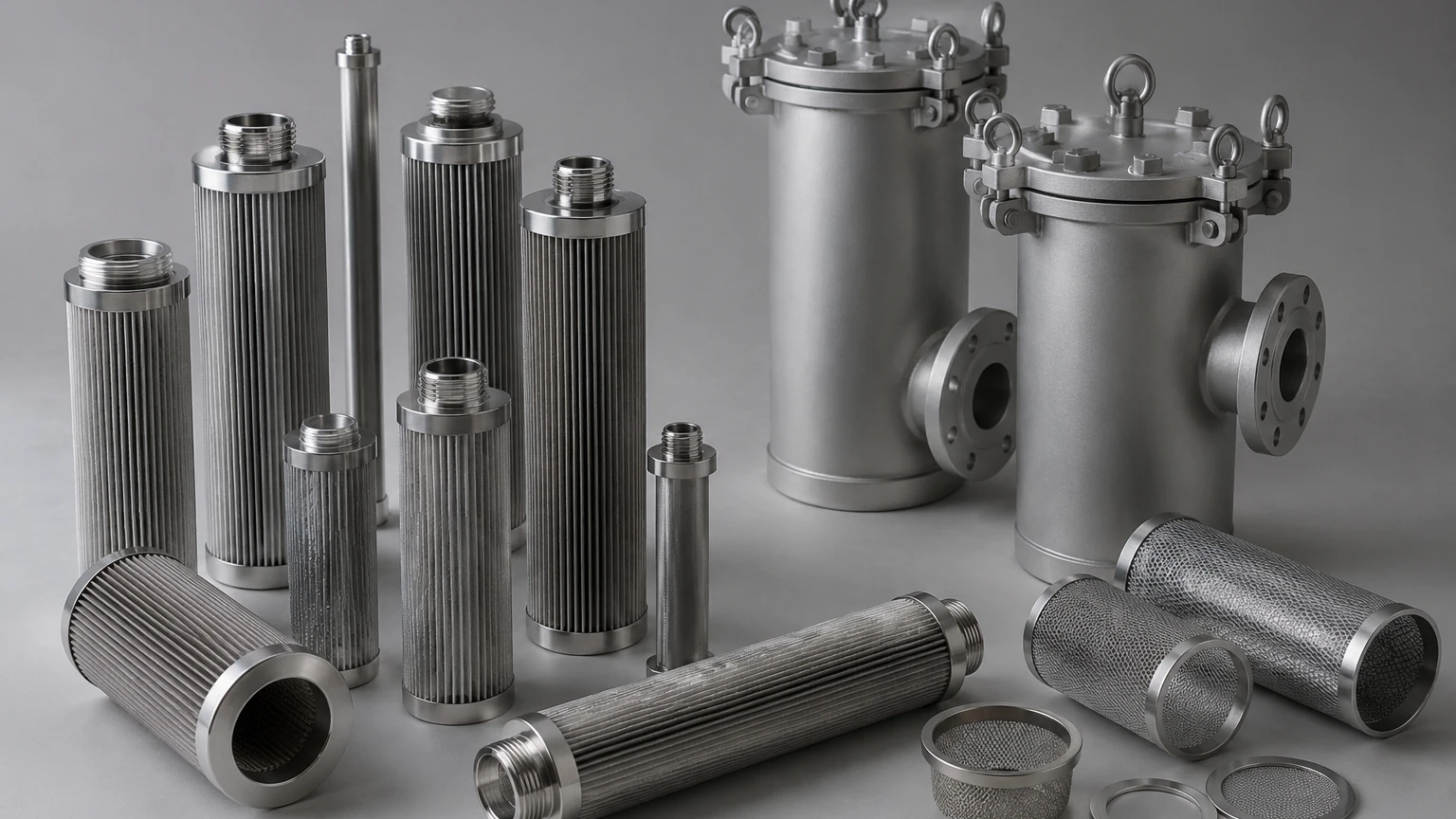
Evaluation Criteria for Industrial Procurement
When sourcing components for a pulse filtration system, purchasing teams and engineers should look beyond the initial purchase price. The total cost of ownership (TCO) is heavily influenced by the durability and cleanability of the filter elements.
Key criteria for evaluation include:
1. Filtration Rating and Efficiency: Does the media meet the required micron rating under actual operating conditions, including the pressure of the pulse?
2. Mechanical Strength: Can the element withstand the maximum expected ΔP without collapsing or deforming?
3. Cleanability: How many pulse cycles can the media undergo before a deep-cleaning (such as ultrasonic cleaning) is required?
4. Customization Options: Can the manufacturer provide custom lengths, diameters, and end-fittings (e.g., 222/226 connectors or threaded ends) to fit existing housings?
By focusing on these technical factors, organizations can ensure they are investing in a system that provides long-term reliability. For detailed product options and engineering support regarding custom filtration components, more information is available on the Kaifil Main Page.
Maintenance and Troubleshooting in Continuous Systems
Even a well-designed pulse filtration system requires regular monitoring to prevent unexpected failures. Engineers should be aware of several common issues that can arise during long-term operation.
Cake Bridging
In applications with high solids concentrations, the filter cake can grow thick enough to bridge the gap between adjacent filter elements. When this happens, the pulse may fail to dislodge the cake, or the falling cake may get stuck, leading to a complete blockage of the filter housing. Proper spacing between elements and optimized pulse timing are the primary defenses against bridging.
Media Fatigue and Pinholes
Over time, the repeated mechanical stress of pulsing can cause microscopic cracks or pinholes in the media. This is often detected by a sudden drop in filtration efficiency or the presence of downstream contaminants. Regular integrity testing, such as the bubble point test, should be part of the maintenance schedule for critical filtration processes.
Valve and Controller Failure
The pulse system relies on solenoid valves and electronic controllers to manage the timing and delivery of the cleaning pulse. If a valve sticks or a controller fails, the filter will quickly blind. Redundancy in the control system and regular inspection of mechanical valves are essential for maintaining 24/7 operation.
Conclusion
The implementation of a pulse filtration system represents a significant step forward in process automation and operational efficiency. By selecting high-quality stainless steel media and carefully engineering the pulse parameters, industrial facilities can achieve consistent filtration performance even in the most demanding environments. Understanding the relationship between media structure, pulse dynamics, and material durability allows engineers to design systems that minimize downtime and maximize productivity. For those seeking to optimize their filtration processes, consulting with a manufacturer that specializes in custom metal filtration solutions is the most effective way to ensure that the system meets the specific needs of the application.
