


In Line Filter for Iv
In the pharmaceutical and medical device manufacturing sectors, the integrity of fluids intended for intravenous administration is paramount. An in line filter for iv applications serves as a critical safeguard, designed to remove particulate matter, air bubbles, and microbial contaminants from fluids before they reach the patient. From an industrial engineering perspective, these filters are not merely disposable components but precision-engineered tools that must meet stringent standards for biocompatibility, flow dynamics, and filtration efficiency.
For manufacturers and engineers involved in the production of infusion sets or the processing of parenteral drugs, selecting the right filtration components requires a deep understanding of material science and fluid mechanics. This guide explores the technical considerations, manufacturing requirements, and selection criteria for high-performance in-line filtration solutions used in IV contexts.
The Role of In Line Filtration in IV Fluid Integrity
The primary function of an in line filter for iv is to ensure that the fluid being administered is free from any contaminants that could cause complications such as phlebitis, embolism, or systemic infection. In an industrial or clinical setting, these filters are integrated into the fluid path to provide continuous protection.
Contaminants in IV fluids typically fall into three categories: macro-particulates, micro-particulates, and microorganisms. Macro-particulates may include glass shards from ampoules, rubber fragments from vial stoppers, or undissolved drug crystals. Micro-particulates, often invisible to the naked eye, can include plastic polymers or environmental dust. Microbial contaminants include bacteria and fungi that may have introduced during the compounding or administration process.
Effective in-line filtration must address these risks without compromising the delivery of the medication. This requires a balance between high filtration efficiency (capturing the smallest possible particles) and high flow rates (ensuring the medication reaches the patient at the prescribed speed). For engineers, this balance is achieved through the careful selection of filter media and the design of the filter housing to minimize dead space and pressure drops.
Material Science: Why Stainless Steel and Precision Mesh Matter
While many bedside IV filters are made from polymer membranes, the industrial equipment used to manufacture, fill, and test these fluids often relies on robust metal filtration components. Stainless steel, particularly grades 304 and 316L, is the material of choice for the precision wire mesh and sintered metal filters used in pharmaceutical processing lines.
Corrosion Resistance and Biocompatibility
316L stainless steel is preferred in medical and pharmaceutical applications due to its superior corrosion resistance and low carbon content. It can withstand the aggressive cleaning agents and high-temperature sterilization processes (such as autoclaving or Steam-in-Place) required to maintain a sterile environment. Unlike some polymers, stainless steel does not leach chemicals into the fluid path, ensuring the purity of the IV solution.
Precision Wire Mesh Construction
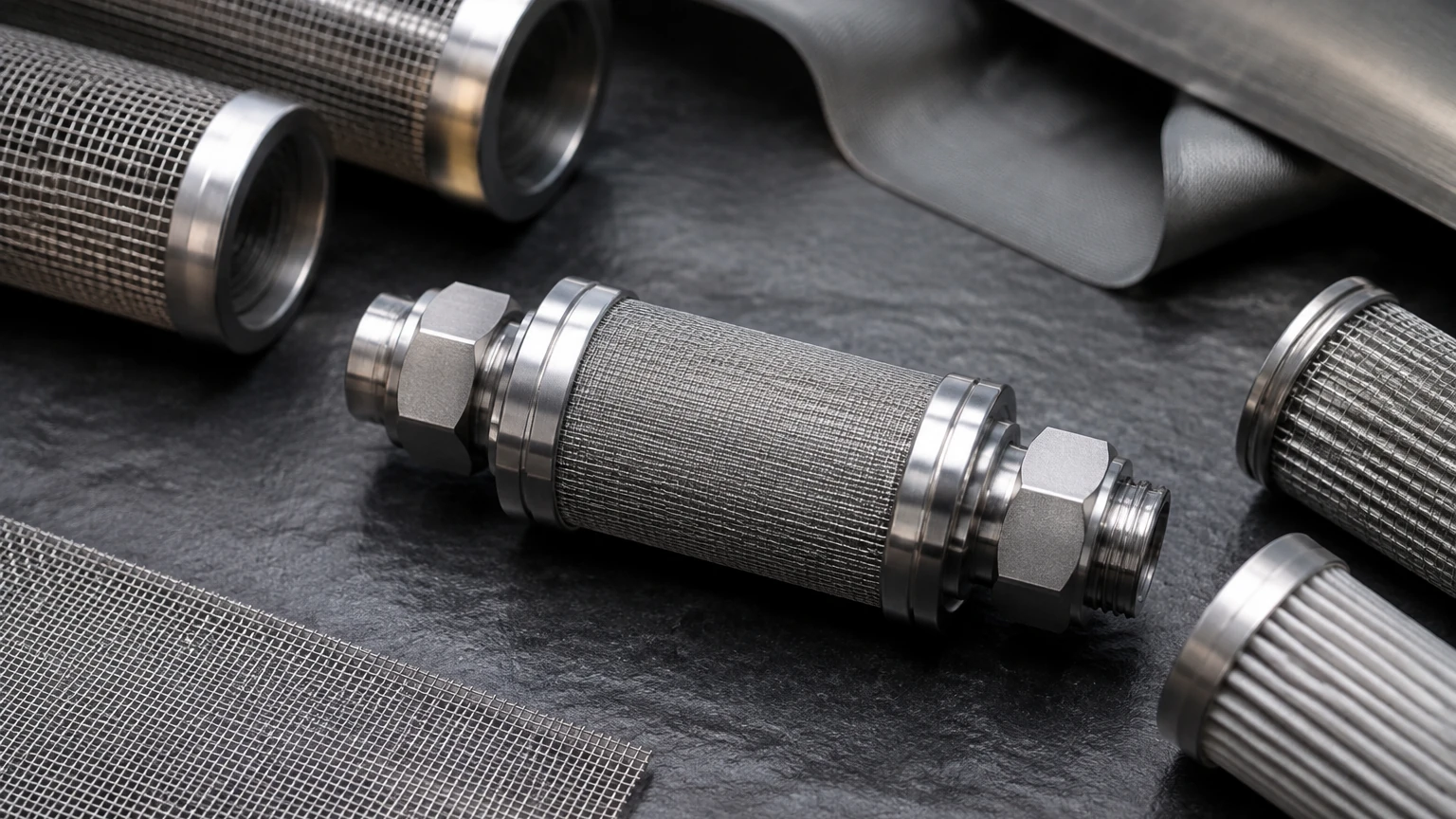
The internal structure of an in line filter for iv often utilizes multi-layered stainless steel wire mesh. This mesh is woven with extreme precision to create uniform pore sizes. In many industrial applications, these layers are sintered—bonded together using heat and pressure without the use of adhesives—to create a rigid, durable filter element that will not shed fibers or deform under pressure. This structural integrity is vital for maintaining a consistent micron rating throughout the filter's service life.
Engineering Parameters for IV Filtration Performance
When specifying an in line filter for iv, engineers must evaluate several key performance indicators to ensure the component is fit for purpose. These parameters dictate how the filter will behave under operational conditions.
Micron Rating and Pore Size Distribution
The micron rating determines the size of the particles the filter can effectively trap. For IV applications, a 0.22-micron filter is often considered the standard for "sterilizing grade" filtration, as it is capable of removing most common bacteria. However, for larger particulate removal, 5-micron or 15-micron filters may be used. It is essential to look at the pore size distribution; a narrow distribution ensures that the filter performs predictably and does not allow oversized particles to pass through larger-than-average pores.
Flow Rate and Pressure Drop (ΔP)
Every filter introduces a degree of resistance to the fluid flow, known as pressure drop. In IV delivery, where gravity or low-pressure pumps are often used, a high pressure drop can impede the delivery of the fluid. Engineers must calculate the Effective Filtration Area (EFA) required to maintain the desired flow rate while keeping the pressure drop within acceptable limits. Increasing the surface area, often through pleating the wire mesh, allows for higher flow rates and longer filter life before clogging occurs.
Air Elimination Capabilities
In line filters for IV often incorporate a hydrophobic membrane or a specific venting mechanism to remove air bubbles from the fluid line. Air embolism is a significant risk in intravenous therapy, and the filter's ability to automatically vent air without leaking fluid is a critical safety feature. This requires precise integration of different material types within the filter housing.
Customization and OEM Manufacturing of Filter Components
No two pharmaceutical processing lines or medical devices are identical. As a result, customization is a core requirement for many B2B purchasers. OEM manufacturers like Kaifil specialize in developing bespoke filtration solutions that fit specific mechanical footprints and performance requirements.
Tailored Housing and Connections
Custom in-line filters can be designed with various connection types, such as Luer locks, NPT threads, or flange connections, to ensure a leak-proof fit within existing systems. The housing itself can be machined from stainless steel or high-grade plastics, depending on the application's pressure and temperature requirements.
Layer Configuration
By varying the number of mesh layers and the weave patterns (e.g., plain weave, twill weave, or dutch weave), manufacturers can fine-tune the filter's dirt-holding capacity and flow characteristics. For instance, a coarse outer layer can act as a pre-filter to protect a finer internal layer, significantly extending the time between filter replacements in high-volume processing environments.
Quality Standards and Validation in Pharmaceutical Filtration
In the context of IV filtration, quality control is not optional. Manufacturers must adhere to rigorous standards to ensure every unit performs as expected. For engineers and purchasing teams, verifying these standards is a critical step in the procurement process.
Bubble Point Testing
The bubble point test is a non-destructive method used to verify the integrity of a filter and its pore size. It measures the pressure required to force air through a liquid-saturated filter. A consistent bubble point across production batches indicates a high level of manufacturing precision and ensures that the filter will meet its specified micron rating in the field.
Cleanliness and Passivation
For stainless steel components, passivation is a necessary chemical process that removes free iron from the surface and enhances the protective chromium oxide layer. This ensures the filter remains inert and does not react with the IV fluids. Furthermore, filters must be manufactured in cleanroom environments to prevent initial contamination before the product is even put into service.
Documentation and Traceability
In the B2B pharmaceutical space, traceability is essential. Each batch of filters should come with material certifications (MTRs) and compliance statements (such as USP Class VI for plastics or ISO 13485 for medical devices). This documentation allows the end-user to validate their own processes and meet regulatory requirements from bodies like the FDA or EMA.
Maintenance, Replacement, and Cost-Efficiency Analysis
While the initial cost of a high-quality in line filter for iv is a factor, the total cost of ownership (TCO) is a more accurate metric for B2B decision-makers. TCO includes the purchase price, installation costs, maintenance requirements, and the cost of potential downtime.
Replacement Cycles
Filters are consumable items. In a continuous manufacturing process, knowing when to replace a filter is vital. This is typically determined by monitoring the pressure drop across the filter. As the filter traps more particles, the ΔP increases. Once it reaches a predetermined terminal pressure drop, the filter must be replaced or cleaned. Stainless steel filters offer the advantage of being cleanable in some industrial applications, whereas polymer filters are strictly single-use.
Minimizing Product Loss
In pharmaceutical manufacturing, the fluid being filtered is often highly valuable. Filters with high "holdup volume" (the amount of fluid trapped inside the filter housing) can lead to significant product waste. Engineers should look for designs that minimize internal volume and allow for maximum recovery of the processed fluid.
Reliability and Risk Mitigation
The cost of a filter failure—leading to a contaminated batch or a safety incident—far outweighs the cost of a premium filter. Investing in components from a manufacturer with proven expertise in precision metal filtration reduces the risk of bypass, shedding, or structural failure. This reliability is the foundation of a cost-effective filtration strategy.
Conclusion
Selecting an in line filter for iv is a technical challenge that requires balancing safety, performance, and cost. Whether you are designing a new medical device or optimizing a pharmaceutical production line, the choice of filter media, material, and construction will have a direct impact on the success of your operation. By focusing on precision-engineered stainless steel components and working with experienced OEM partners, engineers can ensure the highest levels of fluid purity and system reliability.
For those seeking to optimize their industrial filtration systems with high-performance metal components, it is essential to partner with a manufacturer that understands the nuances of custom design and technical validation. You can visit our Main Page to Review product options and application support tailored to your specific industrial filtration needs.
