


Indufil Filter Element
In high-stakes industrial environments, the integrity of rotating equipment such as gas turbines, compressors, and high-pressure pumps depends heavily on the quality of the lubrication and fuel systems. The indufil filter element is a critical component within these systems, designed to remove particulate contaminants that could otherwise lead to catastrophic mechanical failure, unplanned downtime, or decreased operational efficiency. For engineers and procurement specialists, understanding the technical nuances of these elements—ranging from material composition to filtration efficiency—is essential for maintaining system reliability.
Industrial filtration is not a one-size-fits-all discipline. The selection of an indufil filter element must be guided by the specific demands of the application, including fluid viscosity, operating temperature, and the required cleanliness level (ISO 4406). As a specialized manufacturer of stainless steel filtration solutions, Kaifil provides the engineering expertise required to navigate these complexities, offering high-performance alternatives and custom-designed components that meet or exceed original equipment manufacturer (OEM) standards.
The Engineering Role of Indufil Filter Elements
Indufil systems are synonymous with duplex filter configurations, which allow for continuous operation by enabling element changes without shutting down the system. The indufil filter element itself is the heart of this process. Its primary function is to intercept solid particles—such as metal shavings, silica, and carbon deposits—before they reach sensitive bearings or fuel nozzles.
In turbomachinery, the tolerances between moving parts are often measured in microns. Even a small concentration of particles in the 5 to 10-micron range can cause abrasive wear, leading to vibration issues and eventual bearing seizure. The indufil filter element is engineered to provide a barrier that maintains the fluid's purity, ensuring that the lubricant or fuel remains within the specified technical limits for the duration of the service interval.
Technical Specifications and Material Selection
When evaluating an indufil filter element, technical professionals must prioritize material compatibility and structural integrity. The choice of media significantly impacts both the filtration efficiency and the element's lifespan.
Stainless Steel Wire Mesh
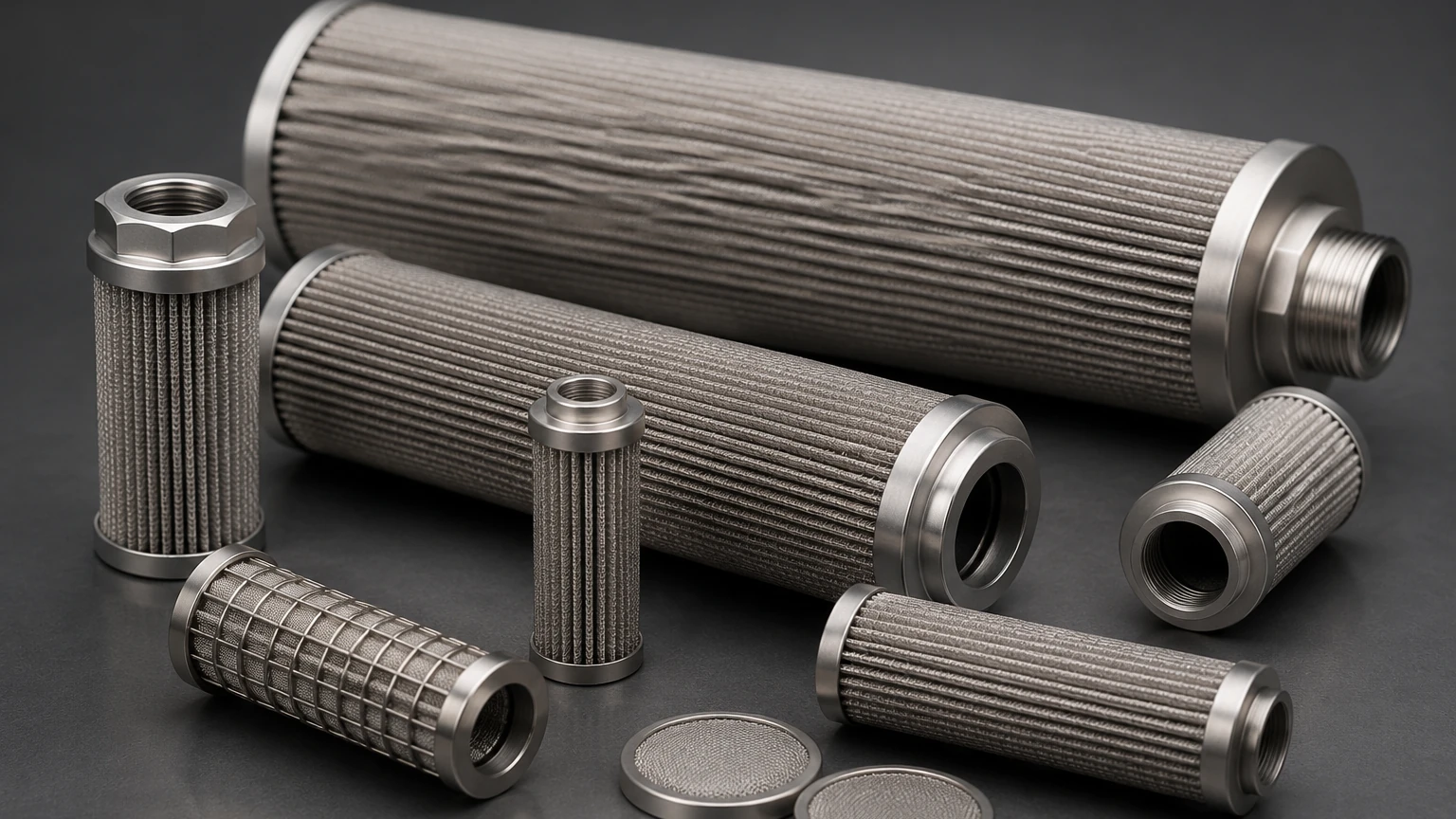
For applications involving high temperatures or aggressive chemical environments, stainless steel wire mesh is often the preferred media. Available in grades such as 304, 316, and 316L, these elements offer excellent corrosion resistance and mechanical strength. Stainless steel elements are often cleanable and reusable, making them a cost-effective choice for systems where particulate loading is predictable and the fluid is compatible with ultrasonic cleaning processes.
Micro-Glass Fiber Media
For high-efficiency filtration, particularly in hydraulic and lubrication systems, pleated micro-glass fiber is frequently used. This media provides a high dirt-holding capacity and a high Beta ratio (filtration efficiency). While these elements are typically disposable, they are essential for achieving the ultra-clean fluid levels required by modern high-speed turbines.
Structural Components
The end caps, center tubes, and outer support cages must also be considered. In heavy-duty industrial applications, these components are usually manufactured from carbon steel or stainless steel to prevent collapse under high differential pressure. Ensuring that the adhesive or welding used to bond the media to the end caps is chemically resistant to the process fluid is a critical engineering check.
Performance Metrics: Beta Ratio and Pressure Drop
To make an informed purchasing decision, engineers must look beyond nominal micron ratings and focus on absolute ratings and Beta ratios. The Beta ratio ($\\beta_x$) is a measure of a filter's efficiency at a specific particle size ($x$). For example, a $\\beta_{10} = 1000$ rating means that for every 1000 particles of 10 microns entering the filter, only one passes through, indicating 99.9% efficiency.
Another vital metric is the clean pressure drop ($\\Delta P$). A high initial pressure drop reduces the available "room" for the filter to load with dirt before reaching the bypass or change-out pressure. This can lead to shorter service intervals and increased maintenance costs. High-quality indufil filter element replacements are designed with optimized pleat geometry to maximize the surface area, thereby minimizing the initial pressure drop and extending the time between replacements.
Customization and OEM Compatibility
Many industrial facilities face challenges when sourcing replacement elements for aging equipment or specialized systems. Kaifil specializes in providing custom stainless steel filtration solutions that serve as direct replacements for standard indufil filter element models. By leveraging advanced manufacturing capabilities, it is possible to tailor the filtration media, dimensions, and sealing materials to suit specific operational requirements.
Customization options often include:
* Reinforced Center Tubes: To withstand high-pressure surges in hydraulic systems.
* Specialized Gaskets: Utilizing Viton, PTFE, or EPDM to ensure seal integrity across a wide temperature range.
* Varying Pleat Densities: To balance the trade-off between filtration surface area and fluid flow dynamics.
For purchasing teams, working with a manufacturer that understands these variables ensures that the replacement parts will fit perfectly and perform reliably within the existing filter housings. You can Review product options and application support to see how custom engineering can solve specific filtration challenges.
Common Risks in Filter Procurement
Selecting an inferior indufil filter element can lead to several hidden risks that far outweigh any initial cost savings. One of the most significant risks is media migration, where fibers from the filter itself break loose and enter the downstream flow, potentially clogging sensitive components. This is often a result of poor manufacturing quality or the use of low-grade adhesives.
Another risk is the lack of structural integrity. If a filter element cannot handle the maximum differential pressure of the system, it may collapse. A collapsed element allows unfiltered fluid to bypass the media entirely, exposing the entire downstream system to contamination. Furthermore, improper sealing at the end caps can lead to "leakage paths," where fluid takes the path of least resistance around the filter media rather than through it.
To mitigate these risks, it is essential to source components from manufacturers who adhere to rigorous quality control standards and can provide material certifications and performance data for their products.
Maintenance and Replacement Cycles
The effective life of an indufil filter element is determined by the environment in which it operates. In a relatively clean closed-loop lubrication system, an element may last for thousands of hours. In contrast, a fuel filter processing poorly refined or contaminated oil may require frequent changes.
Monitoring differential pressure is the most reliable method for determining when a replacement is necessary. Most industrial filter housings are equipped with differential pressure gauges or transmitters. A common practice is to trigger an alarm when the pressure drop reaches a predetermined limit (e.g., 1.5 to 2.0 bar), signaling that the element is nearing its dirt-holding capacity.
Regular oil analysis is also recommended. By monitoring the particle count in the fluid, engineers can verify that the indufil filter element is performing as expected. If particle counts begin to rise despite the filter not being fully loaded, it may indicate a breach in the filter media or a failure of the seals.
Total Cost of Ownership (TCO) Considerations
When evaluating the cost of an indufil filter element, the purchase price is only one component of the Total Cost of Ownership. A comprehensive TCO analysis should include:
1. Service Life: How often does the element need to be replaced? Longer-lasting elements reduce both material costs and labor.
2. Energy Consumption: Elements with a lower pressure drop reduce the load on pumps and compressors, leading to measurable energy savings over time.
3. Equipment Protection: The cost of a high-quality filter is negligible compared to the cost of repairing a damaged turbine bearing or a high-pressure fuel injector.
4. Disposal Costs: Reusable stainless steel elements can significantly reduce waste and disposal fees compared to single-use synthetic elements.
By focusing on these long-term factors, procurement departments can move away from simple price-based purchasing and toward a strategy that prioritizes system uptime and operational efficiency.
Conclusion
The indufil filter element is an indispensable component for the protection of critical industrial machinery. Whether the application involves gas filtration, chemical processing, or high-pressure lubrication, the choice of filter element directly impacts the reliability and longevity of the entire system. By understanding the technical specifications, material options, and performance metrics, engineers can ensure they are selecting the most effective filtration solution for their needs.
Kaifil remains committed to providing the industrial sector with high-performance, custom-engineered stainless steel filtration components. From material selection to final production, our focus is on delivering durability and precision. For those seeking to optimize their filtration processes or find reliable replacements for existing systems, visiting the Main Page provides access to a wealth of technical resources and product information designed to support informed decision-making in the B2B marketplace.
