


Industrial Shredding Dust Collection
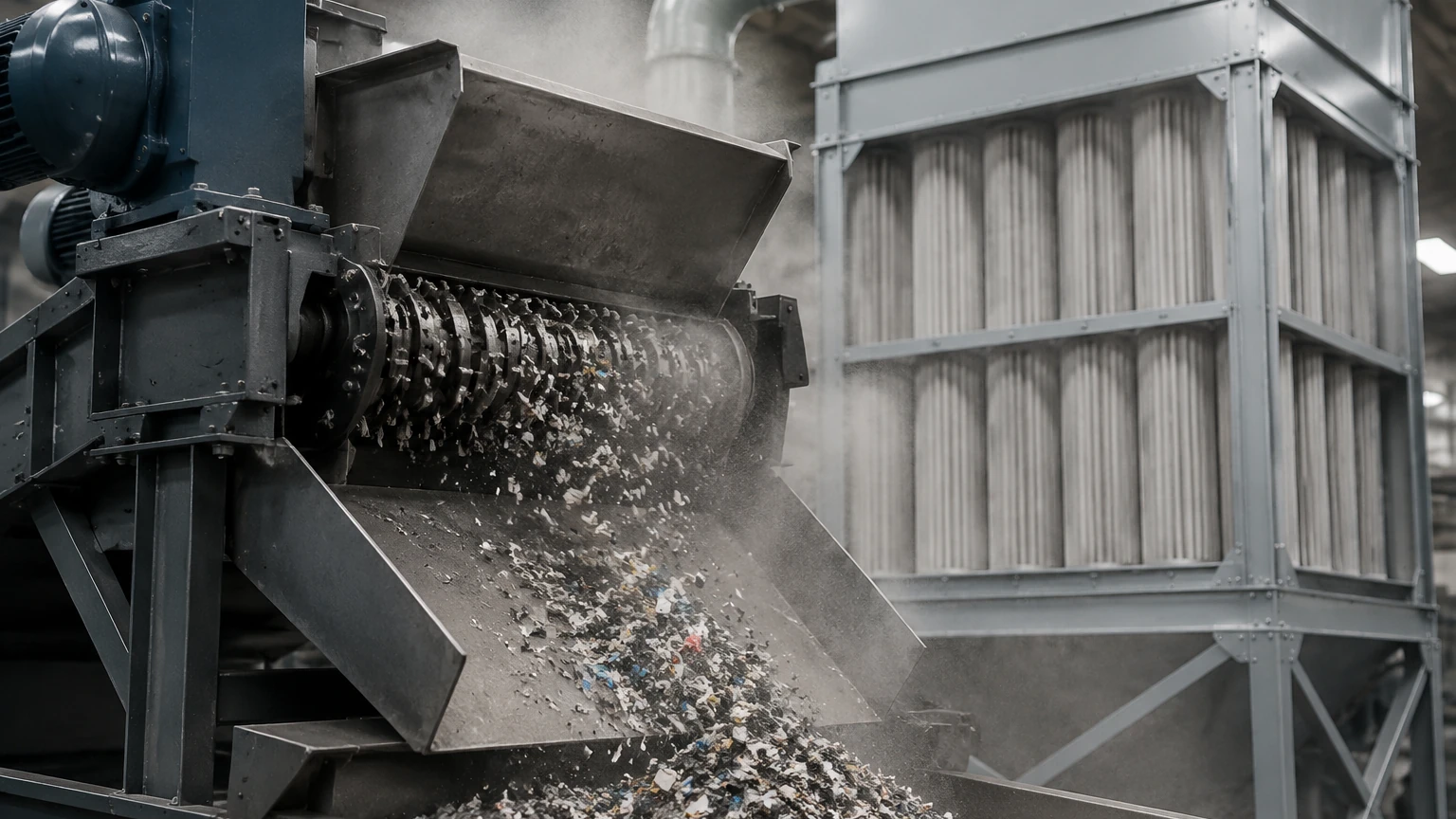
In high-volume manufacturing and recycling environments, industrial shredding is a fundamental process used to reduce the size of materials such as plastics, metals, rubber, and electronic waste. However, the mechanical action of shredding inevitably generates a significant volume of airborne particulates. Managing these particulates through effective industrial shredding dust collection is not merely a matter of facility cleanliness; it is a critical requirement for operational safety, equipment longevity, and regulatory compliance.
For engineers and facility managers, selecting the appropriate filtration technology is the cornerstone of an effective dust management strategy. Unlike standard ventilation, shredding applications involve high dust loads, abrasive particles, and, in many cases, the risk of combustible dust explosions. This article examines the technical requirements of industrial shredding dust collection and why specialized stainless steel filtration components are often the preferred choice for demanding industrial environments.
The Critical Role of Filtration in Industrial Shredding Operations
Industrial shredding processes create a wide spectrum of particle sizes, ranging from large fragments to microscopic fines. Without a robust industrial shredding dust collection system, these fines can migrate throughout a facility, leading to several high-stakes challenges:
1. Health and Safety Risks: Fine dust can be inhaled by operators, leading to respiratory issues. Depending on the material being shredded—such as treated wood, certain polymers, or heavy metals—the dust may also be toxic.
2. Combustible Dust Hazards: Many materials, including aluminum, wood, and certain plastics, become highly explosive when pulverized into fine dust and suspended in the air. A single spark within the shredder or ductwork can trigger a catastrophic event.
3. Equipment Degradation: Abrasive dust can settle on bearings, motors, and electronic controls, causing premature wear and frequent breakdowns. Effective collection protects the capital investment of the shredding machinery itself.
4. Environmental Compliance: Regulatory bodies such as OSHA and the EPA mandate strict limits on particulate emissions. Failure to capture dust at the source can result in significant fines and operational shutdowns.
To mitigate these risks, the filtration system must be engineered to handle the specific physical and chemical properties of the dust generated by the shredder.
Engineering Challenges in Industrial Shredding Dust Collection
Designing a system for industrial shredding dust collection requires an understanding of the unique variables at play. Unlike simple ambient air filtration, shredding dust is often aggressive and high-volume.
Particle Morphology and Abrasiveness
Particles generated during shredding are often jagged and irregular. In metal recycling or e-waste processing, these particles can be highly abrasive. Standard fabric or paper filter media often suffer from premature tearing or "blinding" (permanent clogging) when exposed to these sharp-edged particulates. Stainless steel wire mesh filters provide the mechanical strength necessary to withstand the impact of these particles without compromising the integrity of the filter medium.
High Dust Loading
Shredders operate continuously, producing a steady stream of dust. The filtration system must be able to handle high dust loads without a rapid increase in differential pressure. If the pressure drop across the filter becomes too high, the airflow at the collection hood drops, allowing dust to escape into the work environment. Engineers must calculate the appropriate air-to-cloth ratio to ensure the system can sustain the required cubic feet per minute (CFM) over long shifts.
Temperature and Chemical Stability
In some shredding applications, such as the processing of hot plastics or chemically treated materials, the dust stream may be elevated in temperature or carry corrosive vapors. Synthetic filter bags often have low thermal thresholds and can degrade chemically. Stainless steel filter cartridges, however, maintain structural integrity at high temperatures and offer excellent resistance to a wide range of industrial chemicals.
Selecting the Right Filter Media for Shredding Applications
The choice of filter media is the most significant factor in the performance of an industrial shredding dust collection system. While disposable media are common in light-duty applications, industrial-grade shredding often demands the durability of metal filtration solutions.
Stainless Steel Wire Mesh Filters
Stainless steel wire mesh is an ideal medium for heavy-duty dust collection. It offers precise pore size distribution, which ensures consistent filtration accuracy. Because the mesh is woven from high-strength wire, it can be cleaned and reused multiple times, significantly reducing the total cost of ownership compared to disposable filters. For those seeking durable and high-performance options, you can Review product options and application support to see how custom metal filters fit into industrial workflows.
Sintered Metal Filters
For applications requiring extremely fine particulate capture (sub-micron levels), sintered metal filters provide a rigid, porous structure. Sintering bonds multiple layers of wire mesh or metal powder together, creating a filter element that can withstand high pressure and aggressive pulse-jet cleaning cycles. This is particularly useful in shredding operations where the dust is fine and "sticky," requiring frequent cleaning to maintain airflow.
Comparison: Metal vs. Fabric Media
| Feature | Stainless Steel Mesh/Sintered | Synthetic Fabric/Felt |
| :— | :— | :— |
| Durability | High (Resistant to punctures) | Low (Prone to tearing) |
| Temperature Limit | Up to 500°C+ | Typically <150°C |
| Chemical Resistance | Excellent (304/316L) | Variable |
| Cleaning Method | Ultrasonic, Backwash, Chemical | Pulse-jet (Limited cycles) |
| Service Life | Years | Months |
Technical Parameters for Dust Collector Performance
When specifying components for industrial shredding dust collection, engineers must focus on several key performance indicators (KPIs) to ensure the system meets the application's demands.
Micron Rating and Filtration Efficiency
The micron rating defines the size of particles the filter can effectively trap. In shredding, a multi-stage approach is often used: a coarse pre-filter to capture large fragments and a fine secondary filter for microscopic dust. Stainless steel filters can be manufactured with precise micron ratings, ensuring that even the smallest hazardous particles are contained.
Differential Pressure (ΔP)
Differential pressure is the difference in pressure between the upstream and downstream sides of the filter. A rising ΔP indicates that the filter is loading with dust. High-quality metal filters are designed to operate with a low initial pressure drop, which reduces the energy consumption of the system’s fan or blower. Monitoring ΔP is essential for determining when a cleaning cycle or filter inspection is required.
Face Velocity
Face velocity refers to the speed at which the air passes through the filter media. If the velocity is too high, dust particles may be forced through the media (bleed-through) or become deeply embedded, making the filter difficult to clean. Proper engineering of the filter's surface area ensures that face velocity remains within the optimal range for the specific dust type.
Customization and OEM Integration for Shredding Systems
No two shredding operations are identical. A system shredding automotive tires has different requirements than one shredding pharmaceutical waste or lithium-ion batteries. Customization is often necessary to integrate the filtration system into the existing shredder housing or ductwork.
Custom stainless steel filtration solutions allow for:
* Bespoke Geometry: Filters can be designed as cylinders, pleated cartridges, or flat panels to fit specific space constraints.
* Material Selection: Choosing between Grade 304 for general use or Grade 316L for environments involving high salt or acid exposure.
* Structural Reinforcement: Adding internal cores or external shrouds to the filter element to prevent collapse under high-vacuum conditions.
By working with a manufacturer capable of providing OEM-specific designs, purchasing teams can ensure that the replacement filters they source are perfectly matched to the original equipment’s specifications, maintaining the system's factory-rated performance.
Maintenance, Cleaning, and Life Cycle Management
One of the primary advantages of utilizing stainless steel components in industrial shredding dust collection is the ability to clean and reuse the filter elements. This stands in stark contrast to polymer-based filters, which are typically disposed of once they reach their terminal pressure drop.
Cleaning Methods
* Ultrasonic Cleaning: This is the most effective method for metal filters. High-frequency sound waves create cavitation bubbles that dislodge fine dust particles from deep within the mesh pores.
* Backpulsing/Backwashing: In many automated dust collectors, a burst of compressed air is sent through the filter in the reverse direction to knock the dust cake into a hopper. Stainless steel’s rigidity makes it highly resistant to the mechanical stress of frequent pulsing.
* Chemical Cleaning: For dust that is oily or chemically bonded to the media, stainless steel can be cleaned using solvents or detergents that would destroy synthetic fibers.
Total Cost of Ownership (TCO)
While the initial investment in stainless steel filtration is higher than in disposable alternatives, the TCO is often significantly lower. When factoring in the cost of replacement filters, labor for frequent change-outs, disposal fees for contaminated media, and the potential for lost production during downtime, the durability of metal filters provides a clear economic advantage over a 2-to-5-year period.
Safety and Compliance Standards
In the context of industrial shredding dust collection, safety is paramount. Systems must be designed to comply with international standards such as NFPA 652 (Standard on the Fundamentals of Combustible Dust) or the ATEX directive in Europe.
Stainless steel filters contribute to safety by being inherently non-sparking and capable of being effectively grounded to prevent the buildup of static electricity. Static discharge is a common ignition source in dust collection systems; using conductive metal filtration media helps dissipate this charge, reducing the risk of a dust explosion.
Furthermore, for industries like food processing or pharmaceuticals, the filtration media must meet FDA or equivalent sanitary standards. Stainless steel is the gold standard in these sectors due to its non-leaching properties and ease of sterilization.
Conclusion: Optimizing Your Shredding Process
Industrial shredding dust collection is a complex engineering challenge that requires a balance of airflow dynamics, material science, and safety considerations. By moving away from generic, disposable solutions and toward high-performance stainless steel filtration, manufacturers can achieve higher efficiency, better safety outcomes, and lower long-term costs.
When evaluating your next filtration upgrade or new shredder installation, confirm the particle characteristics, temperature requirements, and cleaning capabilities of your intended system. For professional guidance and specialized components tailored to industrial environments, you can visit the Main Page to explore how advanced metal filtration can optimize your dust collection performance. Investing in the right filtration technology today ensures a cleaner, safer, and more productive facility for the future.
