


Industriele Filters
In the landscape of modern manufacturing and process engineering, the efficiency of a production line is often dictated by the quality of its separation and purification systems. Industrial filters, or *industriele filters*, serve as critical components that ensure product purity, protect sensitive downstream equipment, and maintain environmental compliance. For engineers and procurement specialists, selecting the right filtration solution involves a complex analysis of material science, fluid dynamics, and mechanical design.
As a specialized manufacturer, Kaifil provides high-performance stainless steel filtration solutions tailored to demanding industrial environments. Understanding the technical nuances of these systems is essential for optimizing performance and reducing the total cost of ownership.
The Role of Industriele Filters in Modern Manufacturing
Filtration is more than a simple barrier; it is a precision-engineered process designed to remove specific contaminants from liquid or gas streams. In industrial contexts, these contaminants can range from microscopic particles in pharmaceutical processing to heavy debris in hydraulic systems. The choice of *industriele filters* directly impacts the reliability of the entire operation.
Industrial filtration systems are typically categorized by their placement in the process flow. Pre-filtration stages focus on removing larger particles to extend the life of more expensive, finer filters downstream. Final filtration stages, often utilizing high-precision stainless steel cartridges or fine wire mesh, ensure the end product meets rigorous quality standards. Because industrial processes often involve high temperatures, corrosive chemicals, and extreme pressures, the materials used in these filters must be exceptionally robust.
Technical Classifications: Surface vs. Depth Filtration
When evaluating *industriele filters*, engineers must first distinguish between surface and depth filtration mechanisms. Each has distinct advantages depending on the nature of the contaminant and the desired flow rate.
Surface Filtration
Surface filters, such as stainless steel wire mesh, capture particles on the upstream side of the filter medium. The pore size is precisely controlled, making these filters ideal for applications requiring a sharp "cut-off" point for particle size.
One of the primary advantages of surface filtration is cleanability. Because the particles are trapped on the surface, they can often be removed through backwashing or ultrasonic cleaning, allowing the filter to be reused multiple times. This is a critical factor for industries looking to minimize waste and operational costs.
Depth Filtration
Depth filters utilize a thick medium to trap particles throughout the entire structure. While often associated with disposable media, industrial depth filters can also be constructed from sintered metal fibers. These filters offer a high dirt-holding capacity, making them suitable for streams with a high concentration of contaminants. However, they are generally more difficult to clean than surface filters and are often selected for applications where maximum particle retention is the priority over reusability.
Material Engineering: Why Stainless Steel Dominates Industrial Applications
The material of construction is perhaps the most significant factor in the longevity of *industriele filters*. While polymer-based filters are common in light-duty applications, industrial sectors—including chemical processing, oil and gas, and food production—rely heavily on stainless steel.
Corrosion and Heat Resistance
Stainless steel grades such as 304, 316, and 316L provide excellent resistance to oxidation and chemical attack. In the pharmaceutical and food industries, 316L is the standard due to its low carbon content and resistance to pitting. Furthermore, stainless steel filters can operate at temperatures exceeding 500°C, far beyond the melting points of most synthetic fibers.
Structural Integrity
Industrial processes often involve high-pressure pulses or significant differential pressures. Stainless steel wire mesh and sintered components maintain their pore geometry under mechanical stress. This prevents "unloading," a phenomenon where trapped particles are forced through the filter medium due to pressure spikes, which is a common failure mode in lower-quality filtration products.
Critical Performance Metrics: Micron Ratings and Pressure Differential
To specify the correct *industriele filters*, technical teams must focus on two primary metrics: the micron rating and the pressure drop (Delta P).
Absolute vs. Nominal Micron Ratings
* Nominal Rating: This refers to the ability of the filter to retain a major percentage (usually 60% to 90%) of particles of a specific size. It is a general guide but may allow larger particles to pass through.
* Absolute Rating: This indicates the diameter of the largest hard spherical particle that will pass through the filter under specified test conditions. For critical applications in the chemical or pharmaceutical sectors, an absolute rating is usually required to ensure process integrity.
Managing Pressure Drop
Every filter introduces a degree of resistance to the flow. The initial pressure drop must be calculated to ensure the pump system can maintain the required flow rate. As the filter accumulates debris, the pressure drop increases. Engineers must define the "terminal pressure drop"—the point at which the filter must be cleaned or replaced to prevent system failure or bypass.
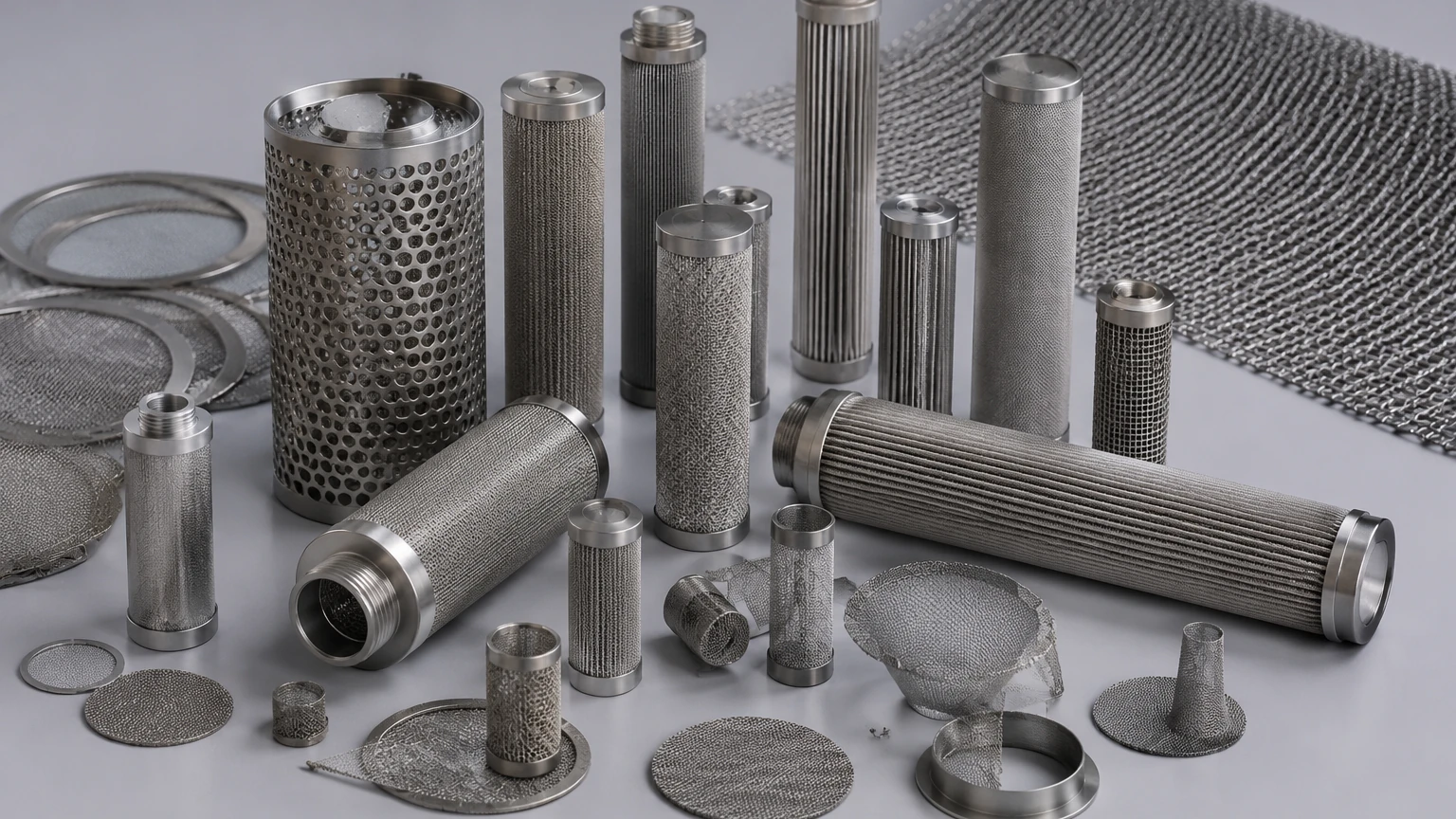
Application-Specific Requirements for Industrial Filters
Different industries impose unique demands on filtration hardware. A one-size-fits-all approach rarely yields optimal results.
Chemical and Petrochemical Processing
In these environments, filters must withstand aggressive solvents and acids. The focus is on material compatibility and the ability to handle high-viscosity fluids. Stainless steel pleated cartridges are often used here to maximize the surface area within a compact housing, allowing for high flow rates even with thick fluids.
Food and Beverage Industry
Hygiene is the paramount concern. *Industriele filters* used in food production must be easy to sterilize (often via Steam-in-Place or SIP) and must be constructed from FDA-compliant materials. Stainless steel mesh is preferred because it does not shed fibers into the product stream, ensuring the final beverage or food product remains uncontaminated.
Hydraulic and Lubrication Systems
Precision metal filters protect sensitive valves and actuators from wear-induced metal particles. These filters must handle high operating pressures and frequent flow reversals without deforming. The durability of stainless steel ensures that the filter itself does not become a source of contamination.
Custom OEM Solutions and Engineering Integration
Standard off-the-shelf filters often fall short when integrated into specialized machinery. This is where custom OEM (Original Equipment Manufacturer) solutions become vital. Customization allows for the optimization of several factors:
1. End-Cap Configurations: Ensuring a leak-proof seal within existing filter housings through custom gaskets or threaded connections.
2. Reinforcement Layers: Adding internal cores or external shrouds to withstand extreme pressure differentials.
3. Variable Mesh Weaves: Selecting specific weaves, such as Dutch weave or Twill weave, to balance filtration fineness with mechanical strength.
By working closely with a manufacturer like Kaifil, engineering teams can develop filtration components that are perfectly matched to their equipment’s specifications, reducing the need for costly retrofitting or frequent maintenance interventions.
Maintenance Strategies for Extending Filter Service Life
The total cost of ownership for *industriele filters* is heavily influenced by how they are maintained. Unlike disposable filters, high-quality stainless steel filters represent a significant initial investment that pays off through longevity.
Cleaning Protocols
For reusable stainless steel filters, several cleaning methods are effective:
* Ultrasonic Cleaning: Uses high-frequency sound waves to create cavitation bubbles that dislodge fine particles from deep within the mesh.
* Chemical Cleaning: Involves soaking the filter in compatible solvents or acids to dissolve organic or mineral deposits.
* Backpulsing: A process-integrated method where the flow is momentarily reversed to blow contaminants off the surface of the filter.
Monitoring and Replacement Cycles
Predictive maintenance is essential. By monitoring the differential pressure across the filter, operators can identify the optimal time for cleaning before performance degrades. If a filter shows signs of wire fraying, permanent deformation, or a persistent high baseline pressure drop after cleaning, it has reached the end of its functional life and must be replaced to protect the system.
Conclusion: Selecting the Right Partner for Industrial Filtration
The selection of *industriele filters* is a critical decision that affects the safety, efficiency, and profitability of industrial operations. By focusing on material quality, precise micron ratings, and application-specific designs, engineers can ensure their systems operate at peak performance.
As a dedicated manufacturer of stainless steel filtration components, Kaifil offers the technical expertise and manufacturing flexibility required to meet the world’s most demanding filtration challenges. Whether you require standard cartridges or fully customized OEM components, understanding the fundamentals of filtration technology is the first step toward process optimization.
For more information on our full range of stainless steel wire mesh and filter solutions, visit our Main Page to explore our products and technical capabilities.
