


Filtered Pipette Tips
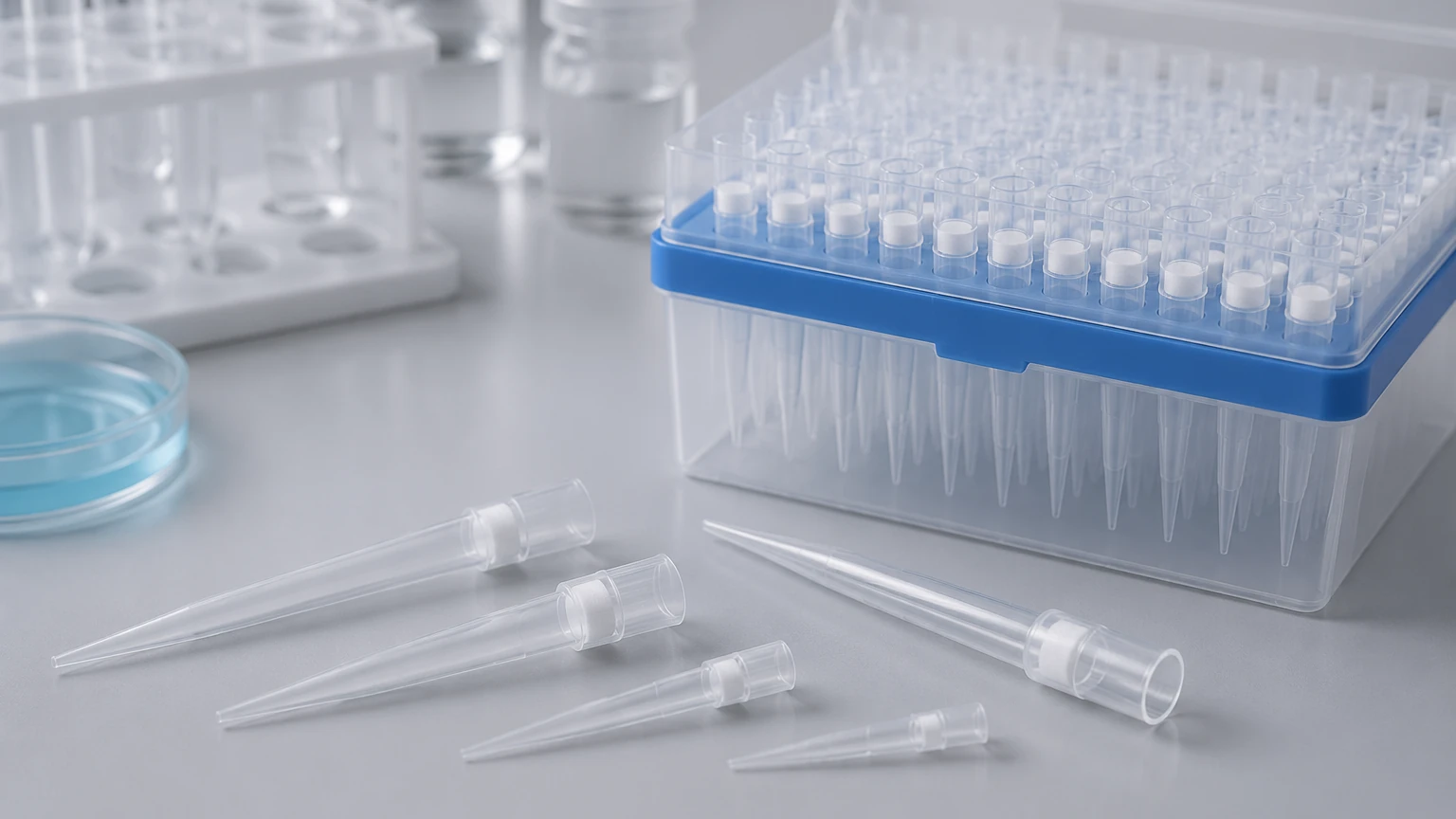
In the landscape of precision liquid handling, filtered pipette tips represent a critical engineering solution designed to mitigate the risks of cross-contamination and equipment degradation. While standard pipette tips are sufficient for routine transfers, applications involving sensitive biological samples, volatile chemicals, or PCR-based assays require a robust barrier to prevent the formation and migration of aerosols. For engineers and laboratory managers, understanding the technical specifications and filtration mechanics of these components is essential for maintaining the integrity of analytical workflows.
As a specialist in custom stainless steel filtration and precision metal components, Kaifil recognizes that the principles governing industrial filtration—such as pore size control, material compatibility, and flow dynamics—are equally vital in the micro-scale environment of laboratory consumables. This guide examines the technical nuances of filtered pipette tips, providing the factual foundation necessary for informed procurement and application-specific selection.
The Role of Filtered Pipette Tips in Precision Liquid Handling
The primary function of filtered pipette tips is to act as a physical and protective barrier between the liquid sample and the internal mechanism of the pipette. During the aspiration process, the rapid movement of liquid can generate microscopic droplets known as aerosols. Without a filter, these aerosols can enter the pipette shaft, leading to two significant problems: cross-contamination between successive samples and the gradual corrosion or contamination of the pipette’s internal piston.
In high-sensitivity environments, such as forensic laboratories or molecular biology suites, even a femtoliter of carry-over can compromise the validity of results. Filtered pipette tips utilize a porous plastic insert—typically made of Ultra-High Molecular Weight Polyethylene (UHMWPE)—to trap these aerosols while allowing air to pass freely, ensuring accurate volume displacement without the risk of contamination. For organizations seeking comprehensive filtration expertise across both lab and industrial scales, reviewing the Main Page of a specialized manufacturer like Kaifil can provide insights into the broader applications of precision filter media.
Technical Principles of Aerosol Barrier Filtration
The effectiveness of filtered pipette tips is not merely a result of "blocking" particles; it is a complex interaction of physical filtration mechanisms. These mechanisms are similar to those employed in industrial-grade wire mesh and sintered filters:
1. Inertial Impaction: Larger aerosol droplets, which have significant momentum, fail to follow the air stream as it weaves through the porous structure of the filter. Instead, they strike the filter fibers and become trapped.
2. Interception: Medium-sized particles follow the air stream but come close enough to a filter fiber to be captured by its surface.
3. Diffusion (Brownian Motion): The smallest particles move erratically due to molecular collisions. This erratic path increases the probability that they will contact and adhere to the filter material.
Engineering these filters requires a precise balance. The pore size must be small enough to capture aerosols effectively but large enough to prevent excessive air resistance (pressure drop), which would negatively impact the accuracy of the pipetting volume. Most high-quality filtered pipette tips are designed with a "tortuous path" structure rather than a simple sieve, increasing the surface area available for particle capture.
Material Selection and Chemical Compatibility
The choice of material for the filter insert is paramount to its performance. Most industrial-standard filtered pipette tips utilize hydrophobic UHMWPE. This material is chosen for several technical reasons:
* Hydrophobicity: The naturally water-repellent nature of the material ensures that if a sample is accidentally over-aspirated, the liquid does not easily soak through the filter, providing a momentary buffer that protects the pipette.
* Chemical Inertness: In B2B environments such as chemical processing or pharmaceutical R&D, the filter must not leach additives or interfere with the sample. UHMWPE is generally resistant to a wide range of laboratory reagents, including acids, bases, and organic solvents.
* Purity: Unlike some fibrous filters that may shed particles into the sample, sintered UHMWPE filters are structurally sound and "lint-free."
For specialized industrial applications where plastic components may fail due to extreme temperatures or aggressive solvents, engineers often turn to stainless steel filtration solutions. Kaifil provides customized metal filtration components that offer the durability and chemical resistance required for demanding industrial environments, mirroring the precision required in lab-scale aerosol barriers.
Performance Metrics: Filtration Efficiency and Flow Resistance
When evaluating filtered pipette tips for procurement, technical teams must consider the trade-off between filtration efficiency and flow resistance. An overly dense filter may provide 99.9% aerosol retention but create a vacuum lag, leading to under-delivery of the liquid sample. Conversely, a filter that is too porous may offer excellent ergonomic feel but fail to protect the pipette from contamination.
Filtration Efficiency
Efficiency is typically measured by the filter's ability to retain particles of a specific micron size. In the context of filtered pipette tips, the focus is on sub-micron aerosols. High-performance tips undergo rigorous testing to ensure they meet the standards required for radioactive, infectious, or sensitive genetic materials.
Airflow and Accuracy
Engineers must confirm that the filter does not introduce significant pneumatic resistance. If the air cannot move freely through the filter, the pipette's piston movement will not be perfectly synchronized with the liquid movement in the tip. This is particularly critical in automated liquid handling systems where timing and pressure are calibrated to the millisecond.
Industrial Manufacturing and OEM Customization for Filtration Components
The manufacturing of filtration components—whether for a pipette tip or a large-scale chemical reactor—requires stringent quality control and advanced engineering capabilities. Kaifil, as a professional manufacturer, specializes in the development of custom filtration solutions that meet specific industrial requirements. This includes the production of wire mesh filters and stainless steel filter cartridges that demand the same level of precision as laboratory consumables.
For B2B customers, the ability to customize filtration parameters is a significant advantage. OEM (Original Equipment Manufacturer) services allow for the adjustment of:
* Micron Ratings: Tailoring the filtration accuracy to the specific particle sizes present in the process.
* Material Grades: Selecting from various stainless steel alloys (e.g., 304, 316L) to match the corrosive profile of the environment.
* Structural Design: Engineering the filter to fit specific housing dimensions or to withstand high-pressure differentials.
While filtered pipette tips are often mass-produced, the underlying technology of porous media is a core competency shared by industrial filter manufacturers. Organizations looking for reliable, high-performance filtration components can explore the customized options and application support available on the Main Page.
Common Risks and Failure Modes in Filtered Tips
Understanding the potential failure modes of filtered pipette tips is essential for maintaining laboratory safety and data integrity. Technical professionals should be aware of the following risks:
* Bypass Contamination: If the filter is not seated correctly within the tip, aerosols can bypass the filter media entirely. Quality manufacturers use automated insertion processes to ensure a friction-fit seal that prevents bypass.
* Liquid Penetration: While the filters are hydrophobic, they are not liquid-proof. If a user tilts the pipette or over-aspirates, the liquid can eventually penetrate the filter. Some advanced tips include self-sealing additives that swell upon contact with liquid, though these can sometimes introduce contaminants into the sample.
* Extractables and Leachables: Low-quality filters may contain residual catalysts or processing aids from the manufacturing process. In sensitive applications like mass spectrometry, these leachables can create "ghost peaks" in the data.
To mitigate these risks, it is standard practice to source consumables from manufacturers who adhere to ISO 9001 quality management systems and provide certificates of analysis confirming the absence of DNase, RNase, and pyrogens.
Procurement Considerations: Quality Control and Application Verification
For purchasing teams and engineers, the selection of filtered pipette tips should be based on a rigorous verification of technical specifications. Before finalizing a supplier, the following information should be confirmed:
1. Compatibility: Ensure the tips are designed to fit the specific brands and models of pipettes used in the facility. A poor fit at the pipette cone can lead to air leaks, negating the benefits of the filter.
2. Certification: Verify that the tips are manufactured in a cleanroom environment (typically Class 100,000 or better) to prevent pre-use contamination.
3. Filtration Data: Request technical data sheets that outline the aerosol retention efficiency and the pore size of the filter media.
4. Supply Chain Reliability: In B2B operations, consistent supply is as important as product quality. Evaluate the manufacturer's ability to provide stable lead times and OEM support if custom configurations are required.
Conclusion
Filtered pipette tips are a fundamental component of the modern laboratory, providing a necessary safeguard against contamination in precision liquid handling. By applying the principles of filtration engineering—focusing on material purity, pore structure, and mechanical fit—technical professionals can ensure the accuracy of their results and the longevity of their equipment.
Whether the application involves micro-scale laboratory work or large-scale industrial processing, the requirement for reliable filtration remains constant. Manufacturers like Kaifil provide the expertise and customized solutions needed to navigate these technical challenges. For those seeking to optimize their filtration performance through high-quality stainless steel cartridges or custom-engineered components, the Main Page serves as a comprehensive resource for industrial-grade filtration technology and OEM capabilities.
