


Inline Carbonation Control
In the modern beverage and chemical processing industries, the transition from traditional batch carbonation to continuous inline processes represents a significant leap in operational efficiency and product consistency. Inline carbonation control is the technical process of precisely injecting carbon dioxide (CO2) or other gases into a liquid stream as it moves through a production line. This method requires a sophisticated understanding of fluid dynamics, gas solubility, and precision engineering to ensure that the final product meets exact specifications for carbonation levels, mouthfeel, and stability.
For engineers and plant managers, mastering inline carbonation control is not merely about adding gas to a liquid; it is about managing the variables of temperature, pressure, and contact surface area to achieve a stable, homogenous solution. Achieving this level of control relies heavily on the quality of the hardware used, particularly the porous metal components that facilitate gas diffusion.
The Transition to Inline Carbonation Systems
Historically, carbonation was achieved through "bright tank" carbonation, where a large volume of liquid was held under pressure and gas was slowly introduced over several hours or even days. While effective for small-scale operations, this method presents several challenges for industrial-scale production, including long processing times, high energy consumption for cooling, and the risk of stratification, where carbonation levels vary between the top and bottom of the tank.
Inline carbonation control addresses these inefficiencies by moving the gas-liquid interface into the piping system. By injecting gas directly into the product stream, manufacturers can achieve instantaneous carbonation. This allows for continuous production, reduces the footprint of the facility by eliminating the need for numerous large tanks, and provides much tighter control over the final CO2 volumes. However, the success of an inline system depends on the ability to dissolve gas efficiently without causing excessive turbulence or "breakout," where the gas remains in large bubbles rather than dissolving into the liquid.
Engineering Principles of Gas-Liquid Mass Transfer
To understand inline carbonation control, one must look at the physics of gas dissolution, primarily governed by Henry’s Law. This law states that the amount of dissolved gas in a liquid is proportional to its partial pressure above the liquid. In a practical industrial setting, three primary factors dictate the efficiency of this mass transfer:
1. Pressure: Increasing the system pressure forces more gas into the liquid phase. In inline systems, backpressure valves are often used to maintain a constant environment that favors dissolution.
2. Temperature: Solubility is inversely proportional to temperature. Colder liquids hold gas more effectively. Precise temperature control of the product stream is essential for stable inline carbonation.
3. Surface Area: This is perhaps the most critical variable controlled by hardware design. The rate of gas transfer is directly related to the total surface area of the gas-liquid interface. Small bubbles (micro-bubbles) provide a significantly higher surface-area-to-volume ratio than large bubbles, leading to faster and more complete dissolution.
In an inline carbonation control setup, the engineering goal is to create the smallest possible bubbles to maximize this surface area, ensuring that the gas is absorbed by the liquid before it reaches the end of the process line.
Porous Metal Spargers: The Heart of Inline Control
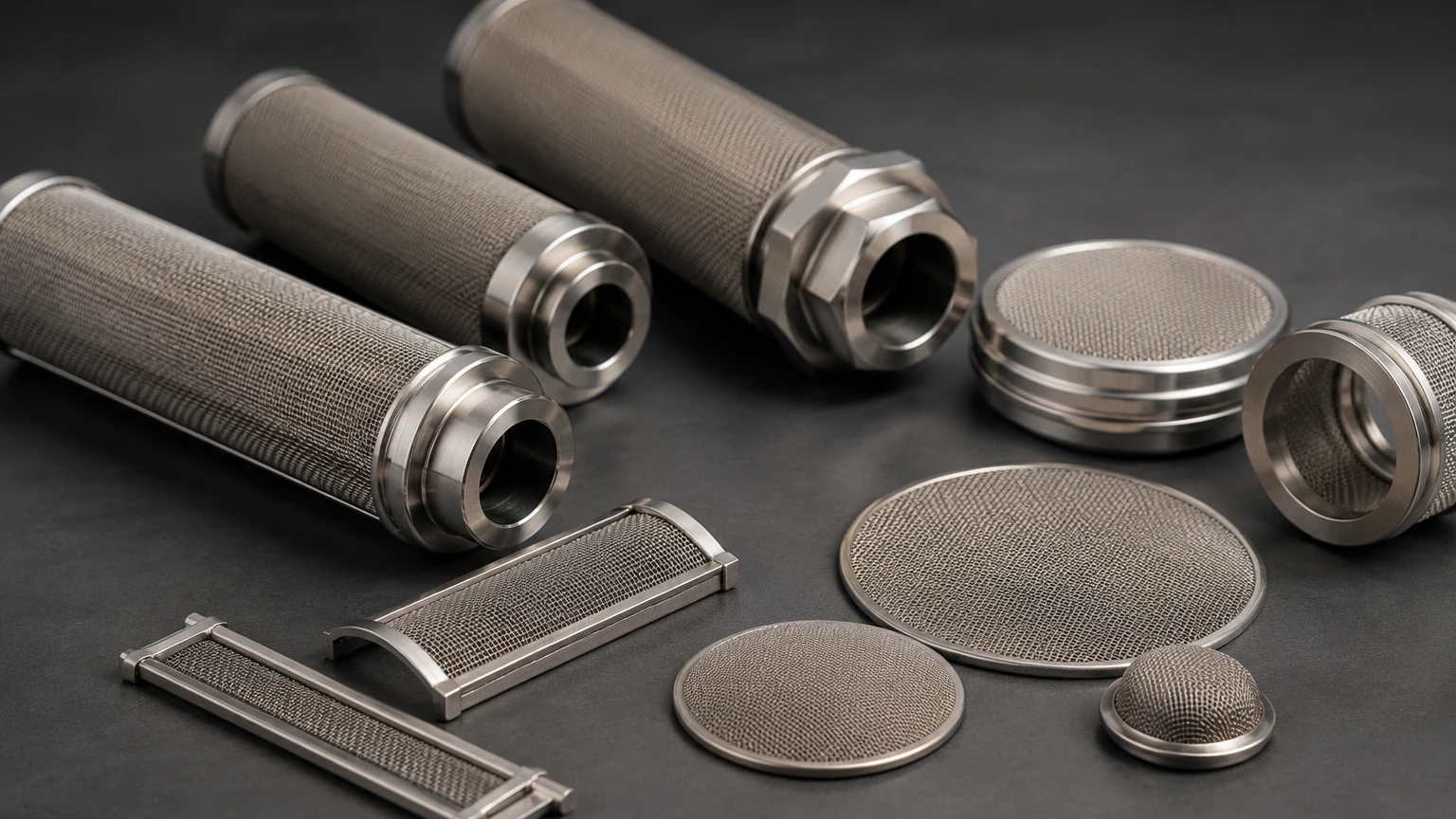
At the center of high-performance inline carbonation systems are porous metal components, often referred to as diffusion stones or spargers. As a specialist in custom stainless steel filtration and fluid control solutions, Kaifil manufactures these components to meet the rigorous demands of industrial gas injection.
Unlike simple drilled pipes or venturi injectors, sintered porous metal spargers are engineered with a controlled pore structure. When CO2 is forced through the microscopic pores of a stainless steel element, it emerges as millions of tiny bubbles.
Micron Rating and Bubble Dynamics
Selecting the correct micron rating for a diffusion element is a critical engineering decision. Common ratings for carbonation range from 0.5 to 10 microns.
* Fine Pores (0.5µm – 2µm): These produce the smallest bubbles, maximizing surface area. They are ideal for applications where the contact time in the pipe is short or where high CO2 volumes are required.
* Coarser Pores (5µm – 10µm): These offer lower pressure drops and are less prone to fouling, making them suitable for liquids with higher viscosity or those containing small particulates.
By utilizing sintered stainless steel, engineers can ensure that the pore distribution is uniform across the entire surface of the sparger, preventing "channeling" where gas escapes through a single large opening, which would compromise the precision of the inline carbonation control.
Material Integrity and Chemical Compatibility
In industrial filtration and gas injection, material selection is dictated by the operating environment. For inline carbonation control, 316L stainless steel is the industry standard. This material offers several essential properties:
* Corrosion Resistance: Carbon dioxide, when dissolved in water, forms carbonic acid. While a weak acid, it can be corrosive to lesser grades of metal over time. 316L stainless steel provides the necessary resistance to maintain structural integrity.
* Thermal Stability: Inline systems often undergo sterilization processes, including Steam-in-Place (SIP). Sintered metal components can withstand high temperatures and rapid thermal cycling without losing their filtration or diffusion characteristics.
* Mechanical Strength: High-pressure gas injection creates mechanical stress. Sintered metal elements are robust and resistant to the vibrations and pressure spikes common in industrial pumping systems.
For specialized applications in the chemical or pharmaceutical sectors, other alloys may be used, but for the vast majority of food and beverage applications, precision-engineered 316L stainless steel components provide the best balance of performance and longevity.
System Integration and Process Automation
Effective inline carbonation control requires more than just a high-quality sparger; it requires a coordinated system of sensors and controllers. A typical automated inline carbonation skid includes:
1. Flow Meters: To measure the velocity of the liquid stream.
2. CO2 Mass Flow Controllers: To precisely meter the amount of gas being injected based on the liquid flow rate.
3. In-line Analyzers: Sensors (often optical or based on thermal conductivity) that measure the actual dissolved CO2 levels in real-time.
4. PID Control Loops: A digital controller that adjusts the gas flow or system pressure based on feedback from the analyzer to maintain the setpoint.
This level of automation ensures that even if the upstream flow rate fluctuates, the inline carbonation control system adjusts instantly to maintain product consistency. This is particularly important for high-speed canning or bottling lines where even a slight deviation in carbonation can lead to foaming issues at the filler, resulting in product waste and downtime.
Maintenance, Cleaning, and Longevity
One of the primary concerns for engineers implementing inline carbonation control is the maintenance of the diffusion elements. Because these components have microscopic pores, they are susceptible to fouling from organic residues, mineral scaling, or particulates in the gas or liquid streams.
Cleaning-in-Place (CIP) Protocols
To maintain the performance of porous metal spargers, they must be integrated into the facility's CIP circuit. The robust nature of stainless steel allows for the use of aggressive caustic and acidic cleaning agents. It is important to ensure that the CIP flow is directed through the sparger to flush out any trapped debris. In some cases, ultrasonic cleaning or back-pulsing may be required to restore the original permeability of the element.
Filtration of the Gas Stream
To prevent clogging from the gas side, it is a best practice to install a high-efficiency particulate filter on the CO2 line before it reaches the carbonation stone. This prevents rust, pipe scale, or compressor oils from entering the porous structure of the sparger, significantly extending the service life of the component.
Strategic Selection for Industrial Applications
When specifying components for an inline carbonation system, purchasing teams and engineers should evaluate several factors to optimize the total cost of ownership. While the initial cost of a precision-engineered sintered metal sparger may be higher than simpler alternatives, the long-term benefits in gas efficiency, product consistency, and durability often outweigh the initial investment.
Key questions to confirm before procurement include:
* What is the target CO2 volume? Higher volumes may require longer diffusion elements or multiple injection points.
* What is the liquid's viscosity and temperature? These affect gas solubility and the required injection pressure.
* What are the hygienic requirements? Ensure the housing and the porous element meet relevant standards for the industry (e.g., FDA or 3-A standards for food and beverage).
* Is customization required? Often, standard off-the-shelf components do not fit the specific piping geometry or flow requirements of a specialized production line.
Kaifil provides the technical expertise and manufacturing capability to develop customized filtration and gas diffusion solutions that address these specific industrial challenges. By focusing on precision and durability, we help our clients achieve stable and efficient inline carbonation control across a wide range of applications.
For more information on our technical capabilities and to explore our full range of stainless steel filtration and diffusion products, please visit our Main Page.
Conclusion
Inline carbonation control is a cornerstone of modern industrial liquid processing. By leveraging the principles of gas-liquid mass transfer and utilizing high-precision porous metal components, manufacturers can achieve levels of consistency and efficiency that were previously impossible with batch processing. The selection of high-quality stainless steel diffusion elements is critical to this success, ensuring that the gas is introduced as micro-bubbles for rapid dissolution, while maintaining the hygienic standards and durability required in demanding industrial environments. As production speeds increase and quality standards become more stringent, the role of precise inline control will only continue to grow in importance.
