


Jet Pulse Dust Collector
In industrial environments, maintaining air quality and managing particulate matter is a critical operational requirement. The jet pulse dust collector, often referred to as a pulse-jet baghouse or cartridge collector, is among the most efficient and widely used systems for continuous dust collection. Unlike mechanical shaking or reverse-air systems, jet pulse technology allows for the cleaning of filter media without interrupting the primary airflow. This capability ensures that industrial processes in chemical processing, food production, and pharmaceutical manufacturing can operate at high capacity with minimal downtime.
For engineers and facility managers, selecting the right filtration components is essential for the longevity of the system. High-performance stainless steel filter cartridges and precision-engineered wire mesh components play a pivotal role in these systems, especially when dealing with high temperatures, corrosive gases, or stringent hygienic standards. Understanding the technical nuances of jet pulse filtration—from the physics of the pulse to the metallurgy of the filter media—is the first step toward optimizing filtration efficiency and reducing the total cost of ownership.
The Mechanism of Jet Pulse Filtration
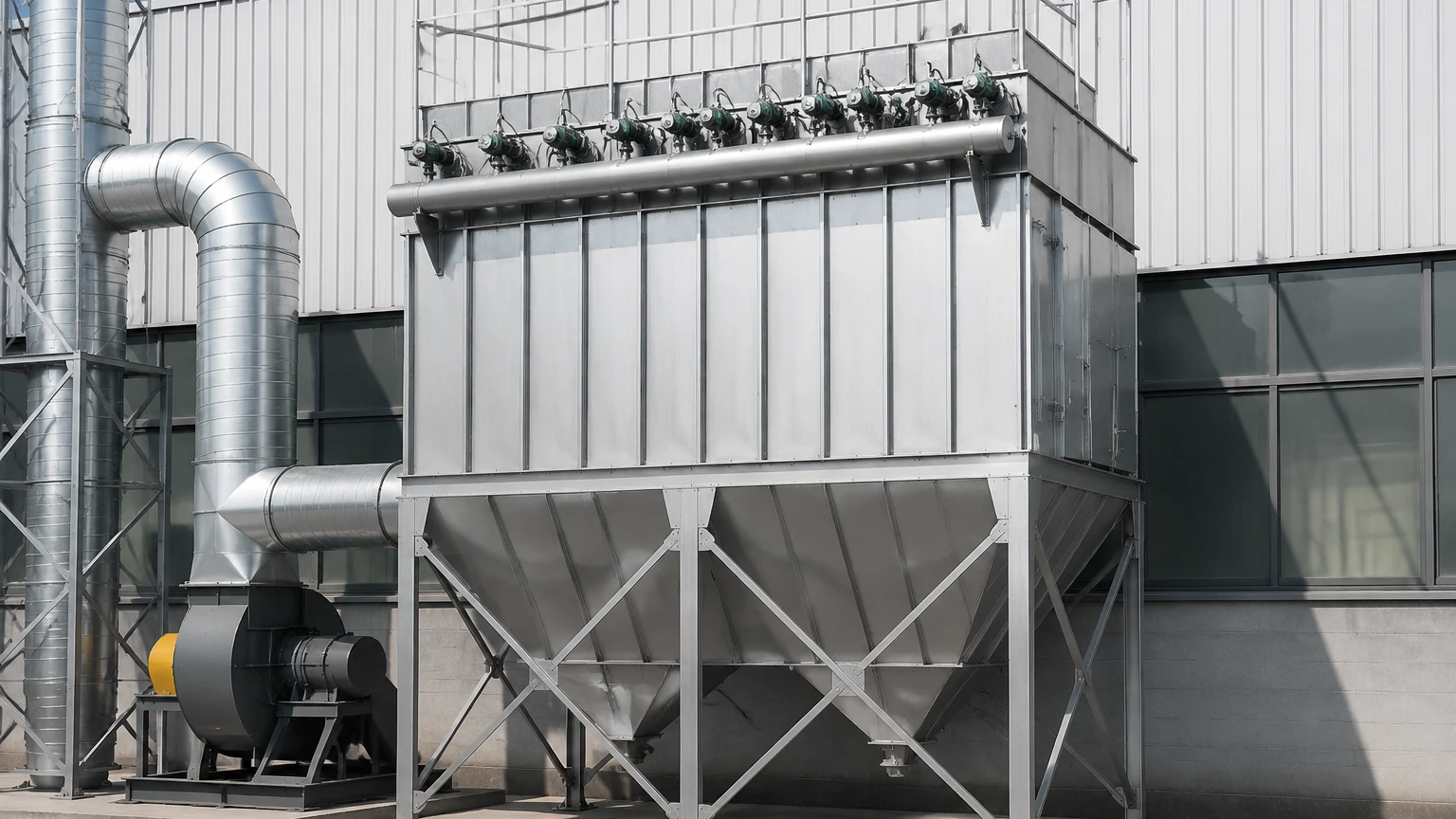
The fundamental principle of a jet pulse dust collector is the use of high-pressure compressed air to dislodge the dust cake from the surface of the filter media. The system typically consists of a housing, a hopper, a clean air plenum, and a series of filter elements (either bags or cartridges).
During operation, dust-laden air enters the collector, and particles are trapped on the exterior surface of the filter media while clean air passes through to the plenum. Over time, a "dust cake" builds up, which actually assists in filtration but eventually increases the differential pressure (resistance). To maintain efficiency, a timer or a pressure sensor triggers a pulse of compressed air (usually 60 to 100 psi) into the top of the filter element.
This pulse creates a shockwave that travels down the length of the filter, causing it to expand rapidly and then snap back. The sudden movement, combined with a brief moment of reverse airflow, causes the accumulated dust cake to fall into the hopper below. Because the pulse lasts only a fraction of a second (typically 0.1 seconds), the overall airflow through the collector remains largely unaffected, allowing for continuous process operation.
Engineering Considerations for Filter Media Selection
When designing or maintaining a jet pulse dust collector, the choice of filter media is the most significant factor affecting performance. While fabric bags are common in general applications, demanding industrial environments often require the durability and precision of metal filtration solutions.
Filtration Accuracy and Micron Ratings
In precision industries, such as pharmaceutical or fine chemical processing, the filtration accuracy must be tightly controlled. Stainless steel wire mesh filters provide a fixed pore size that does not fluctuate under pressure, unlike felted or woven fabrics. Engineers must evaluate the particle size distribution (PSD) of the dust to select a micron rating that balances collection efficiency with the frequency of cleaning cycles.
Temperature and Chemical Compatibility
Standard polyester or aramid filters have strict temperature limits, often failing above 200°C. In contrast, stainless steel filter cartridges can withstand significantly higher temperatures and are immune to many chemical solvents that would degrade synthetic fibers. For applications involving acidic or alkaline vapors, selecting 316L stainless steel ensures long-term resistance to pitting and corrosion.
Structural Integrity and Pleating
To maximize the filtration area within a compact footprint, filter cartridges are often pleated. In a jet pulse system, these pleats must remain stable during the high-pressure air blast. Precision metal supports and inner cores are necessary to prevent the media from collapsing or deforming, which would lead to "blinding" (permanent clogging) or mechanical failure.
Advantages of Stainless Steel in Pulse Jet Systems
While the initial investment in stainless steel filtration components may be higher than synthetic alternatives, the long-term technical and economic benefits are substantial. For professionals looking to optimize their systems, you can Review product options and application support to understand how custom metal solutions integrate into existing hardware.
1. Durability and Longevity: Metal filters are not susceptible to the mechanical wear and tear that eventually tears fabric bags. They can withstand millions of pulse cycles without losing structural integrity.
2. Cleanability: Stainless steel surfaces are smoother than fiber surfaces, allowing for easier release of the dust cake. This leads to lower operating differential pressure and reduced compressed air consumption.
3. Hygienic Standards: In food and beverage or pharmaceutical applications, the ability to clean and sterilize the filter media is paramount. Stainless steel is non-leaching and can be cleaned using CIP (Clean-In-Place) or ultrasonic methods, ensuring no cross-contamination between batches.
4. Conductivity and Safety: In environments where combustible dust is present, static electricity is a major hazard. Stainless steel is naturally conductive, allowing for easy grounding of the filtration system to prevent electrostatic discharge (ESD) and potential explosions.
Optimizing the Pulse Cleaning Cycle
A common mistake in operating a jet pulse dust collector is over-cleaning. If the pulse frequency is too high, the system consumes excessive compressed air and may actually reduce filtration efficiency by preventing a healthy dust cake from forming. Conversely, under-cleaning leads to high differential pressure, which strains the exhaust fan and increases energy costs.
Differential Pressure Monitoring
The most effective way to manage a jet pulse system is through "on-demand" cleaning. By using a differential pressure gauge, the controller only initiates a cleaning pulse when the pressure drop across the filters reaches a specific set point (e.g., 4 to 6 inches of water column). This extends the life of the filter media and ensures the system operates at peak energy efficiency.
Pulse Intensity and Venturi Design
The effectiveness of the pulse depends heavily on the Venturi nozzle located at the top of the filter. The Venturi is designed to accelerate the compressed air and entrain additional secondary air from the clean air plenum. This increases the volume of the pulse, ensuring that the cleaning energy reaches the bottom of the filter element. Engineers must ensure that the pulse valves and manifolds are correctly sized to deliver the necessary volume of air instantaneously.
Common Risks and Failure Modes
Even the best-designed jet pulse dust collector can fail if operational parameters are not strictly monitored. Understanding these risks allows for better preventive maintenance strategies.
* Moisture and Oil in Compressed Air: If the compressed air used for pulsing contains moisture or oil, it will contaminate the filter media. This causes the dust to turn into a "mud" that cannot be pulsed off, leading to permanent blinding. Installing high-quality air dryers and oil separators is non-negotiable.
* Abrasive Wear: In industries handling minerals or glass, the high-velocity dust particles can erode the filter media over time. In these cases, using reinforced stainless steel wire mesh can significantly extend the interval between replacements.
* Thermal Shock: While metal filters handle high temperatures well, rapid and extreme temperature fluctuations can cause fatigue in the welds or the pleat bonds. Gradual heating and cooling cycles are recommended to preserve the mechanical bonds of the filter assembly.
Customization and OEM Solutions
Every industrial process has unique requirements regarding flow rates, particle characteristics, and spatial constraints. Standard off-the-shelf filters often fall short in specialized applications. Custom-manufactured stainless steel filter cartridges allow for precise tailoring of the filtration surface area, flange designs, and support structures.
When working with a manufacturer like Kaifil, engineers can specify the exact wire mesh weave—such as plain, twill, or Dutch weave—to achieve the desired balance between flow rate and particle retention. Furthermore, custom-designed filters can be engineered to retrofit into older jet pulse housings, providing an upgrade in performance without the need for a complete system overhaul.
Conclusion: Making Informed Purchasing Decisions
Investing in a jet pulse dust collector system requires a holistic view of the application. It is not merely about the initial purchase price of the housing, but the ongoing performance and reliability of the internal filtration components. For demanding sectors like chemical processing and pharmaceutical manufacturing, the transition from disposable fabric media to permanent or semi-permanent stainless steel solutions often results in significant cost savings through reduced maintenance, lower energy consumption, and eliminated waste.
Engineers should confirm the chemical compatibility of all seals and gaskets, the maximum operating pressure of the pulse valves, and the specific micron requirements of their process before finalizing a selection. By focusing on high-quality materials and precise engineering, facilities can ensure their jet pulse dust collectors provide reliable service for years to come. For more detailed technical specifications and to explore customized filtration components, visit the Main Page to consult with filtration experts who can assist in optimizing your industrial air quality systems.
