


Duplex Strainer Filter
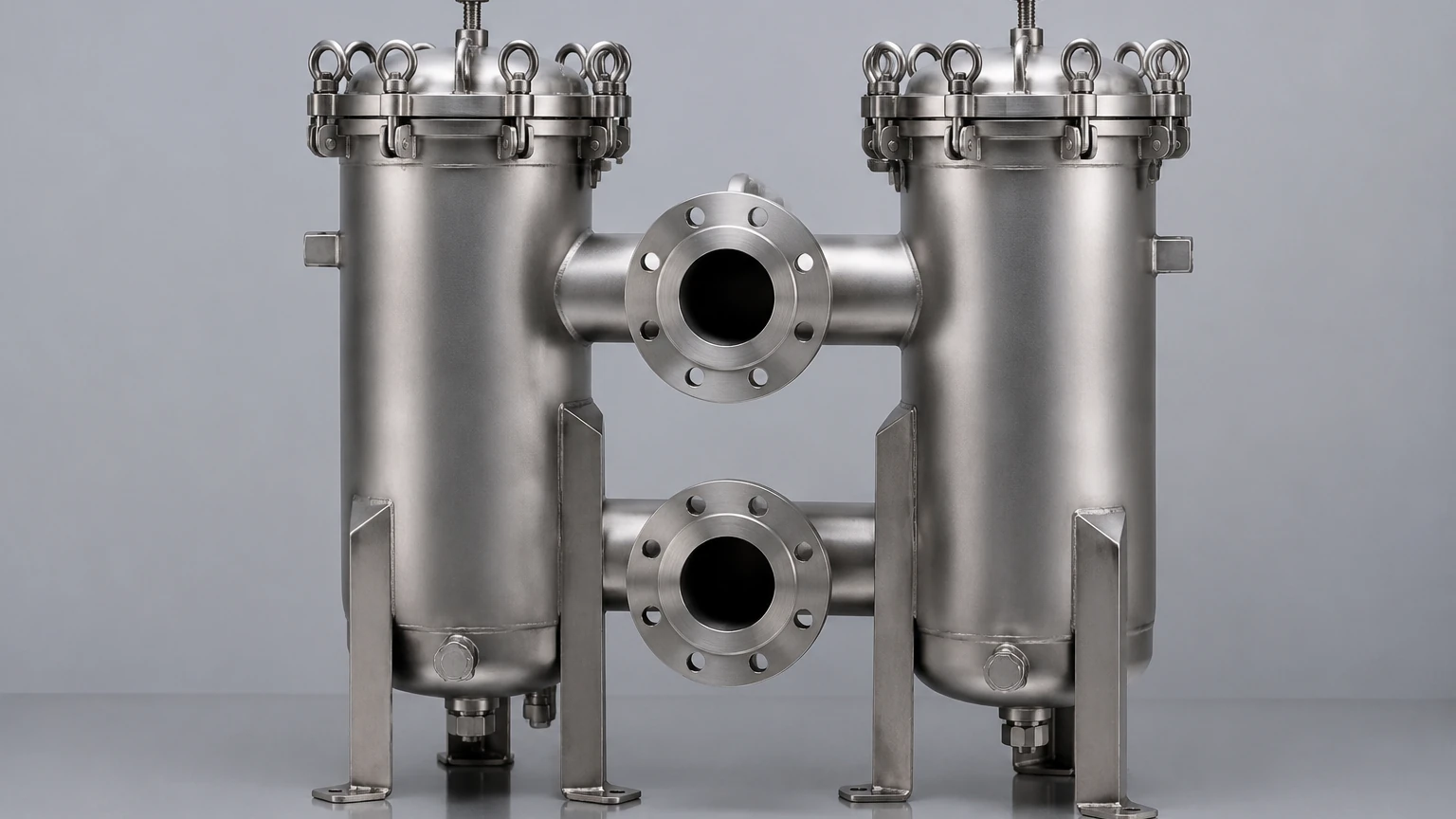
In industrial fluid handling, maintaining a continuous flow is often a critical requirement for operational efficiency and equipment protection. A duplex strainer filter is a specialized filtration component designed specifically for systems that cannot be shut down for filter cleaning or maintenance. Unlike simplex strainers, which require a complete system halt to remove and clean the basket, a duplex system utilizes a twin-chamber design that allows one side to remain in operation while the other is serviced.
For engineers and procurement professionals, selecting the right duplex strainer filter involves understanding the nuances of fluid dynamics, material compatibility, and the specific mechanical requirements of the application. This guide examines the technical considerations, engineering principles, and selection criteria necessary to integrate these components into high-performance industrial systems.
The Engineering Principle of Duplex Filtration
The core functionality of a duplex strainer filter lies in its ability to divert flow between two separate filtration chambers. This is typically achieved through a synchronized valve mechanism. When the primary chamber becomes loaded with contaminants—indicated by an increase in differential pressure—the operator or an automated system shifts the flow to the secondary, clean chamber.
Diverter Valve Configurations
The method of diversion is a primary engineering consideration. Common valve types used in duplex strainers include:
* Plug Valves: These are robust and provide a positive seal, often used in high-pressure or high-viscosity applications. They are designed to ensure that the flow is never completely blocked during the transition (a "non-interrupted flow" design).
* Ball Valves: Frequently used for smaller pipe sizes or applications requiring quick actuation. They offer excellent sealing properties and are relatively easy to automate.
* Butterfly Valves: Common in large-diameter piping systems where space and weight are concerns. They provide a cost-effective solution for high-volume flow but may require more complex linkage for synchronized operation.
Continuous Flow Integrity
A critical feature of a well-engineered duplex strainer is the overlap in the valve stroke. This ensures that as one chamber closes, the other is already opening, preventing pressure spikes or water hammer effects that could damage downstream sensitive equipment like pumps or flow meters.
Material Selection and Chemical Compatibility
Industrial filtration environments vary from benign water systems to highly corrosive chemical processing lines. The longevity of a duplex strainer filter depends heavily on the materials used for the housing, the internal baskets, and the seals.
Stainless Steel Housings
For most high-performance applications, stainless steel is the preferred material. Kaifil specializes in custom stainless steel filtration solutions, utilizing grades such as SS304 and SS316L.
* SS304: Suitable for general industrial use, providing good corrosion resistance and mechanical strength at a lower cost point.
* SS316L: Essential for pharmaceutical, food and beverage, and marine applications where resistance to pitting and chloride-induced corrosion is mandatory.
Seal and Gasket Materials
The choice of elastomers is just as important as the metal housing. Engineers must confirm that the seal material is compatible with the process fluid and the operating temperature. Common options include:
* Buna-N (Nitrile): Standard for oil and water applications.
* EPDM: Excellent for steam and water, but poor resistance to oils.
* Viton (FKM): High-temperature resistance and broad chemical compatibility.
* PTFE: Used for the most aggressive chemical environments, though it offers less elasticity than traditional elastomers.
Technical Specifications: Micron Ratings and Mesh Selection
The efficiency of a duplex strainer filter is defined by its filtration media. This usually consists of a perforated metal support basket lined with a fine wire mesh.
Understanding Micron Ratings
Filtration accuracy is measured in microns (μm). For coarse straining, a perforated plate with 1/8" or 1/16" holes might suffice. However, for precision applications, a multi-layer stainless steel wire mesh is required to capture particles down to 5 or 10 microns. When specifying a duplex strainer, it is vital to distinguish between "nominal" and "absolute" micron ratings. Nominal ratings indicate the ability to trap a percentage of particles, while absolute ratings indicate the size of the largest particle that can pass through the mesh.
Open Area Ratio
An often-overlooked metric is the "Open Area Ratio" (OAR). This is the ratio of the total area of the holes in the filter basket to the cross-sectional area of the inlet pipe. A high OAR (typically 6:1 or 8:1) ensures a low initial pressure drop and extends the time between cleaning cycles. If the OAR is too low, the filter will clog rapidly, necessitating frequent switching between chambers.
Pressure Drop and Flow Efficiency
In any filtration system, the introduction of a duplex strainer filter creates a pressure drop (Delta P). This is the difference in pressure between the inlet and the outlet of the filter. Engineers must calculate the maximum allowable pressure drop for their system to ensure that the downstream process receives adequate pressure.
Factors Influencing Delta P
1. Viscosity: Thicker fluids (like heavy oils or resins) require more force to pass through the mesh, resulting in a higher pressure drop.
2. Flow Rate: Pressure drop increases with the square of the flow rate. Doubling the flow can quadruple the pressure drop.
3. Contaminant Loading: As the basket collects debris, the available open area decreases, and Delta P rises.
Most industrial duplex strainers are equipped with differential pressure gauges. These provide a visual or electronic signal when the pressure drop reaches a pre-set limit (e.g., 10-15 psi), notifying the maintenance team that it is time to switch to the standby chamber.
Industrial Applications and Performance Expectations
Duplex strainer filters are utilized across a broad spectrum of industries, each with unique performance expectations:
* Chemical Processing: Used to protect expensive reactors and nozzles from particulate matter. Reliability and chemical resistance are the primary drivers here.
* Food and Beverage: Requires sanitary designs with smooth internal surfaces (high Ra finish) to prevent bacterial growth. Stainless steel construction is mandatory.
* Power Generation: Used in cooling water systems and lube oil filtration for turbines. These systems often operate 24/7, making the duplex design essential.
* Marine Industry: Essential for fuel oil and sea water cooling systems where a blockage could lead to engine failure at sea.
* Hydraulic Systems: Protects high-pressure pumps and valves from wear-inducing particles, ensuring the longevity of the hydraulic fluid.
Maintenance and Operational Safety
While the duplex design allows for maintenance during operation, safety protocols must be strictly followed. Before opening the standby chamber for cleaning, the operator must ensure that the chamber is properly depressurized and drained.
Cleaning the Filter Basket
Once the flow has been diverted, the isolated chamber can be opened. The stainless steel basket is removed and cleaned. For most industrial applications, ultrasonic cleaning or high-pressure washing is effective. It is critical to inspect the basket for any signs of mechanical fatigue or mesh breakthrough. Even a small tear in the wire mesh can compromise the entire filtration process.
Venting and Draining
Modern duplex strainer filters often include vent valves on the covers and drain plugs on the bottom of the chambers. Venting is necessary to release trapped air when bringing a clean chamber back into standby mode. Failure to vent can lead to air pockets entering the process stream, which can cause cavitation in pumps.
Customization and OEM Considerations
Off-the-shelf filtration solutions do not always meet the specific spatial or performance requirements of complex industrial skids. This is where customized engineering becomes valuable. Factors such as non-standard flange connections (ANSI, DIN, JIS), specific height restrictions, or the need for specialized coatings require a manufacturer with deep technical expertise.
Kaifil provides a wide range of customized filtration components, ensuring that every duplex strainer filter is optimized for its intended environment. By focusing on precision metal filter components and durable stainless steel construction, Kaifil supports engineers in achieving reliable, long-term filtration performance. For more information on specific configurations and technical support, you can visit the Main Page.
Total Cost of Ownership (TCO)
When evaluating a duplex strainer filter, procurement teams should look beyond the initial purchase price and consider the Total Cost of Ownership.
1. Operational Downtime: The primary value of a duplex system is the elimination of downtime. For a high-volume production line, the cost of a single hour of downtime can exceed the entire cost of the strainer.
2. Maintenance Labor: Systems that are easy to switch and clean reduce the labor hours required for maintenance.
3. Durability: High-quality stainless steel components last significantly longer than plastic or cast iron alternatives, especially in corrosive environments.
4. Energy Consumption: A well-sized strainer with a low pressure drop reduces the load on pumps, leading to lower energy costs over the life of the system.
Conclusion
The duplex strainer filter is a fundamental component for any industrial process requiring continuous operation. By providing a redundant filtration path, it ensures that systems remain protected without sacrificing productivity. Selecting the optimal unit requires a thorough analysis of flow rates, fluid properties, and material requirements. By partnering with a manufacturer that understands the complexities of stainless steel filtration, engineers can ensure their systems operate with maximum efficiency and minimal risk.
