


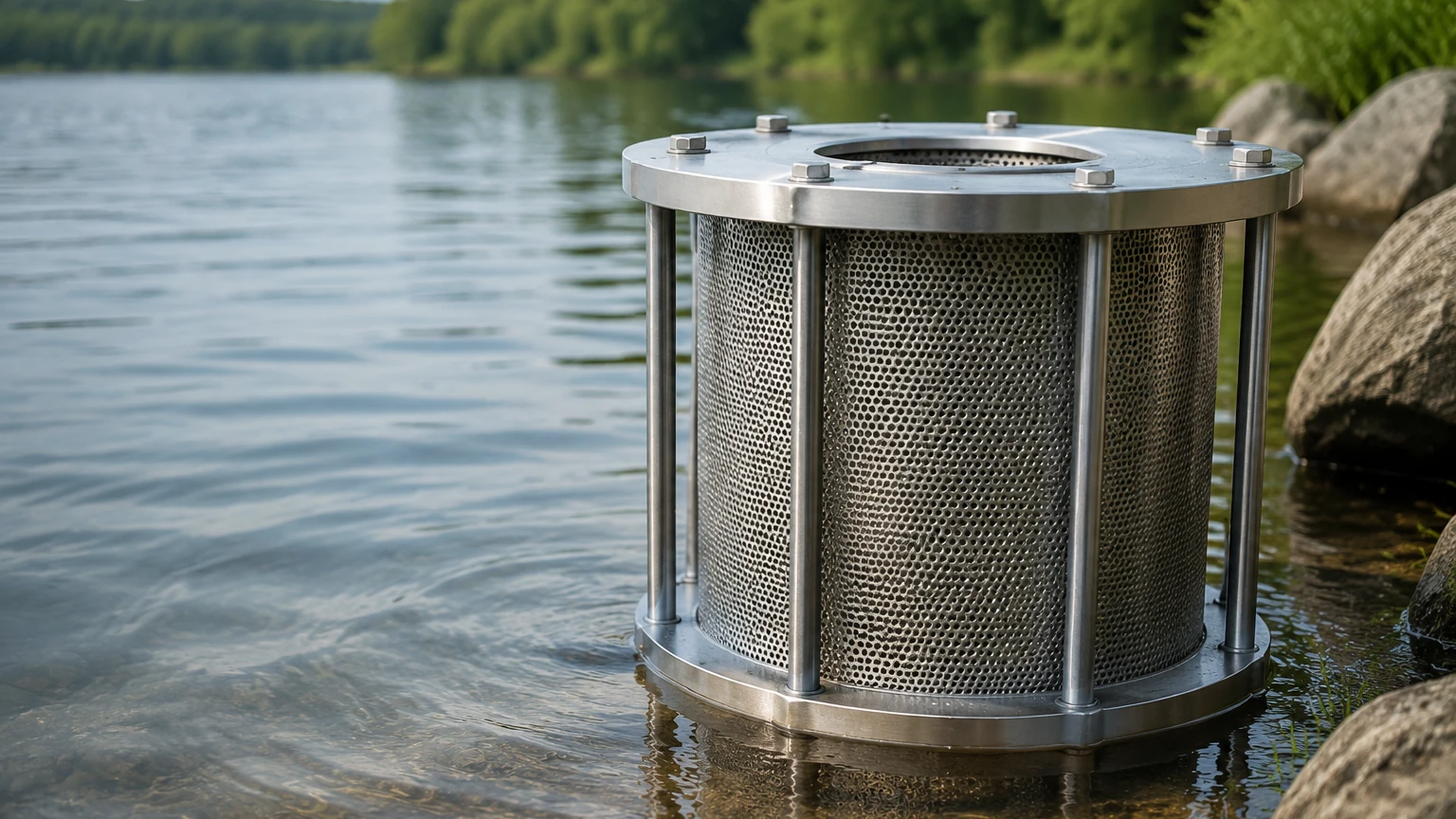
Lake Filter Screen
In industrial and municipal water management, the extraction of raw water from surface sources like lakes and reservoirs requires a robust primary filtration stage. A lake filter screen serves as the critical first line of defense, protecting downstream infrastructure—including pumps, heat exchangers, and fine filtration membranes—from large debris, aquatic life, and suspended solids. For engineering and procurement teams, selecting the appropriate screen involves a complex balance of hydraulic performance, material longevity, and regulatory compliance.
As industrial processes demand higher water quality and greater system uptime, the design of these screens has evolved from simple barriers to precision-engineered components. This guide examines the technical considerations, material science, and operational factors essential for specifying high-performance lake filtration solutions.
Understanding the Role of Lake Filter Screens in Industrial Water Intake
Industrial water intake systems are designed to handle vast volumes of water for cooling, processing, or pre-treatment. Without an effective lake filter screen, the intake system is vulnerable to "blinding" (surface clogging) and internal damage. The primary function of these screens is to exclude solids such as sticks, leaves, plastic waste, and biological matter while maintaining a consistent flow rate.
From an engineering perspective, the screen must be designed to withstand the hydrostatic pressure and physical impact of debris during storm events or seasonal changes. Furthermore, in many jurisdictions, intake screens must comply with environmental regulations regarding "impingement" and "entrainment." These regulations often dictate the maximum approach velocity—the speed at which water nears the screen—to prevent fish and other aquatic organisms from being trapped against the mesh.
Technical Specifications: Micron Ratings and Flow Dynamics
The performance of a lake filter screen is defined by its filtration accuracy (micron rating) and its total open area. Selecting the correct aperture size is a trade-off between the level of protection required and the frequency of maintenance.
Open Area and Pressure Drop
The "open area" percentage of a screen directly influences the differential pressure ($ΔP$) across the filter. A higher open area reduces the initial pressure drop and allows for lower approach velocities, which extends the service life of the screen and reduces energy consumption at the pump station. Engineers typically calculate the required surface area based on the peak flow demand of the facility, ensuring that even if 20-30% of the screen is obstructed, the system can still operate within safe parameters.
Micron Selection for Raw Water
While secondary filtration might target particles down to 5 or 10 microns, lake intake screens usually operate in the range of 500 microns to several millimeters. In applications where the lake water is relatively clear, a finer stainless steel wire mesh may be used to protect sensitive equipment directly. However, in high-turbidity environments, a coarser screen is preferred to prevent rapid clogging, with the understanding that secondary Main Page filtration stages will handle the finer silt and organic load.
Material Engineering for Aquatic Environments
Lake environments present unique corrosive challenges. While freshwater is generally less aggressive than seawater, factors such as dissolved oxygen, pH fluctuations, and the presence of industrial runoff can lead to rapid degradation of inferior metals. Stainless steel is the industry standard for lake filter screens due to its superior mechanical strength and corrosion resistance.
Grade 304 vs. Grade 316 Stainless Steel
* Grade 304: Suitable for most standard freshwater applications. It provides excellent structural integrity and resistance to oxidation at a cost-effective price point.
* Grade 316: Recommended for lakes with higher chloride levels, brackish water, or environments near industrial discharge points. The addition of molybdenum in Grade 316 enhances its resistance to pitting and crevice corrosion, which is vital for submerged components that cannot be easily inspected or replaced.
For specialized applications involving highly acidic or alkaline water, high-nickel alloys may be considered, though 300-series stainless steel remains the most common choice for standard industrial lake intakes.
Structural Designs: Woven Wire Mesh vs. Wedge Wire
The physical structure of the filtration media determines how easily the screen can be cleaned and how well it resists mechanical stress. Two primary designs dominate the market: woven wire mesh and wedge wire.
Woven Wire Mesh
Woven wire mesh is highly versatile and offers a wide range of precision openings. It is often used in cartridge-style lake filters or as a secondary lining for larger intake structures. The primary advantage of woven mesh is its high open area and cost-efficiency. However, in environments with fibrous debris (such as certain types of algae or aquatic weeds), woven mesh can be prone to "stapling," where debris wraps around the wires, making it difficult to clean through backwashing alone.
Wedge Wire (V-Wire)
Wedge wire screens are constructed from V-shaped profiles welded onto support rods. This design creates a "slot" that widens inwardly. This geometry is inherently non-clogging; any particle that passes through the narrowest point of the slot will easily continue through the screen without getting stuck. Wedge wire is exceptionally durable and is the preferred choice for high-capacity intake cylinders and self-cleaning screen systems. Its structural rigidity allows it to withstand significant pressure differentials without deforming.
Overcoming Operational Challenges: Biofouling and Debris Management
One of the greatest challenges in lake filtration is biofouling—the accumulation of biological organisms such as algae, bryozoans, and invasive species like zebra mussels. These organisms can quickly colonize the surface of a lake filter screen, drastically reducing flow and increasing the weight of the intake structure.
Anti-Fouling Strategies
To combat biofouling, engineers employ several strategies:
1. Material Coatings: Some screens utilize specialized coatings to discourage biological attachment.
2. Air Burst Systems: Many modern lake intake screens are equipped with an integrated air burst system. Periodically, a high-pressure blast of air is released from within the screen, physically dislodging accumulated debris and biological growth.
3. Mechanical Scrapers: In stationary screen installations, automated mechanical brushes or scrapers may be used to clear the surface without interrupting the flow.
Seasonal Debris Loading
Lakes undergo seasonal changes, such as "turnover" or heavy runoff during spring melts, which can suddenly increase the debris load. A well-engineered filtration system must account for these peak events. Monitoring the differential pressure across the screen is the most effective way to manage these cycles; a sudden rise in $ΔP$ serves as a trigger for automated cleaning cycles or manual intervention.
Procurement and Customization for OEM Applications
Standard off-the-shelf solutions rarely meet the specific needs of large-scale industrial projects. Customization is often required to fit existing intake piping, satisfy specific flow requirements, or accommodate unique environmental constraints. When working with a manufacturer like Kaifil, engineers should be prepared to confirm several key data points before production begins:
* Maximum and Minimum Flow Rates: To ensure the approach velocity remains within regulatory and operational limits.
* Debris Profile: Identification of the primary debris types (e.g., sand, aquatic plants, or industrial waste).
* Installation Depth: To account for hydrostatic pressure and ease of retrieval for maintenance.
* Connection Specifications: Flange types, thread patterns, or custom mounting brackets required for integration into the existing infrastructure.
By focusing on these technical details, procurement teams can ensure they receive a filtration solution that offers the lowest total cost of ownership. While high-quality stainless steel or wedge wire screens may have a higher initial capital cost, their durability and reduced maintenance requirements provide significant long-term value compared to lower-grade alternatives.
For technical professionals seeking to optimize their water intake systems, reviewing detailed product specifications and engineering capabilities is a vital step. You can explore a wide range of custom stainless steel filtration options and technical support by visiting the Main Page of our primary resource site.
Conclusion
The lake filter screen is a fundamental component in any water-dependent industrial process. Its design impacts everything from pump efficiency to environmental compliance. By selecting the right materials—specifically high-grade stainless steel—and choosing between woven mesh and wedge wire based on debris characteristics, facilities can ensure a reliable supply of raw water. As environmental standards tighten and water scarcity increases the need for efficient intake, the engineering behind these screens remains a critical focus for industrial sustainability.
