


Lube Oil Filters
In industrial machinery, the lubrication system is often compared to the circulatory system of a living organism. Its primary function is to reduce friction, dissipate heat, and transport contaminants away from critical moving parts. However, the effectiveness of the lubricant is entirely dependent on its cleanliness. This is where lube oil filters become indispensable. For engineers and maintenance professionals, selecting the correct filtration solution is not merely a matter of fitting a component; it is a strategic decision that affects equipment longevity, operational efficiency, and total cost of ownership.
Industrial applications—ranging from high-speed turbines and large-scale hydraulic presses to chemical processing pumps—demand filtration that can withstand harsh environments while maintaining precise particle retention. As a specialized manufacturer, Kaifil provides high-performance stainless steel filtration solutions designed to meet these rigorous standards. For a comprehensive overview of our technical capabilities and product range, you can visit our Main Page.
Understanding the Critical Role of Lube Oil Filtration
Lube oil filters are designed to remove various types of contaminants that naturally accumulate in a lubrication circuit. These contaminants generally fall into three categories: built-in, ingressed, and generated. Built-in contaminants include debris left over from the manufacturing process, such as casting sand or metal burrs. Ingressed contaminants enter the system from the external environment, often through breathers or seals. Generated contaminants are the result of internal wear, such as metallic particles from gear meshing or chemical byproducts from oil degradation.
If these particles are not effectively removed, they act as grinding paste, accelerating the wear of bearings, seals, and valves. This leads to a phenomenon known as "wear regeneration," where the particles created by wear cause even more wear, eventually leading to catastrophic component failure. High-quality lube oil filters break this cycle by capturing particles at the micron level, ensuring that the lubricant remains a protective barrier rather than a carrier of abrasive debris.
Technical Evaluation: Micron Ratings and Beta Ratios
When evaluating lube oil filters, engineers must look beyond simple dimensions. The two most critical metrics are the micron rating and the Beta ratio (β-ratio). These figures define the filter's efficiency and its ability to protect sensitive downstream components.
Micron Rating: Absolute vs. Nominal
A micron rating indicates the size of the particles the filter media can capture. However, there is a significant difference between "nominal" and "absolute" ratings. A nominal rating is an arbitrary value indicating that the filter can trap a certain percentage of particles of a given size. In contrast, an absolute rating (typically defined as having a Beta ratio of 75 or higher) means the filter has been tested to capture 99.9% of particles at that specific micron size. For critical industrial machinery, absolute-rated filters are generally required to ensure consistent protection.
The Beta Ratio (ISO 16889)
The Beta ratio is a more precise way to measure filtration efficiency. It is calculated by dividing the number of particles of a specific size upstream of the filter by the number of particles of the same size downstream. For example, if a filter has 100,000 particles of 10 microns upstream and only 1,000 downstream, the Beta ratio ($β_{10}$) is 100. This translates to an efficiency of 99%. Understanding these ratios allows engineers to align the filter's performance with the ISO 4406 cleanliness codes required for their specific equipment.
Material Engineering: The Advantages of Stainless Steel Mesh
While disposable cellulose or glass fiber elements are common in light-duty applications, heavy industrial environments often necessitate the use of stainless steel wire mesh. As a manufacturer specializing in these materials, Kaifil emphasizes the structural and chemical advantages of metal filtration media.
Durability and Pressure Stability
Stainless steel filters, often constructed from 304 or 316L grades, offer exceptional structural integrity. Unlike fiber-based media, which can migrate or collapse under high differential pressure (ΔP), stainless steel wire mesh maintains its pore structure even in high-viscosity or high-pressure start-up conditions. This prevents "channeling," where fluid bypasses the media through small tears, rendering the filter ineffective.
Chemical and Thermal Resistance
In chemical processing and high-temperature hydraulic systems, the lubricant itself or the operating environment may be corrosive. Stainless steel is naturally resistant to a wide range of industrial chemicals and can operate at temperatures far exceeding the limits of synthetic or organic fibers. This makes stainless steel lube oil filters ideal for applications involving synthetic lubricants or high-temperature steam turbine oils.
Cleanability and Sustainability
One of the most significant advantages of stainless steel media is that it is often cleanable and reusable. Through ultrasonic cleaning or backwashing, the accumulated contaminants can be removed, restoring the filter's original flow characteristics. This not only reduces the recurring cost of replacement elements but also minimizes the environmental impact associated with disposing of oil-soaked hazardous waste.
Selection Criteria for Industrial Lubrication Systems
Selecting the right lube oil filters requires a holistic view of the system's operating parameters. A mismatch between the filter and the application can lead to premature clogging, excessive pressure drop, or insufficient protection.
1. Flow Rate and Viscosity: The filter must be sized to handle the maximum flow rate of the system without creating an excessive pressure drop. It is crucial to consider the oil's viscosity at its lowest operating temperature (cold start). High-viscosity oil requires a larger surface area or a coarser mesh to prevent the bypass valve from opening prematurely.
2. Operating Pressure: The filter housing and the internal element must be rated for the system's maximum operating pressure, including potential pressure spikes or surges.
3. Filtration Surface Area: Increasing the surface area through pleating allows for a higher dirt-holding capacity and a lower initial pressure drop. This extends the service interval and improves the overall efficiency of the system.
4. Bypass Valve Settings: Most lube oil filters include a bypass valve to ensure the engine or machine is never starved of oil. However, the cracking pressure of this valve must be carefully calibrated so that it only opens when the filter is truly clogged, rather than during normal high-flow or high-viscosity events.
Maintenance Protocols and Cleaning Procedures
Effective maintenance of lube oil filters is essential for maximizing equipment uptime. The most reliable method for monitoring filter health is the use of differential pressure (ΔP) gauges. As the filter captures contaminants, the resistance to flow increases, causing the pressure upstream of the filter to rise relative to the downstream pressure.
When to Clean or Replace
Maintenance teams should establish clear thresholds for filter service. A common practice is to trigger a maintenance alert when the ΔP reaches 70-80% of the bypass valve's cracking pressure. For reusable stainless steel elements, the cleaning process must be handled with care. Ultrasonic cleaning is the industry standard, as it uses high-frequency sound waves to create cavitation bubbles that dislodge particles from deep within the mesh without damaging the delicate wire structure.
Oil Analysis
Filter maintenance should always be paired with regular oil analysis. By examining the types of particles captured by the filter and those remaining in the oil, engineers can gain insights into the health of the machine. For instance, an uptick in copper particles might indicate a failing bearing, allowing for proactive repairs before a total system failure occurs.
Customization and OEM Integration for Specialized Applications
Every industrial system has unique constraints, whether it is a restricted installation space, an unusual chemical environment, or specific flow dynamics. Standard off-the-shelf filters often fall short in these scenarios. This is where custom OEM filtration solutions become vital.
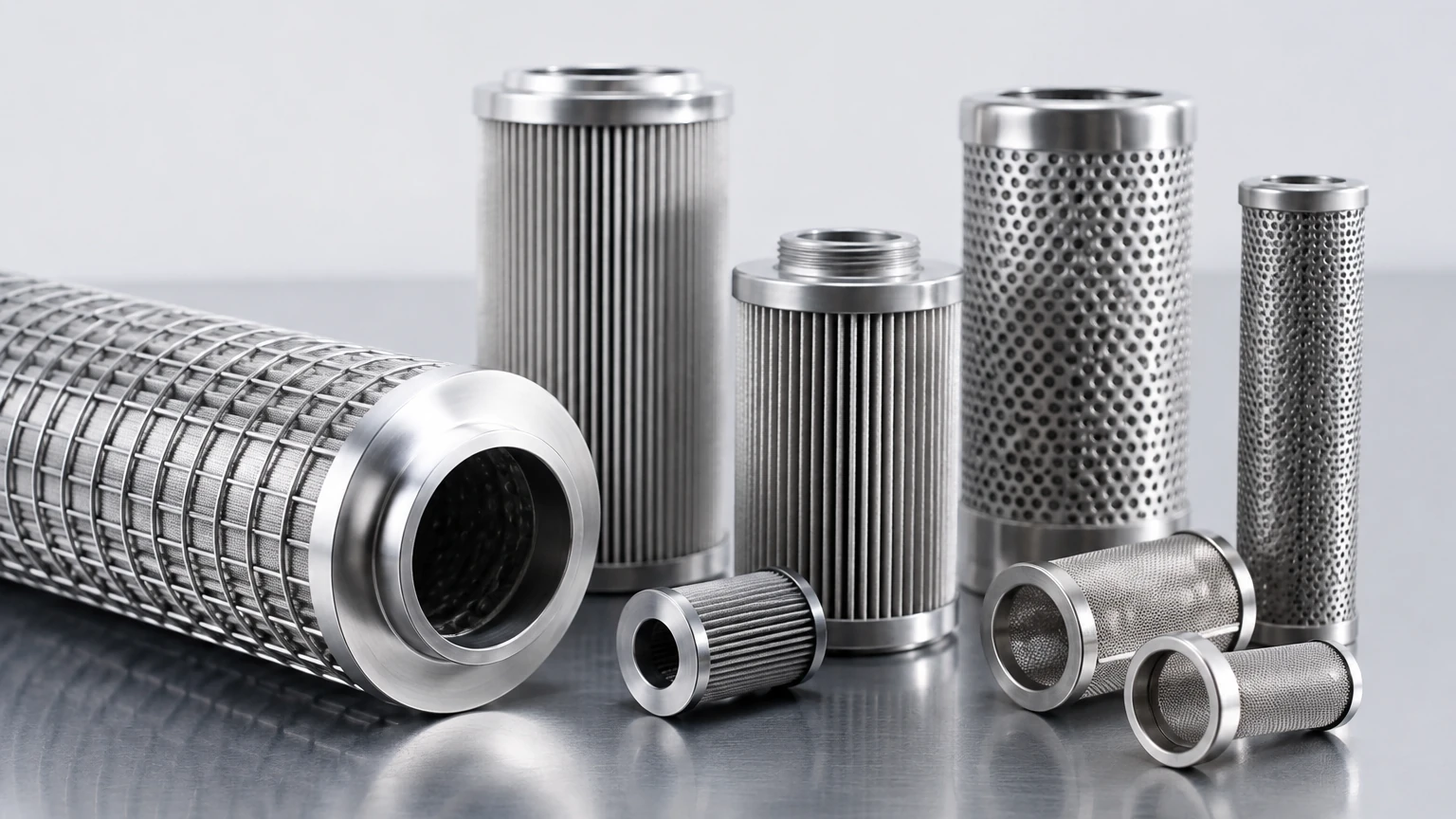
Customization allows for the optimization of every aspect of the filter, from the specific weave pattern of the stainless steel mesh (such as plain, twill, or Dutch weave) to the overall geometry of the cartridge. For example, a specialized Dutch weave can provide a higher strength-to-filtration ratio, which is essential for high-pressure lube systems. By working closely with a manufacturer like Kaifil, engineering teams can develop bespoke filtration components that integrate perfectly into their machinery, ensuring both peak performance and ease of maintenance.
Conclusion
Lube oil filters are a fundamental component of industrial reliability. By understanding the technical nuances of micron ratings, material properties, and system requirements, purchasing teams and engineers can select filtration solutions that do more than just clean oil—they protect the core assets of the business. Stainless steel filtration, in particular, offers a level of durability and precision that is unmatched by traditional media, providing a long-term solution for demanding industrial environments.
For those seeking reliable, high-performance filtration components, choosing a partner with deep manufacturing expertise is essential. Whether you require standard replacements or a fully customized OEM design, focusing on quality and engineering precision will always yield the best return on investment. To explore the full range of stainless steel wire mesh filters and custom cartridges, visit the Kaifil Main Page and consult with our technical team today.
