


Mash Filter
In the landscape of industrial brewing and food processing, the mash filter represents a significant technological evolution from traditional lautering methods. While traditional lauter tuns rely on gravity and a deep grain bed to clarify wort, the modern mash filter utilizes a series of plates and frames, or membranes, to achieve separation through pressure. This transition has allowed facilities to increase extract yields, reduce water consumption, and process a wider variety of raw materials, including finely ground adjuncts that would typically clog a standard lauter tun.
For engineers and procurement teams, selecting the right components for a mash filter is not merely a matter of purchasing equipment; it is an exercise in balancing filtration efficiency with mechanical durability. As a specialized manufacturer of stainless steel filtration solutions, Kaifil provides the precision-engineered wire mesh and filter cartridges essential for maintaining the high-performance standards required in these demanding environments.
Understanding Mash Filter Technology in Industrial Brewing
A mash filter operates on the principle of thin-bed filtration. Unlike the thick grain bed used in a lauter tun, which can be over a meter deep, a mash filter spreads the mash across many chambers with a bed thickness often ranging from 30mm to 70mm. This thin bed allows for much faster filtration and more efficient sparging (washing of the grains).
The process typically involves three main stages: filling, filtration (or first wort collection), and sparging. In membrane-equipped systems, a fourth stage—pressing—is added. During the pressing stage, membranes are inflated with air or water to physically squeeze the grain cakes, ensuring that the maximum amount of extract is recovered. Because the system is pressurized, it can handle much finer grinds than gravity-based systems. This increased surface area of the finely ground malt leads to higher enzymatic conversion and, ultimately, a higher extract yield.
For those looking to explore the full range of custom filtration components that support these systems, visiting the Main Page of a dedicated manufacturer like Kaifil provides insight into the material science and engineering capabilities required to sustain such high-pressure operations.
The Role of Stainless Steel Wire Mesh in Filtration Efficiency
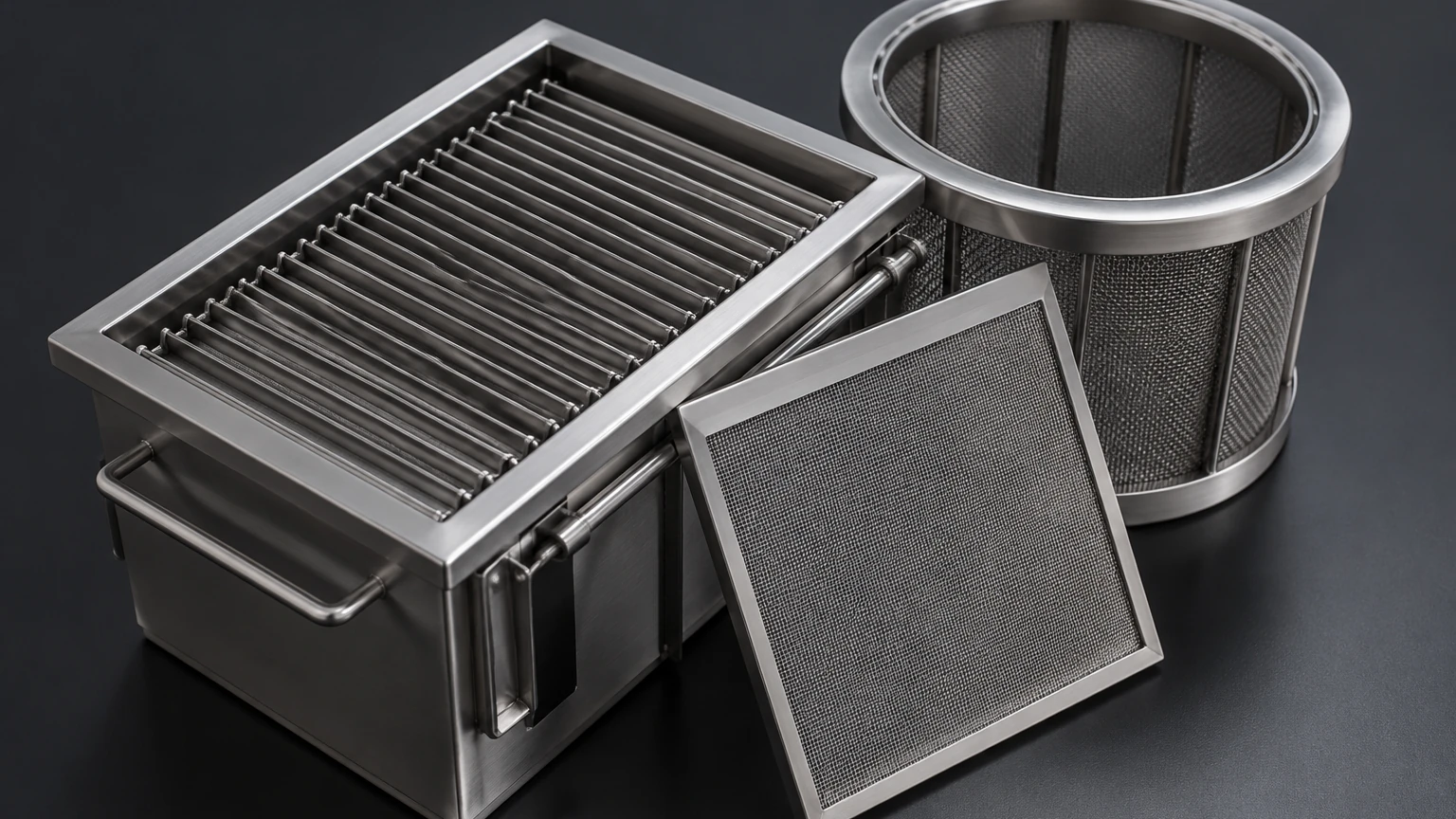
The heart of the mash filter is the filter medium. While some systems use polypropylene cloths, many industrial applications require the durability and hygiene of stainless steel wire mesh or specialized metal filter elements. The choice of mesh significantly impacts the clarity of the wort and the speed of the filtration cycle.
Precision Weave and Micron Ratings
When selecting a mesh for a mash filter, engineers must consider the micron rating. If the mesh is too coarse, fine particles (husk fragments and proteins) will pass through, leading to cloudy wort and potential issues in the downstream fermentation or maturation stages. If the mesh is too fine, it may blind (clog) prematurely, leading to excessive pressure build-up and shortened cycle times.
Kaifil specializes in various weave types, including plain weave, twilled weave, and Dutch weave, each offering different levels of mechanical strength and filtration accuracy. In a mash filter context, the mesh must be robust enough to withstand the mechanical pressure of the grain cake being pressed without deforming.
Surface Filtration vs. Depth Filtration
In a mash filter, the primary filtration is actually performed by the "cake" of grain itself. The stainless steel mesh acts as the support structure that allows this cake to form. However, during the initial stages of the cycle, the mesh must be precise enough to retain the first layer of solids. High-quality stainless steel mesh ensures a uniform distribution of pressure across the entire plate, preventing "channeling," where water bypasses the grain and reduces sparging efficiency.
Engineering Considerations for Custom Filter Components
When designing or replacing components for a mash filter, several engineering variables must be confirmed to ensure compatibility and performance. Standardized solutions often fall short in specialized industrial environments where temperature, acidity, and flow rates vary.
1. Flow Rate and Permeability: The filter media must allow for a specific flow rate (measured in liters per square meter per hour) at a given differential pressure. High-permeability mesh reduces the energy required for pumps and speeds up the production cycle.
2. Mechanical Strength: The filter plates and the mesh attached to them are subject to significant mechanical stress during the squeeze phase. The mesh must be securely bonded—often through high-precision welding or mechanical clamping—to prevent delamination or tearing.
3. Heat Resistance: Brewing processes involve temperatures near boiling. The filtration components must maintain dimensional stability and structural integrity under repeated thermal cycling.
4. Custom Geometry: Not all mash filters are built to the same dimensions. OEM manufacturers like Kaifil work closely with engineers to produce custom-sized wire mesh filters and cartridges that fit specific plate-and-frame architectures.
Material Selection: Why Stainless Steel 304 and 316?
In the food and beverage industry, material selection is dictated by both performance and regulatory compliance. Stainless steel is the industry standard for mash filter components due to its corrosion resistance and ease of sterilization.
* Grade 304 Stainless Steel: This is the most common grade used in brewing. It offers excellent corrosion resistance to the organic acids found in malt and is durable enough for standard cleaning cycles.
* Grade 316 Stainless Steel: For facilities that use more aggressive cleaning chemicals (such as high-concentration caustic or acid washes) or those located in coastal areas with high chloride levels, Grade 316 is preferred. The addition of molybdenum provides superior resistance to pitting and crevice corrosion.
Beyond corrosion resistance, stainless steel is non-reactive, ensuring that the flavor profile of the wort is not compromised by metallic leaching. Furthermore, the smooth surface of precision-drawn stainless steel wire minimizes the adhesion of organic biofilms, making the cleaning process more effective.
Operational Challenges and Maintenance Strategies
Even the best-engineered mash filter faces operational challenges. Understanding these can help purchasing teams evaluate the total cost of ownership rather than just the initial purchase price.
Managing Differential Pressure
Differential pressure (DP) is the difference in pressure between the inlet and outlet of the filter. A rapid rise in DP usually indicates blinding of the filter media. This can be caused by "fine" overloads from poor milling or by the accumulation of proteins and beta-glucans. High-quality stainless steel mesh is easier to backwash and clean than fabric alternatives, allowing for more consistent DP management over the life of the filter.
Clean-In-Place (CIP) Compatibility
Modern industrial filters must be compatible with CIP systems. This involves circulating hot caustic and acid solutions through the filter to remove organic and inorganic deposits. Stainless steel components are ideal for this, as they do not degrade or become brittle when exposed to these chemicals at high temperatures. When evaluating a mash filter component, it is vital to confirm that the mesh and its support structure can withstand the specific CIP protocols of the facility.
Replacement Cycles
While stainless steel mesh is highly durable, it is not infinite. Over thousands of cycles, the mechanical stress of pressing and the abrasive nature of grain husks will eventually lead to wear. Engineers should look for suppliers who provide consistent manufacturing quality, ensuring that replacement parts perform exactly like the originals to avoid recalibrating the entire filtration process.
Optimizing Total Cost of Ownership (TCO) in Filtration
For many procurement departments, the initial cost of a mash filter or its replacement mesh is the primary focus. However, a technical analysis reveals that the TCO is heavily influenced by:
* Extract Yield: A 1% increase in extract recovery due to better filtration can result in thousands of dollars in annual savings for a large-scale brewery.
* Cycle Time: Faster filtration and sparging allow for more brews per day, increasing the total capacity of the plant without adding new vessels.
* Consumable Life: High-quality stainless steel mesh lasts significantly longer than polypropylene cloths, reducing downtime associated with frequent replacements.
* Water Usage: Efficient sparging in a well-designed mash filter uses less water to achieve the same extract recovery, reducing both raw water costs and wastewater treatment expenses.
By partnering with a manufacturer that understands these technical nuances, companies can ensure they are investing in filtration solutions that contribute to the bottom line over the long term.
Conclusion
The mash filter remains one of the most efficient tools for solid-liquid separation in the brewing and food industries. Its success depends heavily on the precision and durability of its internal filtration components. From selecting the appropriate grade of stainless steel to determining the optimal mesh weave for specific wort clarity requirements, engineering expertise is paramount.
Kaifil provides the technical manufacturing support needed to develop and supply these critical components. Whether you are seeking OEM parts for a new installation or customized mesh for an existing system, focusing on quality and precision is the key to optimized filtration performance. For more information on our capabilities and product range, please visit our Main Page to see how our custom stainless steel solutions can support your industrial applications.
