


Gas Condense
In industrial gas processing and filtration, the phenomenon of gas condense—the transition of a substance from a gaseous state to a liquid state—presents significant engineering challenges. Whether it occurs in chemical processing, compressed air systems, or natural gas pipelines, the presence of liquid droplets within a gas stream can lead to equipment corrosion, reduced efficiency, and catastrophic system failure if not managed correctly. For engineers and procurement specialists, understanding the mechanics of condensation and selecting the appropriate filtration media is critical for maintaining system integrity.
Industrial filtration solutions must be designed to handle the multi-phase flow that arises when a gas begins to condense. This requires a deep understanding of dew points, pressure differentials, and the physical properties of the filtration materials used to capture and remove these liquid contaminants. As a professional manufacturer, Kaifil specializes in providing high-performance stainless steel filtration components designed to withstand the rigors of condensing environments.
Understanding the Fundamentals of Gas Condense in Industrial Filtration
Gas condensation occurs when the temperature of a gas falls below its dew point or when the pressure is increased beyond the saturation point of the vapor. In industrial settings, this is often an unintended consequence of pressure drops across valves, cooling in uninsulated pipelines, or the natural cooling of compressed gases. The resulting liquid, or "gas condense," typically manifests as a fine mist or aerosol that can be difficult to remove using standard particulate filters.
From an engineering perspective, the management of gas condense involves two primary objectives: preventing the formation of liquid where it is not desired and effectively removing the liquid once it has formed. Filtration systems play a pivotal role in the latter. Unlike dry particulate filtration, where the goal is to trap solid contaminants within the mesh or on the surface, filtering condensing gases requires media that can facilitate the coalescing of small droplets into larger ones that can be drained away.
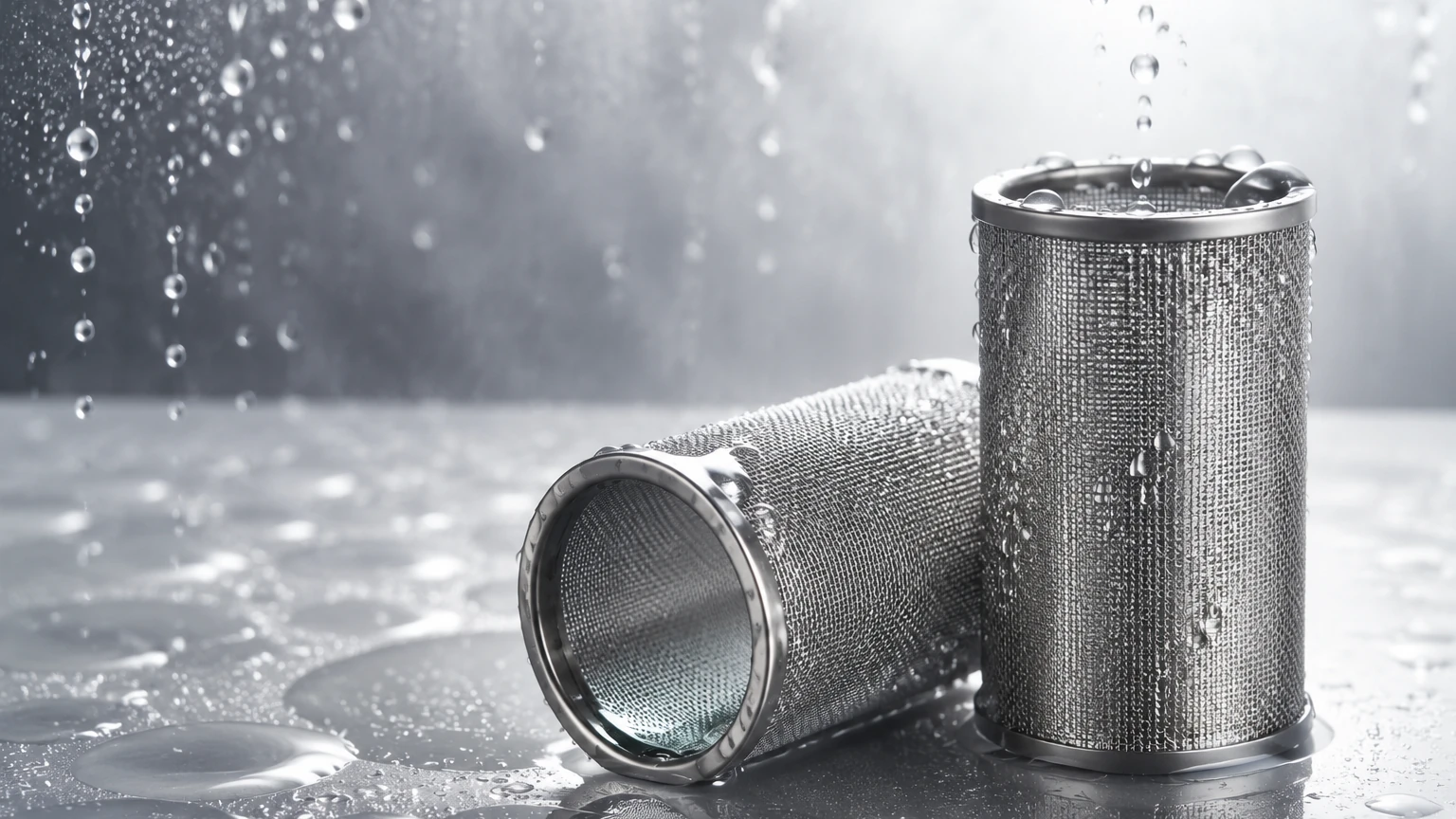
Stainless steel wire mesh is particularly effective in these applications. Its high surface area and controlled pore structure allow for efficient impingement of liquid droplets. As the gas passes through the mesh, the droplets collide with the wires, adhere, and merge with other droplets. Once the droplets reach a sufficient size, gravity overcomes the drag force of the gas stream, and the liquid falls to the bottom of the filter housing for collection.
The Impact of Condensate on Filtration Performance
The presence of gas condense within a filtration system significantly alters the performance characteristics of the filter media. One of the most immediate effects is an increase in pressure drop (differential pressure). In a dry system, the pressure drop is a function of the gas velocity and the resistance of the clean filter media. However, when a gas begins to condense, the liquid partially blocks the pores of the filter, effectively reducing the available flow area and increasing the velocity of the remaining gas. This leads to a higher energy requirement for the system and can potentially cause the filter media to deform if not properly reinforced.
Furthermore, liquid condensate can act as a binder for solid particulates. In a dry gas stream, particles might pass through or be easily cleaned from a surface. When moisture or liquid hydrocarbons are present, these particles can form a "filter cake" that is much denser and more difficult to remove. This phenomenon, often called blinding, reduces the service life of the filter cartridge and increases the frequency of maintenance intervals.
To mitigate these risks, engineers must specify filters with high structural integrity. Kaifil’s stainless steel filter cartridges are engineered with internal support cores and outer protective shrouds to ensure that the filter can withstand high differential pressures caused by liquid loading without collapsing or bypassing. For more information on our engineering capabilities, you can visit our Main Page.
Material Selection and Corrosion Resistance in Condensing Environments
When dealing with gas condense, material selection is perhaps the most critical factor in ensuring long-term reliability. Condensate is rarely pure water; it often contains dissolved gases like carbon dioxide (CO2), hydrogen sulfide (H2S), or various chemical vapors that can form acidic or corrosive solutions. In the food and beverage or pharmaceutical industries, the condensate must also be managed to prevent microbial growth.
Stainless steel is the industry standard for these applications due to its inherent corrosion resistance and mechanical strength. However, the specific grade of stainless steel must be matched to the chemical composition of the condensate:
1. Type 304/304L: Suitable for general industrial applications where moisture is the primary concern and chemical aggressiveness is low.
2. Type 316/316L: The preferred choice for environments containing chlorides or mild acids. The addition of molybdenum provides superior resistance to pitting and crevice corrosion, which is common in areas where liquid condensate may pool.
3. Specialty Alloys: In highly aggressive chemical processing, alloys such as Hastelloy or Duplex stainless steel may be required to prevent stress corrosion cracking.
Kaifil ensures that all custom stainless steel filtration solutions are manufactured from high-quality, certified materials. By selecting the correct alloy, engineers can significantly extend the replacement cycle of their filtration components, thereby reducing the total cost of ownership.
Engineering Solutions: Coalescing and Demisting with Stainless Steel Mesh
Managing gas condense effectively often requires specialized filter structures known as coalescers or demisters. These components are specifically designed to handle the liquid-gas interface.
Coalescing Filters
Coalescing filters typically utilize multiple layers of media with varying porosities. The inner layers are designed to capture the finest aerosols, while the outer layers facilitate the growth of droplets. In many industrial designs, a combination of pleated stainless steel wire mesh and sintered metal fibers is used to provide both high filtration efficiency and the structural rigidity needed to handle liquid weight.
Demister Pads
Demister pads, or mist eliminators, are often used in larger vessels to remove liquid entrainment from gas streams. These consist of knitted wire mesh structures that create a tortuous path for the gas. The inertia of the liquid droplets causes them to strike the wire surfaces and coalesce. The design of these pads—including the wire diameter, the density of the knit, and the overall thickness—must be precisely calculated based on the gas velocity and the expected liquid load.
When designing these systems, engineers must consider the "re-entrainment velocity." If the gas velocity is too high, the liquid that has collected on the filter media can be stripped off and carried downstream, defeating the purpose of the filter. Customization is key here; a one-size-fits-all approach rarely works in complex condensing environments.
Maintenance Protocols for Filters Subjected to Gas Condense
Maintaining filtration systems that handle gas condense requires a different approach than dry particulate systems. Because the liquid can trap solids and potentially lead to corrosion in stagnant areas, regular inspection and cleaning are vital.
* Differential Pressure Monitoring: This is the most reliable indicator of filter health. A sudden spike in pressure may indicate a surge in condensation or the onset of blinding. Continuous monitoring allows for predictive maintenance rather than reactive repairs.
* Cleaning Methods: One of the primary advantages of stainless steel filters is their cleanability. Depending on the nature of the condensate and trapped solids, filters can be cleaned using ultrasonic baths, back-flushing with compatible solvents, or high-pressure steam. This repeatability significantly reduces the environmental impact and cost compared to disposable polymer filters.
* Drainage Verification: In systems designed to remove condensate, the drainage mechanism (such as an automatic trap or manual valve) must be checked regularly. If the liquid is not removed from the filter housing, it will eventually flood the filter element, leading to massive pressure drops and liquid carryover.
Custom OEM Solutions for Complex Condensation Challenges
Every industrial application has unique parameters—flow rates, temperature fluctuations, chemical compositions, and space constraints. Off-the-shelf filtration products often fall short in specialized gas condense management because they are not optimized for the specific thermodynamics of the process.
Kaifil works closely with engineering teams to develop OEM filtration components that are tailored to these specific needs. Our manufacturing process includes:
* Precision Material Selection: Ensuring the mesh and hardware match the corrosive profile of the condensate.
* Custom Geometry: Designing filter cartridges and mesh elements that fit existing housings while maximizing surface area.
* Filtration Accuracy: Providing micron ratings from coarse 500-micron pre-filters to fine 1-micron coalescing stages.
* Structural Reinforcement: Adding support tubes, pleat protectors, and heavy-duty end caps to handle the physical weight of liquid-saturated media.
By focusing on the technical requirements of the application, we help our clients achieve higher purity levels and more stable process conditions. Whether you are dealing with moisture in a compressed air line or complex chemical vapors in a refinery, the right filtration partner is essential.
Conclusion: Optimizing Your System for Gas Condense
Managing gas condense is an ongoing challenge in industrial engineering, but with the right technical approach and high-quality components, it is a challenge that can be effectively met. The transition of gas to liquid should be a controlled part of the process, not a source of unexpected downtime. By prioritizing material quality, structural design, and proper maintenance, facilities can ensure their filtration systems perform reliably under the most demanding conditions.
For engineers looking to optimize their filtration performance or develop custom solutions for condensing environments, Kaifil provides the expertise and manufacturing capability required to deliver results. For a comprehensive overview of our product range and technical specifications, please refer to our Main Page.
