


Meltblown Filter
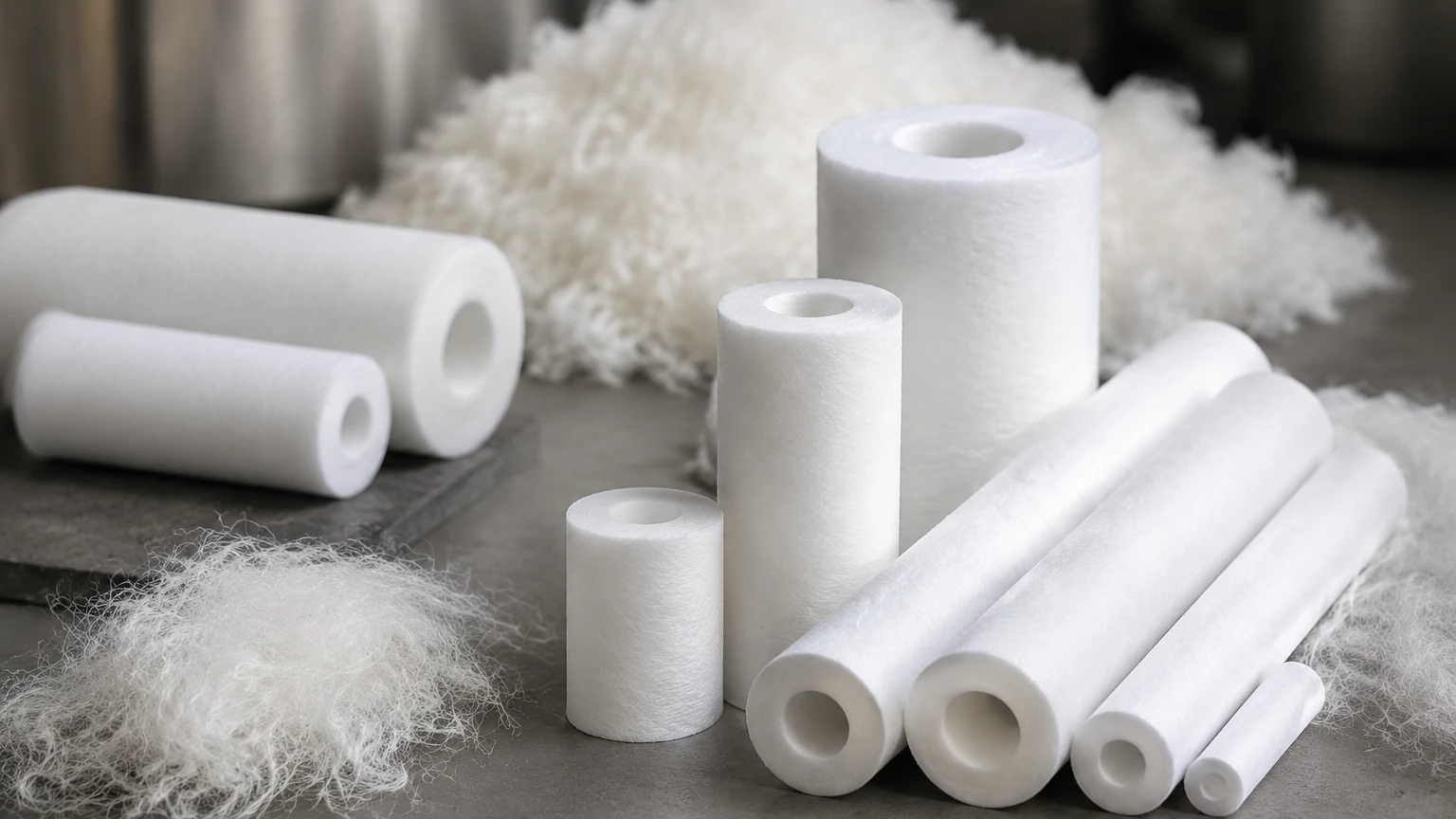
In the landscape of industrial liquid and gas processing, the meltblown filter stands as one of the most widely utilized depth filtration solutions. Characterized by a complex, non-woven structure of thermally bonded microfibers, these filters provide a versatile and cost-effective means of removing particulate matter from various process streams. For engineers and procurement specialists, understanding the technical nuances of meltblown media—ranging from fiber geometry to chemical compatibility—is essential for optimizing system performance and managing operational costs.
While many high-demand industrial environments require the durability of stainless steel filtration components, meltblown filters often serve as critical pre-filters or primary filters in applications where disposable media is more practical. This guide examines the engineering principles, selection criteria, and performance expectations of meltblown filters within a professional B2B context.
The Fundamentals of Meltblown Filter Technology
The performance of a meltblown filter is rooted in its unique manufacturing process. Unlike woven mesh or membrane filters, meltblown media is produced through a single-stage process where thermoplastic polymers—most commonly polypropylene—are extruded through fine nozzles and attenuated by high-velocity hot air. This process creates a web of randomly oriented microfibers that bond together as they cool and settle on a rotating mandrel or collector.
Gradient Density Structure
The most significant technical advantage of a high-quality meltblown filter is its gradient density structure. By varying the air pressure and extrusion speed during production, manufacturers can create a filter element that is less dense on the outer layers and increasingly dense toward the inner core. This "true depth" filtration allows larger particles to be trapped on the outer surface, while finer particles are captured deeper within the matrix. This prevents the surface from blinding prematurely, significantly extending the dirt-holding capacity compared to single-density media.
Fiber Bonding and Media Migration
Because the fibers are thermally bonded, meltblown filters generally do not require chemical binders or resins. This is a critical consideration for applications in the food, beverage, and pharmaceutical industries, as it minimizes the risk of extractables leaching into the process fluid. Furthermore, the thermal bonding ensures structural integrity, reducing the likelihood of media migration—where filter fibers break loose and contaminate the downstream filtrate.
Material Composition and Chemical Compatibility
Selection of the base polymer is the primary determinant of a meltblown filter’s chemical and thermal resistance. While several polymers can be meltblown, polypropylene (PP) remains the industry standard due to its broad chemical resistance and relatively low cost.
1. Polypropylene (PP): Excellent resistance to acids, bases, and many organic solvents. However, it is limited by temperature, typically losing structural integrity above 80°C (176°F). It is the preferred choice for water treatment, reverse osmosis (RO) pre-filtration, and general chemical processing.
2. Polyester (PET): Offers higher temperature resistance and better compatibility with certain oils and hydrocarbons that might degrade polypropylene. PET meltblown filters are often used in industrial oil filtration and high-temperature aqueous processes.
3. Nylon: Provides superior strength and is compatible with many aromatic hydrocarbons and alcohols, though it is sensitive to high concentrations of mineral acids.
When evaluating a meltblown filter for a specific system, engineers must confirm that the polymer is compatible not only with the primary process fluid but also with any cleaning agents or intermittent chemical flushes used in the system.
Evaluating Filtration Efficiency and Micron Ratings
One of the most common points of confusion in filter procurement is the distinction between nominal and absolute micron ratings. Meltblown filters are predominantly rated nominally.
* Nominal Rating: This indicates the filter's ability to retain a majority (typically 60% to 90%) of particles at a specific micron size. Because the pore structure of a meltblown filter is irregular, some particles larger than the rating may still pass through under high-pressure conditions.
* Absolute Rating: Often reserved for high-end pleated or membrane filters, an absolute rating implies a retention efficiency of 99.9% (Beta 5000) or higher.
For engineers, the Beta Ratio is a more precise metric. It compares the number of particles of a given size in the upstream fluid to the number in the downstream fluid. A meltblown filter with a high Beta ratio provides more consistent protection for downstream equipment, such as high-pressure pumps or sensitive spray nozzles.
Comparative Analysis: Meltblown vs. Stainless Steel Filtration
In many industrial settings, the choice between a disposable meltblown filter and a permanent stainless steel filter is a matter of balancing initial capital expenditure (CAPEX) against ongoing operational expenditure (OPEX).
When to Use Meltblown Filters
Meltblown filters are ideal for applications with low-to-moderate solids loading where the cost of cleaning a permanent filter would exceed the cost of replacing a disposable one. They are also preferred in processes where cross-contamination is a high risk, as the used filter can be discarded entirely. Common applications include RO membrane protection, fine chemical clarification, and point-of-use water filtration.
When to Transition to Stainless Steel
For applications involving high temperatures (above 100°C), high pressures, or highly aggressive solvents, stainless steel filtration solutions are necessary. Stainless steel mesh and sintered metal cartridges, such as those detailed on the Main Page, offer cleanability and a much longer service life in harsh environments. While the initial cost of a stainless steel filter is higher, the elimination of recurring disposal costs and the ability to withstand backwashing make them more economical in high-volume industrial circuits.
Engineering Considerations for Industrial System Integration
Integrating a meltblown filter into an existing process requires attention to the physical configuration of the filter housing and the hydraulic parameters of the system.
Housing Compatibility and End-Cap Configurations
Meltblown cartridges are available in various lengths (typically 10, 20, 30, and 40 inches) and diameters. However, the end-cap style is the most critical factor for ensuring a leak-free seal. Common configurations include:
* Double Open End (DOE): Uses flat gaskets at both ends; requires a spring-loaded tie rod in the housing.
* 222/Flat or 226/Fin: Features O-ring seals and a locking mechanism to prevent bypass, even under fluctuating pressure. This is the standard for high-purity applications.
Pressure Drop (Delta P)
Engineers must account for the clean pressure drop across the filter. A meltblown filter typically exhibits a higher initial pressure drop than a surface-type metal mesh filter because the fluid must navigate a dense path of fibers. As the filter loads with contaminants, the pressure drop increases. It is standard practice to replace meltblown cartridges when the differential pressure reaches 2.0 to 2.5 bar (30-35 psi) to prevent the media from compressing or the bypass of trapped particles.
Maintenance, Service Life, and Total Cost of Ownership
The service life of a meltblown filter is dictated by the nature of the contaminant and the flow rate. In B2B procurement, the Total Cost of Ownership (TCO) should be the primary metric rather than the unit price of the cartridge.
* Flow Rate Optimization: Running a filter at its maximum rated flow rate often leads to shorter life cycles. By sizing the housing to allow for a lower flux (gallons per minute per square foot of media), engineers can significantly extend the time between change-outs.
* Disposal Costs: In industries dealing with hazardous chemicals, the cost of disposing of saturated disposable filters can be substantial. In these cases, a hybrid approach—using a coarse, cleanable stainless steel pre-filter followed by a fine meltblown polishing filter—can optimize the TCO.
* Storage and Shelf Life: Because they are made of polymers, meltblown filters should be stored away from direct UV light and extreme temperature fluctuations to prevent the material from becoming brittle.
Selecting the Right Filter for Specific Industrial Applications
To ensure the correct selection, technical teams should confirm the following data points before finalizing a specification:
1. Fluid Characteristics: Viscosity, temperature, and pH level.
2. Contaminant Profile: Is the particulate hard, deformable, or colloidal? Hard particles are easily trapped by meltblown media, while deformable gels may require specialized high-density depth filters.
3. Target Cleanliness Level: What is the required ISO 4406 cleanliness code or the maximum allowable particle size for downstream components?
4. Flow Dynamics: Is the flow steady or pulsating? Pulsating flow can cause "unloading" in lower-quality meltblown filters, where trapped particles are pushed through the media due to pressure spikes.
For organizations requiring precision-engineered filtration components, Kaifil provides a range of custom stainless steel solutions that complement or replace traditional disposable media in demanding environments. For more information on custom metal filtration and engineering support, visit the Main Page.
Conclusion
The meltblown filter remains a cornerstone of industrial separation technology due to its effective depth-loading capability and economic accessibility. By understanding the gradient density mechanics and material limitations of these components, engineers can better protect their equipment and maintain process integrity. However, as process demands increase in temperature and pressure, the transition toward durable, cleanable metal filtration becomes a strategic necessity for long-term operational efficiency.
