


Water Screens
In industrial water treatment and raw water intake systems, the efficiency of downstream processes depends heavily on the initial separation of solids. Water screens serve as the primary defense mechanism, protecting pumps, heat exchangers, and sensitive filtration membranes from debris, organic matter, and particulate contaminants. For engineers and procurement professionals, selecting the appropriate water screening technology requires a deep understanding of hydraulic dynamics, material science, and the specific mechanical requirements of the application.
As a manufacturer specializing in custom stainless steel filtration solutions, Kaifil provides the technical expertise necessary to design and implement high-performance water screens tailored to demanding industrial environments. This guide explores the engineering considerations, material selections, and performance criteria essential for optimizing water screening systems.
The Role of Water Screens in Industrial Infrastructure
Water screens are mechanical filtration components designed to remove large and fine solids from water flows. They are typically the first stage in a multi-stage treatment process. Whether the source is a river, lake, sea, or a closed-loop industrial process, the objective remains the same: to ensure the fluid entering the system meets the required cleanliness standards to prevent mechanical wear and process downtime.
In power plants, for example, intake water screens prevent aquatic life and large debris from entering cooling systems, which could otherwise lead to catastrophic pump failure or reduced heat transfer efficiency. In chemical processing and food production, fine water screens ensure that process water is free of contaminants that could compromise product quality or damage precision equipment. Understanding the specific nature of the debris—ranging from microscopic silt to large organic matter—is the first step in determining the correct screen configuration.
Engineering Fundamentals: Filtration Accuracy and Flow Dynamics
When specifying water screens, engineers must balance the need for high filtration accuracy with the requirement for minimal pressure drop (head loss). The design of the screen surface significantly impacts the hydraulic performance of the entire system.
Open Area and Velocity
The "percentage of open area" is a critical metric. A higher open area allows for greater flow rates and lower approach velocities. If the velocity through the screen is too high, it can lead to "impingement," where debris is forced into the mesh or screen surface, making it difficult to clean and increasing the risk of structural deformation. Engineers typically aim for an approach velocity that prevents debris from becoming deeply embedded while maintaining the required throughput.
Micron Rating vs. Physical Aperture
For fine water screens, the micron rating defines the smallest particle size the screen can reliably intercept. In industrial water treatment, stainless steel wire mesh or wedge wire is often preferred over synthetic materials due to its dimensional stability. Unlike fabric filters, metal water screens maintain a fixed aperture size even under significant pressure differentials, ensuring consistent filtration performance over long operational cycles.
Material Selection for Durability and Corrosion Resistance
Industrial water screens are often exposed to harsh environments, including brackish water, seawater, and chemically aggressive process fluids. Material selection is therefore a primary factor in the total cost of ownership.
Stainless Steel Grades
Stainless steel is the industry standard for high-performance water screens due to its mechanical strength and resistance to oxidation.
- Grade 304: Suitable for general industrial applications and freshwater intake where corrosion risks are moderate.
- Grade 316/316L: Contains molybdenum, providing superior resistance to chlorides and pitting. This is essential for marine environments, desalination plants, and chemical processing facilities.
- Duplex Stainless Steels: Used in extreme conditions where high mechanical stress and highly corrosive environments coexist.
Structural Integrity
Beyond the filtration surface, the support structure of the water screen must withstand the hydraulic forces exerted by the flow, especially when the screen becomes partially blinded by debris. Kaifil’s engineering approach involves reinforcing filtration components to prevent collapse or bypass, ensuring that the Main Page of the filtration system remains the most reliable point of the process.
Types of Water Screens and Their Applications
Water screens come in various configurations, each suited to specific debris types and flow requirements. Choosing the right type is a matter of matching the mechanical design to the operational reality of the site.
1. Intake Screens (Passive and Active)
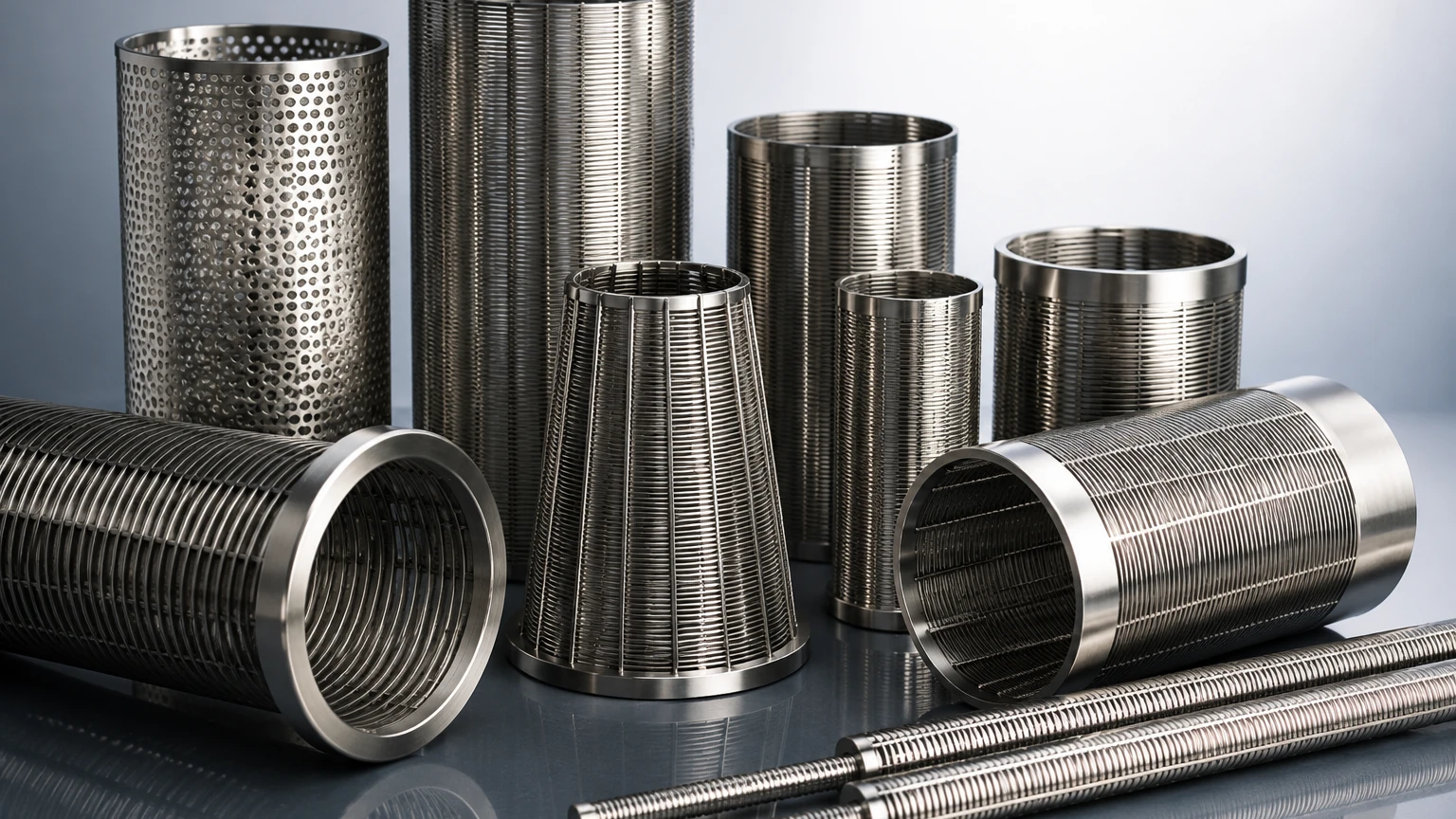
Passive intake screens, often utilizing wedge wire cylinders, are placed in water bodies to provide low-velocity filtration. They are designed to protect aquatic life while providing a clean water source for industrial use. Active screens, such as traveling water screens, use a continuous belt of screen panels that move through the water, bringing debris to the surface for mechanical removal.
2. Static Screens and Sieve Bends
Static screens utilize gravity to separate solids from liquids. Sieve bends, a common form of static screen, use a curved wedge wire surface. As the water flows over the curve, the leading edge of the wedge wire "slices" the fluid, allowing water to pass through while solids are directed down the face of the screen. These are highly effective for high-volume wastewater and process water applications where mechanical complexity must be minimized.
3. Fine Mesh Cartridges and Strainers
For secondary or tertiary filtration, water screens are often configured as cylindrical cartridges or baskets. These are used within pressurized vessels to remove finer particulates. Using stainless steel mesh allows these components to be cleaned and reused, providing a sustainable and cost-effective alternative to disposable filter elements.
Customization: Tailoring Solutions to Site-Specific Challenges
No two industrial water sources are identical. Factors such as seasonal variations in debris loading, chemical composition of the water, and physical space constraints necessitate a customized approach to water screen design.
OEM and Customized Fabrication
Standard off-the-shelf solutions often fail to meet the specific nuances of a complex industrial system. Customization allows for the optimization of screen geometry, mounting interfaces, and cleaning mechanisms. At Kaifil, we work closely with engineering teams to develop bespoke filtration components that integrate seamlessly into existing infrastructure. This includes adjusting the wire profile in wedge wire screens to reduce blinding or designing reinforced mesh structures for high-pressure hydraulic systems.
Addressing Blinding and Biofouling
One of the greatest challenges in water screening is "blinding," where the screen surface becomes covered in a layer of solids, or "biofouling," where biological growth restricts flow. Custom coatings, specialized wire profiles, and the integration of automated backwashing or air-burst cleaning systems are technical solutions that can be engineered into the screen design to maintain operational efficiency.
Performance Evaluation and Selection Criteria
Before finalizing a water screen specification, engineers should evaluate several key performance indicators to ensure long-term reliability.
1. Maximum Differential Pressure: The screen must be rated to withstand the maximum pressure drop expected when the screen is at its highest debris loading point.
2. Cleaning Efficiency: How easily can the screen be restored to its original flow capacity? This involves looking at the surface smoothness and the effectiveness of the intended cleaning method (manual, mechanical, or backwash).
3. Chemical Compatibility: Beyond the water itself, consider any cleaning chemicals or process additives that will come into contact with the screen.
4. Regulatory Compliance: In many regions, intake water screens must meet specific environmental regulations regarding mesh size and approach velocity to protect local ecosystems.
Total Cost of Ownership (TCO) Considerations
While the initial purchase price is a factor, the total cost of ownership for water screens is dominated by maintenance, energy consumption (due to pressure drop), and replacement frequency.
Investing in high-quality stainless steel water screens often results in a lower TCO compared to cheaper alternatives. Durable materials reduce the frequency of replacement, while precision-engineered apertures reduce the energy required to pump water through the system. Furthermore, the ability to clean and reuse stainless steel components eliminates the recurring cost and environmental impact of disposable filters.
Technical Confirmation: Steps Before Purchasing
To ensure the success of a water screening project, the following technical details should be confirmed with the manufacturer:
- Flow Rate Requirements: Peak and average flow rates (GPM or m³/h).
- Debris Profile: Size, shape, and concentration of the solids to be removed.
- Installation Environment: Physical dimensions of the intake or housing, and orientation of the flow.
- Maintenance Access: How the screen will be accessed for inspection and cleaning.
- Material Certification: Ensuring the stainless steel grades meet the required industrial standards (e.g., ASTM or ISO).
By addressing these factors during the design phase, engineers can avoid costly retrofits and ensure that their water screening system provides reliable protection for years to come.
Conclusion
Water screens are indispensable components of industrial water management. Their design requires a sophisticated balance of hydraulic engineering and material science to ensure they can withstand the rigors of continuous operation while maintaining precise filtration standards. Whether you are designing a new intake system or optimizing an existing process, choosing the right water screening technology is critical to operational success.
For more information on customized stainless steel filtration solutions and to explore our range of precision-engineered components, visit the Kaifil Main Page. Our team of experts is dedicated to providing the technical support and manufacturing excellence required to meet your most challenging filtration needs.
