


Membrane Cartridge System
In the landscape of industrial fluid dynamics and separation technology, the membrane cartridge system represents a critical component for achieving high-purity filtration. These systems are engineered to remove sub-micron particles, bacteria, and other contaminants from liquids and gases across a variety of demanding sectors, including pharmaceutical manufacturing, chemical processing, and food production. For engineers and technical procurement teams, understanding the mechanical nuances, material properties, and operational parameters of these systems is essential for optimizing process efficiency and ensuring product integrity.
A membrane cartridge system is typically defined by its ability to provide absolute filtration. Unlike depth filters, which trap particles throughout a thick medium, membrane filters utilize a thin, precisely engineered barrier to stop particles on the surface. While many associate membranes with polymeric materials, industrial applications often require the durability and thermal resistance of stainless steel components, particularly when the system must withstand high pressures, aggressive chemicals, or extreme temperatures.
Understanding the Architecture of a Membrane Cartridge System
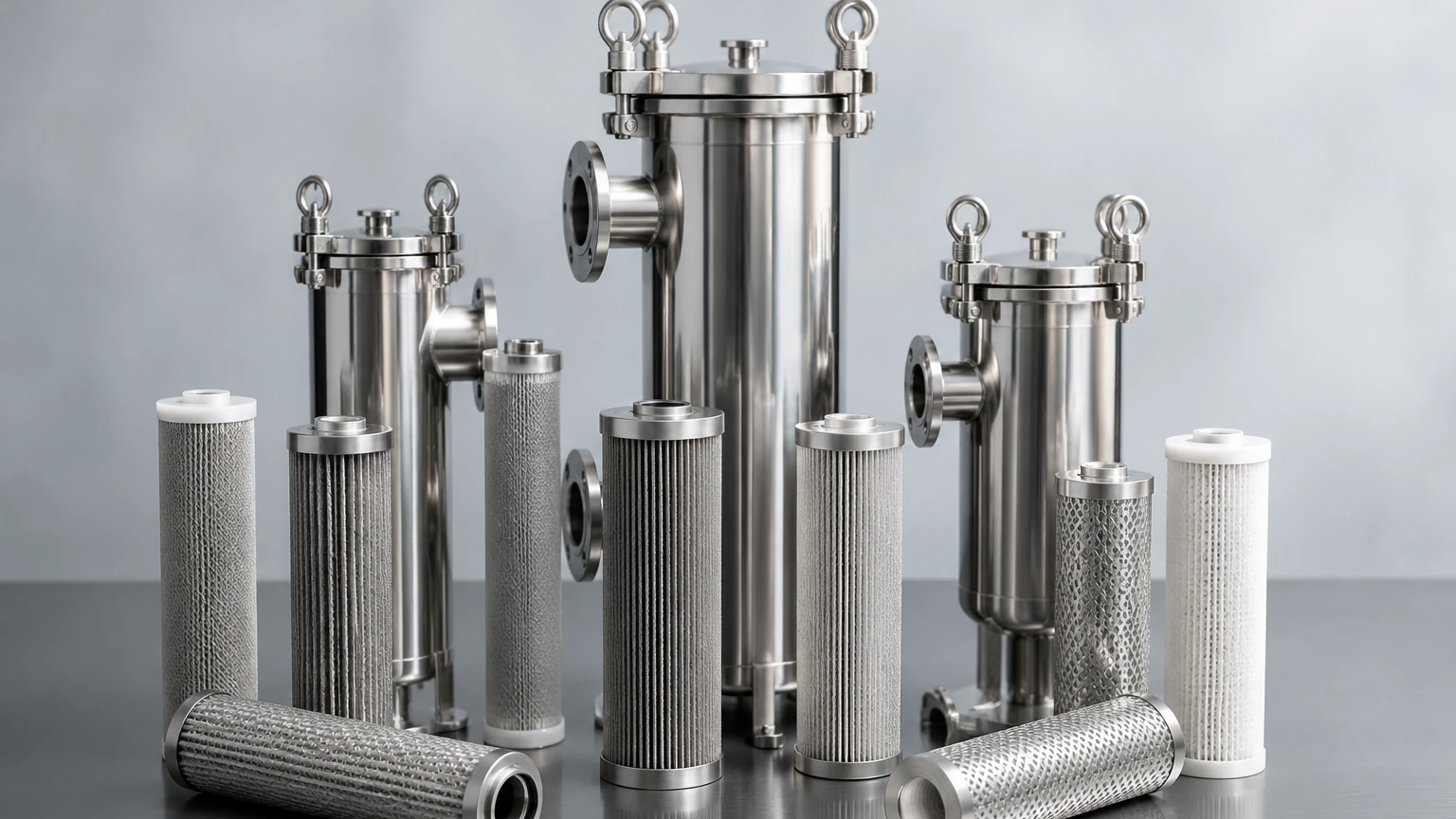
The physical construction of a membrane cartridge system is designed to maximize surface area while maintaining structural integrity under flow-induced stress. A standard cartridge consists of several key components: the filter medium (the membrane), support layers, an inner core, an outer cage, and end caps.
The Filter Medium and Support Layers
In high-precision applications, the membrane is often pleated. Pleating significantly increases the effective filtration area within a standard 10-inch or 20-inch footprint, allowing for higher flow rates and longer service life before the differential pressure reaches its limit. To prevent the pleats from collapsing under pressure, support layers—often made of coarser mesh or non-woven materials—are placed on both sides of the membrane.
Structural Components
The inner core provides the necessary collapse strength to resist the pressure of the fluid moving from the outside of the cartridge to the center. Conversely, the outer cage protects the delicate membrane during handling and installation. In a stainless steel membrane cartridge system, these components are often constructed from 304 or 316L stainless steel, joined through advanced welding techniques such as TIG (Tungsten Inert Gas) or plasma welding to eliminate the need for adhesives that could leach into the process stream.
End Cap Configurations
Compatibility with existing filter housings is managed through various end cap designs. Common configurations include Double Open End (DOE), Code 7 (226 O-rings with a locking fin), and Code 3 (222 O-rings with a flat cap). Selecting the correct seal is vital for preventing bypass, which would compromise the entire filtration process.
Material Engineering: Polymeric vs. Stainless Steel Membranes
When specifying a membrane cartridge system, the choice of material is the most significant factor affecting chemical compatibility and thermal limits. While polymers like PES (Polyethersulfone), PTFE (Polytetrafluoroethylene), and Nylon are standard for many ambient-temperature water applications, industrial environments often demand more robust solutions.
The Role of Stainless Steel in Membrane Systems
Stainless steel membranes, often produced through sintering metal fibers or multi-layered wire mesh, are used when the operating conditions exceed the capabilities of plastics. These metallic systems offer several distinct advantages:
1. Thermal Stability: Stainless steel can operate at temperatures exceeding 250°C (482°F), whereas most polymeric membranes begin to degrade or lose structural integrity above 80°C to 100°C.
2. Chemical Resistance: For highly acidic or alkaline solutions, or for organic solvents that would swell or dissolve polymers, 316L stainless steel provides a reliable, non-reactive barrier.
3. Mechanical Strength: In high-viscosity applications or systems prone to pressure spikes (such as hydraulic systems), the rigidity of a metal membrane cartridge system prevents media migration and fiber shedding.
Performance Metrics and Selection Criteria
Engineers must evaluate several performance metrics to ensure the membrane cartridge system meets the specific requirements of the application. The most critical of these is the micron rating.
Absolute vs. Nominal Ratings
In a membrane system, the rating is almost always "absolute," meaning the filter is designed to remove 99.9% or more of particles at the specified micron size. This is in contrast to "nominal" ratings, which are more common in depth filters and represent a lower efficiency. For sterile filtration in the pharmaceutical industry, a 0.22-micron absolute rating is the standard for bacterial retention.
Flow Rate and Differential Pressure
The "clean pressure drop" is the initial resistance the filter offers to the fluid flow. As the membrane captures contaminants, the differential pressure (ΔP) increases. A well-designed system balances the need for fine filtration with the requirement for an acceptable flow rate. If the membrane area is too small for the intended flux, the system will clog prematurely, leading to frequent downtime and higher operational costs.
Integrity Testing
One of the unique features of a high-quality membrane cartridge system is that it can be integrity tested. Methods such as the Bubble Point test, Pressure Hold test, or Water Intrusion test allow engineers to verify that the membrane is intact and free of defects before starting a production run. This is a non-destructive way to guarantee that the system will perform to its specified efficiency.
Industrial Applications and Compatibility
The versatility of the membrane cartridge system allows it to be integrated into diverse industrial workflows. Each sector presents unique challenges regarding fluid characteristics and regulatory compliance.
Chemical and Petrochemical Processing
In these environments, filters are often exposed to aggressive solvents and high-pressure differentials. A stainless steel membrane cartridge system is frequently employed for catalyst recovery, where the value of the particles being captured justifies the use of a high-performance, cleanable metallic filter. The ability to withstand backpulsing (reversing the flow to dislodge solids) is a key requirement here.
Food and Beverage Production
For the clarification of wine, beer, and juices, membranes must remove yeasts and spoilage organisms without stripping away the essential flavors or colors of the product. In these applications, the materials used in the cartridge must be FDA-compliant and capable of withstanding frequent sanitization cycles.
Pharmaceutical and Biotechnology
This is perhaps the most demanding application for membrane systems. Filters are used for the sterile filtration of injectable drugs, buffers, and growth media. The system must not only be highly efficient but also low in extractables and capable of withstanding SIP (Steam-In-Place) sterilization cycles. The structural integrity of the cartridge core and cage is paramount to ensure the membrane does not rupture during the high-temperature steam phase.
Maintenance, Cleaning, and Replacement Cycles
Understanding the total cost of ownership (TCO) for a membrane cartridge system requires a look beyond the initial purchase price. The longevity of the filter and the ease of maintenance play a massive role in long-term profitability.
Differential Pressure Monitoring
The primary indicator for filter replacement or cleaning is the differential pressure. Most industrial systems are equipped with gauges or sensors that trigger an alarm when the ΔP reaches a predetermined set point (often between 20 and 35 psi). Operating beyond this point risks damaging the membrane or causing the bypass of contaminants.
Cleaning and Regeneration
Unlike disposable polymeric cartridges, stainless steel membrane systems can often be cleaned and reused. Cleaning methods include:
* Backwashing: Reversing the flow of clean fluid through the membrane to push out trapped particles.
* Ultrasonic Cleaning: Using high-frequency sound waves in a cleaning solvent to dislodge fine particulates from the pores.
* Chemical Cleaning: Using surfactants, acids, or bases to dissolve organic or inorganic fouling.
While cleaning extends the life of the cartridge, it must be performed carefully to avoid mechanical damage. Engineers should establish a maximum number of cleaning cycles based on integrity test results to ensure the system remains within specification.
Customization and OEM Integration
Standard off-the-shelf filter cartridges do not always meet the specific needs of complex industrial machinery. In such cases, customized filtration solutions become necessary. Manufacturers like Kaifil specialize in developing bespoke components that fit unique housing geometries or meet specific metallurgical requirements.
When working with an OEM partner, engineers should confirm the following details:
* Housing Dimensions: Ensuring the cartridge length and diameter fit the existing vessel with proper seal compression.
* Media Selection: Choosing between sintered fiber, multi-layer mesh, or wedge wire based on the particle morphology and fluid viscosity.
* Regulatory Compliance: Confirming that the materials meet industry-specific standards such as ASME, PED, or food-grade certifications.
Customization also extends to the structural reinforcements. For example, if a system is subject to heavy vibration or frequent hydraulic shocks, the inner core can be thickened, and the end caps can be reinforced to prevent mechanical fatigue.
Conclusion: Selecting the Right System for Your Facility
Choosing the optimal membrane cartridge system is a balance of science and practical engineering. It requires a deep dive into the fluid's chemical properties, the desired cleanliness level, and the physical constraints of the operating environment. By focusing on high-quality materials—specifically stainless steel for demanding applications—and rigorous performance metrics, facilities can achieve reliable filtration that protects downstream equipment and ensures the purity of the final product.
For technical professionals seeking to explore specific hardware options or request a consultation on customized filtration designs, visiting the Main Page provides access to comprehensive product data and engineering support. Whether the goal is to reduce replacement frequency or to solve a complex chemical compatibility issue, the right membrane cartridge system is a foundational element of modern industrial success.
