


Cartridge Filtration Water Treatment
In industrial water treatment, the requirement for precision, durability, and consistent performance is paramount. Cartridge filtration water treatment stands as a critical stage in various processes, ranging from pre-filtration for reverse osmosis (RO) systems to the final polishing of process water in pharmaceutical and food production. Unlike bulk media filtration, cartridge systems provide a defined filtration area and predictable performance characteristics, making them essential for applications where particle size control is non-negotiable.
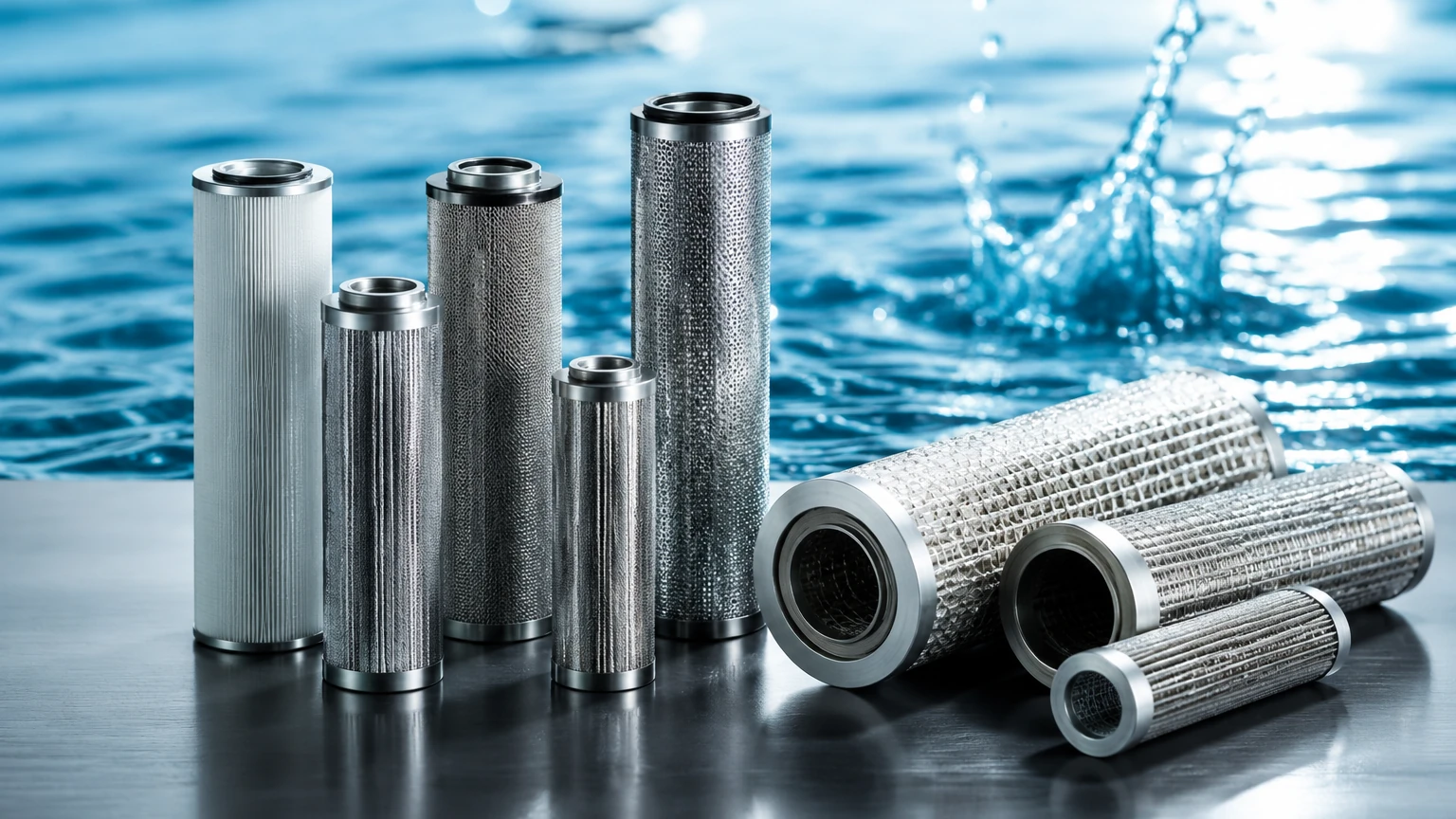
For engineers and procurement professionals, selecting the right filtration media involves a deep understanding of fluid dynamics, material science, and the specific contaminants present in the water stream. While disposable polymer cartridges are common in light-duty applications, industrial-grade stainless steel cartridges offer significant advantages in terms of thermal stability, chemical resistance, and long-term cost-efficiency.
Understanding Cartridge Filtration in Industrial Water Treatment
Cartridge filtration is a mechanical separation process that utilizes a replaceable or cleanable filter element housed within a pressure vessel. In the context of water treatment, these systems are typically designed to remove suspended solids, sediment, and specific particulate matter that could damage downstream equipment or compromise product quality.
Surface vs. Depth Filtration
Industrial cartridges generally fall into two categories: surface and depth filters.
1. Surface Filtration: This mechanism relies on a thin layer of material—often stainless steel wire mesh or pleated fabric—to trap particles on the upstream side of the media. Surface filters are characterized by high precision and are often used when the particle size distribution is relatively uniform. Because the particles are trapped on the surface, these filters are frequently cleanable through backwashing or ultrasonic methods.
2. Depth Filtration: These filters utilize a thick matrix of media to trap particles throughout the entire thickness of the cartridge. While effective for high sediment loads, depth filters are typically disposable. In heavy industrial water treatment, stainless steel fiber felt can act as a high-performance depth medium, combining the dirt-holding capacity of depth filtration with the durability of metallic construction.
The Role of Stainless Steel in Water Treatment
In demanding environments, stainless steel is the preferred material for cartridge construction. It resists the degradation common in plastic filters when exposed to high temperatures, high pressures, or aggressive cleaning chemicals. For those evaluating high-performance options, the Main Page of specialized manufacturers provides detailed technical data on how these materials perform under varying industrial loads.
Engineering Considerations for Stainless Steel Cartridges
When designing or retrofitting a cartridge filtration water treatment system, several engineering factors must be balanced to ensure optimal flux and minimal downtime.
Material Selection (304 vs. 316L)
The choice between Grade 304 and Grade 316L stainless steel is often dictated by the chemical composition of the water. Grade 304 is suitable for many general-purpose industrial water applications. However, in water treatment processes involving high chloride concentrations or acidic cleaning cycles, Grade 316L is necessary due to its molybdenum content, which provides superior resistance to pitting and crevice corrosion.
Pressure Drop and Flow Rates
The differential pressure (ΔP) across a filter cartridge is a primary indicator of its efficiency and remaining life. Engineers must calculate the initial "clean" pressure drop to ensure the pump system can maintain the required flow rate. As the filter traps particles, ΔP increases. A well-engineered stainless steel cartridge is designed with a high open area to minimize initial resistance, thereby extending the interval between cleaning or replacement cycles.
Structural Integrity
Unlike polymer filters that may bypass or collapse under sudden pressure spikes, precision-engineered metal cartridges maintain their structural integrity. This is particularly important in hydraulic water systems or high-pressure boiler feed applications where a structural failure could lead to catastrophic downstream contamination.
Key Evaluation Criteria for Filtration Systems
To achieve effective cartridge filtration water treatment, technical professionals must look beyond the initial purchase price and evaluate the technical specifications that impact long-term performance.
Micron Ratings: Nominal vs. Absolute
One of the most common points of confusion in filter selection is the distinction between nominal and absolute micron ratings.
* Nominal Rating: An indicative value representing the ability of the filter to trap a percentage of particles (often 60% to 90%) of a specific size.
* Absolute Rating: A mathematically determined value indicating that 99.9% (Beta 1000) of particles above a certain size will be retained.
In critical water treatment applications, such as pharmaceutical grade water or microelectronics, absolute-rated stainless steel mesh is often required to guarantee the removal of specific contaminants.
Seal and End-Cap Configurations
The interface between the cartridge and the housing is a common point of failure. Bypassing occurs when untreated water leaks around the seal rather than passing through the media. Common configurations include:
* Double Open End (DOE): Requires gaskets at both ends; common in older or lower-pressure systems.
* Single Open End (SOE): Often features an O-ring seal (e.g., Code 7 or 222/226 configurations) which provides a more secure, leak-proof connection suitable for high-purity applications.
Chemical Compatibility of Gaskets
While the cartridge body may be stainless steel, the gaskets and O-rings must be compatible with the water chemistry. EPDM is standard for many water applications, but Viton or PTFE may be required if the water contains traces of oils, hydrocarbons, or aggressive solvents used in CIP (Clean-In-Place) cycles.
Common Risks and Mitigation in High-Demand Applications
Implementing cartridge filtration water treatment is not without risks. Understanding these challenges allows for better system design and operational stability.
Particulate Bypass and Channeling
In some fiber-based depth filters, high differential pressure can cause the media to shift, creating "channels" that allow large particles to pass through. Stainless steel wire mesh cartridges eliminate this risk because the pore structure is fixed through weaving and, in many cases, sintering. This ensures that the filtration accuracy remains constant throughout the life of the filter.
Biofouling and Scaling
In water treatment, biological growth or mineral scaling can quickly blind a filter. While polymer filters must be discarded once fouled, stainless steel cartridges can often be regenerated. Methods such as chemical soaking (using acids or caustics) or steam sterilization are effective in removing organic and inorganic buildup without damaging the filter structure.
Managing Total Cost of Ownership (TCO)
While the initial investment in stainless steel filtration components is higher than disposable alternatives, the TCO is often lower in industrial settings. By calculating the cost of replacement filters, labor for change-outs, and disposal costs of contaminated polymer media, many facilities find that cleanable metal cartridges provide a faster return on investment (ROI).
Maintenance and Replacement Cycles
Effective maintenance is the backbone of any cartridge filtration water treatment strategy. Monitoring the system correctly prevents both unnecessary downtime and equipment damage.
Differential Pressure Monitoring
Systems should be equipped with upstream and downstream pressure gauges. A typical rule of thumb is to initiate a cleaning or replacement cycle when the differential pressure reaches 15–25 psi (1.0–1.7 bar) above the clean starting pressure. Operating beyond these limits increases the risk of media deformation or pump strain.
Cleaning Protocols for Reusable Cartridges
For stainless steel filters, the cleaning process must be matched to the contaminant:
* Ultrasonic Cleaning: Highly effective for removing fine particles trapped within the mesh.
* Backwashing: Suitable for surface-loading filters where the flow can be reversed to dislodge the filter cake.
* Chemical Cleaning: Used for oils, greases, or mineral scales that cannot be removed mechanically.
Customization and OEM Solutions
Every industrial water system has unique constraints, from flow velocity to space limitations. Off-the-shelf solutions may not always meet the specific needs of a complex chemical process or a specialized water reclamation plant.
Customization options often include:
* Bespoke Dimensions: Tailoring the length and diameter of the cartridge to fit existing non-standard housings.
* Specialized Weave Patterns: Utilizing Dutch weave or twilled weave patterns to achieve a specific balance between filtration fineness and flow capacity.
* Reinforced Cores: Adding internal support structures for applications involving extreme pressure differentials or high-viscosity fluids.
Working with a manufacturer that understands these nuances is vital. Professionals looking for tailored engineering support and high-quality metal filtration components can find extensive resources and product specifications on the Main Page.
Conclusion
Cartridge filtration water treatment is a sophisticated discipline that requires a balance of material science and mechanical engineering. By moving toward durable, stainless steel solutions, industrial operators can achieve higher precision, better thermal resistance, and improved sustainability through the reduction of disposable waste. Whether the goal is protecting sensitive RO membranes or ensuring the purity of process water, the selection of high-quality filtration components is a foundational step in achieving operational excellence. When evaluating options, engineers should prioritize absolute filtration ratings, material compatibility, and the potential for long-term reuse to ensure the most cost-effective and reliable performance.
