


Membrane Filter Cartridge
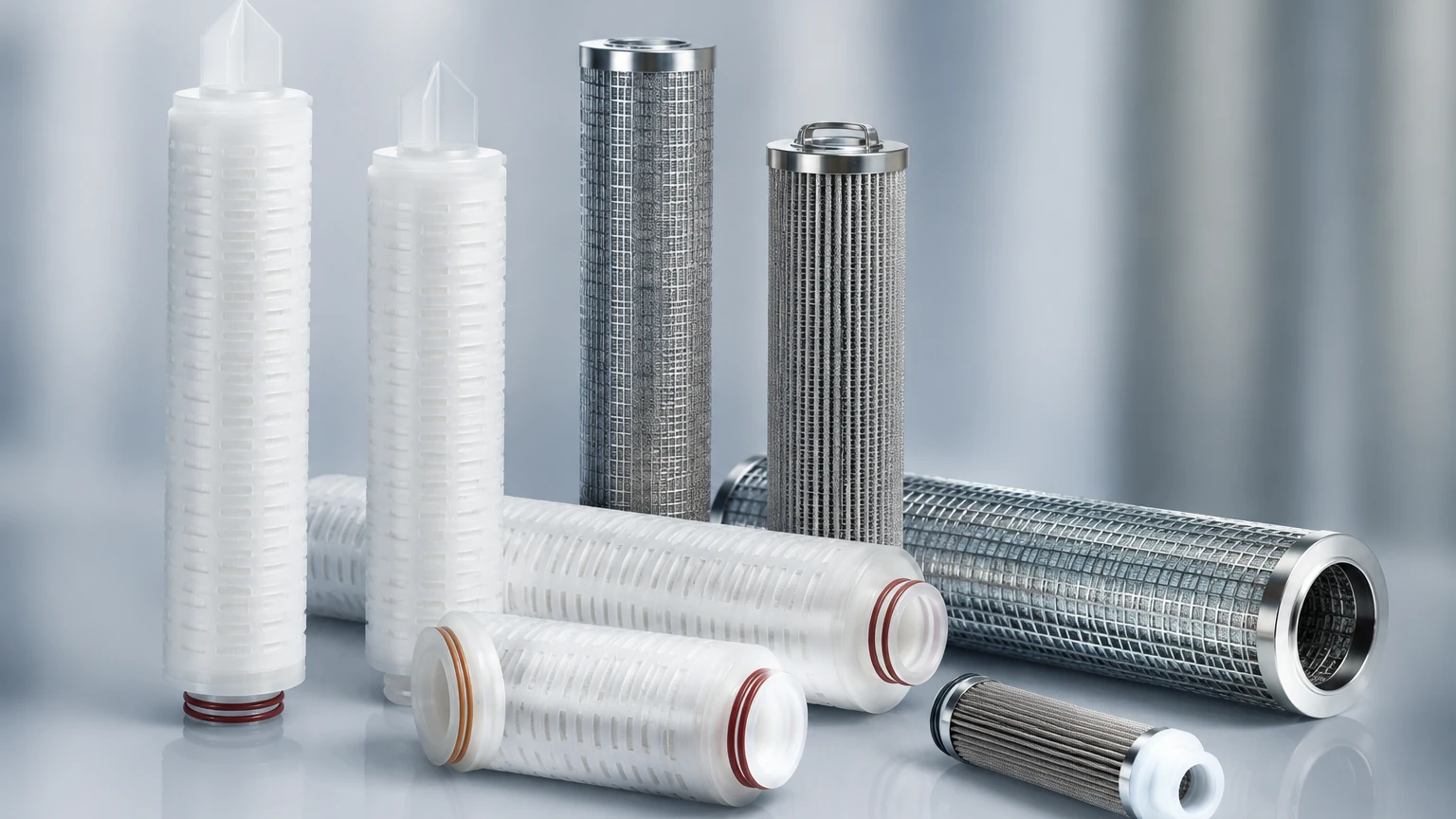
In the landscape of industrial liquid and gas processing, achieving high levels of purity requires specialized equipment capable of removing sub-micron contaminants. The membrane filter cartridge stands as a critical component in these systems, offering absolute filtration ratings that depth filters cannot match. These cartridges utilize thin, microporous films to provide a physical barrier, ensuring that particles, microorganisms, and pyrogens are effectively captured on the surface of the medium.
For engineers and procurement professionals, selecting a membrane filter cartridge involves more than simply matching a micron rating. It requires a deep understanding of material science, fluid dynamics, and the specific rigors of the industrial environment. As a specialist in stainless steel filtration solutions, Kaifil recognizes that the performance of a membrane cartridge is often dependent on the robustness of the entire filtration system, including the housings and pre-filtration stages that protect these sensitive components.
The Role of Membrane Filter Cartridges in Precision Industrial Filtration
Membrane filter cartridges are distinguished from depth filters primarily by their filtration mechanism. While depth filters trap particles within a thick matrix of fibers, a membrane filter cartridge utilizes surface filtration. The membrane itself is a thin, engineered layer with a highly controlled pore structure. This allows for "absolute" filtration, meaning the cartridge is validated to remove a specific percentage (often 99.9% or higher) of particles at its rated micron size.
In B2B applications, these cartridges are typically the final stage in a multi-stage filtration train. They are used when the cost of contamination is high—such as in the production of pharmaceuticals, the bottling of beverages, or the manufacturing of semiconductors. Because the pores are so precise, these filters are prone to premature clogging if the fluid contains a high load of large particles. Therefore, they are almost always preceded by coarser stainless steel wire mesh filters or pleated depth cartridges to extend their service life.
Material Science: Selecting the Right Membrane for the Medium
The chemical and thermal compatibility of a membrane filter cartridge is determined by the polymer used to create the membrane and the materials used for the hardware (cages, cores, and end caps). Selecting the wrong material can lead to membrane degradation, leaching of extractables, or catastrophic failure of the filter element.
Polyethersulfone (PES)
PES is one of the most common materials for aqueous applications. It is naturally hydrophilic, meaning it does not require pre-wetting agents that could contaminate the process fluid. PES membranes offer high flow rates and low protein binding, making them ideal for the pharmaceutical and food and beverage industries. They are also resistant to a wide range of cleaning agents and can withstand repeated steam sterilization cycles.
Polytetrafluoroethylene (PTFE)
PTFE is the material of choice for aggressive chemicals, solvents, and air/gas filtration. It is inherently hydrophobic, which makes it an excellent moisture barrier in tank venting or compressed air applications. In liquid filtration, PTFE is used for highly corrosive acids and bases where other polymers would dissolve or lose structural integrity.
Nylon and PVDF
Nylon membranes are often used for solvent filtration and the removal of fine particulates in industrial chemicals due to their natural hydrophilicity and high mechanical strength. Polyvinylidene Fluoride (PVDF), on the other hand, is valued for its low extractable profile and resistance to oxidizing agents like ozone, which is frequently used in high-purity water systems.
Engineering Specifications: Pore Size and Filtration Efficiency
When evaluating a membrane filter cartridge, engineers must distinguish between nominal and absolute ratings. A nominal rating is an internal manufacturer's standard, often indicating that the filter will trap a certain percentage of solids. An absolute rating, however, is verified through standardized testing, such as the HIMA microbial challenge or the use of latex bead suspensions.
Micron Ratings and Microbial Retention
In sterile applications, the 0.22-micron membrane is the industry standard. This pore size is validated to provide a sterile filtrate by retaining *Brevundimonas diminuta*, one of the smallest known bacteria. For coarser clarification, membranes may range from 0.45 to 1.2 microns. In the electronics industry, ultra-fine membranes down to 0.03 microns are used to ensure the removal of the smallest colloidal silica particles.
Effective Filtration Area (EFA)
To maximize the life of a membrane filter cartridge, manufacturers pleat the membrane material around a central core. The EFA is the total surface area of the membrane available for filtration. A higher EFA generally leads to a lower clean pressure drop and a higher dirt-holding capacity. However, excessive pleating can lead to "blind spots" where fluid cannot flow efficiently, so the engineering of the pleat geometry is a critical factor in cartridge design.
Operational Considerations: Flow Rates and Pressure Management
The performance of a membrane filter cartridge is inextricably linked to the differential pressure (ΔP) across the membrane. As the filter captures contaminants, the ΔP increases. If the pressure becomes too high, the membrane can deform or rupture, leading to bypass and contamination of the downstream fluid.
Flow vs. Differential Pressure
Every membrane material has a specific "flux" rate, which is the volume of fluid that can pass through a given area of membrane per unit of time at a specific pressure. High-viscosity fluids or fluids with a high particulate load will require more surface area or lower flow rates to maintain an acceptable ΔP. Engineers should consult flow-rate-to-pressure-drop curves during the design phase to ensure the pump system is appropriately sized.
Temperature and Structural Integrity
Industrial processes often involve high temperatures, either during the filtration process itself or during sterilization-in-place (SIP) cycles. While the membrane is the functional part of the cartridge, the support cage and core (often made of polypropylene or polyester) must also withstand these temperatures. In extremely demanding environments, specialized cartridges with reinforced cores or stainless steel supports are utilized to prevent thermal collapse.
The Importance of Pre-filtration and Stainless Steel Support Systems
A membrane filter cartridge is a high-value asset, and protecting it is essential for maintaining a low total cost of ownership. This is where the synergy between precision membranes and robust stainless steel components becomes apparent. Large particles, scale, and pipe debris can quickly blind a membrane, leading to frequent and costly replacements.
By implementing a multi-stage system, such as those discussed on the Main Page of the Kaifil technical resource, operators can significantly extend the life of their membranes. High-quality stainless steel wire mesh filters serve as the first line of defense, removing the bulk of the particulate load. Because stainless steel filters can be cleaned and reused, they reduce the burden on the disposable membrane cartridges downstream. Furthermore, the housing that holds the membrane cartridge must be precision-engineered from 316L stainless steel to ensure a sanitary environment and a perfect seal at the O-ring interface, preventing any bypass of unfiltered liquid.
Validation and Integrity Testing Protocols
In regulated industries like pharmaceuticals and biotechnology, the performance of a membrane filter cartridge must be verifiable. Unlike depth filters, membrane cartridges can be non-destructively tested for integrity before and after use. This ensures that the membrane is intact and that no leaks have developed in the seals or the media.
Bubble Point Test
The bubble point test is based on the principle that liquid is held in the pores of the membrane by surface tension. The minimum pressure required to force air through the liquid-filled pores is inversely proportional to the pore diameter. By measuring this pressure, operators can confirm that the pores meet the manufacturer's specifications.
Pressure Decay and Diffusive Flow
For larger systems or multi-cartridge housings, pressure decay or diffusive flow tests are often used. These tests measure the rate at which air diffuses through a wetted membrane at a pressure just below the bubble point. An increase in the diffusion rate beyond a calibrated limit indicates a compromised membrane or a faulty O-ring seal.
Strategic Procurement: Total Cost of Ownership and Lifecycle Management
When purchasing a membrane filter cartridge, the initial unit price is only one component of the total cost. Procurement teams must also consider the "on-stream" life of the filter, the cost of downtime for change-outs, and the risk of product loss due to filtration failure.
Evaluating Cartridge Longevity
A cartridge that is 20% cheaper but lasts only half as long as a premium alternative is ultimately more expensive. Factors that contribute to longevity include the quality of the pleat support layers, the thermal stability of the cage, and the consistency of the membrane manufacturing process. Working with a manufacturer that provides detailed validation guides and technical support allows for more accurate lifecycle forecasting.
Customization and OEM Solutions
Many industrial applications have unique requirements that standard off-the-shelf cartridges cannot meet. Whether it is a specific end-cap configuration (such as Code 7 or Code 226), a non-standard length, or a requirement for specialized O-ring materials like Viton or Kalrez, customization is often necessary. Kaifil specializes in providing these tailored solutions, ensuring that the filtration component integrates seamlessly into existing industrial hardware while maintaining the highest standards of filtration accuracy.
Conclusion
The membrane filter cartridge is an indispensable tool for achieving high-purity results in modern industrial processes. By understanding the interplay between membrane chemistry, pore structure, and mechanical support, engineers can optimize their filtration systems for both performance and cost-effectiveness. Protecting these precision elements with high-quality stainless steel pre-filtration and robust housing systems is the most effective way to ensure consistent results and operational reliability. For those seeking to refine their filtration strategy, focusing on technical specifications and validated performance metrics is the key to successful implementation.
