


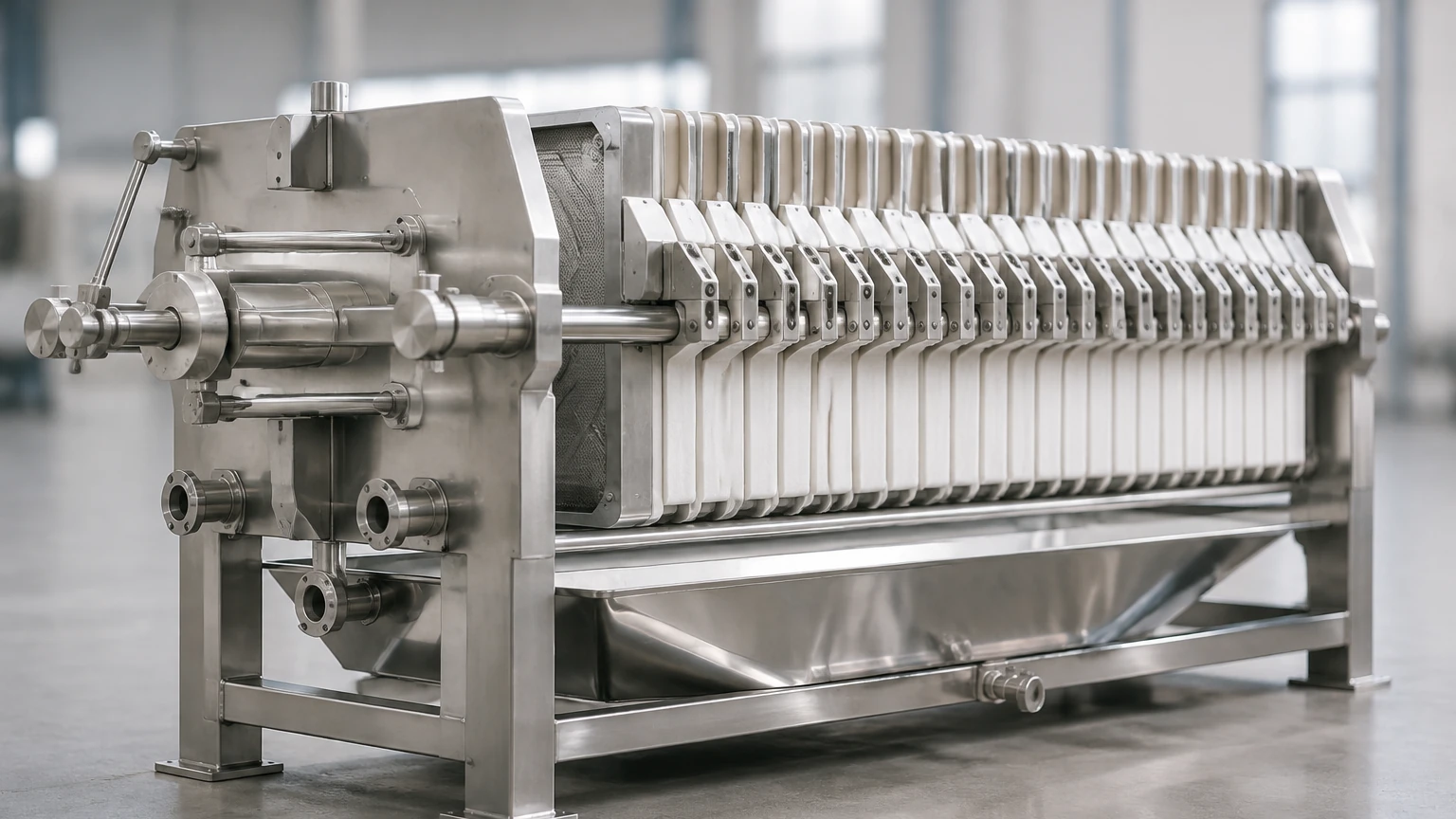
Membrane Filter Press
In industrial liquid-solid separation, the membrane filter press represents a significant technological advancement over the traditional recessed chamber filter press. Designed to achieve maximum cake dryness and minimize cycle times, this equipment is a staple in demanding sectors such as chemical processing, wastewater treatment, and mining. For engineers and procurement teams, understanding the mechanical nuances, material requirements, and operational variables of a membrane filter press is essential for optimizing filtration efficiency and reducing the total cost of ownership.
While traditional presses rely solely on the pressure of the feed pump to form a filter cake, the membrane filter press introduces a secondary mechanical compression stage. This "squeezing" action significantly reduces the residual moisture content in the filter cake, which is often a critical requirement for downstream processes such as thermal drying, incineration, or transport.
Fundamental Working Principles of Membrane Filtration
The operation of a membrane filter press is defined by a distinct four-stage cycle. Understanding these stages allows technical professionals to identify where process improvements can be made.
1. Feeding and Filtration: Slurry is pumped into the chambers formed between the filter plates. As the liquid (filtrate) passes through the filter cloth and internal drainage channels, solids begin to accumulate on the cloth surface, forming a cake. This stage continues until the chambers are full or the flow rate drops below a specific threshold.
2. Membrane Squeezing: This is the defining characteristic of the membrane filter press. Once the feeding stage is complete, a squeezing medium—typically compressed air or high-pressure water—is introduced into the hollow interior of the membrane plates. The flexible membrane face expands, physically compressing the filter cake. This mechanical force expels additional capillary liquid that pump pressure alone cannot remove.
3. Cake Washing (Optional): In applications where the purity of the solids is paramount, such as in pharmaceutical or chemical manufacturing, a wash liquid is introduced to displace any remaining mother liquor within the compressed cake.
4. Cake Discharge: The pressure behind the membranes is released, the plate pack is opened, and the dry cakes are discharged. Because the membrane squeeze creates a more cohesive and drier cake, discharge is often faster and more consistent than in standard chamber presses.
Engineering Considerations for Membrane Plate Design
The heart of the system lies in the design of the filter plates. Engineers must choose between different configurations based on the chemical nature of the slurry and the required pressure ratings.
Fixed vs. Replaceable Membranes
Fixed membranes are heat-welded or chemically bonded to the plate core. They offer a robust, leak-proof design suitable for high-pressure applications. However, if the membrane is damaged, the entire plate must often be replaced or professionally refurbished. Replaceable membranes, on the other hand, are mechanically fastened to the plate core. This allows for easier field maintenance and lower long-term component costs, though they may have lower maximum pressure limits compared to welded designs.
Pressure Ratings
Standard membrane filter presses typically operate with squeeze pressures ranging from 7 to 15 bar (100 to 225 psi). However, high-pressure variants can reach 20 bar or more for specialized applications like fine chemical separation or ultra-fine tailings dewatering. Selecting the correct pressure rating involves balancing the desired cake dryness against the mechanical stress on the plates and the energy consumption of the squeezing system.
Material Compatibility and Selection
Material selection is critical to ensure the longevity of the membrane and the integrity of the filtration process. The membrane must be flexible enough to withstand thousands of expansion cycles while remaining chemically inert to the process fluid.
* Polypropylene (PP): The most common material for both the plate core and the membrane. It offers excellent chemical resistance and is suitable for temperatures up to 80°C.
* EPDM (Ethylene Propylene Diene Monomer): Often used for membranes when higher temperature resistance or specific chemical compatibility is required. It is highly elastic and durable.
* NBR (Nitrile Butadiene Rubber): Selected for applications involving oils, fats, or hydrocarbons that would degrade standard PP or EPDM membranes.
In many industrial environments, the filtration system is part of a larger, integrated process. For example, the efficiency of a membrane filter press can be enhanced by high-quality pre-filtration. Utilizing precision Main Page solutions, such as stainless steel wire mesh filters or specialized cartridges, ensures that large debris or abrasive particles do not reach the membrane press, thereby protecting the delicate membranes and the filter cloth from premature wear.
Optimizing Filtration Efficiency with Precision Components
While the membrane press handles the bulk dewatering, the overall system reliability depends on the quality of the filtration media and the auxiliary components. In high-temperature or highly corrosive environments, standard plastic components may fail. This is where stainless steel filtration components become indispensable.
Custom stainless steel filtration solutions, such as those provided by Kaifil, play a supportive role in the membrane filter press ecosystem. For instance, stainless steel wire mesh can be used as a support layer for filter cloths in extreme environments, or as part of the internal drainage structure to prevent the collapse of the drainage channels under high squeeze pressures. Furthermore, the hydraulic systems that power the plate-shifting and squeezing mechanisms require high-purity hydraulic fluid; precision metal filter cartridges are essential here to prevent valve failure and maintain system uptime.
Maintenance, Replacement Cycles, and Operational Risks
A membrane filter press is a significant capital investment, and its performance is tied directly to a rigorous maintenance schedule. Engineers should monitor several key indicators to prevent catastrophic failure.
Membrane Fatigue
Every squeeze cycle subjects the membrane to mechanical stress. Over time, micro-cracks can develop. If a membrane ruptures during a squeeze cycle, the squeezing medium (air or water) can contaminate the process slurry or the filtrate. Regular ultrasonic testing or visual inspections during cloth changes are recommended.
Uneven Cake Formation
If the slurry is not distributed evenly across all chambers—a condition often caused by clogged feed ports—the membrane will expand unevenly. This creates localized stress points that can snap the plate cores or tear the membranes. Monitoring the pressure differential during the feeding stage is a primary defense against this risk.
Filter Cloth Maintenance
The filter cloth is the primary barrier. Blinding (clogging) of the cloth increases cycle times and reduces the effectiveness of the membrane squeeze. Automated cloth washing systems, often utilizing high-pressure water manifolds, are a common feature in modern membrane filter presses to maintain high throughput.
Total Cost Considerations and ROI
When evaluating the purchase of a membrane filter press, the initial capital expenditure (CAPEX) is only one part of the equation. The return on investment (ROI) is typically driven by operational expenditure (OPEX) savings in the following areas:
* Reduced Drying Costs: For processes that require thermal drying after filtration, a 5-10% reduction in cake moisture can lead to massive savings in natural gas or electricity consumption.
* Lower Disposal Fees: In wastewater applications, sludge disposal costs are often calculated by weight. Drier cakes weigh significantly less, directly reducing hauling and landfill fees.
* Increased Throughput: Shorter cycle times mean more batches per day. Because the membrane squeeze accelerates the final stage of dewatering, a membrane press can often process 20-30% more material than a chamber press of the same size.
* Filtrate Recovery: In mining or chemical synthesis, the liquid (filtrate) is often the valuable product. Higher cake dryness means higher product recovery rates.
Technical Specifications to Confirm Before Procurement
Before finalizing a specification for a membrane filter press, engineers should confirm the following data points with their equipment provider or filtration consultant:
1. Slurry Characteristics: Particle size distribution, solids concentration (wt%), and pH levels.
2. Cycle Time Targets: Desired duration for feeding, squeezing, and discharge.
3. Cake Moisture Requirements: The maximum allowable residual moisture for the next process step.
4. Automation Level: Requirements for automatic plate shifting, cloth washing, and PLC integration with the plant’s SCADA system.
5. Auxiliary Filtration Needs: Identify if stainless steel pre-filters or hydraulic protection cartridges are required to ensure the longevity of the press components.
By focusing on these technical parameters and ensuring that high-quality components—from the membranes themselves to the auxiliary stainless steel filtration systems—are used, industrial operators can achieve a reliable and cost-effective dewatering solution. For more information on custom filtration components and engineering support, reviewing the Main Page of a specialized manufacturer like Kaifil can provide additional insights into material selection and precision manufacturing capabilities.
