


Merv 7
In the landscape of industrial filtration and air handling, the Minimum Efficiency Reporting Value (MERV) serves as a critical benchmark for evaluating the performance of filter media. Specifically, a merv 7 rating represents a mid-range efficiency level that is frequently utilized in commercial and industrial environments to balance air quality requirements with operational constraints such as pressure drop and energy consumption. For engineers and procurement specialists, understanding the technical nuances of this rating—and how it translates to the performance of durable components like stainless steel wire mesh—is essential for optimizing system longevity and filtration accuracy.
While the MERV scale, established by the American Society of Heating, Refrigerating and Air-Conditioning Engineers (ASHRAE) under Standard 52.2, is often associated with disposable pleated filters, its principles are increasingly applied to permanent, high-durability metal filtration solutions. In demanding industrial settings where chemical resistance, temperature stability, and cleanability are paramount, moving beyond standard synthetic media to engineered metal components requires a deep dive into how MERV ratings align with micron-level performance.
The Technical Mechanics of MERV 7
The MERV rating system categorizes filters based on their ability to capture particles of varying sizes, ranging from 0.3 to 10.0 microns. A filter with a merv 7 rating is specifically tested for its efficiency in capturing particles in the 3.0 to 10.0-micron range (E3). To achieve this rating, a filter must demonstrate a composite average efficiency of at least 50% to 69.9% for particles within this size bracket.
From an engineering perspective, particles in the 3.0 to 10.0-micron range include common industrial contaminants such as cement dust, mold spores, hair spray, and certain types of fine powders. In many industrial processes, a merv 7 level of filtration is considered an ideal "pre-filtration" stage. By capturing these larger particulates, the filter protects more sensitive downstream components—such as high-efficiency HEPA filters or precision machinery—from premature loading and mechanical wear.
When evaluating a merv 7 component, it is vital to look beyond the simple rating and examine the initial resistance (pressure drop). In high-velocity industrial air streams, the physical structure of the filter media determines how much energy is required to push air through the system. Engineered solutions, such as those found on the Main Page of specialized manufacturers, prioritize a balance between particle retention and low resistance to maintain system efficiency.
Comparing Material Efficiency: Metal Mesh vs. Synthetic Media
Most commercial merv 7 filters are constructed from synthetic fibers or fiberglass in a pleated configuration. While these are cost-effective for standard HVAC applications, they often fail in rigorous industrial environments. This is where stainless steel wire mesh and precision metal filter components become the superior choice for engineers.
Durability and Environmental Resistance
Synthetic media can degrade when exposed to high temperatures, volatile organic compounds (VOCs), or high humidity. In contrast, stainless steel filters maintain their structural integrity and filtration efficiency in temperatures exceeding 500°F and in the presence of corrosive chemicals. For a system requiring merv 7 equivalent performance in a chemical processing plant or a high-heat exhaust system, metal mesh is often the only viable solution.
Cleanability and Sustainability
A standard synthetic merv 7 filter is a consumable item; once it reaches its dust-holding capacity, it must be replaced and discarded. Stainless steel filtration components are designed for reuse. Through ultrasonic cleaning, backwashing, or chemical cleaning, these filters can be restored to near-original pressure drop levels. This not only reduces the total cost of ownership but also aligns with industrial sustainability goals by minimizing waste.
Operational Impact: Pressure Drop and Energy Efficiency
One of the most critical factors in filter selection is the "clean pressure drop." Every filter introduces resistance into the system. If the resistance is too high, the fan or pump must work harder, leading to increased energy costs and potential equipment strain.
For a merv 7 rated component, the goal is to maximize the "dust-holding capacity" while minimizing the rate at which pressure drop increases. In metal filtration, this is achieved through precise control of the wire diameter and weave pattern. A plain weave or a Dutch weave can be engineered to provide the necessary surface area for particle capture while maintaining high porosity.
Engineers must also consider the "face velocity" of the air or fluid. A filter that performs at a merv 7 level at 492 feet per minute (fpm) may perform differently if the velocity is increased or decreased. Therefore, when specifying custom filtration solutions, it is essential to provide the manufacturer with the exact flow rates and operating conditions to ensure the component maintains its efficiency rating throughout its service life.
Industrial Applications for MERV 7 Level Filtration
The versatility of merv 7 efficiency makes it a staple in various industrial sectors. While it is not intended for sterile environments (which require MERV 13 or higher), it is the workhorse of industrial pre-filtration.
1. Chemical Processing: Protecting sensors and control valves from ambient dust and process-generated particulates. Stainless steel components are preferred here due to their resistance to solvent vapors.
2. Food and Beverage: Used in intake air systems for packaging areas where general dust control is required, but medical-grade air is not necessary. The washdown capability of metal filters is a significant advantage in these hygiene-sensitive areas.
3. Hydraulic and Lubrication Systems: While MERV is an air standard, the equivalent micron rating (approx. 3-10 microns) is critical for protecting hydraulic pumps from wear-inducing contaminants. Metal cartridges provide the high-pressure resistance needed in these applications.
4. Pre-filtration for HEPA Systems: In pharmaceutical or electronics manufacturing, merv 7 filters are used as the first line of defense to extend the life of expensive secondary and tertiary filters.
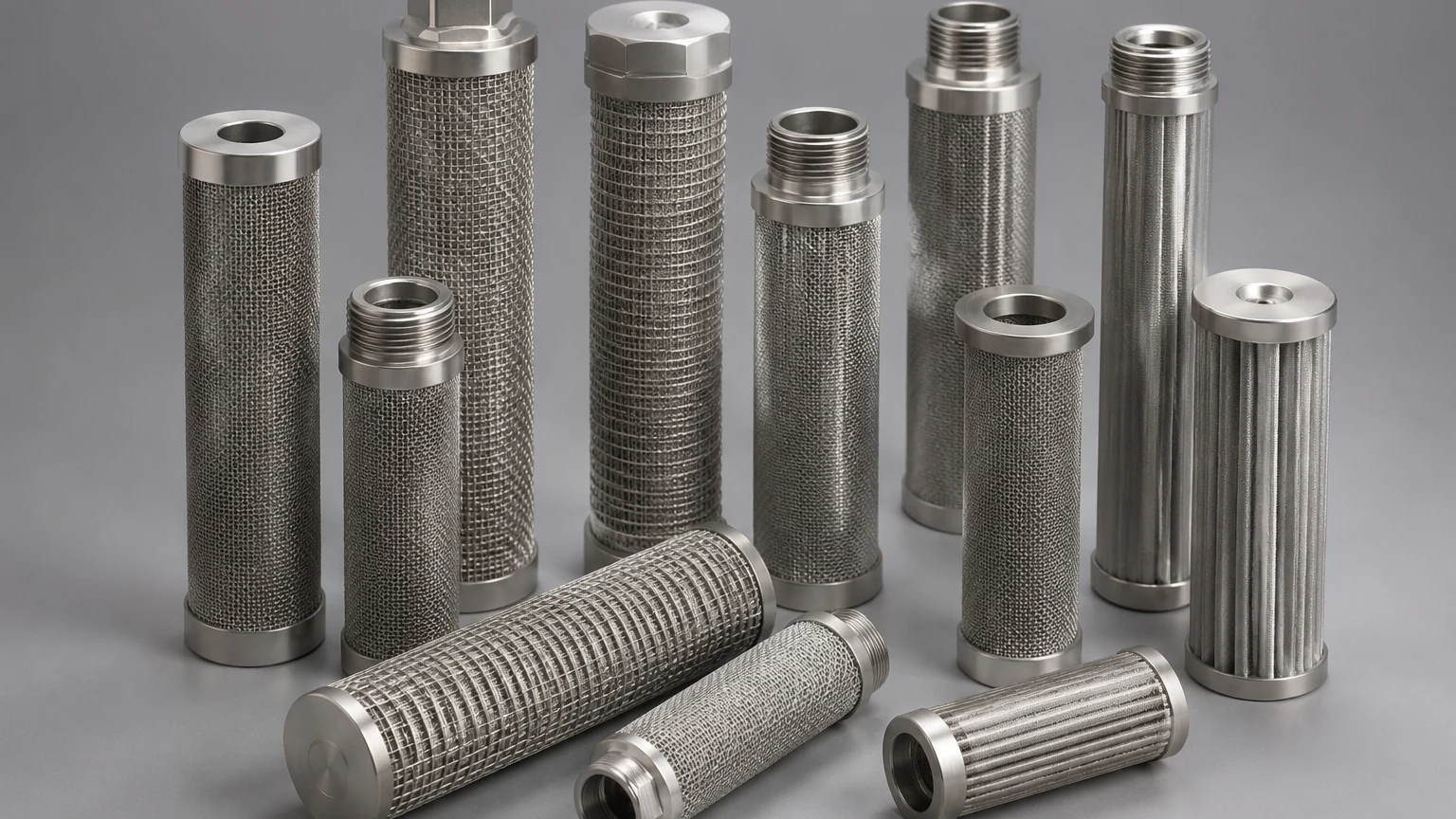
Customization and OEM Integration
For many original equipment manufacturers (OEMs), off-the-shelf merv 7 filters do not meet the spatial or mechanical requirements of their machinery. Customization is often necessary to integrate the filtration component directly into the equipment housing.
When designing a custom filter, several engineering variables are adjusted:
* Alloy Selection: Depending on the environment, 304 or 316L stainless steel may be chosen for its specific corrosion resistance properties.
* Structural Support: For high-pressure applications, the filter media may be reinforced with perforated metal or a coarser support mesh to prevent deformation.
* End Fittings: Custom flanges, threaded connections, or gaskets are engineered to ensure a leak-proof seal within the system.
By working with a specialized manufacturer, engineers can ensure that the merv 7 performance is delivered in a form factor that optimizes the overall machine design. Detailed product specifications and engineering support can be explored further on the Main Page of industrial filtration providers.
Maintenance Cycles and Total Cost of Ownership
Selecting a filter based solely on the initial purchase price is a common pitfall in industrial procurement. A low-cost synthetic merv 7 filter may require replacement every 1-3 months, leading to significant labor costs and downtime.
In contrast, a precision-engineered stainless steel filter represents a higher initial investment but offers a much lower total cost of ownership (TCO). The evaluation of TCO should include:
* Replacement Frequency: How often does the system need to be shut down for filter changes?
* Disposal Costs: Are there costs associated with hazardous waste disposal for used filters?
* Energy Consumption: Does the filter maintain a low pressure drop over time, or does it clog rapidly?
* Cleaning Costs: The cost of cleaning a permanent filter versus the cost of purchasing a new one.
In many high-volume industrial processes, a permanent metal filter pays for itself within the first year of operation through reduced maintenance and elimination of consumable costs.
Engineering Considerations for Selection
Before finalizing a specification for a merv 7 equivalent filter, technical teams should confirm several key data points with their supplier:
1. Micron Rating vs. MERV: Ensure the supplier can provide a micron-to-MERV correlation chart, especially when switching from synthetic to metal media.
2. Operating Temperature: Confirm that all components, including adhesives or gaskets, can withstand the maximum process temperature.
3. Chemical Compatibility: Verify that the filter material is inert to the gases or fluids being filtered.
4. Flow Rate and Pressure: Provide the maximum expected flow rate to ensure the filter area is sufficient to prevent excessive pressure drop.
By focusing on these factual boundaries and engineering requirements, procurement teams can secure filtration solutions that provide reliable, long-term performance. For more information on custom stainless steel filtration and technical specifications, visiting the manufacturer's Main Page provides access to comprehensive product data and application-specific guidance.
