


Micron Mesh Screen
In industrial filtration, the ability to achieve precise separation at the microscopic level is critical for product purity, equipment protection, and process efficiency. A micron mesh screen is a high-precision component engineered to provide consistent aperture sizes, typically measured in microns (one-millionth of a meter). For engineers and procurement specialists, selecting the correct micron mesh screen involves more than just identifying a particle size; it requires a deep understanding of material science, weave geometry, and fluid dynamics.
As a specialized manufacturer of stainless steel filtration solutions, Kaifil produces high-performance mesh screens designed to withstand the rigorous demands of chemical processing, pharmaceutical manufacturing, and hydraulic systems. This guide explores the technical specifications, engineering considerations, and selection criteria essential for optimizing filtration performance.
The Technical Relationship Between Mesh Count and Micron Rating
One of the most common points of confusion in industrial filtration is the relationship between "mesh count" and "micron rating." While they are related, they describe different physical characteristics of the screen.
Defining Mesh Count
Mesh count refers to the number of openings per linear inch (25.4 mm). For example, a 100-mesh screen has 100 openings per inch in both the warp and weft directions. However, the mesh count alone does not define the size of the particle that will pass through the screen because it does not account for the diameter of the wire used in the weave.
Defining Micron Rating
The micron rating refers to the actual size of the aperture or opening between the wires. It is the clear distance between two adjacent parallel wires. To calculate the micron rating of a plain weave screen, engineers use the following formula:
Aperture (Microns) = (25,400 / Mesh Count) – (Wire Diameter in Microns)
This formula demonstrates that for a fixed mesh count, using a thicker wire will result in a smaller micron rating but will also reduce the open area of the screen. Conversely, a thinner wire increases the open area and flow rate but may compromise the mechanical strength of the micron mesh screen. Understanding this balance is vital when specifying components for high-pressure or high-flow environments.
Material Properties and Chemical Compatibility
The performance and longevity of a micron mesh screen are heavily dependent on the alloy selected. Stainless steel is the industry standard due to its mechanical strength and resistance to oxidation and corrosion. At Kaifil, we focus on high-grade alloys to ensure durability in harsh industrial environments.
Stainless Steel 304
SS304 is the most widely used material for general industrial applications. It offers excellent corrosion resistance in most atmospheric conditions and is suitable for food and beverage applications where hygiene is a priority. However, it is susceptible to chloride-induced pitting.
Stainless Steel 316 and 316L
For more demanding environments, such as chemical processing or marine applications, SS316 is preferred. The addition of molybdenum enhances its resistance to pitting and crevice corrosion in chloride-rich environments. SS316L (low carbon) is specifically utilized in applications requiring welding, as it minimizes carbide precipitation that can lead to intergranular corrosion.
Specialized Alloys
In extreme cases involving highly acidic or alkaline fluids, specialized alloys like Inconel, Monel, or Hastelloy may be required. These materials maintain their structural integrity at elevated temperatures and in highly corrosive media where standard stainless steels would fail. Selecting the right material is the first step in ensuring the total cost of ownership remains low by extending the replacement cycle of the filter elements.
Analyzing Weave Structures for Precision Filtration
The method by which the wires are interlaced—the weave type—determines the screen's filtration accuracy, strength, and flow characteristics. Different applications require different weave geometries to handle specific particle shapes and pressure loads.
Plain Weave
In a plain weave, each weft wire passes alternately over and under each warp wire. This is the most common weave for micron mesh screens ranging from 10 to 300 mesh. It provides a consistent aperture and is easy to clean, making it ideal for surface filtration where particles are trapped on the screen's exterior.
Twill Weave
Twill weave involves each weft wire passing alternately over and under two warp wires. This allows for the use of heavier wires than a plain weave of the same mesh count, providing greater strength and the ability to produce finer mesh counts (up to 600 mesh) that would be physically impossible with a plain weave structure.
Dutch Weave (Plain and Twill)
Dutch weaves utilize a combination of different wire diameters for the warp and weft. The warp wires are typically heavier and spaced further apart, while the weft wires are thinner and driven closely together. This creates a dense, strong mesh with very small, tortuous paths for the fluid.
* Plain Dutch Weave: Offers high mechanical strength and is suitable for high-pressure filtration.
* Twill Dutch Weave: Allows for the finest filtration ratings, often down to 1–5 microns, by overlapping the weft wires to create a double layer of filtration media.
Engineering Performance: Flow Rates and Pressure Management
When integrating a micron mesh screen into an industrial system, engineers must account for the impact on the overall system hydraulics. Two primary factors are the clean pressure drop and the dirt-holding capacity.
Pressure Drop (ΔP)
The pressure drop is the difference in pressure between the upstream and downstream sides of the filter. A high mesh count or a Dutch weave naturally creates more resistance to flow. If the initial pressure drop is too high, it can lead to pump cavitation or reduced system efficiency. Engineers must calculate the Effective Filtration Area (EFA) to ensure that the fluid velocity through the mesh does not exceed the material's structural limits.
Dirt-Holding Capacity
This refers to the amount of contaminant a screen can trap before the pressure drop reaches a critical terminal level, necessitating cleaning or replacement. While a finer micron mesh screen provides better filtration, it will clog faster if the particle size distribution of the fluid is not properly understood. In many cases, a multi-stage filtration approach—using a coarse pre-filter followed by a fine micron mesh—is the most cost-effective strategy to extend the service life of the precision screen.
Mechanical Loading and Support
Under high-pressure conditions, a fine micron mesh may lack the structural rigidity to maintain its shape. In these instances, the mesh is often sintered or pleated with a coarser support mesh. Sintering bonds the wire contact points through a thermal process, creating a rigid, porous plate that maintains its micron rating even under extreme mechanical stress.
Industrial Applications and Selection Criteria
Micron mesh screens are utilized across a broad spectrum of industries, each with unique requirements for precision and durability.
* Chemical Processing: Used for catalyst recovery and the removal of impurities from corrosive reagents. The focus here is on chemical compatibility and high-temperature stability.
* Food and Beverage: Employed in the clarification of juices, oils, and syrups. These screens must meet stringent sanitary standards and be capable of frequent Clean-in-Place (CIP) cycles.
* Pharmaceuticals: Requires high-precision Dutch weaves for sterile filtration and active pharmaceutical ingredient (API) recovery. Material traceability and surface finish are paramount.
* Hydraulic Systems: Used to protect sensitive valves and pumps from particulate contamination. These screens must handle high differential pressures and rapid flow fluctuations.
When selecting a screen, engineers should confirm the following parameters:
1. Target Particle Size: What is the specific micron rating required for the application?
2. Fluid Characteristics: What is the viscosity, temperature, and pH of the medium?
3. Flow Rate: What is the maximum and nominal volume of fluid passing through the screen?
4. Operating Pressure: What is the maximum differential pressure the screen will encounter?
Custom Fabrication and OEM Solutions for Industrial Filtration
Standard off-the-shelf mesh often fails to meet the specific spatial or performance requirements of complex industrial machinery. Customization is a core strength of the manufacturing process at Kaifil. We provide tailored solutions that include:
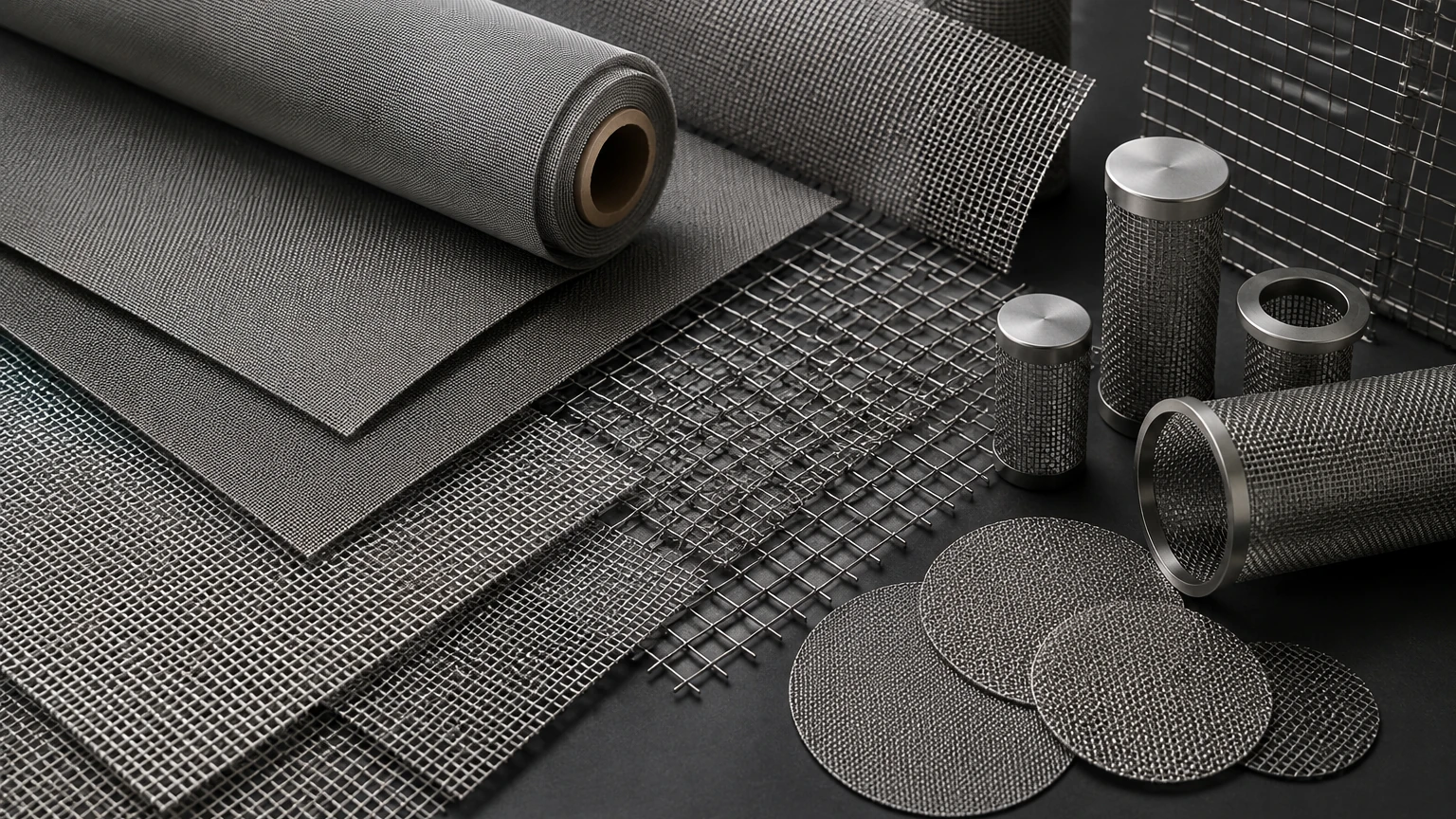
* Custom Shapes and Sizes: From simple discs and ribbons to complex multi-layered cylindrical cartridges and conical strainers.
* Edge Treatments: Options such as ultrasonic welding, framing with stainless steel rings, or polymer encapsulation to prevent fraying and ensure a secure fit within the filter housing.
* Layered Composites: Combining multiple layers of different mesh counts to create a graduated filtration effect, which improves dirt-holding capacity and structural integrity.
By working closely with an OEM partner, engineering teams can ensure that the micron mesh screen is optimized for the specific geometry of their equipment, reducing the risk of bypass or mechanical failure. For detailed technical specifications and to explore our full range of capabilities, you can visit our Main Page.
Maintenance and Durability of Stainless Steel Screens
One of the primary advantages of using stainless steel micron mesh screens over disposable synthetic filters is their cleanability. A well-maintained metal screen can last for years, significantly reducing the total cost of ownership.
Cleaning Methods
Depending on the nature of the contaminant, several cleaning methods can be employed:
* Backwashing: Reversing the flow of the fluid to dislodge particles trapped on the surface of the mesh.
* Ultrasonic Cleaning: Using high-frequency sound waves in a cleaning solvent to remove fine particles from deep within the weave of a Dutch weave screen.
* Chemical Cleaning: Utilizing mild acids or bases to dissolve organic or mineral deposits, provided the mesh material is compatible with the cleaning agent.
* Thermal Cleaning: Burning off organic contaminants in a controlled atmosphere furnace, a method often used for polymer filtration screens.
Monitoring Performance
To maximize the lifespan of a micron mesh screen, it is essential to monitor the differential pressure across the filter. Implementing automated sensors can alert operators when a cleaning cycle is required, preventing the mesh from being subjected to excessive pressure that could cause permanent deformation or "media migration," where wires shift and the micron rating is compromised.
Conclusion
The selection of a micron mesh screen is a critical engineering decision that impacts the reliability and efficiency of industrial processes. By considering the interplay between mesh count, micron rating, weave type, and material science, technical professionals can specify filtration components that deliver precise performance even in the most demanding environments.
Whether you are designing a new hydraulic system, optimizing a chemical reactor, or maintaining a food processing line, the quality of the filtration media is the determining factor in your system's success. Kaifil remains committed to providing the technical expertise and manufacturing precision required to meet these challenges. For more information on our custom stainless steel filtration solutions and to consult with our engineering team, please visit our Main Page.
