


Micron Mesh
In the landscape of industrial filtration, the term "micron mesh" refers to a specialized category of wire cloth or filter media characterized by precise, microscopic openings. These openings, measured in micrometers (microns), determine the size of particles that can pass through the medium and those that are retained. For engineers and technical procurement teams, selecting the appropriate micron mesh is a critical decision that impacts the efficiency, longevity, and safety of industrial processes ranging from chemical refining to food and beverage production.
As a professional manufacturer, Kaifil specializes in custom stainless steel filtration solutions that leverage the technical properties of micron mesh to meet rigorous industrial standards. Understanding the engineering nuances behind these materials is essential for optimizing system performance and ensuring the structural integrity of filtration components in demanding environments.
Understanding the Fundamentals of Micron Mesh
A micron (μm) is one-millionth of a meter, or approximately 0.000039 inches. In the context of industrial mesh, the micron rating defines the aperture size—the clear space between two adjacent warp and shute wires. Unlike standard industrial screens where the focus might be on structural separation, micron mesh is engineered for precision filtration.
There are two primary ways to categorize the filtration capability of a mesh: nominal and absolute ratings. A nominal rating refers to the ability of the mesh to retain a specific percentage (typically 60% to 90%) of particles of a certain size. In contrast, an absolute rating indicates the diameter of the largest spherical particle that can pass through the mesh under specified test conditions. For critical applications, such as pharmaceutical processing or high-pressure hydraulic systems, engineers typically specify absolute ratings to ensure no oversized contaminants bypass the filter.
Technical Specifications: Mesh Count vs. Micron Rating
One of the most common points of confusion in filter selection is the relationship between mesh count and micron rating. Mesh count refers to the number of openings per linear inch (25.4 mm). While there is a mathematical correlation, the two are not interchangeable because the wire diameter significantly influences the aperture size.
The formula used by engineers to determine the aperture (micron size) is:
Aperture = (25.4 / Mesh Count) – Wire Diameter
For example, a 100-mesh screen made with 0.10 mm wire will have a different micron rating than a 100-mesh screen made with 0.08 mm wire. As the wire diameter increases, the structural strength of the mesh improves, but the open area percentage decreases, which can lead to higher pressure drops across the filter. When sourcing components from the Kaifil Main Page, it is vital to provide both the required micron rating and the operating pressure of the system so that the wire diameter can be optimized for both precision and durability.
Material Selection for Industrial Environments
The performance of micron mesh is heavily dependent on the metallurgy of the wire. Stainless steel is the industry standard due to its mechanical strength and resistance to environmental stressors. Kaifil primarily utilizes several grades of stainless steel and high-performance alloys to meet specific application needs:
* AISI 304: The most common grade, offering good corrosion resistance and affordability for general industrial use, such as water treatment and basic chemical filtration.
* AISI 316/316L: Contains molybdenum, which provides superior resistance to chlorides and pitting. The "L" (low carbon) variant is preferred for welded components to prevent carbide precipitation and ensure the integrity of the filter seams.
* AISI 904L: A high-alloy austenitic stainless steel used in environments with severe corrosive conditions, such as sulfuric acid processing.
* Specialty Alloys: For extreme temperatures or highly aggressive chemical environments, materials like Hastelloy, Monel, or Inconel may be used to manufacture micron mesh components.
Selecting the right material involves evaluating the chemical composition of the fluid, the operating temperature, and the potential for galvanic corrosion if the filter is in contact with dissimilar metals.
Weave Structures and Their Effect on Filtration Precision
The geometry of the weave determines the flow characteristics and the micron-level precision of the mesh. Different weave patterns are employed depending on the required filtration fineness and mechanical load.
Plain Weave
In a plain weave, each shute wire passes alternately over and under each warp wire. This is the most straightforward construction and is typically used for mesh ratings down to approximately 40 microns. It provides a high percentage of open area and predictable flow rates.
Twill Weave
For finer filtration, a twill weave allows for heavier wire diameters in a given mesh count. Each shute wire passes over and under two warp wires. This reduces the stress on the wires during the weaving process, allowing for a more robust mesh at lower micron ratings.
Dutch Weave (Plain and Twilled)
Dutch weaves utilize different diameters for warp and shute wires. The warp wires remain relatively heavy, while the shute wires are driven closely together, creating a "tortuous path" for the fluid. This construction does not have straight-through openings; instead, the fluid must pass through the interstitial spaces. Plain Dutch weaves can reach ratings of 20 microns, while Twilled Dutch weaves (TDW) can achieve absolute filtration as fine as 1 to 5 microns.
Reverse Dutch Weave
In this configuration, the positions of the heavy warp wires and fine shute wires are reversed. This results in a mesh with high mechanical strength and high permeability, making it ideal for high-pressure applications like vertical leaf filters and continuous polymer filtration.
Engineering Considerations: Pressure Drop and Flow Dynamics
When integrating micron mesh into a system, engineers must account for the pressure differential ($ΔP$). As the micron rating becomes finer, the resistance to flow increases. This is influenced by the "Open Area Percentage," which is the ratio of the total area of the openings to the total area of the mesh.
If the open area is too low, the system will experience a significant pressure drop, which can lead to pump cavitation, reduced flow rates, and premature filter failure. To mitigate this, engineers often utilize pleated designs. Pleating the micron mesh increases the effective surface area within the same footprint, allowing for higher dirt-holding capacity and lower initial pressure drops. Kaifil provides customized pleated stainless steel filter cartridges designed specifically to balance these competing requirements.
Furthermore, the "Bubble Point Test" is often employed as a quality control measure. By submerging the mesh in a liquid and measuring the pressure required to force air through the pores, manufacturers can verify the absolute micron rating and ensure there are no defects in the weave or the assembly welds.
Custom Fabrication and OEM Capabilities
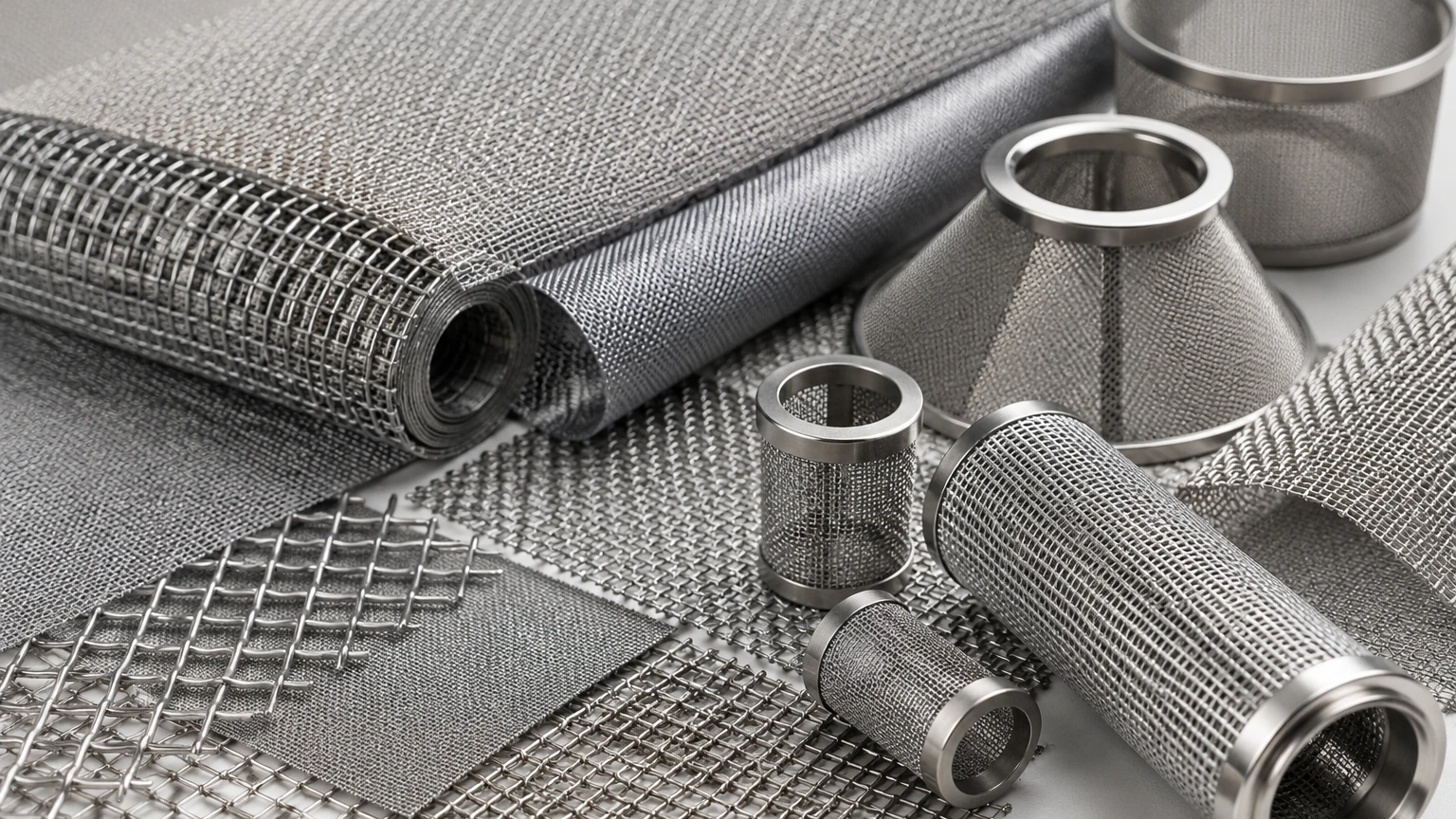
Industrial filtration rarely relies on "off-the-shelf" solutions. Most applications require specific geometries, such as cylindrical cartridges, conical strainers, or flat discs. Kaifil’s manufacturing process involves precision cutting, forming, and welding of micron mesh to meet these custom requirements.
Techniques such as plasma welding and TIG (Tungsten Inert Gas) welding are used to ensure that the seams of the filter do not introduce bypass points. Additionally, for applications involving high pressure or backpulsing, multiple layers of micron mesh can be sintered together. Sintering involves bonding the contact points of the wires through heat and pressure without melting them, creating a rigid, porous plate that maintains its micron rating even under extreme mechanical stress.
OEM partners often require specific end-cap configurations (e.g., 222, 226, or NPT threaded connections) to ensure compatibility with existing filter housings. Providing detailed technical drawings and performance specifications during the design phase is essential for a successful OEM partnership.
Maintenance and Lifespan Optimization
One of the primary advantages of stainless steel micron mesh over disposable synthetic media is its cleanability. However, the cleaning protocol must be carefully managed to avoid damaging the delicate wire structure. Common methods include:
* Backwashing: Reversing the flow of the fluid to dislodge particles trapped on the surface of the mesh.
* Ultrasonic Cleaning: Using high-frequency sound waves in a cleaning solution to remove fine particles from the interstitial spaces of Dutch weaves.
* Chemical Cleaning: Utilizing specific solvents or acids to dissolve organic or inorganic scaling, provided the mesh material is chemically compatible with the cleaning agent.
Replacement cycles are typically determined by monitoring the pressure drop. Once the "terminal pressure drop" is reached—the point where cleaning no longer restores the filter to an acceptable operating pressure—the mesh component must be replaced. Regular inspection for signs of "blinding" (permanent clogging) or mechanical fatigue is recommended to prevent catastrophic failure and downstream contamination.
Conclusion
Selecting and implementing micron mesh requires a deep understanding of fluid dynamics, metallurgy, and weave geometry. By focusing on the technical specifications—such as the distinction between nominal and absolute ratings, the impact of weave patterns on flow, and the necessity of robust material selection—engineers can ensure their filtration systems operate at peak efficiency.
Kaifil remains committed to providing high-performance, customized filtration components that meet the exact needs of modern industry. Whether you are designing a new system or optimizing an existing process, the integration of precision-engineered stainless steel mesh is a proven strategy for achieving reliable results. For more information on our technical capabilities and product range, we invite you to review the resources available on our Main Page.
