


Micron Screen Mesh
In industrial filtration, the precision of particle separation is often the determining factor in product quality, equipment longevity, and process efficiency. Micron screen mesh, a specialized category of wire cloth, provides the necessary accuracy for fine filtration tasks across a wide range of demanding sectors. From chemical processing and pharmaceuticals to food production and hydraulic systems, understanding the technical nuances of micron-rated mesh is essential for engineers and procurement teams tasked with optimizing filtration performance.
As a professional manufacturer, Kaifil specializes in custom stainless steel filtration solutions, utilizing advanced manufacturing techniques to produce micron screen mesh that meets rigorous industrial standards. This guide explores the engineering principles, material considerations, and selection criteria necessary for implementing effective micron-level filtration.
The Technical Relationship Between Mesh Count and Micron Rating
One of the most common points of confusion in the procurement of industrial filters is the distinction between "mesh count" and "micron rating." While they are related, they describe different physical characteristics of the screen.
Defining Mesh Count
Mesh count refers to the number of openings per linear inch of the screen. For example, a 100-mesh screen has 100 openings per inch in both the warp and shute directions. As the mesh count increases, the size of the openings generally decreases, provided the wire diameter remains constant or decreases proportionally.
Defining Micron Rating
A micron (micrometer) is a unit of length equal to one-millionth of a meter (0.001 mm). In filtration, the micron rating indicates the size of the particles that the mesh is designed to retain. A "nominal" micron rating refers to the ability of the mesh to retain a certain percentage of particles of a specific size, while an "absolute" rating indicates the size of the largest particle that can pass through the mesh under controlled conditions.
The Role of Wire Diameter
The relationship between mesh count and micron rating is heavily influenced by the wire diameter. Two screens with the same mesh count but different wire diameters will have different micron ratings and different percentages of open area. Engineers must balance the need for a fine micron rating with the requirement for structural integrity. Thicker wires provide greater durability and resistance to pressure but reduce the open area, which can increase the pressure drop across the filter.
Material Selection for Micron Screen Mesh
The environment in which the micron screen mesh operates dictates the material requirements. For most industrial applications, stainless steel is the preferred choice due to its mechanical strength, thermal stability, and corrosion resistance.
Stainless Steel 304
Grade 304 is the standard "18-8" stainless steel. It offers excellent corrosion resistance in most atmospheric conditions and is widely used in general industrial applications. It is a cost-effective choice for environments where aggressive chemicals are not present.
Stainless Steel 316 and 316L
For more demanding environments, such as marine applications, chemical processing, or pharmaceutical manufacturing, Grade 316 is preferred. The addition of molybdenum enhances its resistance to pitting and crevice corrosion, particularly in chloride-rich environments. Grade 316L (low carbon) is often specified for components that require welding, as it minimizes the risk of intergranular corrosion in the heat-affected zone.
Specialized Alloys
In extreme cases involving high temperatures or highly corrosive acids, specialized alloys like Inconel, Monel, or Hastelloy may be used. These materials ensure that the micron screen mesh maintains its pore geometry and structural integrity under conditions that would cause standard stainless steel to fail.
Evaluating Filtration Performance: Flow Rate and Pressure Drop
Selecting a micron screen mesh is not merely about choosing the smallest pore size available. Engineers must consider the fluid dynamics of the system, specifically the relationship between filtration precision, flow rate, and pressure drop (Delta P).
Open Area and Throughput
The "percentage of open area" is a critical metric. A higher open area allows for higher flow rates and lower initial pressure drops. However, as the micron rating becomes finer, the total open area typically decreases. If the open area is too low for the required flow rate, the velocity of the fluid through the pores increases, which can lead to particle "breakthrough" or premature blinding of the mesh.
Pressure Drop Considerations
Every filter medium introduces a resistance to flow. As particles accumulate on the surface of the micron screen mesh, this resistance increases. It is vital to calculate the clean pressure drop to ensure the system's pump or compressor can handle the load. Furthermore, the mesh must be strong enough to withstand the maximum differential pressure expected before cleaning or replacement occurs.
Sintered Mesh for High-Pressure Applications
For applications involving high pressures or frequent backwashing, single-layer micron screen mesh may lack the necessary mechanical strength. In these instances, sintered wire mesh—where multiple layers of mesh are fused together through a heat-and-pressure process—is often used. This creates a robust, multi-layered structure that retains a fine micron rating while offering significantly higher structural stability.
Industrial Applications and Engineering Requirements
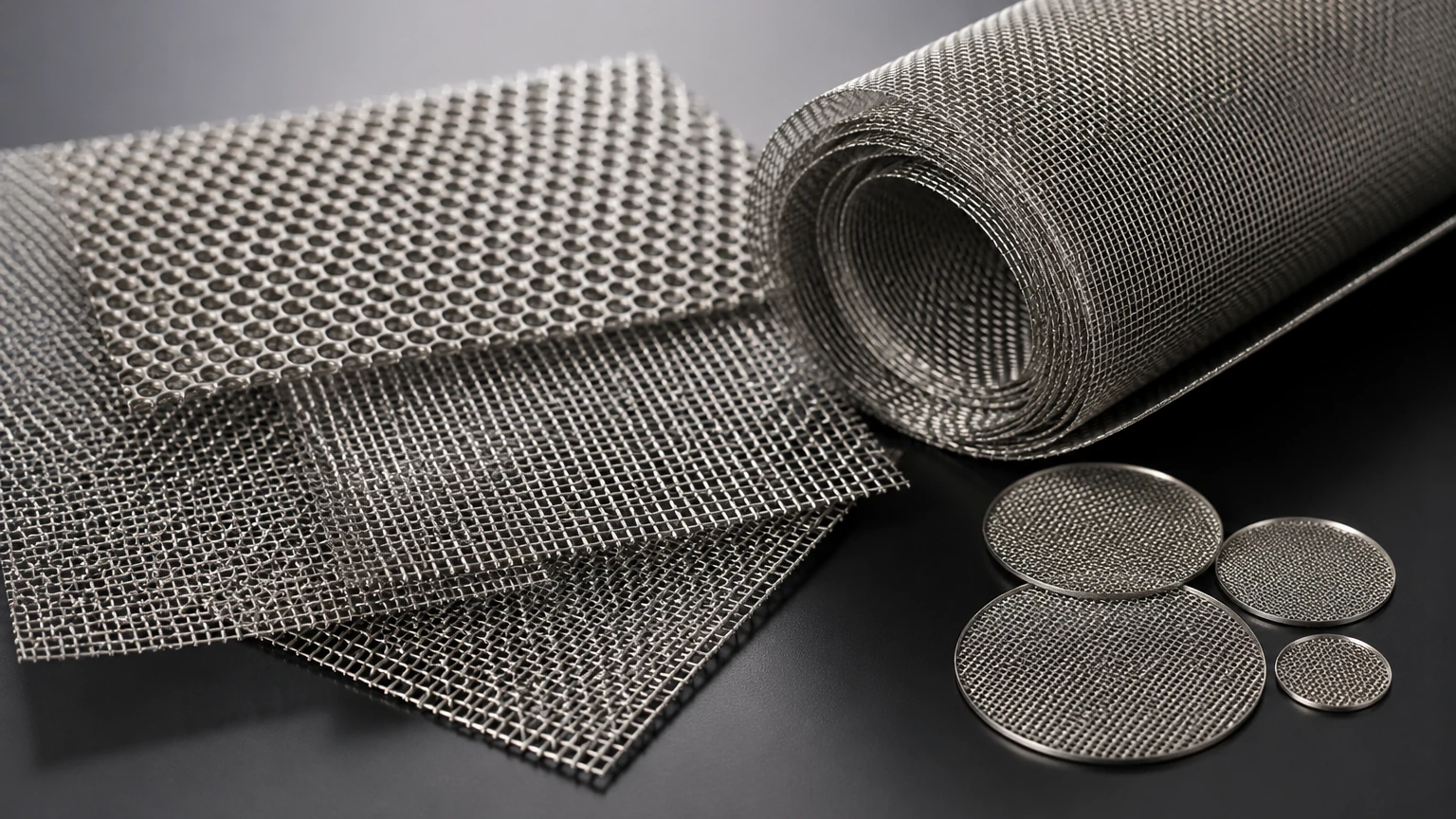
Micron screen mesh is utilized in various configurations, including flat discs, pleated cartridges, and cylindrical strainers. The specific application determines the necessary specifications.
* Chemical and Petrochemical: Used for catalyst recovery and the filtration of aggressive solvents. The mesh must provide high chemical compatibility and the ability to withstand fluctuating temperatures.
* Food and Beverage: In this sector, cleanability and compliance with safety standards are paramount. Micron screen mesh is used for clarifying juices, filtering oils, and ensuring the purity of ingredients. Stainless steel 316L is typically required to meet hygienic standards.
* Pharmaceuticals: Precision is critical in pharmaceutical manufacturing. Micron mesh is used in chromatography, bulk drug production, and sterile filtration processes. The mesh must have a smooth surface finish to prevent particle entrapment and facilitate thorough sterilization.
* Hydraulic and Lubrication Systems: To protect sensitive valves and pumps, micron screen mesh filters out fine metallic wear particles and contaminants. These filters must handle high-pressure differentials and maintain consistent pore sizes under mechanical stress.
Customization and OEM Manufacturing Capabilities
Standard off-the-shelf mesh often fails to meet the unique geometric or performance requirements of specialized industrial equipment. This is where custom manufacturing becomes essential. Kaifil provides comprehensive OEM services, allowing engineers to specify every aspect of the filtration component.
Custom Geometry and Fabrication
Micron screen mesh can be fabricated into complex shapes. This includes multi-layered discs for polymer filtration, pleated elements to increase surface area, and reinforced cylinders for high-flow strainers. Advanced welding techniques, such as TIG welding, plasma welding, and ultrasonic welding, ensure that the seams of the filter are as strong and precise as the mesh itself.
Edge Treatments and Support Structures
To prevent fraying and ensure a secure fit within a housing, micron mesh components often require specialized edge treatments. Options include metal binding, rubber gaskets, or epoxy potting. Additionally, fine micron mesh is frequently supported by a coarser "backup" mesh or a perforated metal core to provide the necessary rigidity without impeding flow.
Maintenance, Cleaning, and Replacement Cycles
The total cost of ownership for a filtration system is heavily influenced by the lifespan of the filter media. Unlike disposable synthetic filters, stainless steel micron screen mesh is often cleanable and reusable.
Cleaning Methods
* Ultrasonic Cleaning: High-frequency sound waves create cavitation bubbles that dislodge fine particles from deep within the mesh pores. This is highly effective for delicate micron mesh.
* Backpulsing/Backwashing: Reversing the flow of the fluid can dislodge the filter cake. This is common in automated systems where downtime must be minimized.
* Chemical Cleaning: Soaking the mesh in compatible solvents or acids can dissolve organic or mineral deposits that mechanical cleaning cannot reach.
Determining Replacement Cycles
While cleanable, micron screen mesh will eventually reach a point of "permanent blinding" or mechanical fatigue. Engineers should monitor the rate at which the pressure drop increases after each cleaning cycle. If the pressure drop returns to a higher baseline each time, the mesh is likely reaching the end of its functional life. Regular inspection for wire displacement or corrosion is also necessary to prevent bypass of unfiltered fluid.
Technical Specifications to Confirm Before Procurement
When consulting with a manufacturer like Kaifil, providing detailed specifications ensures the final product performs as intended. Engineers should be prepared to confirm the following:
1. Target Particle Size: Specify the required absolute or nominal micron rating.
2. Fluid Characteristics: Define the viscosity, temperature, and chemical composition of the medium being filtered.
3. Operating Pressure: Note both the normal operating pressure and the maximum allowable differential pressure.
4. Flow Rate: Determine the required throughput to size the filter surface area correctly.
5. Mechanical Interface: Provide exact dimensions, tolerances, and any required edge treatments or support structures.
Selecting the right micron screen mesh involves a careful balance of material science, fluid dynamics, and mechanical engineering. By focusing on these technical parameters, purchasing teams can secure filtration solutions that enhance process reliability and reduce long-term operational costs.
For more information on customized filtration components and to explore our full range of manufacturing capabilities, please visit our Main Page. As a dedicated partner in industrial filtration, Kaifil provides the technical expertise and manufacturing precision required to solve complex separation challenges.
