


Filter Press Trailer
In industrial liquid-solid separation, the requirement for mobility and rapid deployment has led to the widespread adoption of the filter press trailer. Unlike stationary dewatering plants, a mobile filter press system provides the flexibility to manage sludge, tailings, and chemical slurries at various locations without the capital expenditure associated with permanent infrastructure. For engineers and facility managers, understanding the technical nuances of these systems—from hydraulic pressure management to the selection of high-performance stainless steel filtration media—is essential for optimizing operational efficiency.
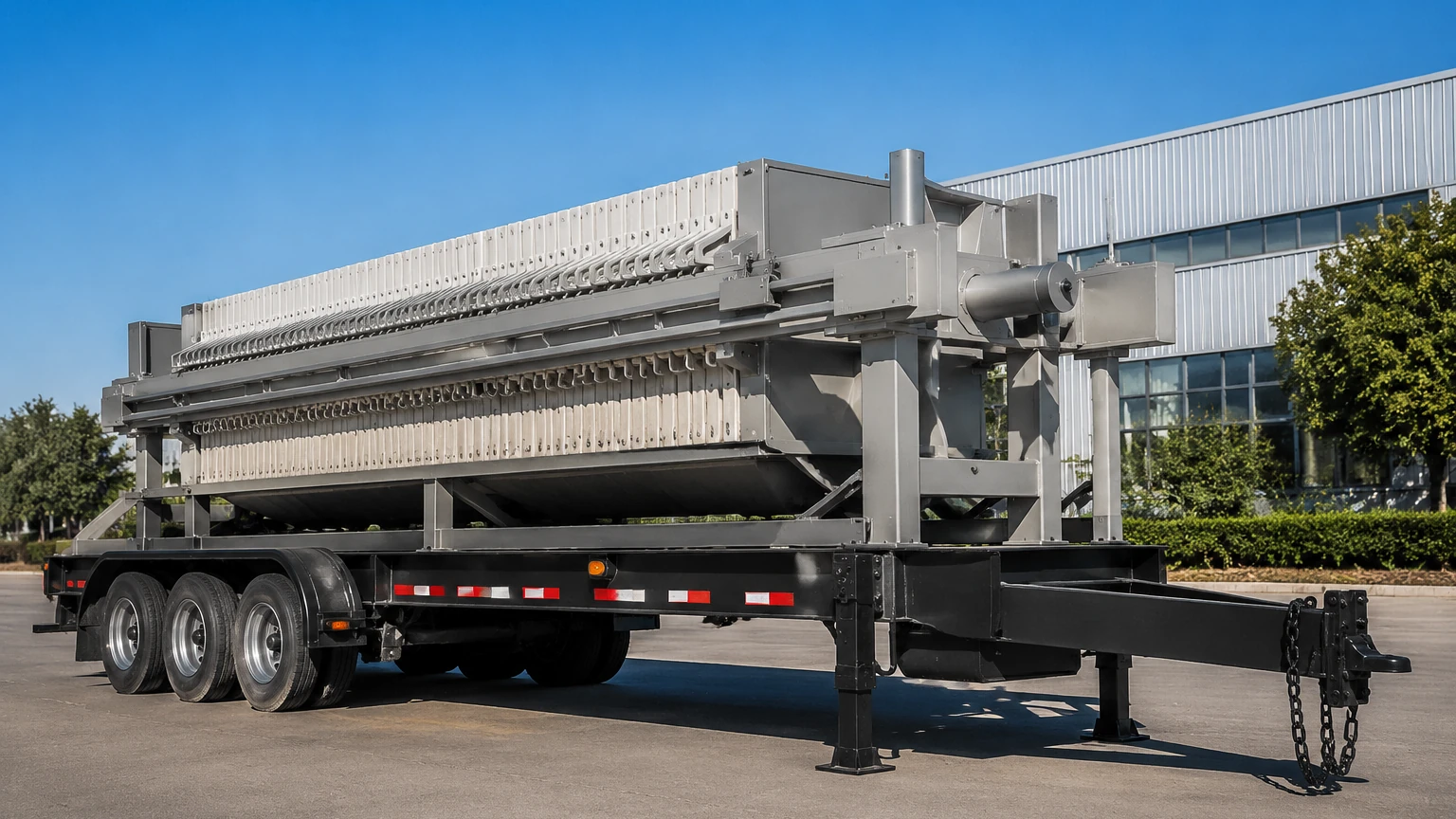
A filter press trailer is essentially a heavy-duty, road-legal or site-towable chassis equipped with a fully integrated dewatering system. This typically includes the filter press itself, feed pumps, manifold piping, a control system, and often a cake discharge conveyor. By consolidating these components onto a single platform, industrial operators can address emergency spills, temporary bypass needs, or remote site remediation with minimal setup time.
Engineering Design and Components of a Filter Press Trailer
The engineering of a mobile filtration unit requires a balance between structural integrity and filtration capacity. Because the system must withstand the rigors of transportation and the high mechanical stresses of hydraulic clamping, the trailer frame is usually constructed from reinforced structural steel.
The Filter Press Unit
At the heart of the trailer is the filter press, usually a recessed chamber or plate-and-frame design. These units are engineered to handle high solids concentrations. In demanding industrial environments, the durability of the internal components is paramount. High-quality manufacturers often utilize precision-engineered stainless steel components to ensure the system remains resistant to corrosion and mechanical wear. For those seeking specialized filtration parts, visiting the Main Page of a dedicated manufacturer can provide insights into the material grades and custom designs available for these rigorous applications.
Integrated Manifold and Pumping Systems
A filter press trailer must be self-contained. This requires an integrated manifold system that manages the flow of slurry into the press and the exit of filtrate. High-pressure feed pumps—often air-operated double diaphragm (AODD) or progressive cavity pumps—are mounted directly on the trailer. The piping must be designed to minimize pressure drops and prevent the settling of solids within the lines during the filtration cycle.
Control Systems and Automation
Modern mobile units feature PLC-based control panels that monitor pressure, cycle times, and valve positioning. Automation is critical in mobile applications where onsite technical staff may be limited. Sensors detect when the chambers are full and initiate the squeeze or air-blow cycles to ensure maximum cake dryness before discharge.
Technical Considerations for Mobile Dewatering Systems
When evaluating a filter press trailer for a specific project, engineers must look beyond the physical dimensions and focus on the performance metrics that dictate throughput and cake quality.
Filtration Area and Volume
The capacity of a mobile unit is defined by its total filtration area (measured in square feet or meters) and its chamber volume. Because trailer dimensions are limited by road regulations, manufacturers often use high-capacity plates to maximize the volume-to-footprint ratio. It is vital to calculate the expected dry solids production per hour to ensure the trailer can keep pace with the slurry generation rate.
Hydraulic Clamping Pressure
To prevent leaking during the high-pressure injection of slurry, the filter plates must be held together with significant force. Hydraulic power units (HPUs) on the trailer provide the necessary clamping pressure, often exceeding 3,000 PSI. The reliability of the hydraulic seals and the precision of the plate alignment are critical factors in preventing bypass and ensuring operator safety.
Cake Dryness and Discharge
The primary goal of using a filter press trailer is often the reduction of waste volume for disposal. Achieving high cake dryness (often 30% to 70% solids depending on the material) reduces transportation costs. Features such as cake wash capabilities or air blow-down systems are often integrated into the trailer design to further enhance the dewatering process.
Material Selection for Industrial Durability
The longevity of a filter press trailer is heavily dependent on the materials used in its construction, particularly the components in direct contact with the process fluid.
Stainless Steel Filtration Media
In industries such as chemical processing or pharmaceutical manufacturing, standard polypropylene plates and cloths may not suffice. Stainless steel wire mesh filters and precision metal filter components offer superior thermal stability and chemical resistance. These materials are essential when dealing with high-temperature slurries or aggressive solvents that would degrade synthetic fibers. Utilizing custom stainless steel filtration solutions ensures that the mobile unit can handle a wider range of pH levels and abrasive particles without frequent downtime for media replacement.
Corrosion Resistance in Remote Environments
Filter press trailers are frequently deployed in harsh environments, such as mining sites or coastal wastewater plants. The use of 304 or 316L stainless steel for manifolds, valves, and filter housings prevents premature failure due to oxidation. Engineering teams should specify material grades based on the most aggressive fluid the trailer is expected to encounter during its service life.
Applications Across Industrial Sectors
The versatility of the filter press trailer makes it a staple in several key industries where onsite processing is more cost-effective than hauling liquid waste.
1. Mining and Mineral Processing: Mobile units are used for dewatering tailings and recovering process water in remote exploration sites. The ability to move the filtration unit as the mining operation progresses is a significant logistical advantage.
2. Municipal Wastewater Treatment: During plant upgrades or maintenance of permanent digesters, a filter press trailer provides temporary dewatering capacity to prevent solids buildup in the system.
3. Environmental Remediation: For dredging projects or the cleanup of contaminated lagoons, mobile filtration allows for the immediate separation of solids, which can then be safely transported to a landfill while the treated water is returned to the environment.
4. Chemical and Food Processing: In seasonal industries or for pilot-scale testing of new products, a mobile press allows for high-pressure filtration without the need for a permanent installation.
Evaluating Performance and Operational Efficiency
To ensure a filter press trailer meets its performance targets, engineers must establish clear evaluation criteria before procurement or deployment.
Cycle Time Optimization
The total time required for a single batch—including filling, pressing, air blowing, and cake discharge—determines the daily throughput. Efficient plate shifters and automated discharge mechanisms can significantly reduce the "dead time" between cycles. If the slurry has poor filterability, the use of flocculants or coagulants may be necessary, requiring the trailer to be equipped with an integrated chemical dosing system.
Filtrate Clarity
In many applications, the quality of the liquid effluent (filtrate) is just as important as the dryness of the cake. The selection of the filter media—whether it be a specific weave of wire mesh or a multi-layered sintered metal—must be matched to the particle size distribution of the slurry. High-performance filtration components prevent "blinding" (clogging of the media) and ensure consistent flow rates throughout the cycle.
Maintenance and Replacement of Filtration Media
Maintenance of a filter press trailer involves both the mechanical aspects of the trailer and the specialized requirements of the filtration system. Regular inspection of the hydraulic lines, tire pressure, and structural welds is standard. However, the most frequent maintenance task is the cleaning or replacement of the filtration media.
Signs of Media Wear
Engineers should monitor for increased cycle times, decreased filtrate clarity, or uneven cake formation. These symptoms often indicate that the filter media has become blinded or physically damaged. In high-demand B2B environments, having a reliable source for custom-sized stainless steel filter cartridges or wire mesh inserts is vital to minimize operational interruptions.
Customization for Specific Slurries
Not all slurries behave the same way under pressure. A filter press trailer may need to be retrofitted with different media when moving from a municipal sludge project to a mining tailings project. Customization options, such as varying the micron rating or the structural reinforcement of the filter plates, allow a single trailer to serve multiple industrial roles effectively.
Conclusion: Strategic Procurement and Technical Support
Selecting a filter press trailer involves more than just comparing tank volumes or trailer lengths. It requires a deep understanding of the chemical compatibility of the materials, the mechanical limits of the hydraulic systems, and the specific filtration requirements of the target application. By focusing on high-quality components, such as stainless steel filtration media and robust structural designs, companies can ensure their mobile dewatering assets provide a high return on investment through durability and consistent performance.
For technical professionals responsible for specifying or maintaining these systems, partnering with an experienced manufacturer of filtration components is essential. Reliable access to precision-engineered parts ensures that whether the trailer is used for emergency response or planned maintenance, it operates at peak efficiency. Understanding the interplay between the trailer’s mobility and the press’s technical capabilities allows for more informed purchasing decisions and optimized onsite filtration outcomes.
