


Natural Gas Filters
In industrial gas processing and distribution, the integrity of downstream equipment depends heavily on the quality of the filtration systems employed. Natural gas filters serve as the primary line of defense against a wide array of contaminants that can compromise the efficiency and safety of compressors, turbines, meters, and regulators. For engineers and procurement professionals, selecting the appropriate filtration solution requires a deep understanding of gas dynamics, material compatibility, and the specific environmental conditions of the application.
Industrial natural gas flows are rarely pure. They often carry solid particulates such as pipeline scale, sand, and rust, as well as liquid contaminants like water, compressor oils, and heavy hydrocarbons. Without effective filtration, these impurities lead to abrasive wear, nozzle plugging, and chemical corrosion, ultimately resulting in unplanned downtime and increased maintenance costs. Manufacturers like Kaifil specialize in providing high-performance stainless steel filtration components designed to meet these rigorous industrial demands.
The Critical Role of Filtration in Natural Gas Infrastructure
The primary function of natural gas filters is to remove both solid and liquid impurities from the gas stream. In high-pressure transmission lines, the presence of "black powder"—a mixture of iron sulfides and oxides—is a common challenge. These fine particles are highly abrasive and can erode valve seats and damage high-speed turbine blades.
Beyond solid removal, many applications require the separation of liquid aerosols. Coalescing filters are often integrated into natural gas systems to merge small liquid droplets into larger ones that can be drained away. This is particularly vital before the gas enters a combustion chamber or a sensitive measuring instrument. By maintaining a clean gas stream, operators can ensure that their infrastructure operates within its designed parameters, maximizing the return on investment for expensive mechanical assets.
Engineering Specifications: Materials and Construction
When specifying natural gas filters, the choice of material is paramount. Stainless steel is the industry standard for demanding environments due to its exceptional resistance to corrosion and high-pressure capabilities.
Stainless Steel Grades
Most industrial gas filters utilize Type 304 or Type 316L stainless steel. While 304 provides excellent durability for standard applications, 316L is preferred for environments where sour gas (containing hydrogen sulfide) or high chloride levels are present. The "L" in 316L denotes low carbon content, which minimizes carbide precipitation during welding, ensuring the structural integrity of the filter housing and element under thermal stress.
Filter Media Types
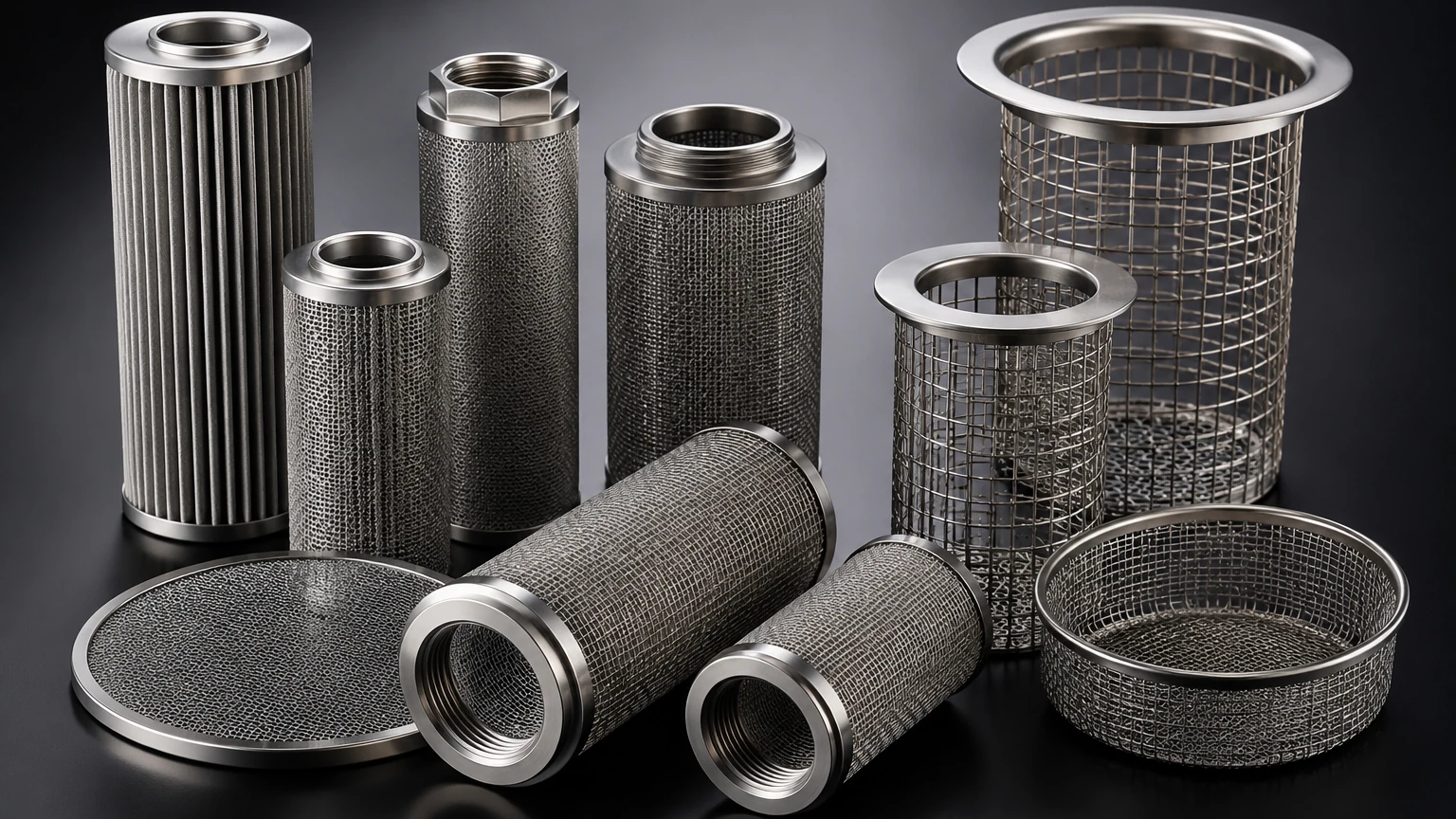
1. Wire Mesh Filters: These are ideal for removing large particulates and are often used as pre-filters. They offer high flow rates and low initial pressure drops. Because they are made of woven stainless steel, they can often be cleaned and reused, providing a lower total cost of ownership.
2. Sintered Metal Filters: For applications requiring high precision and fine micron ratings, sintered stainless steel provides a robust, porous structure. These elements can withstand extreme pressure differentials and are resistant to collapse, making them suitable for high-velocity gas streams.
3. Pleated Cartridges: By pleating the filter media, manufacturers increase the effective surface area. This design allows for higher dirt-holding capacity and longer service intervals without increasing the physical footprint of the filter housing.
Performance Metrics: Efficiency, Flow Rate, and Pressure Drop
Evaluating the performance of natural gas filters involves balancing three interconnected variables: filtration efficiency, flow rate, and pressure drop. Engineers must define the "Beta Ratio" or the micron rating required for their specific application.
Filtration Efficiency and Micron Rating
A filter's micron rating indicates the size of particles it can effectively trap. In natural gas applications, ratings typically range from 0.5 microns for sensitive instrumentation to 50 microns or more for bulk separation. It is important to distinguish between nominal and absolute ratings; an absolute rating guarantees that 99.9% of particles of a specific size will be captured, which is critical for protecting high-precision downstream components.
Flow Rate and Pressure Drop (ΔP)
As gas passes through the filter media, a natural resistance occurs, measured as a pressure drop. An oversized filter may have a low pressure drop but higher capital costs, while an undersized filter will cause significant energy loss and require frequent element replacements. The goal is to select a filter that maintains a low clean pressure drop (typically less than 2-3 psi) while providing sufficient surface area to accommodate the required flow velocity without inducing turbulence or media migration.
Addressing Contaminant Types: Solids, Liquids, and Aerosols
Natural gas contaminants are categorized based on their physical state, and each requires a specific filtration approach.
* Solid Particulates: These are handled through mechanical straining or depth filtration. Stainless steel wire mesh is highly effective for these contaminants, especially in high-temperature stages of gas processing.
* Liquid Slugs: Large volumes of liquid (water or oils) are usually managed by separator vessels or knock-out pots before the gas reaches the fine filtration stage.
* Aerosols and Mists: These sub-micron liquid droplets require coalescing filters. As the gas passes through the media, droplets collide and grow in size until gravity pulls them to the bottom of the filter housing. For comprehensive solutions and technical support regarding these components, engineers often Review product options and application support to ensure the selected hardware matches the specific chemical profile of the gas.
Maintenance Strategies and Differential Pressure Monitoring
The most effective way to manage a natural gas filtration system is through proactive monitoring. Differential pressure (DP) gauges are essential tools that measure the pressure difference between the inlet and outlet of the filter.
As the filter element traps contaminants, the DP will gradually increase. Operators should establish a "change-out" pressure—typically between 10 and 15 psi above the clean pressure drop. Waiting too long to replace or clean the filter can lead to "breakthrough," where the pressure forces contaminants through the media, or even structural failure of the filter element itself.
In many industrial settings, stainless steel filter cartridges are preferred because they can be ultrasonic cleaned or chemically backwashed, extending their lifespan compared to disposable synthetic filters. This durability is a key factor in reducing the long-term operational expenses of gas processing facilities.
Customization for Specialized Industrial Applications
Standard off-the-shelf filters often fall short in specialized industrial environments. Customization is frequently required to meet specific spatial constraints, connection types (such as NPT, BSP, or flanged), and extreme operating conditions.
OEM and Tailored Solutions
Manufacturers like Kaifil provide OEM services that allow for the development of bespoke filtration components. This includes:
* Custom Micron Ratings: Engineering the weave or sinter density to target specific particle sizes unique to a particular pipeline.
* High-Pressure Housings: Designing filter bodies that can withstand pressures exceeding 6000 psi for high-pressure injection or storage applications.
* Material Upgrades: Utilizing exotic alloys for highly corrosive environments where standard stainless steel may not suffice.
By working closely with a manufacturer during the design phase, engineers can ensure that the filtration system is perfectly integrated into the overall process flow, minimizing the need for adapters or complex piping modifications.
Total Cost of Ownership (TCO) Considerations
When purchasing natural gas filters, the initial purchase price is only one component of the total cost. Technical professionals must also consider:
1. Replacement Frequency: How long will the element last before it reaches its terminal pressure drop?
2. Cleaning vs. Disposal: Can the stainless steel media be cleaned, or must it be replaced and disposed of as hazardous waste (if contaminated with oils)?
3. Energy Impact: A filter with a consistently high pressure drop increases the workload on compressors, leading to higher electricity or fuel consumption.
4. Downstream Protection: The cost of a high-quality filter is negligible compared to the cost of repairing a damaged gas turbine or replacing a fouled catalyst bed.
Conclusion
Natural gas filters are indispensable components in the modern energy and industrial landscape. By selecting high-quality stainless steel filtration solutions, engineers can protect sensitive equipment, maintain process efficiency, and ensure safety across the entire distribution chain. Whether dealing with particulate matter in a transmission line or liquid aerosols in a chemical processing plant, the right filtration strategy involves a careful analysis of material science, fluid dynamics, and long-term maintenance requirements. For those seeking reliable, custom-engineered filtration components, visiting the Main Page of an experienced manufacturer provides access to the technical expertise necessary for optimizing industrial gas systems.
