


Scrubber Muffler
In industrial and commercial equipment design, managing noise levels while maintaining efficient airflow is a critical engineering challenge. The scrubber muffler serves as a dual-purpose component, designed to attenuate the acoustic output of vacuum motors or exhaust systems while providing a secondary layer of filtration. For engineers and procurement teams sourcing components for floor scrubbers, industrial gas scrubbers, or pneumatic systems, understanding the technical nuances of muffler design—specifically the role of stainless steel filtration media—is essential for ensuring equipment longevity and regulatory compliance.
As a specialized manufacturer of stainless steel filtration solutions, Kaifil provides the precision-engineered components necessary to build high-performance mufflers. By leveraging advanced wire mesh and sintered metal technologies, these components address the specific needs of demanding environments where plastic or foam alternatives fail due to chemical exposure, moisture, or mechanical stress.
Understanding the Function of a Scrubber Muffler in Industrial Systems
A scrubber muffler is more than a simple silencer. In the context of industrial floor maintenance equipment, it is positioned within the vacuum motor's exhaust path to dampen the high-frequency noise generated by high-speed impellers. In industrial gas scrubbing systems, the muffler (or silencer) is integrated into the discharge stack to reduce the noise of gas flow and fan operation.
The primary mechanism of a scrubber muffler involves the dissipation of sound energy through a porous medium. As air or gas passes through the muffler, the sound waves are forced through a complex, tortuous path created by the internal filtration media. This process converts acoustic energy into low-grade heat through friction and interference. When constructed using stainless steel wire mesh or sintered metal, the muffler also acts as a final safety filter, preventing any internal debris or carbon dust from the motor brushes from being exhausted into the environment.
The Engineering of Sound Attenuation: How Metal Mesh Functions
The effectiveness of a scrubber muffler is largely determined by the geometry and density of its internal core. Engineers must balance the need for noise reduction with the requirement for low backpressure. High backpressure can lead to motor overheating, reduced suction in floor scrubbers, or decreased efficiency in gas treatment systems.
Acoustic Dissipation via Porous Media
Stainless steel wire mesh is an ideal material for this application because its porosity can be precisely controlled during the manufacturing process. By layering different mesh counts—ranging from coarse support layers to fine acoustic layers—manufacturers can create a gradient that effectively traps sound waves across a broad frequency spectrum. Unlike foam, which can degrade and clog over time, stainless steel mesh maintains its structural integrity and open area, ensuring consistent performance throughout the equipment's service life.
Diffusion and Flow Control
In addition to absorbing sound, the scrubber muffler acts as a diffuser. In high-velocity exhaust systems, concentrated air streams can create turbulent noise and even disturb the surrounding environment. The internal mesh structure breaks the concentrated air stream into thousands of micro-streams, significantly reducing the exit velocity and the associated "rushing" sound. This diffusion is critical in applications where the equipment is used in noise-sensitive environments, such as hospitals, schools, or office complexes.
Material Selection: Why Stainless Steel is the Standard
While various materials can be used for sound dampening, stainless steel is the preferred choice for industrial-grade scrubber mufflers due to its unique physical properties. On the Kaifil Main Page, technical professionals can explore the range of materials available for custom filtration and muffler components.
Corrosion Resistance
Scrubber systems, by their nature, often involve moisture. Floor scrubbers use water and chemical detergents, while industrial gas scrubbers use liquid reagents to neutralize pollutants. This creates a high-humidity, often corrosive exhaust environment. Stainless steel (typically AISI 304 or 316L) provides the necessary resistance to oxidation and chemical attack, preventing the muffler from rusting or disintegrating, which would otherwise lead to system failure.
Thermal Stability
Industrial exhaust gases can reach elevated temperatures that would melt or deform plastic mufflers. Stainless steel maintains its mechanical strength and filtration characteristics at temperatures far exceeding those found in standard scrubbing operations. This thermal stability ensures that the muffler does not become a point of failure during continuous, heavy-duty use.
Mechanical Durability
In mobile equipment like floor scrubbers, components are subject to vibration and physical impact. A scrubber muffler constructed with a stainless steel housing and internal mesh reinforcement can withstand these stresses without cracking or losing its internal alignment. This durability translates to a lower total cost of ownership (TCO) for the end-user, as the frequency of replacement is significantly reduced compared to disposable plastic or foam units.
Critical Performance Parameters for Engineers
When specifying a scrubber muffler for an OEM project or a maintenance overhaul, several technical parameters must be evaluated to ensure the component meets the application's requirements.
1. Noise Reduction Rating (dB): The primary metric is the decibel reduction achieved at specific frequency ranges. Engineers should request data on how the muffler performs at the motor's peak operating frequency.
2. Pressure Drop (ΔP): This is the difference in pressure between the inlet and outlet of the muffler. A well-designed muffler should minimize ΔP to preserve the efficiency of the vacuum or fan system. For stainless steel mesh mufflers, this is controlled by the wire diameter and the weave density.
3. Micron Rating: If the muffler is also serving as a particulate filter, the micron rating of the mesh must be specified. This is particularly important in cleanroom-compatible scrubbers where exhaust air must meet strict particulate standards.
4. Connection Interface: Mufflers must be integrated seamlessly into the existing piping or motor housing. Common options include NPT threads, flange mounts, or simple slip-on friction fits with hose clamps.
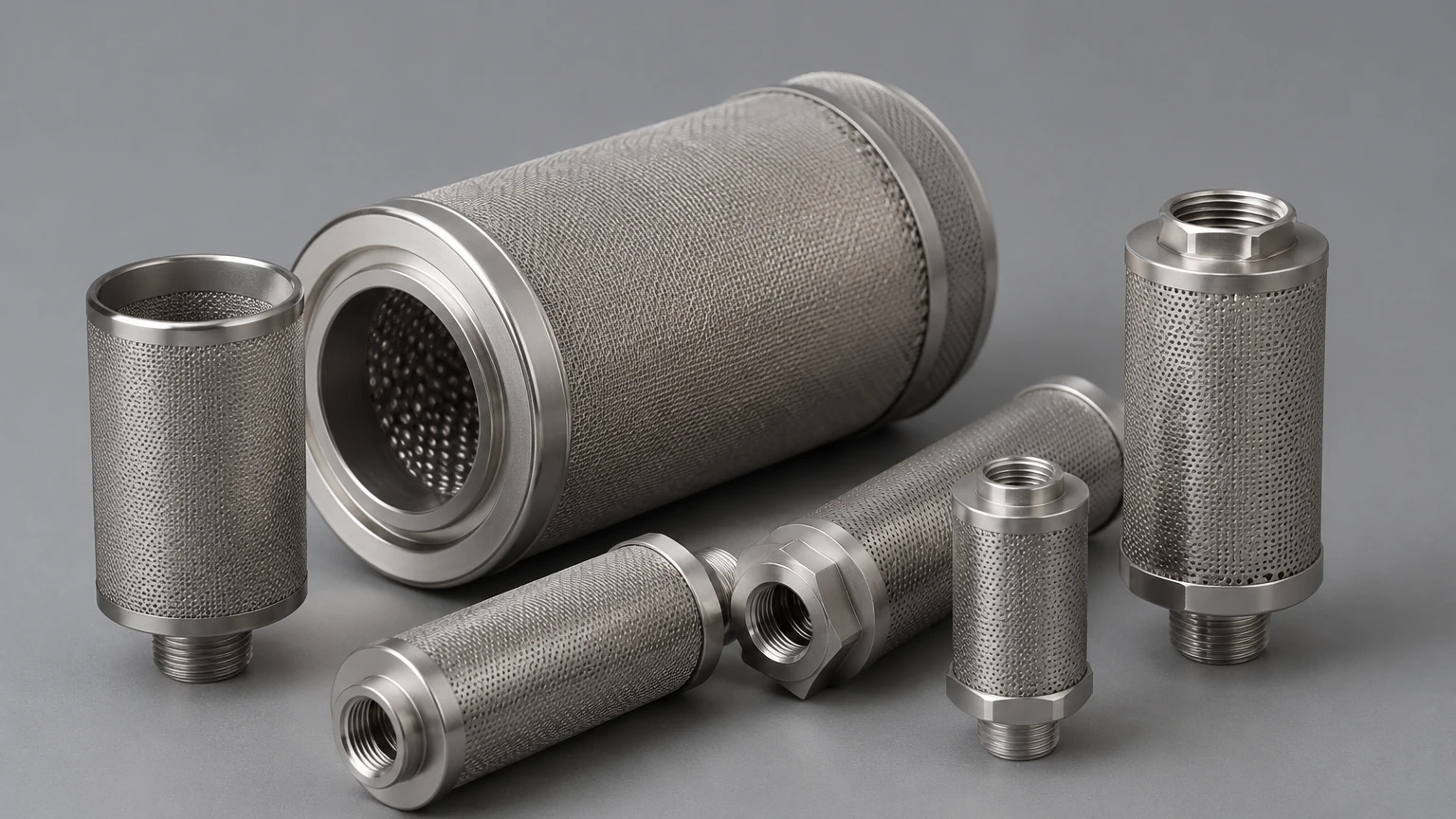
Customization and OEM Integration for Specialized Equipment
No two industrial applications are identical, and off-the-shelf mufflers often fail to meet specific spatial or performance constraints. Customization is a core strength of Kaifil’s manufacturing process. For equipment manufacturers (OEMs), the ability to customize the scrubber muffler allows for optimized machine design.
Tailored Geometry
Space is often at a premium inside a compact floor scrubber. Custom mufflers can be designed in cylindrical, rectangular, or even irregular shapes to fit within the available envelope without sacrificing acoustic performance. By adjusting the length and diameter of the muffler body, engineers can tune the resonance chamber to target specific annoying frequencies.
Layered Mesh Configurations
Depending on whether the goal is maximum noise suppression or maximum airflow, the internal mesh can be customized. Sintered multi-layer mesh provides a rigid, high-strength core that can withstand high-pressure pulses, while pleated wire mesh increases the surface area for filtration and sound absorption in a smaller footprint.
Material Grades
For highly aggressive chemical environments, such as those found in semiconductor or specialty chemical gas scrubbing, upgraded materials like 316L stainless steel or even high-nickel alloys can be utilized. This ensures that the muffler remains functional even when exposed to acidic or alkaline vapors.
Maintenance and Life Cycle Management of Filtration Mufflers
To maintain the efficiency of a scrubber muffler, a regular maintenance schedule is required. Unlike disposable filters, stainless steel mufflers offer the advantage of being cleanable and reusable, which aligns with sustainability goals and reduces long-term operational costs.
Cleaning Procedures
In applications where the muffler traps significant particulate matter, the mesh can eventually become blinded, leading to increased backpressure. Stainless steel mufflers can often be cleaned using ultrasonic baths, high-pressure air, or compatible chemical solvents. This restores the original airflow characteristics without the need for a full component replacement.
Inspection for Clogging
Engineers should design systems with pressure sensors or scheduled inspection intervals to check for muffler clogging. A sudden increase in motor temperature or a decrease in vacuum performance is often an indicator that the muffler requires cleaning. Because stainless steel is robust, these inspections can be performed repeatedly without damaging the internal structure.
Replacement Cycles
While highly durable, a scrubber muffler may eventually require replacement if the mesh becomes permanently fouled or if the housing suffers mechanical damage. Choosing a manufacturer that provides consistent OEM-quality replacements ensures that the equipment continues to operate within its original noise and safety specifications.
Conclusion: Selecting the Right Partner for Filtration Solutions
The selection of a scrubber muffler is a critical decision that impacts the noise profile, efficiency, and durability of industrial equipment. By moving away from generic components and toward engineered stainless steel solutions, companies can ensure their machinery meets modern standards for workplace safety and environmental protection.
Kaifil specializes in the design and production of these precision components, offering the technical expertise required to solve complex filtration and noise attenuation challenges. Whether you are developing a new line of commercial cleaning equipment or upgrading an industrial gas treatment system, focusing on high-quality material selection and precise engineering will lead to superior performance. For more information on custom filtration components and engineering support, visit the Kaifil Main Page to review product options and application support.
