


Oil and Gas Filtration
In the demanding environment of the energy sector, oil and gas filtration serves as a critical safeguard for both process efficiency and equipment longevity. From the initial extraction at the wellhead to the final stages of refining and distribution, the presence of contaminants—ranging from sand and scale to chemical precipitates and waxes—poses a constant threat to operational integrity. For engineers and procurement specialists, selecting the appropriate filtration technology is not merely a matter of maintenance but a fundamental engineering decision that impacts the total cost of ownership and the safety of the facility.
Industrial filtration in this sector requires components that can withstand extreme pressures, corrosive fluids, and high thermal loads. Stainless steel filtration solutions, particularly those involving precision wire mesh and sintered metal components, have become the industry standard due to their mechanical robustness and chemical compatibility. This guide examines the technical requirements, material considerations, and selection criteria essential for optimizing filtration performance in oil and gas applications.
The Role of Filtration Across the Value Chain
Oil and gas filtration requirements vary significantly depending on where the process sits within the value chain. Each stage presents unique challenges regarding particle size distribution, fluid viscosity, and environmental conditions.
Upstream Operations
In upstream extraction, filtration is primarily concerned with protecting downhole equipment and managing produced water. Sand control is a major focus; if solids from the formation enter the production stream, they can cause rapid erosion of valves, chokes, and pumps. High-strength stainless steel screens and mesh filters are deployed to intercept these solids while maintaining high flow rates. Additionally, produced water must be filtered to remove oil droplets and suspended solids before reinjection or disposal to meet environmental regulations and prevent reservoir plugging.
Midstream Processing and Transport
Midstream operations involve the stabilization, storage, and transportation of hydrocarbons. In natural gas pipelines, filtration is necessary to protect compressors from liquid aerosols and fine particulates. Solid contaminants in pipelines often consist of "black powder"—a mixture of iron sulfides and oxides created by internal corrosion. Efficient oil and gas filtration at compressor stations prevents catastrophic mechanical failure and ensures the gas meets pipeline quality specifications. Furthermore, amine and glycol loops used for gas sweetening and dehydration require continuous filtration to remove degradation products and solids that cause foaming and reduced heat exchanger efficiency.
Downstream Refining and Petrochemicals
Downstream facilities represent the most complex filtration environments. Refineries utilize various catalysts that are sensitive to particulate contamination. Filtration systems protect hydrotreaters, fluid catalytic cracking (FCC) units, and reformers by removing scale, coke fines, and other impurities from feedstock. In these applications, filters must often operate at temperatures exceeding 300°C and resist aggressive chemical attack from sulfur compounds and acidic components.
Technical Engineering Considerations for Filter Selection
When specifying filtration components for oil and gas applications, engineers must look beyond simple micron ratings. The structural integrity and performance of a filter are dictated by several interrelated factors.
Material Selection and Corrosion Resistance
The choice of alloy is the first line of defense against premature filter failure. While standard 304 stainless steel is suitable for some low-corrosion environments, 316L stainless steel is the preferred choice for most oil and gas applications due to its superior resistance to pitting and crevice corrosion, particularly in the presence of chlorides. In environments involving sour gas (H2S), specialized alloys or high-nickel stainless steels may be required to prevent stress corrosion cracking. The durability of stainless steel allows for repeated cleaning cycles, which is a significant advantage over disposable synthetic media in high-volume industrial processes.
Pressure Drop and Flow Dynamics
The differential pressure (Delta P) across a filter element is a critical metric. A high initial pressure drop limits the available throughput and increases energy consumption. Engineers must calculate the clean pressure drop based on fluid viscosity, flow velocity, and the open area of the filter media. As contaminants accumulate, the pressure drop increases; therefore, the filter must be designed to withstand the maximum expected differential pressure without collapsing or bypassing. Pleated stainless steel filter cartridges are often utilized to increase the effective filtration area within a compact footprint, effectively lowering the flux (flow per unit area) and extending the time between cleaning or replacement.
Filtration Accuracy: Absolute vs. Nominal
In oil and gas filtration, the distinction between nominal and absolute ratings is vital. A nominal rating refers to a filter's ability to retain a percentage of particles of a certain size, whereas an absolute rating indicates the diameter of the largest spherical particle that can pass through the media under specific test conditions. For protecting high-precision components like gas turbine nozzles or hydraulic actuators, absolute-rated wire mesh filters are essential to ensure no damaging particles bypass the system.
Types of Metal Filtration Components
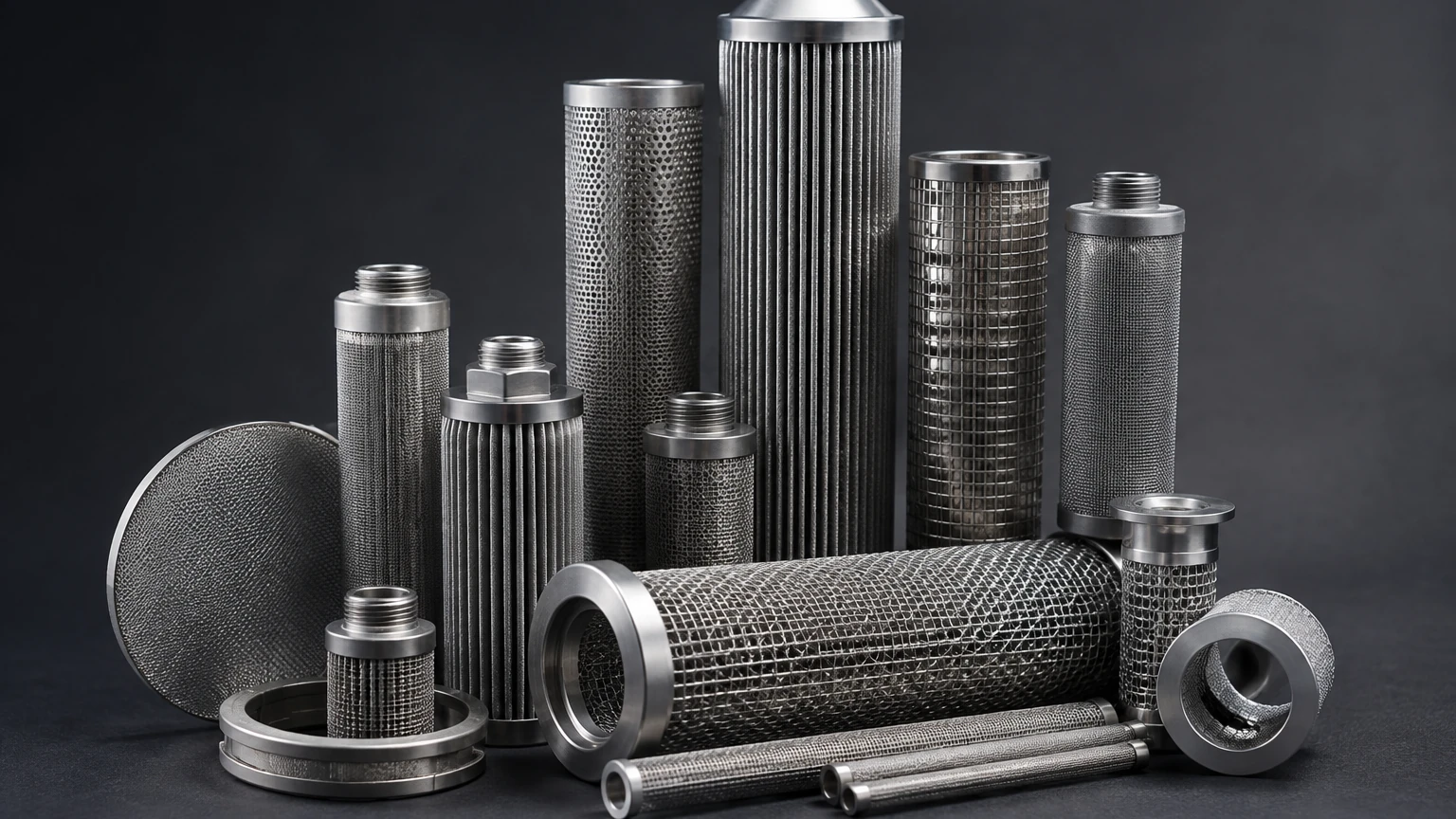
Stainless steel is the material of choice for manufacturing various filter structures tailored to specific oil and gas needs. Understanding the differences between these structures helps in selecting the right tool for the job.
* Sintered Wire Mesh: This media consists of multiple layers of stainless steel wire cloth bonded together through a heat-treatment process (sintering). This creates a porous material with excellent mechanical strength and a precise pore size. Sintered mesh is ideal for high-pressure applications where the filter must maintain its shape under intense stress.
* Pleated Filter Cartridges: By pleating the wire mesh, manufacturers can significantly increase the surface area of the filter. This design is particularly effective for removing fine solids from liquid streams where high dirt-holding capacity is required to minimize downtime.
* Wedge Wire Screens: Constructed from V-shaped wires, these screens are highly resistant to clogging and are frequently used in upstream sand control and large-scale water intake systems. Their robust construction makes them suitable for heavy-duty solids separation.
* Sintered Metal Fiber: For ultra-fine filtration, sintered metal fibers provide high porosity and excellent depth filtration characteristics, making them suitable for removing sub-micron contaminants in specialized gas processing applications.
Common Risks in Industrial Filtration Systems
Failure to properly specify or maintain filtration systems in the oil and gas industry can lead to significant operational risks:
1. Media Migration: In low-quality filters, the filter media itself can break down and enter the downstream flow. Using high-quality, welded stainless steel components eliminates the risk of fiber shedding or media migration.
2. Bypass Leakage: If seals or gaskets fail due to chemical incompatibility or thermal expansion, contaminated fluid will bypass the filter element entirely. Selecting the correct sealing materials (such as Viton, PTFE, or metal O-rings) is as important as the filter media itself.
3. Structural Collapse: In high-viscosity applications or during sudden flow surges, the pressure differential can exceed the structural limits of the filter. Engineering the support core and outer cage of a filter cartridge is essential for maintaining integrity under these conditions.
4. Chemical Incompatibility: Certain process chemicals or additives can react with the filter material. A thorough review of the fluid chemistry, including trace elements, is necessary during the design phase.
Maintenance and Total Cost Considerations
While the initial purchase price of stainless steel filtration components may be higher than disposable alternatives, the total cost of ownership (TCO) is often much lower. Stainless steel filters are cleanable and reusable. Common cleaning methods include:
* Backwashing: Reversing the flow through the filter to dislodge accumulated solids. This can often be automated for continuous operation.
* Ultrasonic Cleaning: Using high-frequency sound waves in a cleaning solvent to remove fine particulates from deep within the mesh pores.
* Chemical Cleaning: Using specialized surfactants or acids to dissolve organic deposits or scales.
By extending the service life of the filter elements, facilities reduce waste, lower replacement costs, and minimize the labor required for frequent filter changes. Furthermore, the reliability of metal filters reduces the risk of unplanned shutdowns, which can cost operators millions of dollars in lost production.
Confirming Specifications Before Procurement
Before moving forward with a filtration project, engineers should confirm several key parameters to ensure the solution is fit for purpose. This technical due diligence prevents costly errors and ensures the system meets performance expectations.
* Particle Size Distribution (PSD): What is the size and concentration of the contaminants that need to be removed?
* Fluid Properties: What is the viscosity, density, and chemical composition of the fluid at operating temperature?
* Operating Conditions: What are the normal and maximum operating pressures and temperatures?
* Flow Requirements: What is the required flow rate, and what is the maximum allowable pressure drop?
* Housing Compatibility: Does the filter element need to fit into an existing housing, or is a custom design required?
For those seeking specialized support in developing these systems, you can Review product options and application support to find tailored solutions that meet specific industrial requirements. Customization often involves adjusting the weave pattern of the wire mesh, selecting specific alloys for corrosion resistance, or engineering unique structural reinforcements for high-pressure environments.
Conclusion
Oil and gas filtration is a sophisticated discipline that requires a deep understanding of fluid dynamics, material science, and mechanical engineering. By utilizing high-quality stainless steel filtration solutions, operators can protect their critical infrastructure, ensure the purity of their products, and maintain a competitive edge in a demanding global market. Whether it is a standard wire mesh filter or a complex, custom-engineered filter cartridge, the focus must remain on precision, durability, and reliable performance under pressure. As the industry evolves toward more challenging extraction environments and stricter environmental standards, the role of advanced filtration will only continue to grow in importance.
