


Oil and Oil Filter Guide
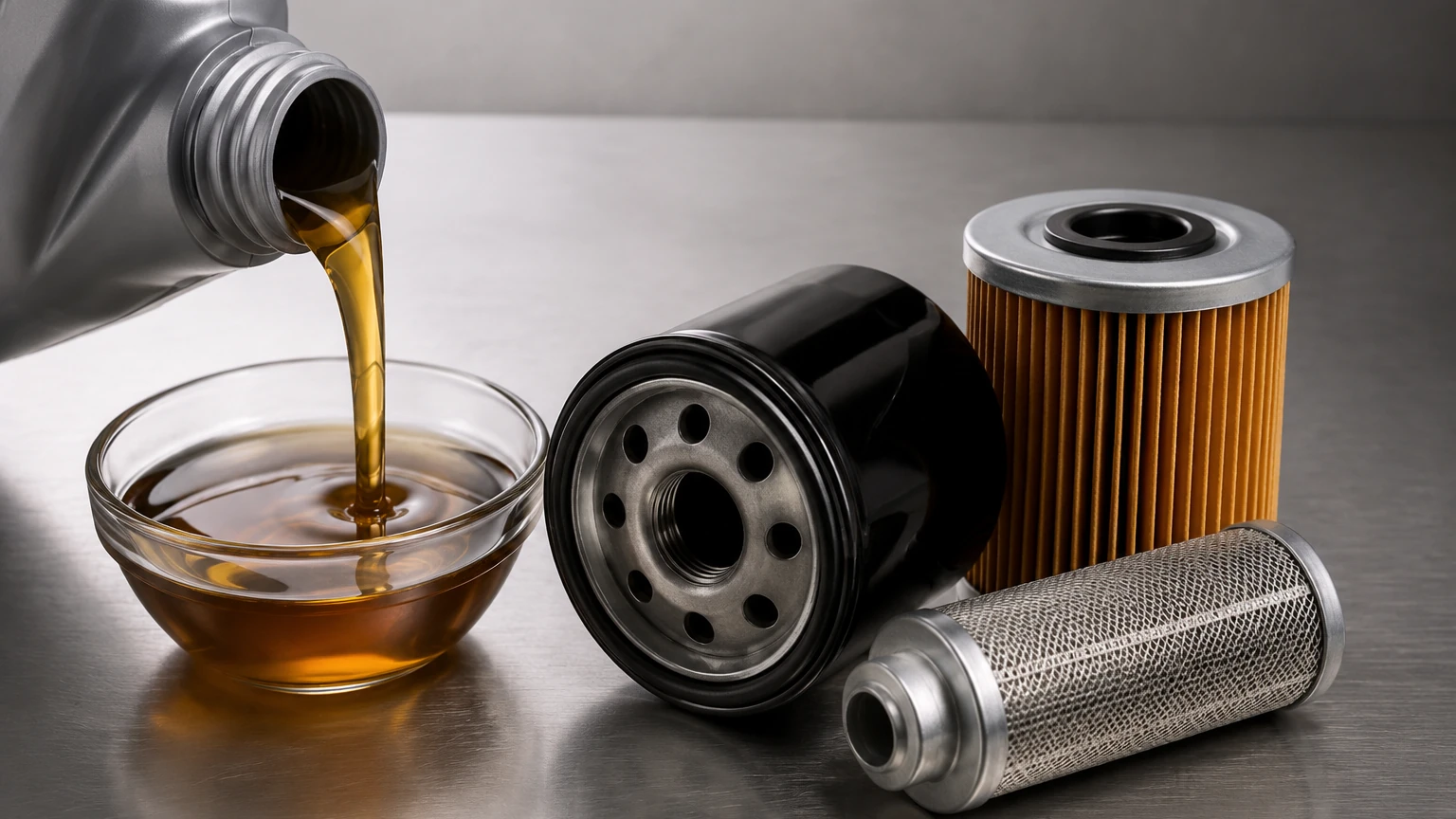
In industrial environments, the integrity of lubricating and hydraulic oils is paramount to the longevity and efficiency of machinery. Whether in chemical processing, hydraulic power systems, or food production, oil serves as the lifeblood of mechanical operations, providing lubrication, heat transfer, and power transmission. However, the presence of contaminants—ranging from microscopic metal shavings to environmental dust—can lead to catastrophic component failure if not managed correctly. This technical oil and oil filter guide explores the engineering principles, material selections, and performance criteria essential for selecting high-performance filtration solutions.
The Role of Filtration in Industrial Oil Systems
Industrial oils are subject to constant contamination from both internal and external sources. Internal contaminants often include wear debris from gears and bearings, as well as chemical byproducts of oil oxidation, such as varnish and sludge. External contaminants enter the system through seals, breathers, or during fluid top-offs. Without an effective filtration strategy, these particles circulate through the system, acting as abrasive agents that accelerate wear and reduce the service life of pumps, valves, and actuators.
An effective oil filter must do more than simply "trap dirt." It must maintain a balance between filtration efficiency (the ability to remove particles of a specific size) and flow permeability (the ability to allow fluid to pass with minimal resistance). In high-pressure hydraulic systems or high-viscosity lubricating circuits, selecting the wrong filter can lead to excessive pressure drops, causing cavitation in pumps or triggering bypass valves that allow unfiltered oil to circulate.
Key Components of an Effective Oil and Oil Filter Guide
When engineers evaluate filtration systems, they must consider the specific requirements of the fluid and the operating environment. A comprehensive oil and oil filter guide should prioritize the following technical parameters:
1. Fluid Compatibility
The chemical composition of the oil—whether mineral-based, synthetic, or water-glycol—dictates the materials used in the filter construction. While standard cellulose filters may suffice for basic mineral oils, aggressive synthetic fluids or high-temperature applications often require stainless steel wire mesh or sintered metal media to prevent chemical degradation of the filter element.
2. Contaminant Loading Capacity
This refers to the amount of particulate matter a filter can hold before the pressure drop reaches a critical level. In industrial settings where downtime is costly, filters with high dirt-holding capacity are preferred to extend the intervals between maintenance cycles.
3. Structural Integrity
Industrial filters must withstand mechanical stresses, including pressure surges (water hammer), vibrations, and thermal cycling. Stainless steel filter cartridges are particularly valued in these scenarios because they maintain their pore structure and mechanical strength under conditions that would cause disposable media to collapse or tear.
For technical professionals looking to optimize their systems, reviewing the Main Page of a specialized manufacturer can provide insights into the various configurations available for demanding industrial applications.
Material Science: Why Stainless Steel for Industrial Oil Filtration?
While disposable paper or fiberglass filters are common in light-duty applications, heavy industrial processes frequently turn to stainless steel wire mesh and precision metal components. The choice of material is driven by several engineering advantages:
* Thermal Stability: Stainless steel (typically 304, 316, or 316L grades) can operate at temperatures exceeding 500°F (260°C), far beyond the limits of polymer-based media.
* Corrosion Resistance: In chemical processing or offshore environments, the ability of stainless steel to resist oxidation and chemical attack is critical for maintaining the purity of the oil.
* Cleanability and Reusability: One of the most significant advantages of metal mesh filters is that they are cleanable. Through ultrasonic cleaning, backwashing, or chemical baths, these filters can be restored to near-original performance, significantly reducing the total cost of ownership compared to frequent replacement of disposable elements.
* Precision Filtration: Advanced weaving techniques allow for the creation of wire mesh with highly uniform pore sizes, ensuring consistent filtration performance across the entire surface area of the filter.
Evaluating Filtration Performance: Micron Ratings and Beta Ratios
Understanding how a filter is rated is essential for accurate selection. In the context of an oil and oil filter guide, two primary metrics are used: micron ratings and Beta ratios.
Micron Ratings: Nominal vs. Absolute
* Nominal Rating: This is an indicative value representing the filter's ability to retain a majority of particles of a certain size (e.g., 95% of 10-micron particles). It is not a guarantee of total removal.
* Absolute Rating: This represents the diameter of the largest hard spherical particle that will pass through the filter under specified test conditions. For critical applications, such as protecting precision servo valves, an absolute-rated filter is mandatory.
The Beta Ratio ($β$)
The Beta ratio is a more precise measure of filtration efficiency derived from multi-pass testing. It is calculated by dividing the number of particles of a certain size upstream of the filter by the number of particles of the same size downstream. For example, a $β_{10} = 200$ means that for every 200 particles of 10 microns entering the filter, only one passes through. This equates to an efficiency of 99.5%.
Engineers should always confirm whether a filter's rating is nominal or absolute before integration, as this choice directly impacts the ISO 4406 cleanliness code of the operating fluid.
Operational Factors: Pressure Drop and Flow Rates
A common mistake in filter selection is choosing a micron rating that is too fine for the system's flow requirements. Every filter imposes a restriction on the fluid flow, known as pressure drop ($ΔP$). This resistance is influenced by:
1. Fluid Viscosity: Thicker oils (higher ISO VG) create higher pressure drops, especially during cold starts.
2. Flow Velocity: Higher flow rates increase the turbulence and resistance across the filter media.
3. Filter Surface Area: Increasing the surface area, often through pleating the wire mesh, reduces the flux (flow per unit area) and lowers the initial pressure drop.
If the $ΔP$ is too high, the system may enter a bypass mode, or the filter element may suffer structural failure. Designing for a low "clean" pressure drop ensures that there is sufficient "room" for the pressure to rise as the filter accumulates contaminants during its service life.
Maintenance Strategies: Cleaning vs. Replacement
A strategic oil and oil filter guide must address the economic and operational impact of maintenance. In many industrial sectors, the trend is shifting from disposable "spin-on" filters to permanent stainless steel housings with cleanable elements.
Determining the Replacement Cycle
Maintenance should be driven by data rather than arbitrary schedules. Differential pressure indicators (gauges or electronic sensors) provide real-time feedback on the filter's condition. When the pressure drop reaches a predetermined limit, the filter should be serviced. Additionally, regular oil analysis can detect if a filter is failing to remove specific types of wear debris, indicating a need for a change in filter media or micron rating.
The Cleaning Process for Metal Filters
For stainless steel wire mesh filters, the cleaning process typically involves:
* Pre-cleaning: Removing bulk oil and loose debris.
* Ultrasonic Cleaning: Using high-frequency sound waves in a cleaning solution to dislodge particles trapped deep within the mesh pores.
* Drying and Inspection: Ensuring the element is free of moisture and inspecting the mesh for any signs of mechanical damage or wire displacement.
Customization for Specialized Industrial Applications
No two industrial systems are identical, and off-the-shelf filters often fall short of specific engineering requirements. Customization allows engineers to specify the exact dimensions, end-cap configurations, and reinforcement layers needed for their equipment.
For instance, in high-pressure hydraulic applications, a filter might require a perforated inner core for crush resistance and an outer support mesh to prevent pleat bunching. In the food and beverage industry, the filter must be designed with "sanitary" features, such as smooth welds and 316L stainless steel, to prevent bacterial growth and ensure compliance with safety standards.
Customized filtration solutions also allow for the integration of specialized gaskets and seals, such as Viton or EPDM, to ensure compatibility with high-temperature or chemically aggressive oils. By working with a manufacturer that offers OEM capabilities, engineering teams can develop filtration components that are perfectly matched to their system's duty cycle and environmental conditions.
Conclusion: The Strategic Value of Quality Filtration
Investing in a robust oil filtration system is an investment in the reliability of the entire industrial process. By following a technical oil and oil filter guide and prioritizing high-quality materials like stainless steel, organizations can reduce unexpected downtime, lower maintenance costs, and extend the life of expensive machinery.
Whether you are managing a hydraulic system in a manufacturing plant or a complex lubrication circuit in a chemical refinery, the principles of material compatibility, filtration efficiency, and structural integrity remain the same. For those ready to explore specific product options or requiring application-specific engineering support, the Main Page serves as a gateway to professional filtration expertise and customized metal filter solutions. Selecting the right filter is not just about maintenance—it is about optimizing the performance and sustainability of industrial operations.
