


Oil Filtration
In industrial environments, oil is more than just a lubricant; it is a critical component of power transmission, heat transfer, and surface protection. Effective oil filtration is the primary defense mechanism against system degradation, component failure, and unplanned downtime. For engineers and maintenance professionals, understanding the technical nuances of filtration media, fluid dynamics, and contaminant profiles is essential for optimizing system longevity and performance.
Industrial oil filtration systems are tasked with removing a diverse range of contaminants, including solid particulates, water, and chemical byproducts like varnish. As machinery tolerances become tighter, the demand for high-precision filtration solutions has increased. This guide explores the engineering principles of oil filtration, material selection criteria, and the strategic considerations necessary for implementing robust filtration protocols.
Understanding the Role of Filtration in Industrial Oil Systems
The primary objective of oil filtration is to maintain the fluid’s cleanliness level within the limits specified by equipment manufacturers, often defined by ISO 4406 standards. When oil circulates through a system, it picks up wear debris, environmental dust, and moisture. Without an effective filtration barrier, these contaminants act as catalysts for further wear, leading to a phenomenon known as the "wear chain reaction."
Particulate contamination is typically classified by size, measured in microns (µm). While large particles can cause catastrophic failure by jamming moving parts, it is often the silt-sized particles (1–5 µm) that cause the most significant long-term damage through abrasive wear. High-quality oil filtration systems utilize precision-engineered media to intercept these particles before they reach sensitive components like servo valves, bearings, and high-pressure pumps.
Beyond simple particle removal, modern filtration must also account for the chemical stability of the oil. Oxidation and thermal breakdown can lead to the formation of sludge and varnish. While mechanical filters are primarily designed for particulate capture, the choice of filter housing and flow dynamics can influence how these chemical byproducts are managed within the system.
Key Engineering Metrics for Oil Filter Selection
Selecting the appropriate filter for an industrial application requires an analysis of several technical parameters. Relying solely on a nominal micron rating is often insufficient for critical systems. Engineers must evaluate filters based on efficiency, capacity, and structural integrity.
Efficiency and the Beta Ratio
The Beta Ratio (β) is the standard industry metric for expressing a filter’s capture efficiency at a specific particle size. It is calculated by comparing the number of particles upstream of the filter to the number of particles downstream. For example, a β10 = 200 rating means that for every 200 particles of 10 microns entering the filter, only one passes through. This represents an efficiency of 99.5%.
Dirt Holding Capacity (DHC)
DHC refers to the total amount of contaminant a filter can retain before the pressure drop across the media reaches a terminal level. A higher DHC generally translates to longer service intervals. In oil filtration, DHC is influenced by the surface area of the media and the depth of the filtration layer. Stainless steel wire mesh filters offer excellent surface filtration, while sintered metal fiber felts provide depth filtration characteristics with significantly higher DHC.
Pressure Drop (ΔP)
Every filter introduces a degree of resistance to flow, resulting in a pressure drop. This ΔP is influenced by the oil's viscosity, the flow rate, and the pore size of the media. In hydraulic and lubrication systems, it is vital to ensure that the clean pressure drop does not trigger bypass valves prematurely, especially during cold starts when oil viscosity is highest. Engineers must balance filtration fineness with the allowable pressure drop to maintain system efficiency.
Material Science: Why Stainless Steel is Preferred for Critical Oil Filtration
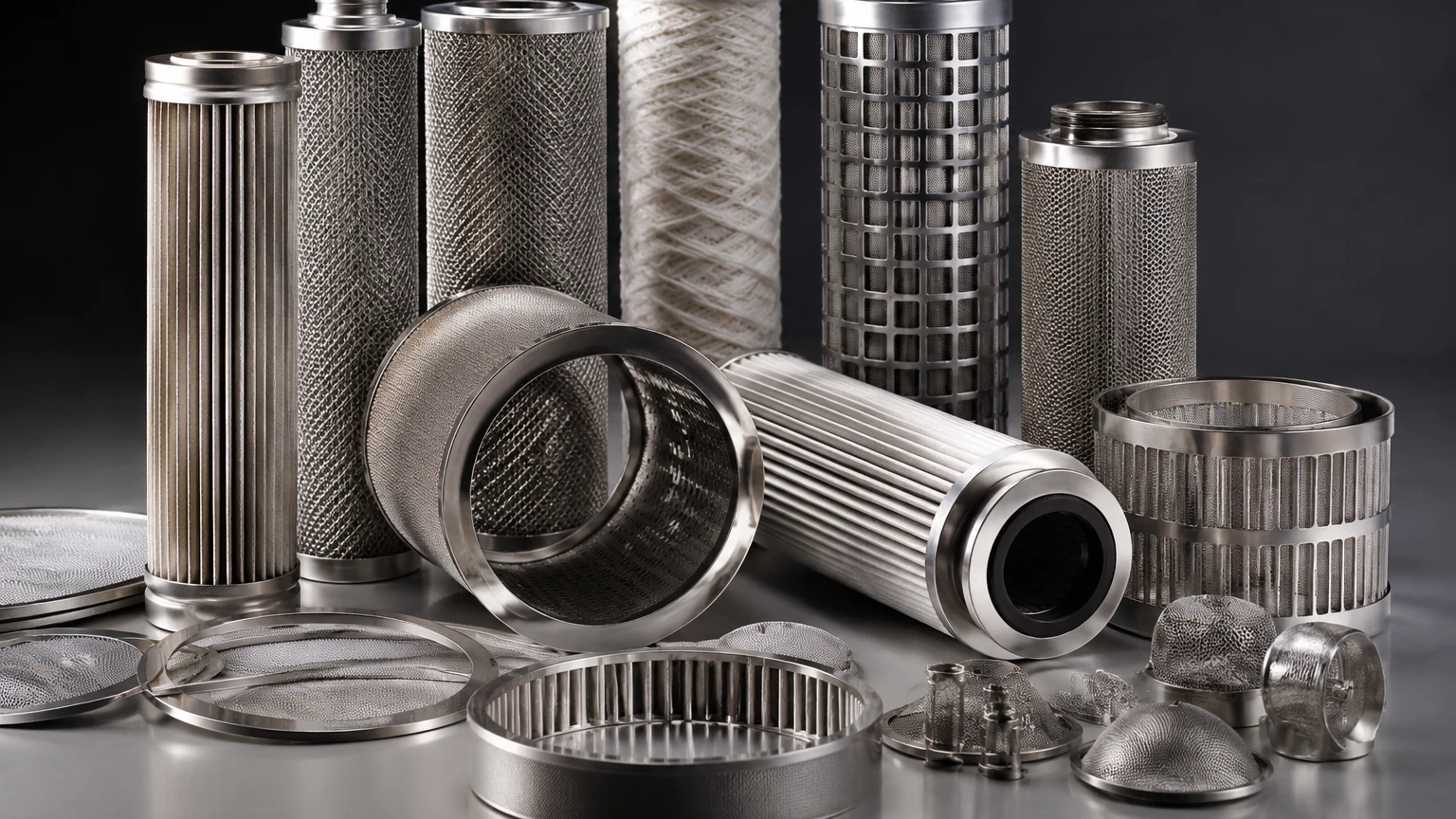
While cellulose and synthetic glass fibers are common in many applications, stainless steel remains the material of choice for demanding industrial oil filtration. The use of 304, 316, or 316L stainless steel provides several engineering advantages that organic media cannot match.
1. Thermal Stability: Industrial processes often involve high-temperature oils. Stainless steel filters maintain their structural integrity and filtration accuracy at temperatures that would cause synthetic fibers to soften or degrade.
2. Chemical Compatibility: Certain industrial oils, particularly fire-resistant fluids and those with aggressive additive packages, can be chemically incompatible with standard adhesives and media. Stainless steel is inert to most hydraulic fluids and lubricants.
3. Mechanical Strength: In high-pressure systems or applications subject to pressure surges (such as hydraulic return lines), the mechanical strength of the filter media is paramount. Sintered stainless steel mesh can withstand high differential pressures without media migration or pore distortion.
4. Cleanability and Reusability: Unlike disposable cartridges, stainless steel wire mesh filters can often be cleaned using ultrasonic baths or back-flushing techniques. This makes them a cost-effective solution for processes where high levels of contamination are expected, reducing the total cost of ownership over the equipment's lifecycle.
For more information on customized stainless steel filtration components, you can visit the Main Page to review technical specifications and material options.
Addressing Specific Contaminants: Particulates, Water, and Varnish
Effective oil filtration strategies must address the specific types of contamination present in the application. A "one size fits all" approach often leads to premature component wear or excessive maintenance costs.
Particulate Contamination
This is the most common form of contamination. Hard particles (silica, metals) cause abrasive and erosive wear. Soft particles (elastomers from seals) can clog small orifices. The filtration system must be sized to handle the expected ingression rate from both internal wear and external environment (breathers and seals).
Water Contamination
Water can exist in oil in three states: dissolved, emulsified, and free. Water reduces the lubricating film thickness, promotes rust, and accelerates oil oxidation. While standard particulate filters do not remove water, specialized coalescing filters or vacuum dehydration units are often integrated into the oil filtration circuit to manage moisture levels.
Varnish and Sludge
Varnish is a thin, insoluble film that deposits on internal surfaces, particularly in turbine and high-cycle hydraulic systems. It is caused by the degradation of the oil base stock. Because varnish particles are often sub-micron in size, they can pass through standard filters. Controlling varnish requires a combination of high-efficiency filtration and maintaining the oil within its thermal and oxidative limits.
Design Considerations for Custom Oil Filtration Solutions
When standard off-the-shelf filters do not meet the specific requirements of an application, custom-engineered solutions become necessary. This is common in OEM equipment manufacturing where space constraints, unique flow paths, or extreme operating conditions are present.
Housing and Flow Path
The design of the filter housing is as important as the media itself. Smooth internal transitions reduce turbulence and prevent localized high-velocity zones that could erode the filter media. For high-flow systems, duplex filter arrangements allow for filter element replacement without shutting down the system, ensuring continuous oil filtration.
Pleating and Surface Area
To increase the effective filtration area within a compact footprint, stainless steel mesh is often pleated. The geometry of the pleats must be carefully engineered to prevent "pleat bunching" under high flow, which would reduce the effective area and increase pressure drop. Support layers, such as coarser mesh or perforated metal cores, are used to provide structural rigidity.
Micron Rating and Mesh Weave
The choice of weave—such as plain weave, twilled weave, or Dutch weave—determines the pore structure and filtration characteristics. For instance, Dutch weave provides a tortuous path that enhances particle capture efficiency for fine oil filtration applications, while plain weave is often used for coarser straining tasks.
Optimizing Performance and Total Cost of Ownership (TCO)
For purchasing teams and plant managers, the focus on oil filtration is often driven by the Total Cost of Ownership rather than the initial purchase price. A low-cost filter that requires frequent replacement or fails to protect downstream components is significantly more expensive in the long run.
Monitoring and Predictive Maintenance
Implementing differential pressure indicators is the first step in optimizing filter life. Modern systems often incorporate electronic sensors that provide real-time data to a central control system. By tracking the rate of pressure increase, maintenance teams can move from reactive to predictive maintenance, replacing filters only when necessary but before bypass occurs.
Oil Analysis as a Diagnostic Tool
Regular oil analysis is the "blood test" of industrial machinery. By monitoring the particle count (ISO 4406), water content, and additive levels, engineers can verify the effectiveness of their oil filtration system. If particle counts remain high despite frequent filter changes, it may indicate that the filter's micron rating is too coarse or that there is a significant external ingression point that needs to be addressed.
Quality Manufacturing and OEM Standards
For OEMs, integrating high-quality filtration components is a matter of brand reputation. Using filters that meet or exceed the technical requirements of the system ensures that the end-user experiences the reliability promised by the equipment manufacturer. Customization allows for the integration of unique fittings, branding, and performance characteristics that align with the specific needs of the machinery.
Conclusion: Selecting the Right Filtration Partner
Oil filtration is a complex discipline that sits at the intersection of fluid mechanics, material science, and mechanical engineering. Whether the goal is to protect a high-pressure hydraulic system, extend the life of a gearbox lubricant, or ensure the purity of processing oil, the choice of filtration technology is paramount.
Stainless steel filtration solutions offer the durability, precision, and chemical resistance required for the most demanding industrial applications. By focusing on technical metrics like the Beta ratio, pressure drop, and material compatibility, engineers can design systems that provide superior protection and operational efficiency. Collaborating with a manufacturer that understands these engineering boundaries is essential for developing customized solutions that meet specific performance targets.
For engineers seeking to optimize their filtration processes, reviewing the available configurations and technical capabilities on the Main Page provides a foundation for making informed selection decisions. Proper oil filtration is not merely a maintenance task; it is a strategic investment in the reliability and productivity of industrial assets.
