


Oil Purification Equipment
In industrial environments, the longevity and reliability of rotating machinery, hydraulic systems, and power generation equipment depend heavily on the cleanliness of the lubricating and functional oils. Oil purification equipment serves as the primary defense against internal and external contaminants that can lead to catastrophic component failure, unplanned downtime, and significant financial losses. For engineers and maintenance professionals, understanding the technical nuances of oil purification—ranging from particulate removal to moisture extraction—is essential for optimizing system performance and extending the service life of both the oil and the machinery.
Industrial oils, such as hydraulic fluids, turbine oils, and gear lubricants, are subject to various forms of degradation. As these fluids circulate, they accumulate moisture, solid particles, and oxidation byproducts. Without effective oil purification equipment, these contaminants accelerate wear through abrasion, fatigue, and corrosion. This article examines the technical requirements of oil purification systems, the role of high-precision stainless steel filtration components, and the engineering criteria necessary for selecting the right equipment for demanding industrial applications.
Understanding Contaminant Profiles in Industrial Oils
Before selecting or designing oil purification equipment, it is critical to identify the specific contaminants present in the system. Contamination is generally categorized into three main types: particulate matter, water (moisture), and chemical degradation products.
Particulate Contamination
Solid particles are the most common cause of component wear. These can include metal shavings from internal wear, dust from the environment, or silica particles. The concentration and size of these particles are typically measured according to the ISO 4406 cleanliness standard, which provides a three-part code representing the number of particles larger than 4µm, 6µm, and 14µm per milliliter of fluid. Effective purification must target these specific micron levels to prevent abrasive wear in high-precision components like servo valves and bearings.
Moisture Contamination
Water can exist in oil in three states: dissolved, emulsified, and free. Dissolved water is chemically bonded to the oil molecules, while emulsified water is suspended in tiny droplets. Free water settles at the bottom of reservoirs. Moisture reduces the lubricating film strength, promotes oxidation, and leads to the formation of acids. Oil purification equipment, such as vacuum dehydrators, is specifically designed to remove all three forms of water to maintain the fluid’s dielectric and lubricating properties.
Varnish and Oxidation Byproducts
As oil ages and is subjected to thermal stress, it undergoes oxidation. This process creates soft contaminants known as varnish or sludge. These sticky deposits can coat internal surfaces, causing valves to stick and heat exchangers to lose efficiency. Specialized purification methods, including electrostatic precipitation or depth filtration, are often required to manage these sub-micron contaminants.
The Role of Mechanical Filtration in Oil Purification
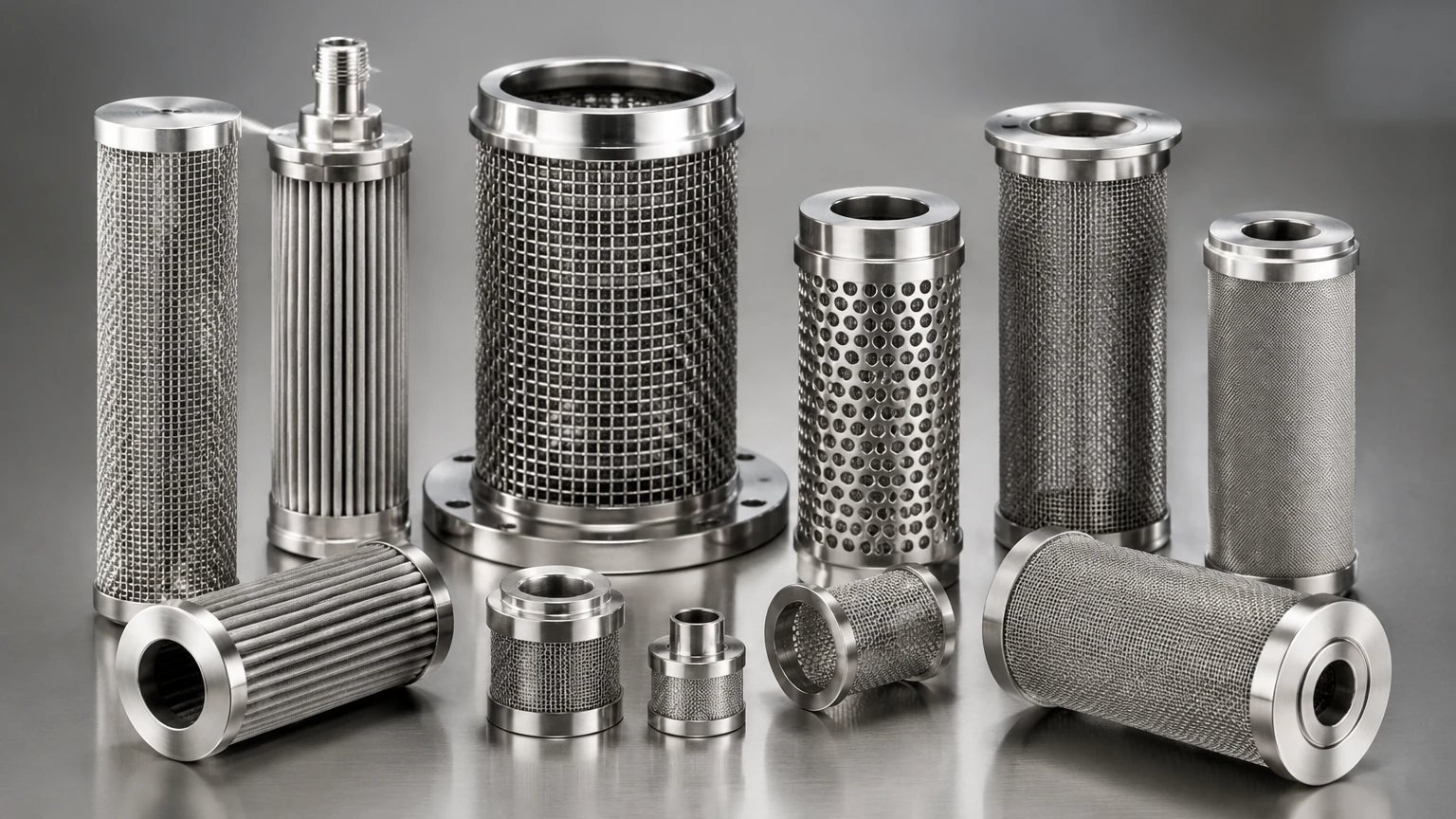
At the heart of most oil purification equipment is mechanical filtration. While many systems use disposable cellulose or synthetic media, high-performance industrial applications often require the durability and precision of stainless steel filter elements. These components are essential in systems where high temperatures, high pressures, or aggressive chemical environments are present.
Stainless Steel Wire Mesh Filters
Stainless steel wire mesh is a preferred medium for primary and secondary filtration in oil purification. Unlike fiber-based media, stainless steel mesh provides a consistent pore size and high structural integrity. It is particularly effective for removing large particulate loads and can be cleaned and reused, which lowers the total cost of ownership in the long term. For engineers, the choice between plain weave, twilled weave, or Dutch weave mesh depends on the required filtration accuracy and the flow characteristics of the oil.
Sintered Metal Filter Elements
In applications requiring extreme precision and high pressure resistance, sintered metal filters are employed. These are created by bonding multiple layers of stainless steel wire mesh or metal powders through a high-temperature sintering process. The result is a porous metal structure that offers exceptional mechanical strength and a fixed pore geometry. Sintered elements are ideal for oil purification equipment used in chemical processing or high-pressure hydraulic systems where bypass or media migration cannot be tolerated.
Technologies Used in Oil Purification Equipment
Modern oil purification equipment often combines several technologies to achieve the desired cleanliness levels. The selection of technology depends on the volume of oil, the type of fluid, and the specific contamination challenges.
Vacuum Dehydration
Vacuum dehydration is one of the most effective methods for removing water and gases from oil. The equipment works by heating the oil and exposing it to a vacuum. This lowers the boiling point of water, allowing it to evaporate at temperatures that do not damage the oil's additive package. High-surface-area filtration media inside the vacuum chamber facilitate the release of water vapor. This method is indispensable for turbine oils and transformer oils where moisture levels must be kept extremely low.
Centrifugal Separation
Centrifuges use centrifugal force to separate contaminants based on density. Since water and solid particles are typically denser than oil, they are forced to the outer perimeter of a rotating bowl and removed. While highly effective for removing large volumes of free water and heavy solids, centrifuges may struggle with dissolved water and very fine particulates, often requiring a secondary polishing filter stage.
Electrostatic Purification
This technology uses an electric field to charge contaminants, which are then attracted to a collection media. Electrostatic purifiers are uniquely capable of removing extremely fine particles and varnish precursors that are too small for conventional mechanical filters. However, they are generally limited to non-conductive oils and operate at lower flow rates.
Engineering Selection Criteria for Filtration Components
When integrating filtration components into oil purification equipment, engineers must evaluate several technical parameters to ensure system compatibility and performance. For comprehensive technical specifications and product options, professionals can refer to our Main Page to review how different materials and designs align with specific industrial requirements.
Micron Rating: Absolute vs. Nominal
It is vital to distinguish between nominal and absolute micron ratings. A nominal rating indicates the filter's ability to trap a percentage of particles of a certain size, whereas an absolute rating (often defined by a Beta Ratio of 200 or higher) guarantees the capture of virtually all particles above that size. For critical oil purification, absolute-rated stainless steel elements are preferred to ensure consistent fluid quality.
Pressure Drop (ΔP) and Flow Rate
Every filter element creates a resistance to flow, known as pressure drop. This is influenced by the oil’s viscosity, the filter’s surface area, and the pore size. In oil purification equipment, the system must be sized to handle the maximum flow rate at the highest expected viscosity (e.g., during cold starts) without triggering the bypass valve. Using pleated stainless steel designs can significantly increase the surface area, reducing ΔP and extending the interval between cleanings.
Material Compatibility
Industrial oils often contain complex additive packages, and some synthetic fluids can be chemically aggressive. Stainless steel (typically Grades 304 or 316L) provides excellent resistance to most hydraulic and lubricating oils. Furthermore, the selection of seal materials (such as Viton, Buna-N, or PTFE) must be verified against the fluid type and operating temperature to prevent leaks or system contamination.
Customization and OEM Integration
Many industrial applications require bespoke oil purification equipment tailored to specific spatial constraints or unique operating conditions. Customization allows for the optimization of filter housing dimensions, connection types (NPT, Flange, or SAE), and specialized internal structures.
For original equipment manufacturers (OEMs), partnering with a specialist in stainless steel filtration ensures that the internal components of the purification system are engineered to the same standards as the rest of the machinery. Custom-designed filter cartridges can be developed to meet specific dirt-holding capacities or to fit within compact footprints in mobile hydraulic units. By focusing on precision manufacturing and material quality, Kaifil supports the development of purification systems that deliver reliable performance in the field.
Maintenance and Performance Monitoring
The effectiveness of oil purification equipment is not static; it requires ongoing monitoring and maintenance. Differential pressure gauges are the primary tool for determining when a filter element is reaching its dirt-holding capacity. As the pores of the stainless steel mesh become filled with contaminants, the pressure drop across the element increases.
Regular oil analysis is also essential. By taking periodic samples and performing laboratory tests (including particle counting and Karl Fischer titration for moisture), operators can verify that the purification equipment is meeting the required ISO cleanliness codes. For reusable stainless steel elements, established cleaning protocols—such as ultrasonic cleaning or backflushing—must be followed to restore the media's permeability without damaging the mesh structure.
Total Cost of Ownership in Oil Purification
While the initial cost of high-quality oil purification equipment and stainless steel filtration components may be higher than disposable alternatives, the total cost of ownership is often significantly lower. The benefits include:
* Reduced Oil Consumption: By extending the life of the oil, companies reduce the frequency of oil changes and the associated disposal costs.
* Component Longevity: Cleaner oil directly correlates to reduced wear on pumps, valves, and bearings, leading to fewer repairs and replacements.
* Increased Uptime: Preventing contamination-related failures ensures that production lines and power plants remain operational.
* Sustainability: Reusable stainless steel filters reduce the environmental impact associated with disposing of contaminated fiberglass or paper filter elements.
In conclusion, oil purification equipment is a critical investment for any industrial operation relying on high-performance lubricants and hydraulic fluids. By selecting the appropriate purification technology and high-precision stainless steel filtration components, engineers can achieve superior fluid cleanliness, protect expensive machinery, and optimize operational efficiency. Understanding the technical variables—from micron ratings to material compatibility—is the key to implementing a successful oil conditioning strategy.
